
Dream Interpretation Modern Spirituality Decoding Messages
Dream interpretation, a practice as old as humanity itself, has experienced a profound resurgence within modern spirituality. Far from being mere random firings of the brain, dreams are increasingly recognized as potent channels for subconscious communication, offering invaluable insights into our inner world, emotional states, and spiritual journey. This ancient art, once confined to shamans and mystics, is now embraced by individuals seeking deeper self-understanding and a more profound connection to their spiritual path.
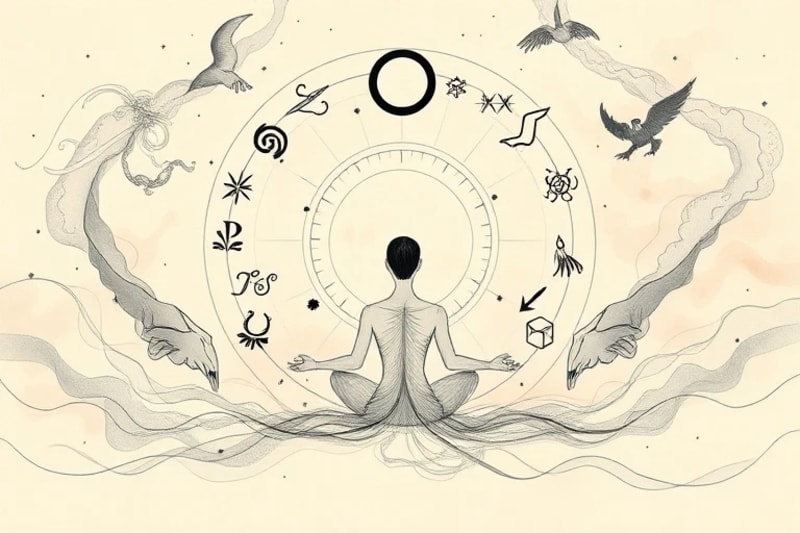
A meditative figure immersed in a cosmic dreamscape, symbolizing the profound connection between the individual and the universe's hidden messages.
In a world saturated with external stimuli, the quiet realm of dreams provides a sanctuary where the soul can speak without the filters of conscious thought or societal expectations. Modern spirituality encourages a holistic approach to well-being, where mental, emotional, and spiritual health are intertwined. Dream interpretation serves as a powerful tool within this framework, enabling individuals to decode the symbolic language of their nocturnal experiences and apply these revelations to their waking lives, fostering personal growth and spiritual evolution.
Table of Contents
- The Ancient Roots of Dream Interpretation
- Modern Perspectives: Psychology and Spirituality
- Common Dream Archetypes and Symbols
- Practical Techniques for Dream Recall and Analysis
- Integrating Dream Insights into Daily Life
- The Role of Intuition and Personal Context
- Dreams as a Path to Self-Discovery
The Ancient Roots of Dream Interpretation
The practice of interpreting dreams is not a new phenomenon; it dates back thousands of years, woven into the fabric of nearly every ancient civilization. From the elaborate dream temples of ancient Egypt, where priests acted as dream interpreters, to the prophetic dreams recorded in biblical texts and the intricate dream symbolism of indigenous cultures, humanity has long sought meaning in the nocturnal narratives of the mind. These early interpretations often linked dreams to divine messages, omens, or communications from ancestral spirits.
In ancient Mesopotamia, dream interpretation was a sophisticated practice, with detailed dream books used to decipher complex symbols and predict future events. The Greeks and Romans believed dreams were messages from the gods or glimpses into the future, often seeking guidance from oracles and seers. Across various cultures, dreams were not merely passive experiences but active dialogues between the individual and the cosmos, offering guidance, warnings, and revelations about one's destiny or spiritual path.
These historical precedents highlight a universal human desire to understand the hidden dimensions of existence and the role dreams play in bridging the conscious and unconscious realms. Modern spirituality draws upon this rich heritage, recognizing that while the language of dreams may be symbolic and personal, its underlying purpose—to communicate profound truths—remains constant. The reverence for dreams as a source of wisdom has endured, evolving through centuries to find its place in contemporary spiritual practices.
Modern Perspectives: Psychology and Spirituality
The 20th century brought a scientific lens to dream interpretation, primarily through the pioneering work of psychologists like Sigmund Freud and Carl Jung. Freud viewed dreams as "the royal road to the unconscious," a means to uncover repressed desires and unresolved conflicts. His emphasis on wish fulfillment and symbolic representation laid a foundational framework for understanding dreams as more than random noise.
Carl Jung expanded on Freud's ideas, introducing the concept of the "collective unconscious" and archetypes. Jung believed dreams draw from a universal reservoir of human experience, manifesting symbols that transcend individual history. For Jung, dreams served as a compensatory mechanism, striving to bring balance to the psyche and guide individuals toward individuation—the process of becoming a whole, integrated self. This Jungian perspective resonates deeply with modern spiritual thought, which often emphasizes self-realization and the integration of all aspects of the self.
In modern spirituality, dream interpretation often synthesizes these psychological insights with ancient wisdom traditions. It views dreams not just as psychological phenomena but as spiritual communications, offering guidance from higher consciousness, spirit guides, or the soul itself. This integrated approach acknowledges the profound connection between the mind, body, and spirit, seeing dreams as a bridge between our earthly existence and our spiritual essence. Understanding these subconscious messages can be enhanced by exploring tools like AI dream interpretation algorithms, which offer new ways to unravel complex symbolism.
A watercolor depiction of various dream symbols, illustrating the interconnectedness of our subconscious narratives.
Common Dream Archetypes and Symbols
Dreams speak in a language of symbols, metaphors, and archetypes. While personal associations are paramount, many symbols hold universal meanings that can provide a starting point for interpretation. Understanding these common archetypes can help decode the messages your subconscious is trying to convey.
- Water: Often symbolizes emotions, the unconscious, or the flow of life. Calm water might suggest emotional tranquility, while turbulent water could indicate emotional upheaval.
- Animals: Represent primal instincts, specific qualities, or aspects of the self. A lion might symbolize courage, a snake transformation or healing, and a bird freedom.
- Houses: Frequently represent the self, with different rooms corresponding to different aspects of your personality or life. The attic might be the mind, the basement the unconscious.
- Flying: Often associated with freedom, transcendence, or a desire to escape. It can also signify a sense of control or empowerment.
- Falling: Can indicate feelings of insecurity, loss of control, or anxiety. It might also suggest a need to let go and trust the process.
- Chasing/Being Chased: Often points to unresolved issues, fears, or aspects of yourself you are trying to avoid. The identity of the chaser can be crucial.
- Death: Rarely literal, death in dreams typically symbolizes an end to something (a phase, a habit, a relationship) and the beginning of something new—a transformation.
- Paths/Roads: Represent your life's journey, choices, and direction. A clear path suggests clarity, while a winding or blocked path indicates challenges or uncertainty.
It is crucial to remember that these are general interpretations. The true meaning of a symbol lies in its personal resonance with the dreamer. A dream dictionary can be a helpful guide, but ultimately, your intuition and personal associations will provide the most accurate insights. For instance, understanding how energy centers like chakras influence our well-being can also shed light on dream symbolism, as discussed in Chakra Healing Basics: Balancing Your Energy Centers.
Practical Techniques for Dream Recall and Analysis
To effectively interpret dreams, the first step is to remember them. Many people believe they don't dream, but everyone dreams; the challenge is often in recall. Here are practical techniques to enhance dream recall and facilitate analysis:
1. Dream Journaling: Keep a notebook and pen (or a voice recorder) by your bedside. As soon as you wake up, before moving or opening your eyes fully, try to recall any fragments of your dream. Write down everything you remember, no matter how trivial or nonsensical it seems. Include emotions, colors, people, objects, and actions. This practice trains your brain to prioritize dream memory.
2. Intention Setting: Before falling asleep, set a clear intention to remember your dreams. You can silently repeat a phrase like, "I will remember my dreams tonight" or "My dreams will bring me clarity." This primes your subconscious for recall.
3. Wake Up Gently: Avoid jarring alarms or immediately jumping out of bed. Allow yourself a few moments of quiet transition upon waking. This liminal state between sleep and wakefulness is often when dream memories are most accessible.
4. Look for Patterns: Over time, review your dream journal. Do certain symbols, themes, or emotions recur? Recurring dreams often indicate an important message that your subconscious is persistently trying to convey. These patterns can reveal deeper insights into your ongoing psychological or spiritual processes.
5. Engage with the Dream: Once you've recorded your dream, ask yourself questions: How did I feel in the dream? What was the dominant emotion? What stands out most? What real-life situations or people does this dream remind me of? What is the central conflict or message? Sometimes, even a simple aura cleansing practice can help clear mental fog and improve dream clarity.
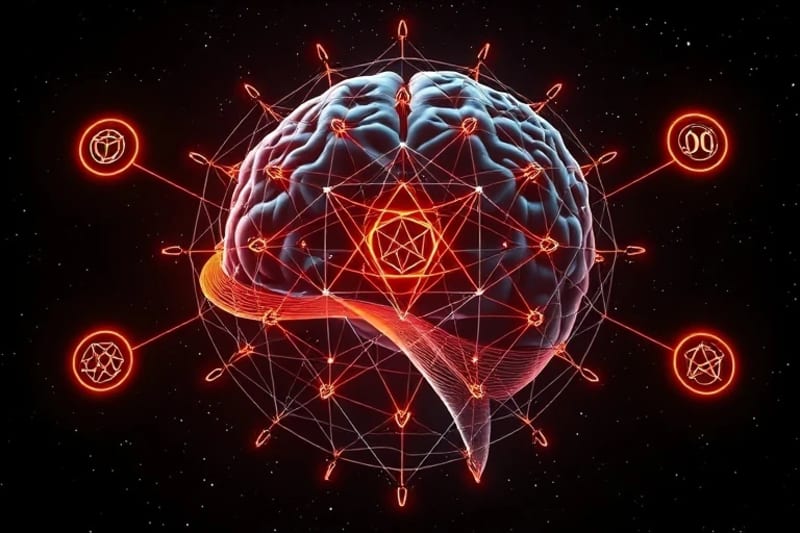
A futuristic visualization of the brain's intricate connection to subconscious messages, highlighting the analytical and spiritual aspects of dream decoding.
Integrating Dream Insights into Daily Life
The true power of dream interpretation lies not just in understanding the messages, but in applying them to your waking life. Dreams offer guidance, warnings, and affirmations that, when heeded, can lead to significant personal and spiritual growth. Integrating these insights requires conscious effort and a willingness to act upon the wisdom revealed.
Consider the emotional tone of your dreams. If you consistently dream of feeling anxious or trapped, it might be a signal to address sources of stress or feelings of confinement in your waking life. Conversely, dreams filled with joy and liberation could be affirming your current path or encouraging you to embrace new opportunities. Dreams often highlight areas where we need to heal, grow, or make a change, providing a roadmap for self-improvement.
Actionable steps might include setting boundaries, pursuing a creative endeavor, confronting a difficult conversation, or simply taking more time for self-care. Dreams can also inspire creativity, problem-solving, and spiritual practices. Many artists, scientists, and spiritual leaders have credited dreams with profound breakthroughs and revelations. By actively engaging with your dream insights, you transform passive nocturnal experiences into active catalysts for positive change and deeper spiritual connection.
The Role of Intuition and Personal Context
While universal symbols and psychological theories provide valuable frameworks, the most crucial tools in dream interpretation are your intuition and personal context. No dream dictionary can fully capture the unique tapestry of your life experiences, memories, and emotional landscape. Your subconscious mind communicates in a highly personalized language, drawing from your individual history and current circumstances.
Trust your gut feelings about a dream. Often, the initial emotional reaction or the first thought that comes to mind when recalling a dream is the most accurate indicator of its meaning. What does that symbol mean to you personally? What memories or feelings does it evoke? For example, a snake might symbolize fear for one person and healing for another, depending on their life experiences and cultural background. This personal connection is vital for accurate interpretation, much like the personalized guidance offered by ethical AI predictive astrology.
Consider the events of your waking life leading up to the dream. Were you experiencing stress, making a big decision, or processing a significant emotional event? Dreams often reflect and process our daily experiences, offering a nocturnal commentary on our waking reality. By combining objective analysis with subjective intuition, you can unlock the deepest layers of meaning within your dreams.
Dreams as a Path to Self-Discovery
Ultimately, dream interpretation in modern spirituality is a profound path to self-discovery and spiritual awakening. It encourages a deeper relationship with your inner self, fostering self-awareness, emotional intelligence, and spiritual insight. By consistently engaging with your dreams, you cultivate a dialogue with your subconscious, allowing it to guide you toward greater wholeness and authenticity.
This journey of decoding subconscious messages can illuminate hidden talents, unresolved traumas, and untapped potentials. It can help you understand your deepest fears and desires, guiding you toward choices that align with your true purpose. Dreams can also be a source of creative inspiration, problem-solving, and even spiritual healing, offering comfort and direction during challenging times. The consistent practice of dream work transforms your nocturnal experiences into a powerful resource for navigating the complexities of life and deepening your spiritual connection.
Embracing dream interpretation is an invitation to explore the vast, mysterious landscape of your inner world. It is a commitment to listening to the whispers of your soul and allowing them to illuminate your path toward a more conscious, fulfilling, and spiritually aligned existence. This practice, combined with other holistic approaches, can significantly enhance one's overall well-being and spiritual journey, much like the benefits explored in discussions on sound frequencies for DNA repair and bio-resonance quantum healing.
Explore More Spiritual Insights
- Synastry Relationship Dynamics
- Mercury Retrograde Navigation
- Scrying Art & Future Gazing
- Advanced Horary Astrology
- Neptune Aspects & Spirituality
- Fixed Stars Astrological Impact
- Tarot Sacred Geometry
- Astro Linguistics & Manifestation
- Yod Aspect Astrology
- Whole Sign Houses vs. Placidus
- Neurociencia Adicciones (Althox)
- Historia Café (Althox)
- Colombian Commercial Code (Althox)
- Estrellas Fijas Astrología Kármica (AstroFuturo)
- Feng Shui Cuántico (AstroFuturo)
- Astrología Dinero Fortuna (AstroFuturo)
- Coros Angélicos (Profecías)
- Tronos Dominaciones (Profecías)
- Danza Cósmica Serafines (Profecías)
Source: Hybrid content assisted by AI and human editorial supervision.


Comments
Post a Comment