
Astro-Archeology Unearthing Ancient Celestial Narratives
Astro-archeology stands as a captivating interdisciplinary field, bridging the ancient past with the vast cosmos. It systematically investigates how ancient civilizations observed, interpreted, and integrated celestial phenomena into their cultures, architecture, and belief systems. This discipline moves beyond mere astronomical observation, delving into the profound cultural and spiritual significance attributed to the stars, planets, and cycles of the sky.
By examining archaeological sites through an astronomical lens, researchers uncover sophisticated knowledge embedded in ancient structures and artifacts. This reveals a rich tapestry of human interaction with the heavens. The insights gained from astro-archeology challenge modern perceptions of ancient intelligence and their profound connection to the cosmic order.
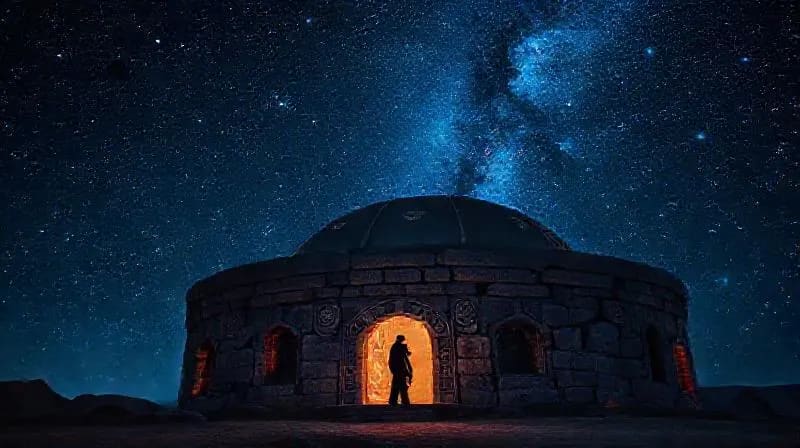
Intellectual precursors, fundamental diagrams, and conceptual representations that shaped humanity's vision of celestial archaeology.
Visual source subject to ecosystem availability: Wikimedia Commons under license CC BY-SA 4.0 or conceptual AI rendering.This field offers a unique perspective on the origins of scientific thought, religious practices, and societal organization. It highlights how celestial events were not just observed but deeply woven into the fabric of daily life, influencing everything from agricultural cycles to political power. Understanding these ancient celestial narratives provides invaluable context for the esoteric symbolism often found in historical astrology.
Table of Contents
- Introduction to Astro-Archeology
- Historical Roots of Celestial Observation
- Major Civilizations and Their Cosmic Narratives
- Methodologies: Unearthing Celestial Secrets
- Esoteric Symbolism and Spiritual Dimensions
- Modern Relevance of Ancient Cosmic Wisdom
Introduction to Astro-Archeology
Astro-archeology, often interchangeably used with archaeoastronomy, is the study of how people in the past "understood the phenomena in the sky, how they used these phenomena, and what role the sky played in their cultures." This definition, proposed by Clive Ruggles, emphasizes the cultural context over purely scientific measurements. It seeks to reconstruct ancient worldviews by analyzing the astronomical orientations of structures, artifacts, and rock art.
The field draws upon diverse disciplines including astronomy, archeology, anthropology, history, and religious studies. Its primary goal is to understand the cognitive and practical applications of celestial knowledge in pre-modern societies. This includes examining how astronomical cycles influenced agricultural practices, religious rituals, social organization, and the very construction of sacred spaces.
Historical Roots of Celestial Observation
Humanity's fascination with the night sky dates back to prehistoric times. Early hunter-gatherer societies likely tracked lunar cycles to predict seasonal changes and animal migrations. Evidence of this early observation can be found in paleolithic cave paintings and bone carvings, which sometimes depict lunar phases or constellations.
The development of agriculture further intensified the need for accurate celestial calendars. Predicting solstices and equinoxes became crucial for planting and harvesting. This practical necessity spurred the construction of monumental structures aligned with celestial events, serving as both observatories and ceremonial centers.
One of the most famous examples is Stonehenge in England, a prehistoric monument precisely aligned with the sunrise on the summer solstice. This alignment suggests a deep understanding of solar cycles and their importance to Neolithic communities. Such sites demonstrate that ancient peoples possessed sophisticated astronomical knowledge, often passed down through generations.
Major Civilizations and Their Cosmic Narratives
Across the globe, various ancient civilizations developed unique and complex cosmic narratives. These narratives were often intertwined with their religious beliefs, societal structures, and daily lives. The study of these cultures provides rich data for astro-archeological inquiry.
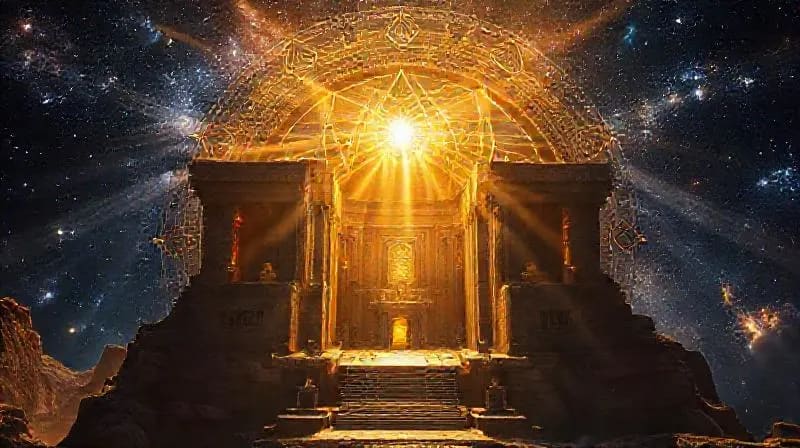
Ancient structures often reveal precise alignments with celestial events, reflecting deep cosmic understanding.
Ancient Egypt: The Nile, Sirius, and Immortality
The ancient Egyptians held a profound reverence for the celestial realm. Their civilization was deeply tied to the annual flooding of the Nile, which they observed coincided with the heliacal rising of the star Sirius (Sopdet). This event marked the beginning of their new year and was crucial for agricultural fertility. Many temples and pyramids, such as the Great Pyramid of Giza, exhibit precise astronomical alignments.
For instance, the descending passage of the Great Pyramid was aligned towards the pole star Thuban around 2400 BCE. Furthermore, the temples at Karnak and Abu Simbel are oriented to capture specific solar events, illuminating inner sanctuaries on solstices or equinoxes. These alignments were not merely practical but deeply symbolic, connecting the pharaohs and the afterlife with the eternal cycles of the cosmos.
The Maya: Complex Calendars and Venus Cycles
The Mayan civilization of Mesoamerica developed one of the most sophisticated astronomical systems in the ancient world. Their intricate calendars, including the Long Count, Tzolkin (260-day sacred calendar), and Haab' (365-day civil calendar), were based on meticulous observations of celestial bodies. Mayan observatories, like El Caracol at Chichen Itza, were designed for precise tracking of planetary movements, especially Venus.
Venus held immense significance for the Maya, associated with warfare and prophecy. Its cycles were accurately predicted and incorporated into their architectural orientations and ritual timings. The Dresden Codex, one of the few surviving Mayan books, contains detailed astronomical tables, including precise predictions for solar and lunar eclipses, demonstrating their advanced mathematical and astronomical prowess.
Mesopotamia: Birthplace of Astrology
Mesopotamia, the "cradle of civilization," is widely recognized as the birthplace of systematic astrology. The Sumerians, Babylonians, and Assyrians meticulously recorded celestial events on clay tablets, developing sophisticated systems for predicting planetary positions and interpreting their omens. Ziggurats, massive stepped pyramids, often served as astronomical observatories and temples.
Their detailed star catalogues and ephemerides laid the groundwork for much of Western astronomy and astrology. The concept of the zodiac, planetary deities, and horoscopic astrology originated in Mesopotamia, influencing subsequent Greek, Roman, and Indian traditions. This historical context is crucial for understanding the evolution of astrological thought and its esoteric symbolism, as discussed in topics like Astro-Linguistics and Natal Chart Mantras.
Other Global Examples
Astro-archeological evidence is not limited to these major civilizations. Across the globe, numerous sites demonstrate similar celestial awareness. In North America, the Chaco Canyon in New Mexico features the "Sun Dagger" petroglyph, which marks solstices and equinoxes with precise light patterns. Many Native American medicine wheels also show astronomical alignments.
In ancient China, imperial astronomers maintained meticulous records of celestial events, believing they reflected the Mandate of Heaven. Their observatories were central to political legitimacy. Similarly, in the Andes, Inca and pre-Inca cultures constructed structures like Machu Picchu with alignments to solstices and specific stars, reflecting their reverence for the cosmos and its influence on agricultural cycles.

Abstract representations of cosmic patterns and ancient symbols hint at a deeper, esoteric understanding of the universe.
Methodologies: Unearthing Celestial Secrets
Astro-archeologists employ a variety of scientific and analytical methods to uncover ancient celestial narratives. These methodologies are crucial for distinguishing intentional astronomical alignments from coincidental orientations. Rigorous statistical analysis and field surveys are fundamental to the discipline.
- Site Surveys and Measurements: Precise measurements of architectural orientations, alignments of standing stones, and features within structures are taken using modern surveying equipment.
- Astronomical Calculations: Historical astronomical software and ephemerides are used to calculate the positions of celestial bodies (sun, moon, stars, planets) at specific dates and times in the ancient past, correlating them with the measured alignments.
- Statistical Analysis: To rule out chance, statistical methods are applied to determine the probability of observed alignments occurring randomly. This helps establish the intentionality of astronomical design.
- Ethnoastronomy: Studying contemporary indigenous cultures with preserved astronomical traditions provides valuable insights into how ancient peoples might have viewed and used the sky.
- Iconographic Analysis: Examining ancient art, carvings, and texts for celestial symbols and representations helps decode their cosmic narratives and esoteric meanings. This can often reveal connections to concepts like Akashic Records and Soul Blueprints.
The interdisciplinary nature of astro-archeology requires collaboration between experts from various fields. Archeologists provide context for the material culture, astronomers offer precise celestial data, and anthropologists interpret the cultural significance. This holistic approach ensures a comprehensive understanding of the ancient relationship with the cosmos.
Esoteric Symbolism and Spiritual Dimensions
Beyond the practical applications of celestial observation, ancient cultures imbued the cosmos with profound esoteric symbolism and spiritual significance. The movements of the sun, moon, and planets were often seen as manifestations of divine will or the actions of powerful deities. This perspective forms the bedrock of much ancient astrological and mythological thought.
For many societies, the sky was a sacred text, a living canvas upon which the fate of individuals, communities, and even empires was written. Celestial events were interpreted as omens, prophecies, or divine communications. This spiritual dimension transformed astronomical observations into a powerful tool for understanding existence and navigating the human condition.
- Deification of Celestial Bodies: The sun, moon, and prominent stars were often personified as gods and goddesses, each with distinct powers and influences.
- Cosmological Models: Ancient cosmologies often depicted the universe as a multi-layered structure, with the celestial realm directly influencing the earthly one. This belief system informed their spiritual practices and understanding of life and death.
- Ritual and Ceremony: Many religious rituals were timed to coincide with specific celestial events, such as solstices, equinoxes, or planetary conjunctions. These ceremonies were believed to harness cosmic energies or appease divine forces.
- Sacred Geometry: The precise alignments of ancient structures often reflect principles of sacred geometry, believed to create a harmonious connection between the earthly and celestial spheres. This is a concept explored in Light Codes and Stellar Activation.
The esoteric symbolism found in astro-archeology underscores the holistic worldview of ancient peoples. They did not separate science from spirituality, but rather saw them as interconnected facets of a single, grand cosmic order. Their understanding of celestial mechanics was often inseparable from their spiritual beliefs, creating a rich tapestry of meaning.
Modern Relevance of Ancient Cosmic Wisdom
The study of astro-archeology is not merely an academic exercise; it holds significant relevance for contemporary society. By understanding how ancient cultures integrated cosmic knowledge, we can gain fresh perspectives on our own relationship with the universe. It encourages a re-evaluation of the human place within the cosmos, moving beyond a purely materialistic viewpoint.
The insights from ancient celestial narratives can inform modern discussions on sustainability, environmental stewardship, and global consciousness. Many ancient cultures lived in profound harmony with natural and celestial cycles, a wisdom that is increasingly vital today. This connection to cosmic rhythms can also be seen in modern concepts of Cosmic Sociology and Global Consciousness Trends.
Furthermore, astro-archeology reminds us of the enduring human quest for meaning and connection beyond the immediate earthly experience. It highlights the universal impulse to look up at the stars and seek answers about our origins, purpose, and destiny. This field enriches our understanding of human history, cultural diversity, and the profound impact of the cosmos on our collective journey.
Conclusion
Astro-archeology offers a compelling window into the minds and cultures of ancient peoples. It reveals a world where the sky was not just a distant backdrop but an integral, living component of human existence. Through meticulous research and interdisciplinary collaboration, this field continues to unearth the sophisticated celestial narratives that shaped civilizations across millennia.
By appreciating the depth of ancient cosmic wisdom, we can foster a greater sense of wonder and connection to the universe ourselves. The echoes of these ancient observations and their esoteric interpretations resonate even today, reminding us of humanity's timeless bond with the stars.
Related Explorations in Cosmic Wisdom
- Fixed Stars Predictive Astrology: Timing Events with Cosmic Portents
Discover how ancient and modern astrologers use fixed stars to predict significant global and personal events. - Urban Geomancy Celestial Mechanics City Energy Well-being
Explore the esoteric connection between urban planning, celestial alignments, and the energetic well-being of city inhabitants. - Ancestral Healing Shamanic Practices: Connecting Your Roots
Delve into ancient healing traditions that emphasize connecting with ancestral wisdom and cosmic lineage. - Monthly Horoscope Insights: New Moon Full Moon Energies
Understand the ongoing influence of lunar cycles, a practice rooted in ancient celestial observations.
Source: Hybrid content assisted by AI and human editorial supervision.


Comments
Post a Comment