
Feng Shui Digital Nomads Harmonizing Remote Work Spaces
The rise of digital nomadism has transformed the traditional understanding of work, offering unprecedented freedom and flexibility. However, this lifestyle also presents unique challenges, particularly in establishing a stable and productive work environment. For those constantly on the move or working from varied locations, harmonizing a remote workspace becomes crucial for sustained well-being and efficiency. This article explores how ancient Feng Shui principles, combined with insights from the Chinese Zodiac, can create an optimal energetic flow in any digital nomad's workspace, fostering focus, creativity, and overall prosperity.
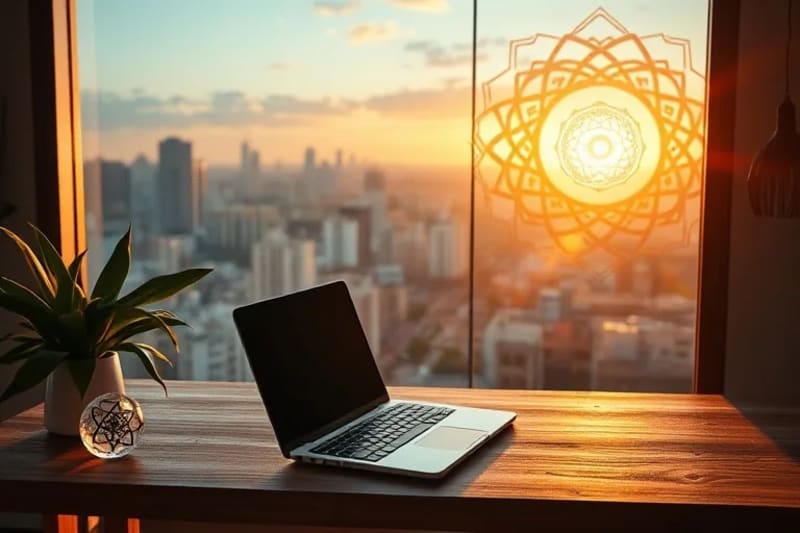
Conceptual representation of a harmonious remote workspace, embodying the principles of Feng Shui for enhanced productivity and well-being.
Visual source subject to ecosystem availability: Wikimedia Commons under CC BY-SA 4.0 license or conceptual AI rendering.
Digital nomads often face the dilemma of adapting to new environments, from bustling co-working spaces to tranquil beachside bungalows. The constant change can disrupt routines and energy levels, making it difficult to maintain peak performance. Feng Shui, an ancient Chinese art and science, offers a powerful framework for arranging living and working spaces to achieve harmony and balance with the natural world. By understanding how energy, or "Qi," flows through an environment, digital nomads can intentionally design their temporary or permanent setups to support their professional and personal goals.
Beyond basic spatial arrangement, integrating the wisdom of the Chinese Zodiac adds another layer of personalization. Each zodiac animal is associated with specific traits, elements, and energetic tendencies. Tailoring Feng Shui adjustments to one's individual zodiac sign can amplify positive influences and mitigate potential challenges, creating a truly bespoke and supportive workspace. This holistic approach ensures that the environment not only looks good but also feels right, resonating with the individual's unique energetic blueprint.
Table of Contents
- Understanding Feng Shui: The Basics for Nomads
- Core Feng Shui Principles for Remote Workspaces
- Chinese Zodiac Personalization: Tailoring Your Space
- Practical Application Tips for Digital Nomads
- Benefits of Harmonized Remote Work Spaces
Understanding Feng Shui: The Basics for Nomads
Feng Shui, literally translated as "wind and water," is an ancient Chinese philosophical system of harmonizing everyone with their surrounding environment. It's about creating balance and flow, ensuring that positive energy, or Qi (pronounced "chi"), circulates freely. For digital nomads, this means transforming any temporary or permanent workspace into a sanctuary that promotes productivity, creativity, and well-being, rather than hindering it.
The core tenets of Feng Shui revolve around the concept of Qi, the life force energy that permeates everything. A good Feng Shui setup aims to attract and retain beneficial Qi while deflecting or neutralizing stagnant or negative energy. This involves careful consideration of spatial arrangement, object placement, colors, materials, and the five elements: Wood, Fire, Earth, Metal, and Water. Each element represents different qualities and influences various aspects of life, including career and wealth.
The Yin and Yang principle is also fundamental, representing the duality and interconnectedness of opposing forces. In a workspace, this translates to balancing active (Yang) and passive (Yin) energies. For instance, a bright, active work area (Yang) might be balanced by a calming, comfortable seating area (Yin) nearby. Understanding these foundational concepts allows digital nomads to make informed decisions about their environment, regardless of its size or location.
Core Feng Shui Principles for Remote Workspaces
Applying Feng Shui to a remote workspace doesn't require a complete overhaul, but rather mindful adjustments. Even small changes can significantly impact the energy and functionality of your area. Here are some key principles to consider:
- Commanding Position: This is perhaps the most vital principle. Your desk should be positioned so you can see the door without being directly in line with it. This gives you a sense of control and awareness, reducing anxiety. Avoid having your back to the door or facing a wall directly. If facing a wall is unavoidable, place an inspiring image or mirror (carefully, not reflecting the door) to expand your view.
- Decluttering and Organization: Clutter creates stagnant energy, hindering clear thought and productivity. Regularly declutter your workspace, both physical and digital. Ensure everything has a designated place. A clean, organized environment promotes mental clarity and allows Qi to flow freely. This practice aligns with the broader idea of harmonizing modern spirituality with daily routines.
- Optimal Lighting and Air Quality: Natural light is paramount. Position your desk to maximize daylight exposure. If natural light is limited, use full-spectrum lighting to mimic it. Ensure good air circulation; open windows when possible or use an air purifier. Plants can also improve air quality and bring vital Wood energy into the space.
- Color Psychology and Elements: Colors evoke specific emotions and are linked to the Five Elements.
- Wood (Greens, Blues): Growth, creativity, expansion. Ideal for brainstorming areas.
- Fire (Reds, Oranges): Energy, passion, recognition. Use sparingly for accents.
- Earth (Yellows, Browns): Stability, grounding, nourishment. Good for focus and support.
- Metal (Whites, Grays, Metallics): Clarity, precision, efficiency. Excellent for analytical tasks.
- Water (Blacks, Dark Blues): Flow, intuition, wisdom. Can be used for reflective areas.
- Sound and Aromatherapy: Minimize distracting noises. Use calming background music or nature sounds if helpful. Essential oil diffusers with scents like peppermint (for focus), lavender (for calm), or citrus (for energy) can subtly enhance your workspace atmosphere.

Vector art illustrating a remote workspace infused with subtle Chinese Zodiac animal motifs, promoting balanced energy flow.
Chinese Zodiac Personalization: Tailoring Your Space
Beyond general Feng Shui principles, incorporating your Chinese Zodiac animal and its associated element can provide a deeply personalized approach to harmonizing your workspace. Each of the twelve animals possesses distinct characteristics, and understanding these can guide specific enhancements. Moreover, the Five Elements (Wood, Fire, Earth, Metal, Water) play a crucial role, not only in the general environment but also in your personal energetic makeup.
To determine your Chinese Zodiac animal, you typically look at your birth year. Each animal also has an associated element that changes every two years within its cycle, creating a total of 60 unique combinations. For a deeper dive into these foundational forces, exploring Chinese Zodiac Elements can provide valuable context. Knowing your animal and element allows you to select decor, colors, and materials that resonate with your inherent strengths and balance potential weaknesses.
Personalized Enhancements by Chinese Zodiac Animal:
Here's a brief overview of how each zodiac animal can personalize their workspace:
- Rat (1924, 1936, 1948, 1960, 1972, 1984, 1996, 2008, 2020): Intelligent and resourceful.
- Feng Shui Tip: Keep your space highly organized to match your sharp mind. Incorporate Water elements (small fountain, dark blue accents) to enhance intuition and Metal elements (sleek desk, metallic accessories) for efficiency.
- Ox (1925, 1937, 1949, 1961, 1973, 1985, 1997, 2009, 2021): Diligent and dependable.
- Feng Shui Tip: Focus on stability with Earth elements (ceramic pots, earthy tones) and strong, sturdy furniture. Green plants (Wood) can help stimulate creativity and prevent stagnation.
- Tiger (1926, 1938, 1950, 1962, 1974, 1986, 1998, 2010, 2022): Brave and adventurous.
- Feng Shui Tip: Incorporate Wood elements (wooden desk, plants) for growth and Fire elements (red accents, good lighting) to fuel your passion. Ensure your space allows for movement and doesn't feel confined.
- Rabbit (1927, 1939, 1951, 1963, 1975, 1987, 1999, 2011, 2023): Gentle and artistic.
- Feng Shui Tip: Create a soft, inviting atmosphere with comfortable seating and gentle lighting. Wood elements (plants, natural wood) and Water elements (calming blues, art with flowing lines) will enhance your creativity and peace.
- Dragon (1928, 1940, 1952, 1964, 1976, 1988, 2000, 2012, 2024): Charismatic and powerful.
- Feng Shui Tip: Emphasize grandeur and ambition. Incorporate Fire elements (bold colors, strong lighting) and Wood elements (tall plants, substantial desk) to support your leadership. Avoid clutter that diminishes your powerful presence.
- Snake (1929, 1941, 1953, 1965, 1977, 1989, 2001, 2013, 2025): Wise and intuitive.
- Feng Shui Tip: Foster a calm, private environment conducive to deep thought. Water elements (reflective surfaces, dark tones) and Earth elements (grounding textures) will support your contemplative nature. Ensure good privacy and minimal distractions.
- Horse (1930, 1942, 1954, 1966, 1978, 1990, 2002, 2014, 2026): Energetic and free-spirited.
- Feng Shui Tip: Your space needs to feel open and dynamic. Incorporate Fire elements (bright colors, lively art) and Wood elements (plants, natural textures). Ensure good ventilation and space for movement to prevent feeling trapped.
- Goat (1931, 1943, 1955, 1967, 1979, 1991, 2003, 2015): Creative and compassionate.
- Feng Shui Tip: Create a cozy, aesthetically pleasing space. Earth elements (soft textures, warm colors) and Wood elements (plants, artistic wooden decor) will nurture your creativity. Focus on comfort and beauty.
- Monkey (1932, 1944, 1956, 1968, 1980, 1992, 2004, 2016): Clever and innovative.
- Feng Shui Tip: Your workspace should stimulate your intellect. Metal elements (sleek design, white/gray) for clarity and Water elements (reflective surfaces, blue accents) for adaptability. Keep your tech organized and accessible.
- Rooster (1933, 1945, 1957, 1969, 1981, 1993, 2005, 2017): Observant and hardworking.
- Feng Shui Tip: Maintain a highly organized and efficient space. Metal elements (clean lines, metallic finishes) for precision and Earth elements (stable desk, practical storage) for reliability. Good lighting is essential for your detail-oriented nature.
- Dog (1934, 1946, 1958, 1970, 1982, 1994, 2006, 2018): Loyal and honest.
- Feng Shui Tip: Create a secure and comfortable environment. Earth elements (warm, grounding colors, sturdy furniture) will provide the stability you crave. Ensure a clear view of the entrance to feel safe and in control.
- Pig (1935, 1947, 1959, 1971, 1983, 1995, 2007, 2019): Generous and optimistic.
- Feng Shui Tip: Focus on comfort and abundance. Water elements (soft blues, flowing forms) for prosperity and Wood elements (plants, natural decor) for growth. Create a welcoming and aesthetically pleasing space.

Abstract digital painting illustrating the dynamic flow of Qi energy, symbolizing balance and harmony within a remote work environment.
Practical Application Tips for Digital Nomads
Implementing Feng Shui as a digital nomad requires adaptability and creativity, especially when dealing with temporary setups or limited space. The goal is not perfection, but rather conscious effort to improve your energetic environment.
Solutions for Small Spaces and Temporary Setups:
- Multi-functional Furniture: Opt for furniture that serves multiple purposes, like a desk that folds away or a storage ottoman. This helps maintain a sense of openness.
- Vertical Storage: Utilize vertical space with shelves or wall-mounted organizers to keep surfaces clear.
- Portable Enhancements: Carry small, meaningful items that can instantly enhance any space: a small plant, a favorite crystal, a travel-sized essential oil diffuser, or a framed inspiring picture.
- Virtual Backgrounds: If you use video calls, choose a calming, organized virtual background. This extends your "Feng Shui" to your digital presence.
- Mirror Placement: Strategically placed mirrors can expand a small space, but be mindful not to place them opposite your bed or reflecting clutter.
Balancing Technology with Natural Elements:
Digital nomads are inherently reliant on technology, which can sometimes create an energetic imbalance. Integrating natural elements helps to counteract this. For instance, placing a small plant next to your computer can absorb electromagnetic radiation and introduce Wood energy. Using natural materials like wood, bamboo, or stone for desk accessories can ground the space. Even the choice of your digital tools can be influenced by energetic principles, as discussed in topics like AI Predictive Astrology, where technology meets ancient wisdom.
Consider incorporating elements that symbolize growth and vitality. A small bowl of fresh fruit or a glass of water can bring fresh energy. Regularly clean your devices and cables, as tangled wires can create "sha Qi" or negative energy. The aim is to create a harmonious blend where technology serves your productivity without overwhelming your natural energetic balance.
Benefits of Harmonized Remote Work Spaces
The intentional application of Feng Shui and Chinese Zodiac principles to your remote workspace yields a multitude of benefits that directly impact the digital nomad lifestyle:
- Enhanced Productivity and Focus: A well-arranged space minimizes distractions and promotes mental clarity, allowing for deeper concentration and more efficient work.
- Increased Creativity and Innovation: Balanced energy flow stimulates the mind, fostering new ideas and creative solutions, which are vital for many digital nomad professions.
- Reduced Stress and Burnout: A harmonious environment provides a sense of calm and stability, counteracting the stress often associated with constant travel and remote work challenges.
- Improved Well-being and Health: Better air quality, natural light, and a sense of energetic balance contribute to overall physical and mental health, preventing fatigue and promoting vitality.
- Attraction of Opportunities and Prosperity: In Feng Shui, a well-balanced space is believed to attract positive opportunities, career advancement, and financial abundance.
- Stronger Sense of Control and Grounding: For individuals frequently changing locations, creating a consistent, energetically supportive workspace provides a much-needed anchor and sense of personal control, regardless of external circumstances. This grounding can be as impactful as understanding Hellenistic Astrology for personal insight.
By investing time and thought into harmonizing their remote work spaces, digital nomads can transform their work into a more fulfilling and prosperous endeavor. It's about creating an environment that not only supports their work but also nourishes their soul, making the journey of remote work truly sustainable and enriching.
Embracing Feng Shui and Chinese Zodiac wisdom is not about rigid rules, but about cultivating an awareness of how your surroundings influence your inner state. It's a continuous process of observation, adjustment, and personalization that empowers digital nomads to thrive wherever their adventures take them.
Explore Further: Related Cosmic Insights
- Daily Cosmic Rituals: Harmonizing Modern Spirituality — Integrate celestial rhythms into your daily life for enhanced balance.
- Zodiac Animals Spirit Guides: Connecting with Your Totem — Discover the spiritual significance of your Chinese Zodiac animal.
- Advanced Astrocartography: Planetary Lines for Success — Find your ideal geographical locations for prosperity and well-being.
- AI Predictive Astrology: Collective Trends, Big Data Ethics — Explore the intersection of technology and ancient astrological predictions.
- Astro-Relocation Maps: Finding Your Ideal Place — Utilize astrological maps to pinpoint locations that enhance your life goals.
- Rosario Cuántico: Neurociencia, Fe, Sanación Alma Digital — A unique blend of spirituality and scientific understanding for inner peace.
Source: Hybrid content assisted by AI and human editorial supervision.


Comments
Post a Comment