
Urban Geomancy Aligning City Dwellings Cosmic Energies
Urban Geomancy: Aligning City Dwellings with Cosmic Energies
In an increasingly urbanized world, the connection between human well-being and the built environment has become a critical area of study. Urban geomancy offers a fascinating perspective on this relationship, proposing that the energetic alignment of city dwellings and their surrounding landscapes profoundly impacts our lives. This ancient practice, rooted in the understanding of Earth's subtle energies, seeks to harmonize human habitats with natural and cosmic forces, fostering environments that support health, prosperity, and spiritual growth.
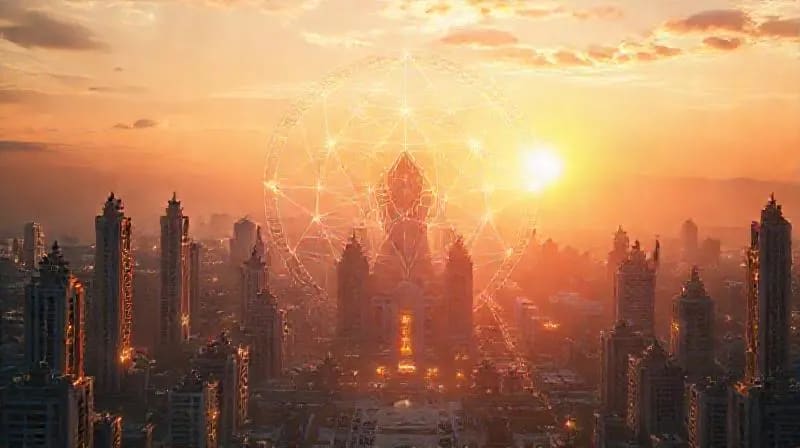
A vision of urban harmony, where modern architecture integrates seamlessly with subtle cosmic energy flows, creating a balanced and serene environment.
Unlike conventional urban planning, which often prioritizes functionality and aesthetics, urban geomancy delves into the unseen energetic currents that permeate our planet. It draws parallels with traditional systems like Feng Shui in China and Vastu Shastra in India, both of which emphasize the importance of site orientation, layout, and material choices to optimize energy flow. By understanding and applying these principles, we can transform concrete jungles into vibrant, life-affirming spaces.
This article will explore the foundational concepts of urban geomancy, its historical roots, and its practical applications in contemporary city design. We will delve into how these ancient wisdom traditions can inform modern architectural and planning decisions, creating cities that not only house populations but also uplift the human spirit and promote ecological balance. The goal is to bridge the gap between ancient esoteric knowledge and the demands of modern urban living, offering a holistic approach to city development.
Table of Contents
- Introduction to Urban Geomancy
- Historical Roots and Global Perspectives
- Core Principles of Urban Geomancy
- Practical Applications in Modern Cities
- Benefits and Challenges of Geomantic Integration
- Modern Relevance and Future Outlook
- Conclusion: Harmonizing Urban Spaces
Historical Roots and Global Perspectives
Geomancy, in its broadest sense, is the art and science of understanding the Earth's energies and their influence on living beings. Its origins can be traced back to ancient civilizations across the globe, where the placement of temples, cities, and sacred sites was meticulously chosen to align with auspicious energetic currents. These early practitioners believed that certain locations possessed inherent vitality or spiritual power, which could be harnessed for the benefit of the community.
In China, Feng Shui, meaning "wind and water," is perhaps the most well-known form of geomancy. It focuses on the harmonious flow of 'qi' (life force energy) within a space, influencing everything from building orientation to interior design. Similarly, India's Vastu Shastra provides guidelines for architectural design and construction, aiming to integrate structures with the cosmic energies of the universe. Both systems share a common goal: to create environments that promote health, wealth, and spiritual balance.
Beyond Asia, evidence of geomantic practices can be found in ancient Egyptian civilization, where the alignment of pyramids and temples with celestial bodies and telluric currents was paramount. This ancient wisdom, closely tied to their understanding of the cosmos, is echoed in practices like Egyptian Astrology: Deciphering Decans, Planetary Deities. Indigenous cultures worldwide also possess rich traditions of sacred geography, recognizing specific sites as power points or places of healing, often marked by natural formations or megalithic structures.
These diverse traditions, while varying in their specific methodologies, all underscore a universal recognition of the Earth as a living, energetic entity. They teach us that our built environments are not merely inert structures but dynamic interfaces between human life and the greater cosmic order. Understanding these historical precedents is crucial for appreciating the depth and potential of urban geomancy in our modern context.
Core Principles of Urban Geomancy
Urban geomancy operates on several fundamental principles that govern the interaction between energy, environment, and human experience. These principles provide a framework for analyzing and optimizing urban spaces.
- Qi (Chi) or Prana Flow: This is the universal life force energy that animates all things. In urban geomancy, the goal is to ensure smooth, unobstructed, and balanced flow of qi through cities, buildings, and individual dwellings. Stagnant or chaotic qi can lead to illness, misfortune, and discord.
- Ley Lines and Earth Grids: Many geomantic traditions believe in a network of energetic lines or grids that crisscross the Earth's surface. These "ley lines" are thought to be channels of telluric energy, and their intersections are often considered power spots. Urban geomancy seeks to identify and work with these lines, positioning structures to either draw upon or avoid their influence.
- Yin and Yang Balance: The ancient Chinese concept of yin (feminine, dark, passive) and yang (masculine, light, active) is central. An ideal urban environment achieves a harmonious balance of these complementary forces, expressed through architectural forms, landscape design, and the overall rhythm of city life.
- Five Elements Theory: Wood, Fire, Earth, Metal, and Water are interconnected elements used to categorize and understand natural phenomena and human interactions. In urban geomancy, these elements are applied to materials, colors, shapes, and directions to create a balanced and supportive environment.
- Topography and Landscape: The natural features of the land, such as mountains, rivers, and valleys, are considered vital. These elements influence wind patterns, water flow, and the overall energetic signature of a site. Urban geomancy respects and integrates these natural contours rather than imposing upon them.
An intricate visual representation of how subtle energy lines and pathways might interact with a modern urban landscape, highlighting points of energetic connection.
Understanding these core principles allows practitioners to diagnose energetic imbalances in existing urban areas and design new developments that inherently promote vitality. It's about seeing the city not just as a collection of buildings, but as a complex, living organism with its own energetic pulse.
Practical Applications in Modern Cities
Applying urban geomancy in contemporary city planning and architecture involves a multi-faceted approach, integrating ancient wisdom with modern techniques. The goal is to create spaces that are not only functional and aesthetically pleasing but also energetically supportive.
- Site Selection and Orientation: Before any construction begins, geomancers assess the energetic quality of a site. This includes analyzing topography, water sources, prevailing winds, and the presence of ley lines. Buildings are then oriented to maximize beneficial energy intake and minimize exposure to detrimental forces. This strategic placement can significantly impact the long-term prosperity and well-being of occupants.
- Urban Layout and Infrastructure: The arrangement of streets, parks, and public buildings is crucial. Curved roads are often preferred over straight ones to encourage gentle energy flow, preventing "sha qi" (sharp, aggressive energy). Green spaces and water features are strategically placed to enhance vitality and create calming zones. The overall flow of the city should mimic natural patterns, promoting a sense of ease and connection.
- Architectural Design and Materials: The shape, size, and materials of individual buildings contribute to their energetic signature. Rounded forms are generally considered more harmonious than sharp angles. Natural materials like wood, stone, and brick are often favored for their grounding and balancing properties. Color schemes are also chosen to align with elemental energies and desired psychological effects.
- Water and Green Spaces: Water is a powerful conductor of qi, and its strategic placement in fountains, ponds, or rivers can activate and circulate energy. Green spaces, such as parks and urban gardens, act as energetic lungs for the city, purifying the environment and providing areas for rejuvenation. These elements are vital for balancing the dense, often stagnant energy of urban centers.
- Mitigating Negative Influences: Urban geomancy also addresses ways to mitigate negative energetic influences, such as those caused by electromagnetic fields (EMFs), pollution, or discordant architectural forms. This can involve strategic landscaping, the use of specific crystals or materials, or even the careful placement of reflective surfaces to redirect energy. Just as individuals might practice Bio-Acoustic Therapy Cellular Regeneration Sound Frequencies, cities can implement similar principles on a larger scale.
By consciously applying these principles, urban planners and architects can design cities that are not only sustainable in an ecological sense but also energetically vibrant and supportive of human flourishing. It's about creating a living tapestry where every element contributes to the overall harmony and well-being.
Benefits and Challenges of Geomantic Integration
Integrating urban geomancy into modern development offers a plethora of potential benefits, aiming to create more livable and harmonious cities. However, this approach also comes with its unique set of challenges that need to be carefully considered.
| Benefits of Urban Geomancy | Challenges of Integration |
|---|---|
| Enhanced Well-being: Promotes physical and mental health by reducing stress and fostering a sense of calm and balance. | Skepticism and Acceptance: Difficulty in gaining mainstream acceptance due to its esoteric nature and lack of empirical scientific validation in Western contexts. |
| Increased Harmony and Productivity: Creates environments where people feel more connected, cooperative, and efficient. | Cost and Time Implications: Implementing geomantic principles can add complexity and cost to planning and construction phases. |
| Sustainable Development: Encourages designs that work with natural landscapes rather than against them, promoting ecological balance. | Subjectivity and Interpretation: Geomantic readings can be subjective, leading to varying interpretations and potential disagreements among practitioners. |
| Reduced Conflict: Harmonious energetic flows can contribute to a more peaceful and cohesive community. | Retrofitting Existing Cities: Significant challenges in applying principles to already established urban areas with fixed infrastructure. |
| Aesthetic Appeal: Designs often result in visually pleasing and intuitively comfortable spaces. | Lack of Standardized Training: No universally recognized certifications or educational pathways, making it difficult to find qualified professionals. |
Despite these challenges, the growing interest in holistic well-being and sustainable living is paving the way for greater acceptance of geomantic principles. Many forward-thinking developers and urban planners are beginning to recognize the intangible benefits that go beyond mere functionality, seeking to create spaces that truly nourish the human spirit. Just as in Synastry Business Partnerships: Aligning Strengths Success Astrology, aligning urban energies can lead to greater success and harmony.
Modern Relevance and Future Outlook
In an era dominated by rapid urbanization and technological advancement, the wisdom of urban geomancy offers a vital counterpoint to purely utilitarian approaches to city design. It reminds us that cities are not just machines for living but complex ecosystems that interact with both the natural world and the subtle energies of the cosmos. The relevance of urban geomancy is arguably greater now than ever before, as we grapple with issues of mental health, environmental degradation, and social disconnection in our increasingly dense urban centers.
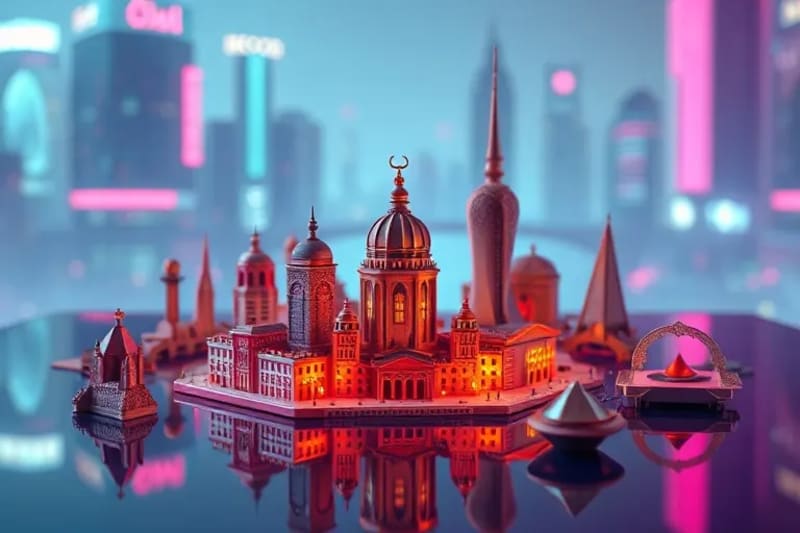
A conceptual arrangement showcasing miniature city models alongside ancient geomantic tools, symbolizing the integration of timeless wisdom into contemporary urban planning.
The future of urban geomancy lies in its ability to integrate with modern scientific understanding and sustainable practices. While its energetic claims may not always be quantifiable by current scientific instruments, the observable effects on human comfort, well-being, and ecological balance are increasingly recognized. For instance, the principles of optimal sunlight exposure, natural ventilation, and green infrastructure, which are central to geomancy, are also cornerstones of modern ecological design.
Furthermore, as disciplines like quantum physics and biophysics explore the subtle interactions between energy and matter, the scientific community may eventually develop tools to better understand and measure the phenomena that geomancers have intuitively worked with for millennia. This interdisciplinary approach, blending ancient wisdom with cutting-edge science, holds the promise of creating truly regenerative and human-centered urban environments.
The concept of aligning dwellings with cosmic energies extends beyond physical structures; it also touches upon the collective consciousness and the energetic resonance of a community. Just as individuals can feel the influence of planetary positions on their psyche, as explored in articles like Aquarius Decans Deep Dive: Water Bearer Faces Explained, cities too have a collective energetic signature that can be optimized for positive outcomes. By consciously shaping our urban spaces, we contribute to a more harmonious collective experience.
Conclusion: Harmonizing Urban Spaces
Urban geomancy offers a profound and holistic framework for designing and living in cities. By recognizing and working with the subtle energetic currents of the Earth and cosmos, we can move beyond purely functional urban planning to create environments that actively support human flourishing. From the careful selection of a building site to the thoughtful arrangement of city parks, every decision can either enhance or detract from the overall energetic harmony of an urban space.
While challenges remain in integrating these ancient principles into modern, fast-paced development, the growing awareness of our interconnectedness with nature and the desire for more meaningful living spaces are powerful catalysts for change. Embracing urban geomancy means envisioning cities not just as places of commerce and residence, but as living organisms, breathing and vibrating with life force, capable of inspiring health, creativity, and spiritual growth in their inhabitants.
Ultimately, the journey of urban geomancy is one of re-enchanting our cities, imbuing them with a sense of sacredness and purpose. It is an invitation to build environments that reflect our highest aspirations, fostering a deeper connection between humanity, the Earth, and the vast, energetic universe that surrounds us.
Explore Further: Related Insights
- Urban Geomancy: Aligning Dwellings Cosmic Energies - Deep dive into cosmic alignment.
- North Node Transits: Evolutionary Growth & Soul Contracts - Explore your soul's astrological path.
- Zodiac Compatibility Advanced Elemental Ascendant Influences - Uncover deeper compatibility insights.
- 2nd House Astrology: Wealth, Values, Self-Worth - Understand your material and intrinsic values.
Source: Hybrid content assisted by AI and human editorial supervision.


Comments
Post a Comment