
Techno-Shamanism Digital Tools Ancient Rituals Modern Spirituality
In an increasingly interconnected yet often disconnected world, a fascinating paradigm is emerging: techno-shamanism. This concept represents the convergence of ancient spiritual practices and modern digital technologies, aiming to bridge the gap between ancestral wisdom and contemporary life. It explores how digital tools can facilitate altered states of consciousness, enhance spiritual healing, and create new forms of ritual in the 21st century.
Techno-shamanism is not merely about using technology in spiritual contexts; it's about a deeper philosophical inquiry into how our digital existence can be imbued with sacred meaning. It challenges the traditional separation of the material and the spiritual, proposing that the virtual realm can also serve as a potent space for personal growth, collective healing, and profound connection. This evolving field invites us to reconsider the boundaries of what constitutes spiritual practice in an era defined by rapid technological advancement.
Table of Contents
- Introduction to Techno-Shamanism
- The Roots of Shamanism: A Brief Overview
- Bridging Worlds: Technology as a Spiritual Conduit
- Digital Tools for Modern Spiritual Practice
- Benefits and Transformative Potential
- Navigating the Digital Sacred: Challenges and Ethics
- The Future of Techno-Shamanism
- Conclusion: Re-enchanting the Digital Age
Introduction to Techno-Shamanism
Techno-shamanism is a contemporary term that describes the intentional use of technology to access, explore, and integrate spiritual experiences traditionally associated with shamanic practices. It acknowledges that while the tools have evolved, the fundamental human quest for meaning, healing, and connection to something larger than oneself remains constant. This approach suggests that digital environments, from virtual reality to biofeedback apps, can serve as modern-day sacred spaces or conduits for altered states of consciousness.
This interdisciplinary field draws from anthropology, psychology, computer science, and various spiritual traditions. It seeks to understand how digital interfaces can be designed and utilized to facilitate introspection, communal ritual, and even transpersonal experiences. Far from replacing traditional practices, techno-shamanism often aims to complement them, making spiritual exploration more accessible and relevant to individuals living in a technologically saturated world.
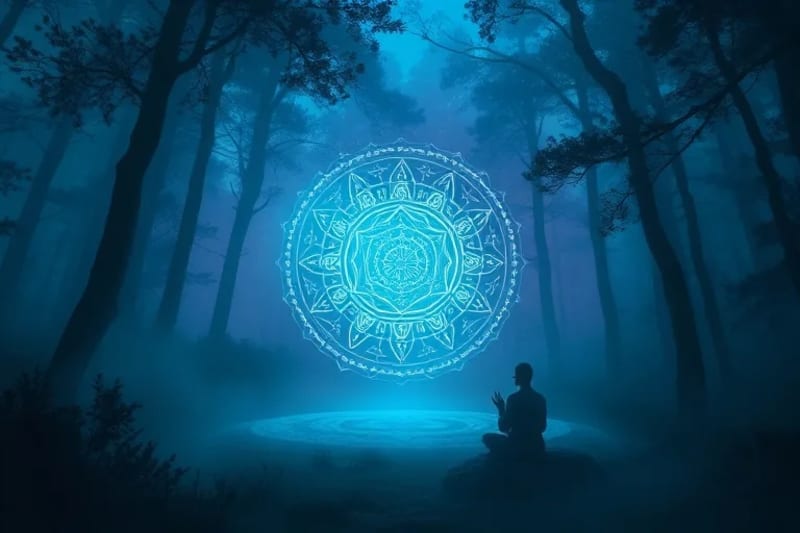 Conceptualizing the fusion of ancient spiritual practices with cutting-edge digital technology, illustrating the harmonious blend of nature and innovation in modern consciousness exploration.
The Roots of Shamanism: A Brief Overview
To understand techno-shamanism, it is essential to grasp the core principles of traditional shamanism. Shamanism is an ancient spiritual practice found in diverse cultures worldwide, characterized by a practitioner (shaman) who acts as an intermediary between the human and spirit worlds. Shamans typically enter altered states of consciousness through various means, such as drumming, chanting, dance, or entheogenic plants, to commune with spirits, seek guidance, or facilitate healing.
Key aspects of shamanic practice include soul retrieval, divination, communication with ancestors or nature spirits, and community healing. The shaman's role is often one of a healer, guide, and keeper of ecological and spiritual balance. These practices are deeply rooted in animistic worldviews, where all elements of nature are considered to possess a spiritual essence. The profound wisdom embedded in these ancient traditions offers a rich foundation upon which modern interpretations can build.
Bridging Worlds: Technology as a Spiritual Conduit
The concept of technology as a spiritual conduit might seem paradoxical, yet it aligns with the shamanic understanding of tools and rituals as means to an end—the expansion of consciousness. Just as a shaman's drum creates rhythmic patterns to induce trance, digital soundscapes can guide meditative states. Virtual reality environments can simulate journeys to other realms, offering immersive experiences that mirror visionary quests. This perspective reframes technology not as a distraction, but as a potential ally in spiritual exploration.
Modern technology offers unprecedented ways to visualize internal states, connect with global communities, and access vast repositories of spiritual knowledge. It allows for personalized experiences that can be tailored to individual needs, potentially democratizing access to practices once reserved for specific lineages or geographic locations. By consciously designing digital experiences with spiritual intent, we can transform screens from mere interfaces into gateways for deeper self-discovery and connection. This approach can also be seen in how we seek to understand our inner workings, much like shadow work explores natal chart potentials, digital tools can help illuminate our subconscious landscapes.
Digital Tools for Modern Spiritual Practice
A diverse array of digital tools is being adapted or specifically designed for techno-shamanic practices. These tools leverage various technological advancements to support meditation, mindfulness, altered states, and community building. Their application ranges from personal introspection to collective virtual ceremonies.
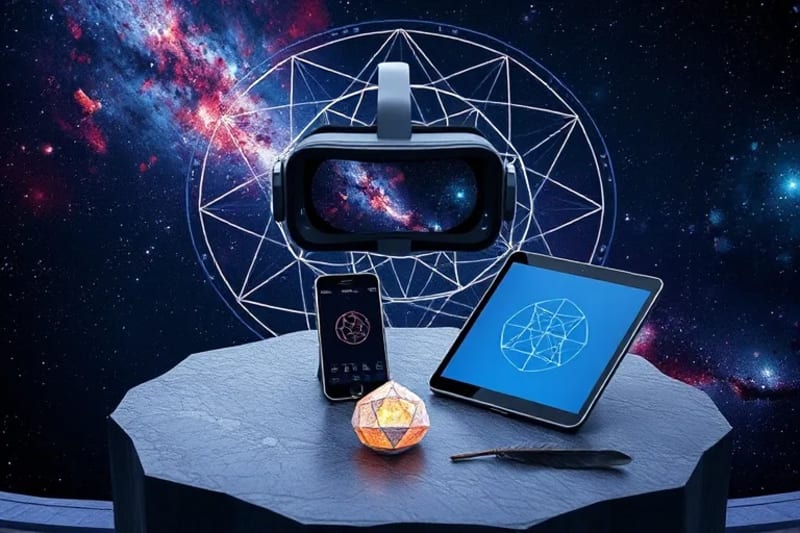 An array of digital devices harmoniously arranged with natural elements, symbolizing the integration of technology into spiritual practices and the exploration of consciousness.
Meditation and Mindfulness Apps: Applications like Headspace, Calm, or Insight Timer offer guided meditations, soundscapes, and mindfulness exercises that help users cultivate inner peace and focus. These can be seen as modern tools for training attention, a prerequisite for many spiritual disciplines.
Virtual Reality (VR) and Augmented Reality (AR): VR can create fully immersive environments that simulate sacred spaces, nature scenes, or even abstract visionary landscapes. These can be used for guided journeys, visualization practices, or to experience profound states of presence. AR can overlay digital elements onto the physical world, enhancing real-world rituals or creating interactive spiritual experiences.
Biofeedback and Neurofeedback Devices: These technologies monitor physiological responses (heart rate, brainwaves, skin conductance) and provide real-time feedback, allowing users to learn to consciously regulate their body and mind. This can be invaluable for achieving deeper meditative states, managing stress, and exploring the mind-body connection.
Digital Art and Music Generation: Algorithms can create generative art and music that respond to user input or biometric data, producing dynamic, personalized sensory experiences. These can be used to induce altered states, facilitate emotional release, or serve as a focal point for contemplation, much like sigil magic crafts symbols for personal power.
Online Spiritual Communities and Forums: Digital platforms allow individuals from around the globe to connect, share experiences, and participate in collective rituals or discussions. These virtual communities can provide support, foster a sense of belonging, and facilitate shared spiritual growth, transcending geographical limitations.
AI for Self-Exploration: Artificial intelligence is beginning to assist in self-discovery, for instance, through advanced dream interpretation tools that help decode subconscious symbolism. This can provide insights into personal narratives and spiritual paths, similar to how AI decodes subconscious symbolism in dreams.
Benefits and Transformative Potential
The integration of technology into spiritual practices offers several compelling benefits. One of the most significant is increased accessibility. Digital tools can make spiritual practices available to individuals who might not have access to traditional teachers, communities, or sacred spaces due to geographical, physical, or financial constraints. This democratization of spiritual knowledge can empower more people to embark on their inner journeys.
Another key advantage is personalization. Algorithms and user data can tailor spiritual experiences to an individual's specific needs, preferences, and progress, offering a highly customized path. This can lead to more effective and engaging practices. Furthermore, technology can provide new ways to document and share spiritual experiences, fostering collective learning and the evolution of spiritual understanding in a global context. It enables new forms of ritual that are both ancient in spirit and modern in execution, creating unique pathways for transformation.
Navigating the Digital Sacred: Challenges and Ethics
Despite its potential, techno-shamanism is not without its challenges and ethical considerations. A primary concern is the risk of digital distraction and superficiality. The very tools designed to foster focus can also lead to constant interruptions, potentially hindering deep meditative states. There is also a risk that spiritual experiences mediated by technology might lack the depth, authenticity, or embodied wisdom gained through direct, unmediated practice or guidance from experienced teachers.
 An abstract visualization depicting the energetic interplay between ancient spiritual symbolism and modern technological patterns, representing the evolving landscape of human consciousness.
Ethical questions also arise regarding commercialization and data privacy. As spiritual apps and devices become more prevalent, ensuring that they are developed with integrity, respect for diverse traditions, and robust data protection is crucial. The potential for cultural appropriation of sacred practices, especially when decontextualized and commodified through technology, also requires careful consideration. It is vital to approach techno-shamanism with discernment, maintaining a balance between technological innovation and the preservation of genuine spiritual depth and ethical responsibility.
The Future of Techno-Shamanism
The future of techno-shamanism is likely to involve increasingly sophisticated integrations of technology and spirituality. We may see more advanced AI companions for spiritual guidance, hyper-realistic VR environments for collective ritual, and bio-integrated systems that seamlessly blend our physical and digital selves in pursuit of higher consciousness. The evolution of neurotechnology could offer direct interfaces for exploring inner states, pushing the boundaries of human perception and experience.
As these technologies evolve, so too will our understanding of consciousness and the nature of reality. Techno-shamanism has the potential to foster a more holistic view of existence, where technology serves as a tool for re-enchanting the world and deepening our connection to ourselves, each other, and the cosmos. It encourages us to ask profound questions about what it means to be human in a rapidly changing technological landscape, and how we can use innovation to cultivate well-being and spiritual growth.
Conclusion: Re-enchanting the Digital Age
Techno-shamanism represents a compelling frontier in human spirituality, offering a path to re-enchant the digital age. By thoughtfully integrating ancient wisdom with modern technology, we can create powerful new avenues for healing, self-discovery, and collective transformation. It is a call to view our digital tools not merely as instruments of productivity or entertainment, but as potential allies in our spiritual evolution.
As we navigate this evolving landscape, the key lies in conscious intention, ethical development, and a continuous commitment to authenticity and depth. Techno-shamanism invites us to explore how the sacred can manifest in new forms, ensuring that as technology advances, our human spirit continues to thrive and connect with the profound mysteries of existence.
Source: Hybrid content assisted by AI and human editorial supervision.


Comments
Post a Comment