
Sigil Magic: Crafting Symbols for Personal Power | StarPluto
Sigil magic is a fascinating and powerful practice within the realm of esotericism, focusing on the creation and activation of symbolic representations of one's desires or intentions. These unique symbols, known as sigils, act as condensed forms of will, designed to bypass the conscious mind and directly influence the subconscious, thereby facilitating manifestation. Rooted in ancient magical traditions and popularized by figures like Austin Osman Spare, sigil magic offers a direct and accessible method for personal empowerment and focused intention setting, appealing to both seasoned practitioners and curious newcomers alike.
- Personal Power: Sigils are highly individualized, crafted to resonate with the specific desires of their creator.
- Intention Setting: They serve as potent tools for clarifying and embedding intentions deeply within the psyche.
- Manifestation: By working with the subconscious, sigils aim to align inner and outer realities to bring about desired outcomes.
- Accessibility: The methods for creating sigils are straightforward, making this practice approachable for many.
Unlocking inner potential through the creation of Tarot Quantum Mechanics Intersecting Divination Reality.
The core principle behind sigil magic lies in the idea that our conscious minds often interfere with our deepest desires, creating doubt or resistance. By encoding an intention into a unique symbol and then "charging" it, practitioners aim to bypass these conscious filters, allowing the intention to be absorbed directly by the subconscious, which is believed to be the engine of manifestation. This process is not about external manipulation but rather about internal alignment, helping individuals to focus their will and energy more effectively towards their goals.
What is Sigil Magic?
Sigil magic is a specific form of magic where a practitioner creates a personalized symbol, or sigil, to represent a desired outcome or intention. Unlike traditional spells that might involve complex rituals or specific incantations, sigil magic often emphasizes simplicity and directness. The goal is to distill a complex desire into a simple, abstract form that can be imprinted upon the subconscious mind.
This practice is often associated with chaos magic, a modern magical current that emphasizes personal experimentation and belief as the driving force behind magical efficacy. However, the concept of using symbols for magical purposes is ancient and can be found across various cultures and spiritual traditions. The uniqueness of modern sigil magic lies in its systematic approach to creation and activation, designed to make the process efficient and potent.
The History and Origins of Sigils
While the term "sigil" in its modern magical context was popularized by artist and occultist Austin Osman Spare in the early 20th century, the use of symbolic representations for magical purposes dates back millennia. Ancient civilizations, including the Egyptians, Babylonians, and various tribal cultures, utilized hieroglyphs, ideograms, and sacred symbols in their spiritual and magical practices. These symbols were believed to embody divine power, protect against evil, or invoke specific energies.
Medieval grimoires, such as the Lesser Key of Solomon, are replete with sigils, often used to summon or control spirits. These early sigils were typically complex, incorporating planetary symbols, astrological signs, and Hebrew letters. Spare's innovation was to simplify this process, advocating for the creation of highly personal, abstract symbols derived directly from the practitioner's intention, rather than relying on pre-existing magical alphabets or complex correspondences.
The Philosophy Behind Sigil Crafting
At its heart, sigil crafting is a psychological operation as much as it is a magical one. The underlying philosophy suggests that our subconscious mind is incredibly powerful but often constrained by the conscious mind's doubts and rationalizations. By creating a sigil, we encode an intention into a form that the conscious mind cannot easily decipher, allowing it to bypass these mental blocks.
The process of creating a sigil involves a focused act of will and creativity. This act itself can be empowering, as it forces the practitioner to clarify their desires and commit them to a tangible form. Once activated and "forgotten," the sigil is believed to work on a deeper level, influencing the practitioner's perceptions, actions, and even external circumstances to align with the embedded intention. This belief aligns with principles of Tarot Quantum Mechanics Intersecting Divination Reality, albeit through a more direct, symbolic route.
Methods for Creating Sigils
There are several popular methods for crafting sigils, each designed to transform a verbal intention into a unique visual symbol. The most common approach involves taking a statement of intent and systematically abstracting it. Here are a few widely used techniques:

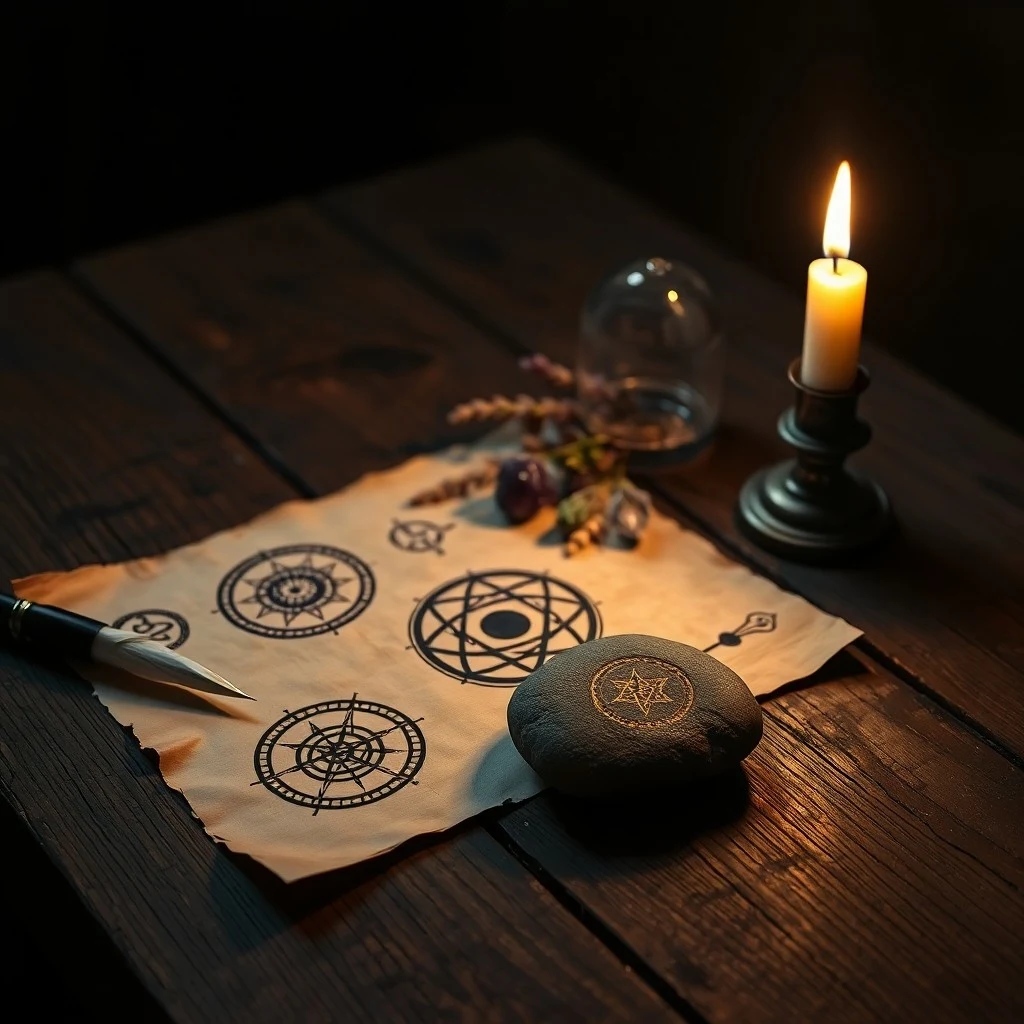
The tools of the trade: a quill, parchment, and an obsidian mirror for Tarot Quantum Mechanics Intersecting Divination Reality.
The Word Method (Austin Osman Spare's Technique):
- Write down your clear intention in a positive, present-tense statement (e.g., "I AM FINANCIALLY SECURE").
- Remove all repeating letters (e.g., I A M F N C L Y S E C U R).
- Arrange the remaining letters into an aesthetically pleasing, abstract symbol. This is where creativity comes in. Combine the lines and curves of the letters to form a unique glyph.
The Image Method:
- Visualize your desired outcome as vividly as possible.
- Draw a simple image or doodle that encapsulates this vision.
- Abstract and simplify this image until it becomes a unique, unrecognizable symbol.
The Mantra Method:
- Create a short, rhythmic phrase that embodies your intention (e.g., "Wealth flows to me freely").
- Repeat this mantra until it loses its conscious meaning and becomes a pure sound.
- While in this state, draw a symbol that spontaneously arises from your subconscious.
The key across all methods is to create a symbol that is visually distinct and holds no immediate conscious association with the original statement of intent. This abstraction is crucial for bypassing the conscious mind.
Activating and Charging Your Sigils
Once a sigil is created, it needs to be "charged" or activated to imbue it with magical energy. The process of charging typically involves entering a state of gnosis, a focused, altered state of consciousness where the conscious mind is temporarily suspended. This allows the sigil to be imprinted directly onto the subconscious.
Common methods for achieving gnosis and charging a sigil include:
- Intense Focus: Staring intently at the sigil until its lines blur and its meaning dissolves.
- Sensory Overload/Deprivation: Engaging in activities that overwhelm the senses (e.g., ecstatic dance, loud music) or deprive them (e.g., meditation, dark room).
- Emotional Peak: Reaching a peak of intense emotion, such as laughter, anger, or sexual climax, and then focusing on the sigil during that moment.
- Ritualistic Practices: Incorporating the sigil into a larger ritual, using chanting, visualization, or other magical tools to raise energy.
The moment of activation is often fleeting. The goal is to impress the sigil upon the subconscious during this peak state, without the conscious mind analyzing or questioning its purpose.
Releasing and Forgetting Sigils
A crucial, and often counterintuitive, step in sigil magic is the act of "forgetting" the sigil after it has been charged. This means consciously letting go of the intention and the symbol itself, allowing the subconscious to work unimpeded. Obsessing over the sigil or constantly thinking about the desired outcome can reactivate the conscious mind's filters, hindering the manifestation process.

New intentions and growth emerging from the remnants of old beliefs, symbolizing Tarot Quantum Mechanics Intersecting Divination Reality.
Methods for forgetting include:
- Destroying the Sigil: Burning, burying, or tearing up the physical representation of the sigil.
- Distraction: Immediately engaging in a mundane activity or a completely unrelated task after charging.
- Mental Release: A conscious act of letting go, trusting that the subconscious will handle the rest.
The act of forgetting is a symbolic release, signaling to the subconscious that the work is done and it is free to execute the intention. This trust in the process is a cornerstone of effective sigil magic.
Ethical Considerations in Sigil Magic
Like any powerful tool, sigil magic comes with ethical considerations. Practitioners are often advised to create sigils only for positive intentions that do not harm others or infringe upon their free will. The principle of "do no harm" is paramount in many magical traditions, and this extends to sigil work. While sigils primarily work by influencing the practitioner's own actions and perceptions, the ripple effects of these changes can impact others.
It is also important to consider the potential for unintended consequences. Clearly defining an intention and considering its broader implications can help mitigate unforeseen negative outcomes. Sigil magic is a tool for personal growth and empowerment, and its ethical application ensures that its power is used constructively and responsibly. Engaging in self-reflection and understanding one's true motivations are key aspects of ethical practice.
Modern Applications of Sigil Magic
In contemporary practice, sigil magic finds application in various aspects of life, from personal development to creative endeavors. Many use sigils for:
- Goal Setting: Creating sigils for career advancement, financial stability, or academic success.
- Emotional Healing: Designing sigils to promote self-love, overcome anxiety, or release past traumas.
- Creative Inspiration: Using sigils to unlock artistic blocks or enhance creative flow.
- Protection: Crafting sigils for personal or energetic protection.
- Habit Formation: Developing sigils to reinforce positive habits or break negative ones.
The versatility of sigil magic makes it a valuable tool for anyone seeking to consciously direct their energy and intentions towards specific outcomes. It encourages a proactive approach to personal reality creation, emphasizing the power of focused will and symbolic communication with the subconscious.
Common Misconceptions About Sigils
Despite its growing popularity, sigil magic is often misunderstood. Here are some common misconceptions:
- It's "Black Magic": Sigil magic is a neutral tool. Its ethical implications depend entirely on the intent of the practitioner. It's not inherently good or evil.
- It's Instantaneous: While some results can be rapid, manifestation often takes time and requires alignment of actions with the subconscious intention. It's not a magic button for instant gratification.
- It's a Substitute for Action: Sigils are catalysts for change, not replacements for effort. They help align your inner world, making it easier to take inspired action in the outer world.
- You Need to Be a "Witch" or "Magician": Anyone can practice sigil magic. It requires focus, creativity, and an open mind, not adherence to a specific magical tradition or title.
- All Sigils Look the Same: Sigils are highly personal. While there are common methods, the final appearance of a sigil should be unique to the creator and their intention.
Understanding these points helps demystify the practice and allows for a more informed and effective engagement with sigil magic. It is a journey of self-discovery and intentional living, leveraging the power of symbols and the subconscious mind.
Source: Hybrid content assisted by AIs and human editorial supervision.


Comments
Post a Comment