
Lunar Mansions: Decoding Ancient Arabic Astrology for Modern Insights and Timing | StarPluto
The celestial ballet of the Moon has captivated humanity for millennia, influencing tides, agricultural cycles, and even human emotions. Beyond its familiar phases, ancient astrological traditions meticulously charted the Moon's journey through specific segments of the sky, known as Lunar Mansions. These divisions, particularly prominent in Arabic, Indian (Nakshatras), and Chinese astrology, offer a profound layer of insight into timing, magical practices, and the subtle energies influencing our daily lives. While often overshadowed by the Western zodiac, understanding the Lunar Mansions can unlock a deeper, more nuanced appreciation of lunar astrology and its practical applications.
This in-depth exploration delves into the rich history and intricate mechanics of the Lunar Mansions, focusing on their Arabic tradition, known as 'Manazil al-Qamar'. We will uncover how these ancient astronomical observations evolved into powerful astrological tools, providing modern insights for personal development, electional astrology, and the timing of significant events. By decoding these age-old wisdom systems, we can gain a unique perspective on the Moon's continuous influence and harness its power more effectively in our contemporary world.
Table of Contents
- Introduction to Lunar Mansions: A Celestial Blueprint
- Historical Roots: The Arabic Tradition of Manazil al-Qamar
- The 28 Mansions: Structure and Significance
- Decoding Key Lunar Mansions and Their Energies
- Modern Applications: Timing, Electional Astrology, and Personal Insight
- Comparing Systems: Lunar Mansions and Vedic Nakshatras
- Integrating Lunar Mansions into Your Astrological Practice
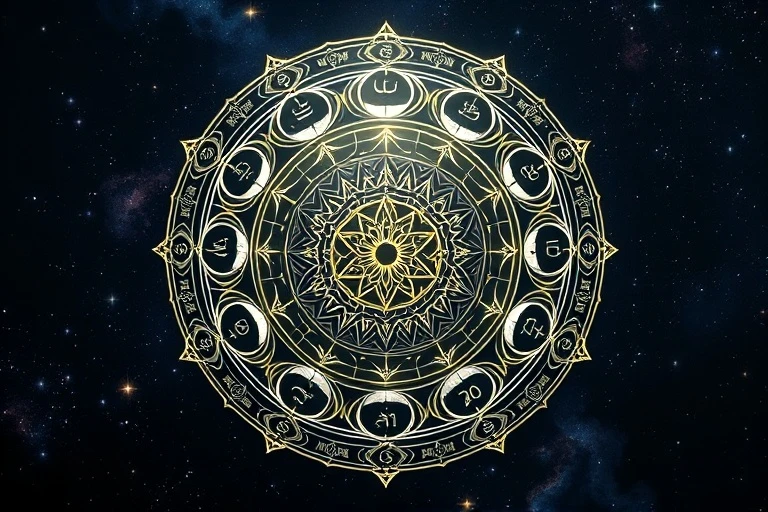
A conceptual digital illustration of a moon phase chart, intricately adorned with Arabic calligraphy and celestial symbols, representing the profound wisdom of the Lunar Mansions.
Introduction to Lunar Mansions: A Celestial Blueprint
The Lunar Mansions represent a division of the ecliptic, the path the Sun (and seemingly the Moon) travels through the zodiac, into segments that the Moon traverses over approximately one day. Unlike the twelve signs of the tropical or sidereal zodiac, which are solar-based, Lunar Mansions are purely lunar, reflecting the Moon's daily progression. This system originated independently in various ancient cultures, including Babylonia, India, China, and the Arabic world, each developing its unique set of mansions and interpretations.
In the Arabic tradition, these are known as 'Manazil al-Qamar' (Mansions of the Moon), typically numbering 28. Each mansion spans approximately 12 degrees and 51 minutes of the zodiac, corresponding to the Moon's average daily movement. As the Moon transits through each mansion, it is believed to absorb and radiate specific energies, influencing earthly affairs, human endeavors, and even magical operations. This makes the Lunar Mansions an invaluable tool for understanding the subtle ebb and flow of cosmic influences on a day-today basis, offering a precision that broader zodiacal analysis might miss.
Historical Roots: The Arabic Tradition of Manazil al-Qamar
The Arabic system of Lunar Mansions has deep roots, drawing from pre-Islamic Arabian astronomy and later integrating knowledge from Indian and Persian traditions. Early Arabian astronomers and astrologers, such as Mashallah, Albumasar (Abu Ma'shar), and Al-Biruni, extensively documented and elaborated on the Manazil al-Qamar. Their works became foundational texts, influencing not only Islamic astrology but also contributing significantly to the transmission of astrological knowledge to medieval Europe.
These mansions were not merely abstract divisions; they were often associated with specific stars or asterisms that the Moon would pass near. This gave each mansion a distinct visual and energetic identity. For instance, the first mansion, Al-Nath, was associated with the horns of Aries, while Al-Thurayya corresponded to the Pleiades star cluster. This direct link to visible celestial bodies provided a tangible framework for interpreting the Moon's daily journey, allowing ancient practitioners to predict weather patterns, agricultural outcomes, and propitious times for various activities.
The Arabic tradition also assigned planetary rulers, elemental qualities, and specific magical images or talismans to each mansion. This intricate system allowed for highly specialized and potent applications, from crafting amulets for protection to timing medical treatments or business ventures. The precision and depth of this system highlight the sophisticated understanding of celestial mechanics and their terrestrial impact held by ancient scholars.
The 28 Mansions: Structure and Significance
The 28 Lunar Mansions divide the entire 360-degree zodiac, with each mansion covering approximately 12°51'. This division is based on the Moon's average sidereal period of roughly 27.3 days to complete one full cycle through the zodiac. Since the Moon moves approximately 13 degrees per day, each mansion represents the Moon's position for roughly one day. This daily progression is what makes the mansions so valuable for precise timing.
Each mansion carries a unique name, often derived from the prominent star or asterism within its bounds, and is associated with specific themes, planetary rulers, and effects. These effects can range from favorable for new beginnings and growth to challenging for conflict and obstacles. Understanding the nature of the mansion the Moon is currently transiting allows an astrologer to gauge the general energetic climate of the day and advise on the most auspicious times for particular actions.
A still-life photograph showcasing ancient astrological instruments on a wooden desk, symbolizing the historical depth of celestial observation.
The significance of the 28 Mansions extends beyond mere daily predictions. They are integral to various astrological techniques, including natal chart analysis, where the Moon's position in a specific mansion at birth can reveal inherent talents, challenges, and life path inclinations. In electional astrology, they are crucial for selecting the most favorable moment to initiate projects, ensuring they align with supportive lunar energies. Furthermore, in magical and spiritual practices, working with the Moon in its specific mansion allows practitioners to tap into highly focused and potent energies for rituals and spellwork.
Decoding Key Lunar Mansions and Their Energies
While all 28 Mansions possess unique qualities, examining a few prominent ones can illustrate their profound influence. The names themselves often hint at their core energies and traditional associations.
- Al-Nath (The Horns, 0° - 12°51' Aries): This first mansion is associated with beginnings, aggression, and swift action. It's considered favorable for starting new ventures, travel, and asserting oneself. However, its impulsive nature can also lead to conflict if not managed carefully. Its planetary ruler is often Mars, emphasizing its dynamic and pioneering spirit.
- Al-Thurayya (The Pleiades, 25°42' Aries - 8°34' Taurus): Named after the famous Pleiades star cluster, this mansion is highly auspicious. It signifies abundance, good fortune, wealth, and prosperity. It's an excellent time for planting, building, marriage, and seeking financial gain. The traditional ruler is Jupiter, reinforcing its benevolent and expansive qualities.
- Al-Sarfa (The Changer, 12°51' Leo - 25°42' Leo): This mansion is characterized by transformation, departure, and separation. It can be a good time for ending old habits, breaking free from constraints, or traveling. However, it's generally considered unfavorable for new beginnings or commitments, as its energy promotes change and severance. Mercury often rules this mansion, highlighting its intellectual and adaptive nature.
- Al-Awwa (The Barker, 12°51' Libra - 25°42' Libra): Associated with protection, retrieval, and reconciliation. This mansion is favorable for seeking lost items, recovering from illness, or mediating disputes. It promotes harmony and balance, making it suitable for social gatherings and strengthening relationships. Venus is a common ruler, emphasizing connection and diplomacy.
- Al-Zubana (The Claws/Scales, 0° - 12°51' Scorpio): A mansion with a dual nature, reflecting the scales of justice and the sting of a scorpion. It can be favorable for legal matters, seeking justice, or uncovering secrets. However, it also carries a potent, sometimes dangerous energy, making it unfavorable for travel or new endeavors that require stability. Mars and Saturn are often associated, indicating its intensity and potential for difficult lessons.
Each of these mansions, and indeed all 28, offers a specific energetic flavor that can be utilized or navigated. By understanding these nuances, practitioners can align their actions with the prevailing lunar currents, enhancing the likelihood of success and mitigating potential challenges. This detailed understanding moves beyond generic "good" or "bad" lunar days, offering a granular approach to astrological timing.
Modern Applications: Timing, Electional Astrology, and Personal Insight
In contemporary astrology, the Lunar Mansions offer a powerful layer of precision, particularly for electional astrology and daily planning. While the Moon's sign and phase provide a broad energetic context, its transit through a specific mansion refines this understanding, offering actionable insights for optimal timing.
For instance, if one wishes to start a new business venture, waiting for the Moon to be in Al-Thurayya (The Pleiades) would be highly auspicious, promising growth and abundance. Conversely, initiating a long-term commitment during Al-Sarfa (The Changer) might lead to unforeseen separations or transformations. This level of detail allows for a more strategic approach to life's events, from signing contracts and launching projects to scheduling important conversations or even magical rituals.
An abstract conceptual artwork depicting cosmic threads forming an intricate web, symbolizing the subtle and interconnected timing revealed by Lunar Mansions.
Beyond electional astrology, the Lunar Mansions can also be used for personal insight. By observing which mansion the Moon was in at the moment of birth, one can gain a deeper understanding of their emotional nature, their innate drives, and the types of energies that resonate most strongly with them. This natal placement can highlight areas of natural talent, predispositions, and potential life lessons. For example, a natal Moon in Al-Thurayya might indicate a person naturally inclined towards prosperity and generosity, while a Moon in Al-Zubana could point to a life path involving justice, conflict resolution, or deep transformative experiences.
Furthermore, for those engaged in spiritual or magical practices, the Mansions provide a framework for aligning intentions with cosmic energies. Each mansion is believed to be particularly potent for certain types of magical work, such as healing, protection, love, or banishing. By timing rituals to coincide with the Moon's transit through a specific mansion, practitioners aim to amplify the effectiveness of their work, drawing upon the concentrated energy of that particular celestial segment.
Comparing Systems: Lunar Mansions and Vedic Nakshatras
It is impossible to discuss Lunar Mansions without acknowledging their close relatives: the Nakshatras of Vedic astrology. Both systems divide the Moon's path into 27 or 28 segments, and both are fundamental to their respective astrological traditions. While there are significant overlaps in their conceptual frameworks and applications, there are also distinct differences worth noting.
- Number of Divisions: Vedic astrology primarily uses 27 Nakshatras, each spanning 13°20'. Some systems may include an intercalary 28th Nakshatra (Abhijit). The Arabic system, conversely, almost universally employs 28 Mansions, each approximately 12°51'. This difference arises from slightly different calculation methods and astronomical reference points.
- Starting Point: The Nakshatras traditionally begin with Ashwini at 0° Aries in the sidereal zodiac. The Arabic Mansions also typically start near 0° Aries, but their exact starting points and boundaries can vary slightly depending on the specific tradition or astrologer.
- Cultural Context and Rulerships: While both systems share a focus on lunar timing, their cultural and mythological associations differ. Nakshatras have deep roots in Hindu mythology, with specific deities, symbols, and animal associations. Arabic Mansions, while also having traditional images and planetary rulers, are more rooted in Islamic astronomy and pre-Islamic Arabian folklore.
- Applications: Both are used for electional astrology, natal chart analysis (especially for Moon placement), and timing. However, Vedic astrology uses Nakshatras extensively for marriage compatibility (Kuta system), Dasha periods (planetary periods), and specific yogas (planetary combinations), which are not direct parallels in the Arabic Mansion system.
Despite these differences, the underlying principle remains the same: the Moon's daily transit through specific celestial sectors imparts unique energies. Both systems offer a powerful corrective to a purely solar-centric astrological view, emphasizing the Moon's profound and immediate influence on life on Earth. Studying both can provide a richer, more holistic understanding of lunar astrology.
Integrating Lunar Mansions into Your Astrological Practice
For astrologers and enthusiasts seeking to deepen their practice, integrating the Lunar Mansions offers a valuable layer of precision and insight. Here are several ways to begin working with these ancient divisions:
- Daily Lunar Tracking: Start by identifying which Lunar Mansion the Moon is currently transiting each day. There are many online calculators and ephemerides that provide this information. Observe the general mood, events, and your personal experiences during each mansion's transit. This practice builds an intuitive understanding of their energies.
- Electional Timing: When planning significant events—be it a job interview, a first date, a business launch, or a creative project—consult the Lunar Mansions in addition to the Moon's sign and phase. Choose a mansion whose qualities align with your desired outcome. For example, use Al-Thurayya for financial endeavors or Al-Awwa for reconciliation.
- Natal Chart Analysis: Examine the Lunar Mansion of your natal Moon. Research the traditional meanings, planetary rulers, and associated stars of that mansion. How do these themes resonate with your personality, emotional patterns, and life experiences? This can unlock deeper layers of self-understanding.
- Magical and Spiritual Work: If you engage in ritual or spellwork, align your practices with the appropriate Lunar Mansion. For instance, a protection spell might be more potent when the Moon is in a mansion known for defensive energies, while a ritual for growth would benefit from a mansion associated with abundance.
- Journaling and Reflection: Maintain a journal dedicated to your observations of the Lunar Mansions. Note down the mansion, the Moon's phase, your feelings, significant events, and any patterns you notice. Over time, this personal data will become an invaluable resource for understanding the mansions' influence in your life.
The Lunar Mansions are not merely historical curiosities; they are living astrological tools that offer profound insights into the subtle rhythms of the cosmos. By embracing this ancient wisdom, we can navigate our lives with greater awareness, intention, and alignment with the powerful energies of the Moon. Their detailed framework provides a bridge between ancient astronomical observation and modern astrological practice, enriching our understanding of celestial influences and empowering us to make more informed choices.
Source: Hybrid content assisted by AIs and human editorial supervision.


Comments
Post a Comment