
Synastry Attachment Theory: Bridging Relationship Dynamics
The intricate dance of human relationships has long captivated psychologists and astrologers alike. While psychology offers frameworks like attachment theory to understand our relational patterns, astrology provides a cosmic lens through synastry, revealing the energetic interplay between two individuals' birth charts. This article delves into the burgeoning field of Synastry Attachment Theory, a sophisticated approach that bridges these two powerful disciplines to offer a more holistic understanding of relationship dynamics and the profound astrological bonds that underpin them.
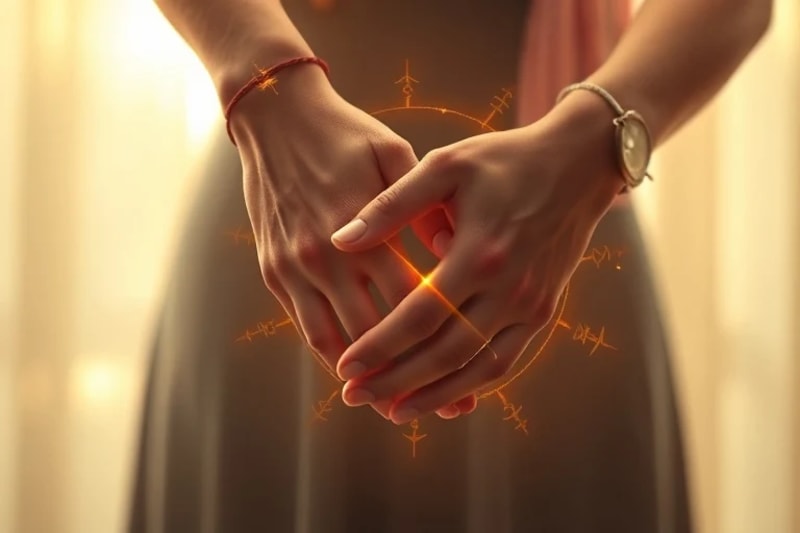
A visual metaphor for the unseen forces and emotional connections that bind individuals, hinting at both psychological and astrological influences.
By integrating the insights of attachment theory with the predictive and descriptive power of synastry, we can uncover deeper layers of relational compatibility, conflict, and growth potential. This interdisciplinary perspective allows for a nuanced exploration of how early life experiences, reflected in our natal charts, manifest in our adult relationships, and how the unique energetic blueprint of a partnership influences our sense of security, intimacy, and autonomy.
Introduction to Synastry and Attachment Theory
Synastry, in astrology, is the art of comparing two natal charts to understand the dynamics between individuals. It highlights areas of harmony, challenge, attraction, and repulsion, offering a blueprint of the relationship's energetic landscape. Attachment theory, developed by John Bowlby and expanded by Mary Ainsworth, is a psychological model that describes the long-term interpersonal relationships between humans, focusing on how early experiences with caregivers shape our expectations and behaviors in adult relationships.
The convergence of these two fields proposes that our natal chart, particularly the Moon, Venus, Mars, and Saturn placements, along with specific house overlays, can provide profound insights into our inherent attachment style and how it interacts with another person's. This holistic view moves beyond simple compatibility, offering a framework to understand the psychological underpinnings of our cosmic connections.
Attachment Theory: A Psychological Framework
Attachment theory posits that humans are born with an innate psychobiological system that motivates them to seek proximity to significant others (attachment figures) when distressed, threatened, or in need. The quality of these early interactions shapes an individual's "internal working models" – cognitive and emotional schemas that guide their perceptions, emotions, and behavior in relationships throughout life. These models typically coalesce into distinct attachment styles:
- Secure Attachment: Characterized by comfort with intimacy and interdependence, a healthy balance between closeness and autonomy, and trust in others' availability and responsiveness.
- Anxious-Preoccupied Attachment: Marked by a strong desire for intimacy, fear of abandonment, and often a preoccupation with the relationship. Individuals may be overly dependent and seek constant reassurance.
- Dismissive-Avoidant Attachment: Individuals tend to value independence and self-sufficiency, often suppressing emotions and avoiding close intimacy. They may appear emotionally distant or uncomfortable with vulnerability.
- Fearful-Avoidant (Disorganized) Attachment: A complex style characterized by a desire for intimacy coupled with a fear of it, often stemming from inconsistent or frightening early caregiving. Individuals may exhibit contradictory behaviors, pushing others away while simultaneously craving connection.
Understanding these styles is crucial for self-awareness and navigating relational challenges. They provide a lens through which we can interpret our own and our partners' behaviors and needs.
Synastry: Astrological Interconnections in Relationships
Synastry analysis involves superimposing one person's natal chart onto another's, examining the aspects (angles) formed between their planets, and how one person's planets fall into the houses of the other's chart. This reveals specific points of connection and friction. For a foundational understanding of the celestial bodies involved, it's beneficial to explore Planets in Astrology: Understanding Your Natal Chart.
Key astrological components in synastry include:
- Planets: Each planet represents a different psychological function or life area. For attachment, the Moon (emotions, security), Venus (love, affection), Mars (desire, assertion), and Saturn (commitment, fears) are particularly significant.
- Aspects: The angles between planets (conjunction, opposition, square, trine, sextile) indicate the nature of their interaction – harmonious or challenging.
- Houses: When one person's planet falls into another's house, it activates that area of life for the house owner, showing where the relationship's energy will be felt most acutely.
Synastry goes beyond superficial compatibility, delving into the core psychological and energetic exchanges that define a relationship, offering insights into its strengths, weaknesses, and potential for evolution.
Planetary Aspects Reflecting Attachment Styles
Certain synastry aspects can strongly correlate with the dynamics of attachment styles. These are not deterministic but rather indicative of energetic tendencies and predispositions within the relationship.
Symbolic representation of the intricate mechanisms at play when astrological influences meet psychological frameworks.
- Moon Aspects: The Moon governs our emotional nature, security needs, and unconscious patterns. Harmonious Moon aspects (trine, sextile) between charts often foster secure attachment, creating a sense of emotional safety and mutual understanding. Challenging Moon aspects (square, opposition) can indicate emotional misunderstandings, fluctuating moods, or a struggle to meet each other's needs, potentially triggering anxious or avoidant patterns. Moon-Saturn aspects, especially hard ones, can point to fears of abandonment or emotional restriction, echoing avoidant tendencies.
- Venus Aspects: Venus rules love, affection, and how we give and receive intimacy. Strong Venus connections (conjunction, trine to personal planets) can indicate a natural flow of affection and a shared love language, supporting secure attachment. Difficult Venus aspects might reveal differing needs for intimacy or expressions of love, leading to frustration or feelings of being unloved, potentially exacerbating anxious or avoidant behaviors.
- Mars Aspects: Mars represents desire, assertion, and how we handle conflict. Harmonious Mars aspects can facilitate healthy conflict resolution and passionate connection. Challenging Mars aspects (square, opposition) can lead to power struggles, arguments, or a tendency to withdraw, which can be particularly triggering for anxious or avoidant individuals.
- Saturn Aspects: Saturn is the planet of commitment, responsibility, and fear. Saturn aspects in synastry are crucial for understanding the long-term viability and challenges of a relationship. Saturn conjunct or square personal planets can create a sense of obligation, restriction, or fear of commitment, often reflecting avoidant patterns or creating anxiety about the relationship's future. However, well-integrated Saturn aspects can provide stability and a deep sense of commitment, fostering secure attachment over time.
- Chiron Aspects: Chiron, the wounded healer, can highlight core wounds related to attachment. Aspects to Chiron can reveal where partners trigger each other's deepest insecurities or past traumas, offering opportunities for healing if approached consciously.
These planetary interactions provide a complex tapestry of how our innate emotional wiring meets that of another, shaping the attachment landscape of the relationship.
House Overlays and Relational Security
When one person's planets fall into the houses of another's chart, it illuminates the specific areas of life where their energies will intertwine and influence each other's sense of security and attachment.
- Planets in the 4th House: The 4th house rules home, roots, emotional foundations, and early conditioning. When a partner's planet (especially Moon or Saturn) falls into your 4th house, it can deeply impact your sense of emotional security. A supportive planet here can foster a feeling of home and belonging, while a challenging one might stir up unresolved family issues or fears related to stability, influencing attachment behaviors.
- Planets in the 7th House: The 7th house governs partnerships, open enemies, and how we relate to others one-on-one. Planets falling here highlight the nature of the partnership. Venus or Moon in the 7th can indicate a strong desire for partnership and a comfortable relational dynamic, supporting secure attachment. Challenging planets might bring projections, conflict, or a tendency to seek external validation, potentially triggering anxious or avoidant responses.
- Planets in the 8th House: The 8th house deals with intimacy, shared resources, trust, power dynamics, and transformation. Planets here can indicate profound psychological bonding and a deep level of intimacy, but also potential for power struggles, jealousy, or issues around vulnerability. This house is critical for understanding the depth of attachment and the challenges of merging lives.
- Planets in the 12th House: The 12th house rules the subconscious, hidden matters, and self-undoing. Planets falling here can bring a sense of karmic connection, but also unconscious patterns, hidden fears, or a tendency to idealize or misunderstand the partner, which can complicate attachment dynamics and lead to confusion or disillusionment.
These house overlays provide a spatial context for how partners impact each other's psychological landscape, offering clues to where attachment patterns are likely to be activated or challenged.
The Role of Karmic Nodes in Attachment Patterns
The Lunar Nodes (North Node and South Node) represent our karmic path, past life influences, and soul's evolutionary direction. In synastry, nodal connections are highly significant, often indicating a fated or karmic bond that deeply influences attachment. For a deeper dive into these karmic patterns, consider exploring South Node Transits: Releasing Past Patterns for Growth.
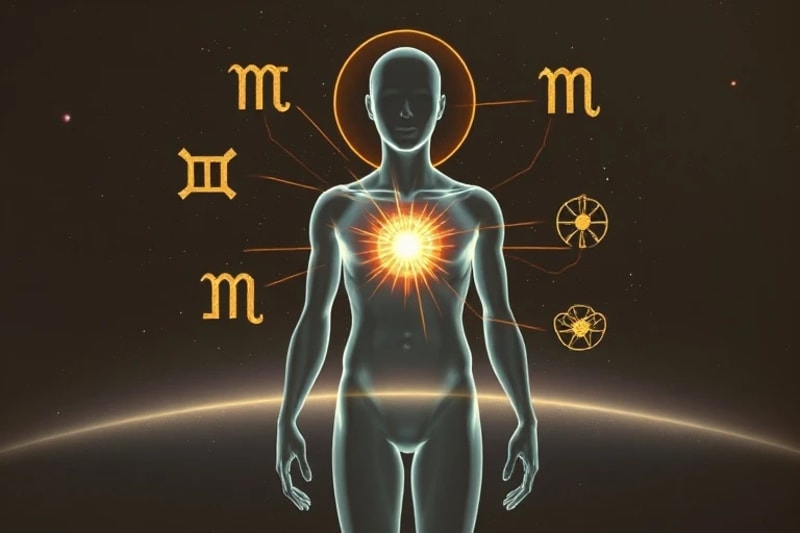
An abstract illustration of the individual's energetic field interacting with universal astrological principles.
- North Node Connections: When a partner's planet aspects your North Node, or vice versa, it suggests that the relationship is instrumental in guiding you towards your evolutionary path. These connections can feel exciting and growth-oriented, encouraging a more secure and conscious form of attachment as you both move towards your higher purpose.
- South Node Connections: Aspects to the South Node often indicate familiar, comfortable, but potentially stagnant patterns from past lives or ancestral lines. While these connections can feel instantly comfortable, they might also reinforce old, unhelpful attachment behaviors if not consciously addressed. A partner's planet on your South Node might feel like a "soulmate" connection, but it could also bring up old wounds or patterns that need to be released for growth. This often ties into concepts like the Vertex Anti-Vertex: Fated Encounters, Soulmate Connections, which can highlight significant, often karmic, relationships.
Understanding these nodal connections provides a deeper context for the "why" behind certain attachment patterns and the karmic lessons embedded within a relationship.
Integrating Synastry and Attachment for Relationship Growth
The true power of Synastry Attachment Theory lies in its practical application for fostering healthier relationships. By identifying specific astrological triggers for attachment behaviors, individuals and couples can gain profound self-awareness and develop strategies for conscious relating.
For example, if synastry reveals a challenging Moon-Saturn aspect, indicating a partner's fear of emotional closeness, the securely attached individual can understand this as an energetic predisposition rather than a personal rejection. Conversely, an anxiously attached individual might learn to recognize their own triggers when a partner's Mars squares their Venus, leading to a feeling of being unloved or unheard. This awareness allows for proactive communication and empathy, transforming potential conflicts into opportunities for growth.
This integrative approach encourages couples to:
- Identify Triggers: Recognize which planetary aspects or house overlays activate specific attachment fears or behaviors in themselves and their partner.
- Communicate Consciously: Use astrological insights to frame discussions about emotional needs, fears, and expectations.
- Cultivate Empathy: Understand that certain behaviors stem from deep-seated patterns, both psychological and astrological, fostering compassion.
- Promote Healing: Work through challenging aspects, recognizing them as areas for mutual growth and transformation. Even Planetary Debilitations: Navigating Challenges and Growth in a chart can be understood and worked with.
This framework empowers individuals to move beyond reactive patterns, fostering secure and fulfilling connections.
Challenges and Ethical Considerations
While Synastry Attachment Theory offers profound insights, it is essential to approach it with caution and ethical awareness. Astrology should never be used to pathologize or label individuals, nor should it replace professional psychological counseling when needed. The goal is empowerment and understanding, not fatalism.
Challenges include the complexity of interpreting multiple astrological factors simultaneously and the potential for misinterpretation if not approached with sufficient knowledge and sensitivity. It is vital to remember that individuals always have free will and the capacity for growth, regardless of their astrological blueprint or early attachment experiences. This theory serves as a map, not a destiny, guiding us toward greater self-awareness and more conscious relationship choices.
Conclusion
Synastry Attachment Theory represents an exciting frontier in understanding human relationships. By weaving together the profound insights of psychological attachment theory with the ancient wisdom of astrological synastry, we gain a richer, multi-dimensional perspective on why we connect, how we love, and the challenges we face in our most intimate bonds. This integrated approach empowers individuals to navigate their relationships with greater awareness, empathy, and a deeper appreciation for the cosmic and psychological forces that shape their journey together.
The information provided in this article is for educational and informational purposes only and is not intended as a substitute for professional psychological or astrological advice. Always consult with a qualified professional for any personal concerns.
Explore More Astrological Insights
Vertex Anti-Vertex: Fated Encounters, Soulmate Connections
South Node Transits: Releasing Past Patterns for Growth
Lunar Phases Guided Meditation for Emotional Well-being
Space Clearing Techniques: Energetic Cleansing for Home and Office
Astro-Linguistics Sigil Magic Manifestation Guide
Mercury Astrology: Communication, Intellect, Learning Explained
Rat Horse Compatibility: Zodiac Clash of Wills
Medical Astrology: Chronic Conditions, Planetary Debilities, Rulerships
Astrocartography Career Success: Professional Power Zones
Chakra Healing Basics: Balancing Your Energy Centers
Fixed Stars Galactic Alignment Activating Soul Cosmic Purpose
Planets in Astrology: Understanding Your Natal Chart
Biophilic Manifestation Nature's Blueprint: Harmonizing Intentions
Source: Hybrid content assisted by AI and human editorial supervision.


Comments
Post a Comment