
Advanced Astrological Ethics: Navigating AI, Big Data, and Collective Trends
The intersection of ancient wisdom and cutting-edge technology presents a fascinating frontier, particularly in the realm of astrology. As artificial intelligence (AI) and big data analytics become increasingly sophisticated, their application to astrological interpretation raises profound ethical questions. Advanced astrological ethics is not merely about personal conduct; it encompasses the responsible use of powerful tools that can shape individual perceptions, collective behaviors, and societal narratives.
This exploration delves into the intricate challenges and opportunities that emerge when astrological insights are processed through algorithms and vast datasets. It requires a nuanced understanding of both the potential for enhanced accuracy and the risks of misinterpretation, bias, and the erosion of free will. Our goal is to establish a framework for ethical engagement, ensuring that technological advancements serve to enlighten rather than to constrain human experience.
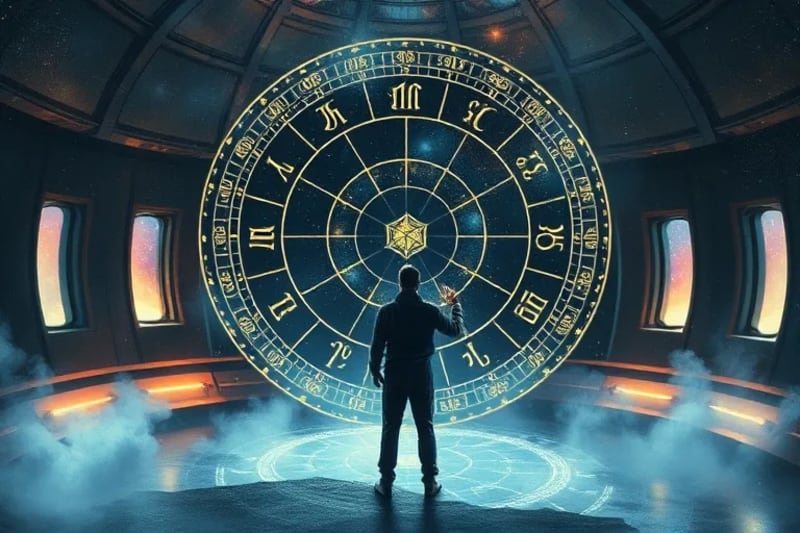
A futuristic scene where astrological insights merge with advanced data analytics, highlighting the complex ethical landscape.
The rapid evolution of AI and big data capabilities compels us to re-evaluate traditional ethical boundaries. Astrologers and data scientists alike must collaborate to forge principles that uphold integrity, respect individual autonomy, and foster a deeper, more informed understanding of cosmic influences. This article outlines key ethical considerations and proposes best practices for navigating this evolving landscape.
Here is an overview of the topics we will cover:
Table of Contents
- The Confluence of Astrology, AI, and Big Data
- Ethical Imperatives in Astrological Data Interpretation
- Navigating Predictive Analytics and Free Will
- Collective Trends and Astrological Archetypes
- Best Practices for Ethical Astrological AI Development
- The Future of Astrological Ethics in a Data-Driven World
The Confluence of Astrology, AI, and Big Data
Astrology, historically reliant on intricate calculations and intuitive interpretation, is now encountering the transformative power of AI and big data. AI algorithms can process vast amounts of astrological data, including birth charts, planetary transits, and historical events, at speeds and scales impossible for human analysis. This capability opens new avenues for pattern recognition and correlation discovery.
Big data, encompassing everything from individual birth details to global socio-economic indicators, provides the raw material for these algorithms. By cross-referencing astrological configurations with real-world outcomes, AI can potentially identify statistical correlations that might refine our understanding of planetary influences. This integration promises to move astrology beyond anecdotal evidence towards a more empirically informed practice.
However, this confluence also introduces complexities. The sheer volume of data and the opaque nature of some AI models (the "black box" problem) can make it challenging to understand *why* certain correlations are identified. This necessitates a critical approach, ensuring that technological tools augment, rather than replace, human wisdom and ethical oversight in astrological practice.
The potential applications are diverse, from personalized astrological readings that adapt to real-time data to broader analyses of collective trends. For instance, AI could analyze millions of birth charts alongside career trajectories, relationship outcomes, or health patterns, identifying statistically significant astrological markers. This could lead to more precise and evidence-based astrological insights.
Abstract visualization of astrological data flowing through complex digital networks, highlighting interconnectedness.
This integration also facilitates the study of Cosmic Sociology, where celestial mechanics are analyzed in conjunction with global consciousness trends. By observing how planetary alignments correlate with shifts in societal mood, technological adoption, or political climates, we can gain a deeper understanding of the underlying rhythms that shape human civilization. The challenge lies in interpreting these correlations responsibly, avoiding deterministic conclusions.
Ethical Imperatives in Astrological Data Interpretation
The ethical landscape of astrological data interpretation is fraught with critical considerations. Paramount among these is data privacy. Astrological charts often contain highly personal information, including birth dates, times, and locations, which can be linked to individuals. The collection, storage, and processing of such sensitive data demand robust security measures and transparent consent protocols.
Another significant concern is algorithmic bias. AI models are trained on existing data, which may reflect historical biases or incomplete representations. If the training data for astrological AI is skewed, the interpretations generated could perpetuate stereotypes or misrepresent certain demographic groups. Ensuring diverse and representative datasets is crucial for fair and equitable astrological insights.
The risk of deterministic interpretations also looms large. While astrology offers insights into potential pathways and energies, it traditionally emphasizes free will and personal agency. AI-driven predictions, if presented as absolute truths, could disempower individuals, leading them to believe their fate is sealed. Ethical practice requires framing AI-generated insights as probabilities and potentials, encouraging self-reflection and conscious choice.
Transparency in AI models is another ethical imperative. Users should have a clear understanding of how an AI-powered astrological system arrives at its conclusions. This includes knowledge about the data sources, algorithms used, and the limitations of the technology. Without transparency, trust erodes, and the potential for manipulation or misunderstanding increases significantly.
Navigating Predictive Analytics and Free Will
The allure of predictive analytics in astrology is undeniable, offering glimpses into future trends and potential challenges. AI can enhance this by identifying complex patterns in transits and progressions that correlate with specific life events. However, this capability must be handled with extreme care to preserve the concept of free will, a cornerstone of most spiritual and philosophical traditions.
Ethical astrological AI should focus on providing guidance and awareness, not on dictating outcomes. For example, instead of predicting "you will lose your job," an ethical AI might suggest "transits indicate significant professional restructuring, offering opportunities for re-evaluation and new directions." This empowers the individual to proactively engage with cosmic energies rather than passively accept a predetermined fate.
The concept of Solar Return Guide emphasizes intentional self-development and annual vision. AI can be a powerful tool in this context, helping individuals identify optimal periods for setting intentions, pursuing goals, or focusing on specific areas of growth. The ethical application here is to provide a roadmap of potential energetic landscapes, allowing for conscious navigation.
Moreover, the integration of Quantum Entanglement Synastry with predictive models could offer insights into non-local soul connections and their influence on individual destinies. This deepens the complexity, as predictions might then involve not just an individual's chart but their entanglement with others. The ethical challenge intensifies, requiring even greater sensitivity to interconnectedness and personal responsibility.
Collective Trends and Astrological Archetypes
Beyond individual charts, AI and big data offer unprecedented opportunities to analyze collective astrological trends. By aggregating data from millions of individuals, or by analyzing mundane astrology charts for nations and global events, AI can identify overarching archetypal patterns that manifest in societal shifts. This could provide valuable insights for policymakers, sociologists, and cultural analysts.
For instance, the analysis of specific planetary ingresses or aspects across historical periods could reveal correlations with economic booms, social unrest, or technological revolutions. This macro-level astrological analysis, supported by data, moves beyond personal horoscopes to offer a framework for understanding the collective human journey. The ethical responsibility here lies in presenting these correlations as observational data, not as prophecies.

Symbolic representation of the delicate balance between traditional astrological knowledge and contemporary data science ethics.
Understanding these collective astrological archetypes can inform our approach to global challenges. For example, recognizing a period of intense Saturnian influence might suggest a time for structural reforms and accountability, while a strong Jupiterian presence could indicate opportunities for expansion and optimism. Ethical application involves using these insights to foster resilience and informed decision-making within communities.
However, it is crucial to avoid the pitfalls of oversimplification or reductionism. Collective trends are complex, influenced by myriad factors beyond astrology. AI's role should be to highlight potential astrological correlations as one layer of understanding, integrated with sociological, economic, and historical analyses. The goal is to enrich our perspective, not to provide a singular, deterministic explanation.
Best Practices for Ethical Astrological AI Development
Developing astrological AI ethically requires a multi-faceted approach, integrating principles from data science, ethics, and traditional astrological wisdom. Here are some best practices:
- Data Privacy by Design: Implement robust encryption, anonymization techniques, and strict access controls for all personal astrological data. Adhere to global data protection regulations like GDPR.
- Bias Mitigation: Actively work to identify and correct biases in training datasets. This may involve using diverse data sources, employing fairness metrics, and regular auditing of AI outputs for discriminatory patterns.
- Transparency and Explainability (XAI): Design AI systems that can explain their reasoning and the basis of their astrological interpretations. Users should be able to understand how a particular conclusion was reached, fostering trust and critical engagement.
- Human-in-the-Loop: Maintain human oversight and intervention in AI-driven astrological systems. Expert astrologers should review and validate AI-generated insights, especially for sensitive or critical interpretations.
- User Empowerment: Frame all AI-generated astrological insights as tools for self-discovery and empowerment, emphasizing personal agency and the dynamic nature of destiny. Avoid definitive or fatalistic language.
- Interdisciplinary Collaboration: Foster collaboration between astrologers, data scientists, ethicists, and psychologists to ensure a holistic approach to development and deployment.
- Continuous Ethical Review: Establish ongoing processes for reviewing the ethical implications of new AI features, data sources, and interpretive models.
These practices are essential for building AI tools that respect individual dignity and enhance the understanding of cosmic influences. They ensure that technology serves as a beneficial partner in the astrological journey, rather than a source of potential harm or misguidance. The principles of Biometric Divination also highlight the importance of self-discovery and intuition, which should be preserved and enhanced, not overshadowed, by AI.
The Future of Astrological Ethics in a Data-Driven World
The future of astrological ethics in a data-driven world is one of continuous adaptation and responsible innovation. As AI capabilities expand, so too will the potential for both profound insight and ethical dilemmas. The ongoing dialogue between astrologers, technologists, and ethicists will be crucial in shaping this future.
We can anticipate AI models becoming even more sophisticated, capable of integrating complex variables, including psychological profiles, genetic predispositions, and environmental factors, into astrological interpretations. This holistic approach could lead to an unprecedented level of personalized insight, but it also amplifies the need for stringent ethical safeguards.
The development of ethical guidelines and regulatory frameworks specifically for AI in spiritual and interpretive practices will become increasingly important. These frameworks should address issues of data ownership, algorithmic accountability, and the prevention of misuse. Education for both practitioners and the public will also be vital, fostering critical thinking about AI-generated astrological content.
Ultimately, the ethical integration of AI and big data into astrology offers a path toward a more informed, nuanced, and empowering understanding of our place in the cosmos. By prioritizing privacy, mitigating bias, fostering transparency, and upholding human agency, we can harness these powerful tools to enrich human experience and contribute positively to collective consciousness.
The journey ahead requires vigilance, open-mindedness, and a commitment to ethical principles that honor both the ancient wisdom of astrology and the transformative potential of modern technology. It is a call to conscious evolution, where technology serves as a mirror reflecting our highest intentions and deepest truths.
Further Exploration:
Deepen your understanding of astrological concepts and their modern applications:
- Zodiac Decanates Planetary Rulerships Mastering Sun Sign Nuances
- Lilith Astrology: Dark Feminine, Untamed Instincts
- Chinese Zodiac Elements: Deep Dive into Wood, Fire, Earth, Metal, Water
- Neuroastrología Kármica: Plasticidad Cerebral Sanar Patrones
- Predicciones Carrera Tránsitos: Optimiza Ruta Profesional
Source: Hybrid content assisted by AI and human editorial supervision.


Comments
Post a Comment