
AI Chinese Zodiac Predictive Tools Ancient Oracles
The ancient wisdom of the Chinese Zodiac has guided individuals for millennia, offering insights into personality, compatibility, and future prospects based on birth year. Rooted in celestial observations and philosophical principles, this system has traditionally relied on the interpretive skills of experienced astrologers. However, in an era defined by rapid technological advancement, artificial intelligence (AI) is beginning to intersect with these time-honored practices, creating a new frontier for predictive tools.
This article delves into the fascinating convergence of ancient oracles and modern insights, exploring how AI is being developed and utilized to analyze, interpret, and even enhance Chinese Zodiac predictions. We will examine the underlying principles of this astrological system, the traditional methods of forecasting, and the innovative ways AI is transforming these practices, offering both unprecedented opportunities and significant challenges.
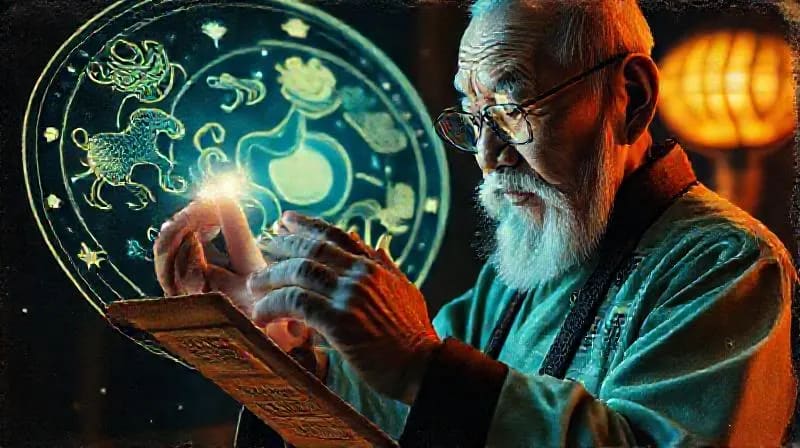
Conceptual blend of ancient astrological wisdom and modern AI interpretation, symbolizing a new era of predictive insights.
Table of Contents
- The Foundations of Chinese Zodiac Astrology
- Traditional Predictive Methods and Their Nuances
- The Dawn of AI in Astrological Analysis
- How AI Tools Work for Chinese Zodiac Predictions
- Benefits and Limitations of AI Predictive Tools
- Ethical Considerations and the Future Outlook
The Foundations of Chinese Zodiac Astrology
The Chinese Zodiac, known as Sheng Xiao, is a repeating cycle of 12 years, with each year represented by an animal and its reputed attributes. This system is deeply interwoven with Chinese culture, history, and philosophy, influencing everything from personal relationships to major life decisions. Unlike Western astrology, which is based on monthly zodiac signs determined by the sun's position, the Chinese Zodiac assigns an animal sign based on the lunar year of birth.
The 12 animals—Rat, Ox, Tiger, Rabbit, Dragon, Snake, Horse, Goat, Monkey, Rooster, Dog, and Pig—are believed to have originated from a mythological race organized by the Jade Emperor. Each animal embodies distinct personality traits, strengths, and weaknesses, which are thought to be inherited by those born under its influence. Beyond the animal signs, the system incorporates the Five Elements (Wood, Fire, Earth, Metal, Water) and the principles of Yin and Yang, adding layers of complexity to individual profiles and yearly forecasts.
Understanding the interplay of these elements and principles is crucial for accurate interpretations. For instance, a person born in a Wood Dragon year will have different characteristics and fortunes than someone born in a Fire Dragon year, despite sharing the same animal sign. This intricate framework provides a rich dataset for analysis, both human and artificial. For a deeper dive into the origins and cultural significance, explore the Chinese Zodiac: Myths, Origins, Cultural Significance.
Traditional Predictive Methods and Their Nuances
Traditionally, Chinese Zodiac predictions involve a holistic approach, considering not only the birth year but also the month, day, and even hour of birth, which correspond to specific animal signs and elements. This creates a "Four Pillars of Destiny" or Bazi chart, a highly personalized map of an individual's life path. Expert astrologers meticulously analyze these pillars, along with the prevailing elemental cycles and the current year's animal sign, to provide detailed forecasts.
Key aspects of traditional interpretation include:
- Compatibility Analysis: Determining harmonious or conflicting relationships between individuals based on their animal signs and elemental interactions. For example, the compatibility between a Rat and Rabbit can be analyzed in detail.
- Annual Forecasts: Predicting general trends and potential challenges or opportunities for each animal sign in a given year, influenced by the ruling animal and element of that year.
- Life Path Insights: Offering guidance on career, health, family, and personal development based on the unique Bazi chart.
- Remedies and Enhancements: Suggesting specific actions, colors, or objects to balance elemental energies and mitigate negative influences.
The depth of traditional readings often relies on the astrologer's intuition, experience, and ability to synthesize complex symbolic information with an understanding of human psychology and life circumstances. This qualitative aspect has historically been difficult to quantify or automate, posing a unique challenge for AI integration.
The Dawn of AI in Astrological Analysis
The advent of artificial intelligence, particularly machine learning and natural language processing (NLP), has opened new avenues for analyzing vast datasets and identifying patterns that might elude human observation. In the context of Chinese Zodiac, AI offers the potential to process centuries of astrological texts, historical records, and personal birth data to uncover correlations and refine predictive models. This is akin to how AI is transforming other complex fields, from medicine to finance, by identifying intricate relationships within large data pools.
Visual representation of AI algorithms processing astrological data and zodiac patterns.
AI's strength lies in its capacity for data aggregation and pattern recognition. By feeding AI algorithms with historical Bazi charts, corresponding life events, and traditional interpretations, developers aim to train models that can generate predictions with increasing accuracy. This approach moves beyond simple rule-based systems, leveraging machine learning to identify subtle nuances and complex interactions between the various components of a zodiac chart.
The goal is not necessarily to replace human astrologers but to provide powerful tools that can assist in analysis, offer alternative perspectives, and make astrological insights more accessible to a wider audience. AI can quickly cross-reference millions of data points, something a human simply cannot do, thus potentially revealing previously unobserved patterns or strengthening existing correlations. This mirrors the broader trend of Big Data and Personalized Health, where data analysis leads to tailored insights.
How AI Tools Work for Chinese Zodiac Predictions
AI-powered Chinese Zodiac predictive tools typically operate through several key stages:
- Data Collection and Digitization: This involves digitizing vast amounts of traditional astrological texts, Bazi charts, historical records of events, and personal data (with consent and anonymization). This forms the training dataset for the AI.
- Feature Engineering: Astrological concepts like animal signs, elements, Yin/Yang, and their interactions are translated into numerical features that AI algorithms can process. This is a critical step, as the quality of these features directly impacts the model's performance.
- Machine Learning Models: Various machine learning techniques are employed, including:
- Supervised Learning: Training models on labeled data (e.g., Bazi charts paired with known life outcomes) to predict future events or personality traits.
- Natural Language Processing (NLP): Analyzing traditional astrological texts to extract meanings, concepts, and interpretive rules, helping the AI understand the nuances of the language used by human astrologers.
- Pattern Recognition: Identifying recurring patterns and correlations between specific chart configurations and life experiences across large populations.
- Prediction Generation: Once trained, the AI model can take a new individual's birth data as input and generate a personalized report, including personality analysis, compatibility assessments, and annual forecasts.
- Continuous Learning: Advanced AI systems are designed to continuously learn and improve their accuracy by incorporating new data and feedback, adapting to evolving patterns and refining their predictive capabilities over time.
These tools can provide users with instant, detailed reports that would traditionally take a human astrologer significant time to compile. They can also offer comparative analyses, such as assessing compatibility between multiple individuals or exploring different life path scenarios based on minor adjustments to birth data.
Benefits and Limitations of AI Predictive Tools
The integration of AI into Chinese Zodiac predictions brings a host of benefits, alongside inherent limitations that warrant careful consideration.

Abstract depiction of cosmic energies and ancient oracles, representing AI's mystical interpretations.
Benefits:
- Accessibility: AI tools can make Chinese Zodiac insights available to a global audience, overcoming geographical and language barriers that might limit access to traditional masters.
- Speed and Efficiency: Predictions that once took hours or days can be generated in seconds, offering immediate gratification and facilitating quick comparative analyses.
- Data-Driven Insights: By processing massive datasets, AI can uncover subtle correlations and statistical probabilities that human analysis might miss, potentially leading to more nuanced or accurate predictions.
- Consistency: AI models provide consistent interpretations based on their training data, eliminating potential biases or variations that might arise from different human astrologers.
- Educational Value: These tools can serve as educational platforms, allowing users to explore their charts and learn about the underlying principles of Chinese Zodiac in an interactive way.
Limitations:
- Lack of Intuition and Empathy: AI cannot replicate the human element of intuition, empathy, and the ability to provide personalized, compassionate guidance based on a deep understanding of individual circumstances.
- Data Bias: The accuracy and fairness of AI predictions are heavily dependent on the quality and representativeness of the training data. Biases in historical data could lead to biased or inaccurate outputs.
- Interpretive Depth: While AI can identify patterns, it struggles with the nuanced, symbolic, and often poetic interpretations that characterize traditional astrology. It may lack the capacity to explain the "why" behind a prediction in a truly meaningful way.
- Over-Reliance: There's a risk that individuals might over-rely on AI predictions, potentially diminishing critical thinking or personal agency.
- Ethical Concerns: Issues around data privacy, the potential for misuse of predictive insights, and the responsibility for AI-generated advice are significant.
The challenge lies in finding a balance where AI augments human expertise rather than attempting to replace its irreplaceable qualities. The concept of Vibrational Manifestation Esoteric Secrets also highlights the subjective and energetic aspects often missing from purely data-driven analysis.
Ethical Considerations and the Future Outlook
As AI predictive tools for Chinese Zodiac become more sophisticated, critical ethical considerations come to the forefront. Data privacy is paramount; users must be assured that their personal birth information is handled securely and anonymously. Furthermore, the responsible use of AI in fields touching upon personal destiny requires transparency about how predictions are generated and clear disclaimers regarding their nature as guidance rather than absolute truths.
The future of AI in Chinese Zodiac predictions likely involves a hybrid model. Imagine a scenario where AI performs the initial, data-intensive analysis, identifying complex patterns and generating preliminary reports. These reports could then be reviewed and enriched by human astrologers, who would add the layers of intuition, empathy, and personalized context that AI currently lacks. This collaborative approach could offer the best of both worlds: the efficiency and analytical power of AI combined with the profound wisdom and human touch of experienced practitioners.
Moreover, AI could play a significant role in preserving and disseminating ancient astrological knowledge. By digitizing and analyzing old texts, AI can help researchers understand the evolution of these systems and make them accessible to new generations. This ensures that the rich heritage of the Chinese Zodiac continues to thrive, even as it adapts to modern technological landscapes. The broader implications for understanding Mundane Astrology: Planetary Cycles, Global Events could also benefit from such advanced analytical capabilities.
Ultimately, AI Chinese Zodiac predictive tools represent a fascinating experiment in bridging the gap between ancient spiritual practices and cutting-edge technology. They offer a glimpse into a future where data science can illuminate paths traditionally understood through intuition and centuries of accumulated wisdom, providing a new dimension to self-discovery and understanding one's place in the cosmic tapestry.
The integration of artificial intelligence into traditional astrological practices, such as the Chinese Zodiac, is an emerging field that requires careful consideration of both technological capabilities and ethical responsibilities.
While AI can process vast amounts of data to identify patterns and generate predictions, the nuanced, intuitive, and empathetic aspects of human interpretation remain invaluable.
The journey of integrating AI with ancient oracles is just beginning, promising a future where technology serves to deepen our connection to timeless wisdom, rather than detracting from it. The ongoing development will undoubtedly shape how we perceive and interact with predictive systems, blending the best of both worlds for a more informed and insightful understanding of our destinies.
Explore More Insights
Source: Hybrid content assisted by AI and human editorial supervision.


Comments
Post a Comment