
Cosmic Sociology: AI Mapping Global Consciousness Evolution
In an increasingly interconnected world, the concept of a "global consciousness" has moved from philosophical discourse to a tangible area of scientific inquiry. Cosmic Sociology, an emerging interdisciplinary field, seeks to understand the collective human experience and its evolution, particularly how it is shaped by technological advancements. At its core, this field investigates the intricate web of human interactions, beliefs, and shared experiences on a planetary scale, aiming to map the subtle shifts and overarching patterns that define our collective mental and emotional landscape.
The advent of artificial intelligence (AI) has provided unprecedented tools for this ambitious endeavor. AI algorithms can process vast amounts of data from social media, digital communications, scientific publications, and cultural artifacts, offering insights into the evolution of human thought, sentiment, and societal values. By analyzing these digital footprints, AI helps us to visualize and quantify the otherwise abstract notion of global consciousness, revealing how it adapts and transforms in response to global events, technological shifts, and cultural exchanges.
Table of Contents
- Understanding Cosmic Sociology and Global Consciousness
- The Historical Trajectory of Collective Consciousness
- Artificial Intelligence as a Lens for Global Consciousness
- The Digital Age: Accelerating Interconnectedness
- Integrating New Age Principles with AI Analysis
- Ethical Dimensions and Challenges
- The Future of Global Consciousness: A Synergistic Evolution
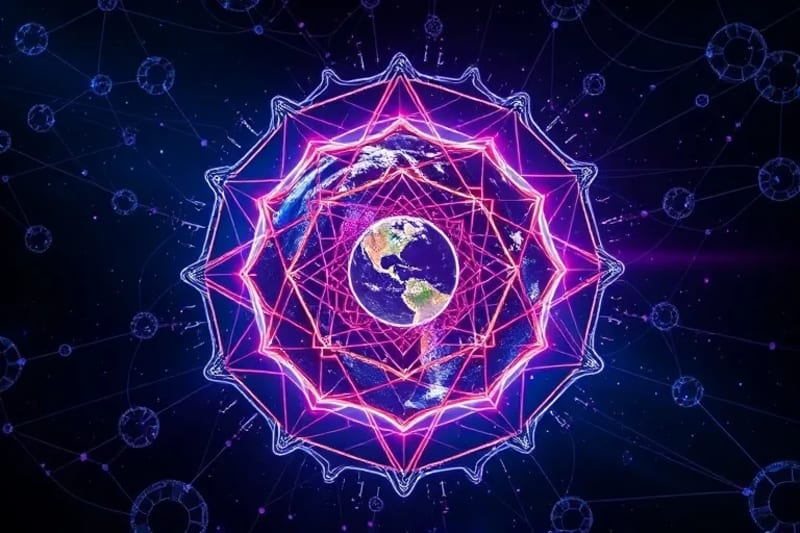
A conceptual rendering of AI algorithms visualizing the intricate connections within global consciousness, highlighting the digital age's influence.
Understanding Cosmic Sociology and Global Consciousness
Cosmic Sociology extends traditional sociological frameworks to encompass a broader, more holistic view of human society. It posits that humanity is not merely a collection of individuals or disparate groups, but an interconnected system with a collective consciousness that evolves over time. This consciousness is influenced by shared experiences, cultural narratives, scientific discoveries, and spiritual beliefs, forming a dynamic tapestry of human thought and emotion.
Global consciousness, in this context, refers to the emergent properties of this interconnected human system. It is the sum total of all individual consciousnesses, interacting and influencing one another, leading to collective trends, shifts in values, and shared understandings. While intangible, its effects can be observed in global movements, widespread adoption of new ideas, and synchronized responses to planetary challenges.
The digital age has amplified these connections, creating a global nervous system through the internet and social media. This unprecedented level of connectivity allows for the rapid dissemination of information and emotions, accelerating the evolution of global consciousness. Cosmic Sociology, therefore, seeks to provide a scientific lens through which these complex phenomena can be studied and understood, moving beyond anecdotal evidence to data-driven insights.
The Historical Trajectory of Collective Consciousness
The idea of a collective or global consciousness is not new, with roots in ancient philosophies and spiritual traditions. Thinkers from various eras have contemplated how individual minds might coalesce into a larger, shared awareness. Early concepts often emerged from religious or mystical perspectives, suggesting a universal mind or a spiritual interconnectedness among all beings.
In modern times, philosophers like Carl Jung introduced the concept of the collective unconscious, a reservoir of shared human experiences and archetypes. Sociologists like Émile Durkheim explored the idea of collective effervescence, where shared rituals and beliefs create a powerful sense of group solidarity and a heightened collective state. These foundational ideas laid the groundwork for understanding how human consciousness operates beyond the individual.
The evolution of communication technologies has played a crucial role in shaping the scale and intensity of this collective awareness. From oral traditions to written language, the printing press, and eventually mass media, each advancement has broadened the scope of shared human experience. The digital age marks the most significant leap, creating an instantaneous and pervasive global network that constantly feeds and reflects the global consciousness. This continuous feedback loop is what makes the current era so unique for studying these phenomena.
Artificial Intelligence as a Lens for Global Consciousness
AI's capacity to process and analyze vast datasets makes it an indispensable tool for mapping global consciousness. Traditional sociological methods, while valuable, often struggle with the sheer volume and complexity of global human interaction. AI, however, can identify subtle patterns, correlations, and emerging trends that would be invisible to human observers.
Key applications of AI in this field include:
- Sentiment Analysis: AI can gauge the prevailing emotional tone across social media, news articles, and public discourse, providing real-time insights into collective mood and sentiment.
- Topic Modeling: Algorithms can identify dominant themes and topics emerging in global conversations, revealing shared concerns, interests, and intellectual shifts.
- Network Analysis: AI maps the connections between individuals, groups, and ideas, illustrating how influence spreads and how collective thought forms and evolves.
- Predictive Analytics: By analyzing historical data, AI can forecast potential shifts in global consciousness, such as the rise of new social movements or changes in widely held beliefs.
For instance, AI can track the spread of specific ideas or memes across different cultures, showing how they are adopted, adapted, or rejected. This provides a quantitative measure of cultural diffusion and the interconnectedness of human thought. The ability to process multilingual data further enhances AI's power, breaking down linguistic barriers to reveal universal patterns in human experience. The insights gained can be profound, offering a new understanding of our collective psyche.
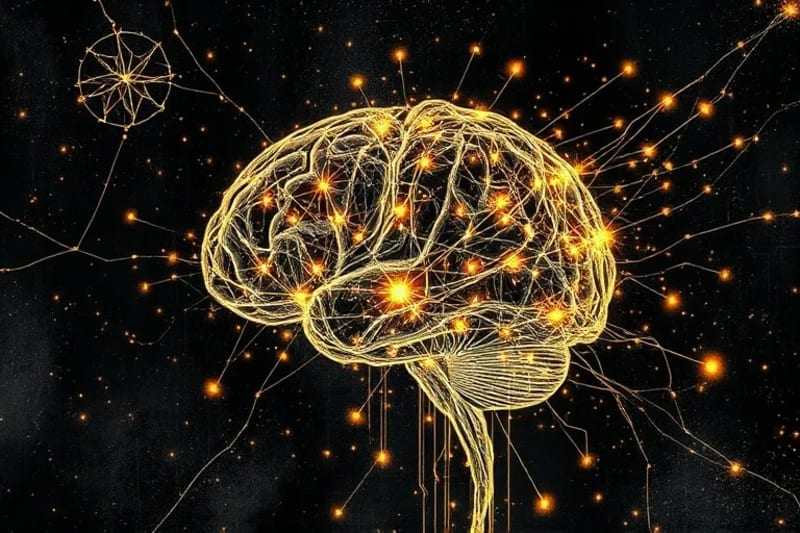
An artistic depiction of a digital brain, symbolizing the collective human mind as mapped and analyzed by advanced AI systems.
The Digital Age: Accelerating Interconnectedness
The digital age has fundamentally altered the landscape of human interaction, creating an unprecedented level of interconnectedness. Social media platforms, instant messaging, and global news networks ensure that events and ideas can traverse the globe in seconds. This constant flow of information and emotional resonance significantly impacts the evolution of global consciousness.
The rise of digital communities, often transcending geographical boundaries, fosters shared identities and collective actions. From online activism to global gaming communities, these digital spaces contribute to a sense of shared purpose and belonging, even among individuals who have never met in person. This phenomenon creates new challenges and opportunities for understanding collective behavior and the formation of global values.
However, this interconnectedness also brings its own set of complexities, including the spread of misinformation, echo chambers, and digital polarization. AI can help to identify these patterns, offering insights into how collective consciousness can be manipulated or fragmented. Understanding these dynamics is crucial for fostering a more harmonious and informed global society. The analysis of esoteric symbolism and its digital propagation can also reveal deeper cultural currents.
Integrating New Age Principles with AI Analysis
The New Age movement, with its emphasis on personal growth, spiritual awakening, and holistic well-being, offers a rich conceptual framework for understanding individual and collective consciousness. Concepts like guided meditation, mindfulness, positive energy, the law of attraction, manifestation, and energy healing, while often seen as subjective, can be explored through an AI-driven Cosmic Sociology lens.
AI can analyze the impact of these practices on collective well-being and societal trends:
- Guided Meditation & Mindfulness: AI can personalize guided meditation experiences based on individual biometric data and psychological profiles, optimizing their effectiveness. On a global scale, AI can track the prevalence and impact of mindfulness practices, correlating them with indicators of societal stress or well-being.
- Positive Energy & Law of Attraction: While abstract, the collective belief in positive energy and the law of attraction can influence societal outcomes. AI can analyze how positive affirmations and collective intentions manifest in real-world events, such as economic trends or social movements. It can identify patterns in collective thought that precede significant societal shifts.
- Manifestation & Energy Healing: AI can study the efficacy of manifestation techniques by analyzing vast datasets of individual and collective goals and their outcomes. In energy healing, AI could potentially analyze biofeedback data during sound bath healing sessions or other energy work, identifying physiological changes that correlate with perceived healing or well-being.
By applying rigorous data analysis to these seemingly subjective phenomena, Cosmic Sociology, aided by AI, can bridge the gap between spiritual insights and empirical observation. This approach allows for a deeper understanding of how individual spiritual practices can contribute to the larger tapestry of global consciousness and its evolution.
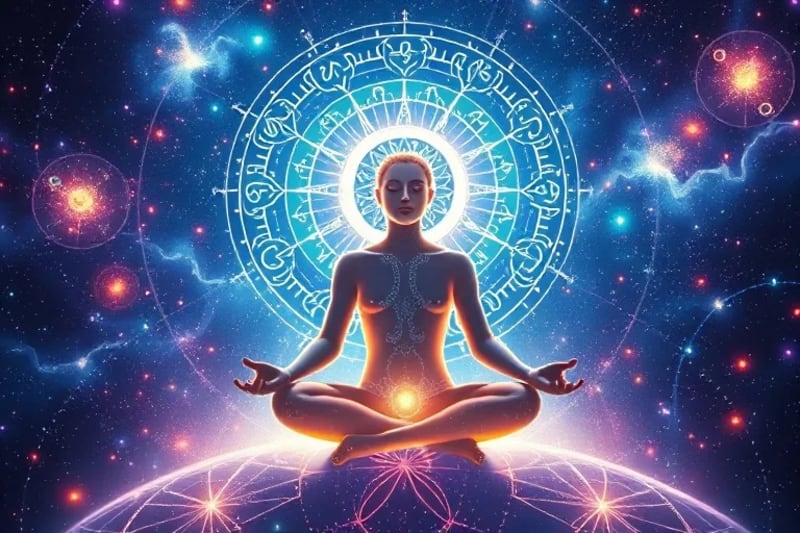
A visual representation of meditation enhanced by digital energy patterns, symbolizing the synergy between spiritual practice and AI analysis.
Ethical Dimensions and Challenges
While the potential of AI in mapping global consciousness is immense, it also raises significant ethical concerns. The collection and analysis of vast amounts of personal and collective data necessitate strict adherence to privacy principles. Ensuring anonymity and data security is paramount to prevent misuse or surveillance.
Another critical challenge is the potential for algorithmic bias. If the data used to train AI models reflects existing societal prejudices, the AI's analysis of global consciousness could perpetuate or even amplify these biases. Researchers must actively work to develop fair and unbiased algorithms, ensuring that the mapping of consciousness is inclusive and representative of all human experiences.
Furthermore, the interpretation of AI-generated insights requires careful consideration. The temptation to oversimplify complex phenomena or to use AI to control or manipulate collective thought must be resisted. The goal of Cosmic Sociology, aided by AI, should be to understand and empower, not to dictate or exploit. Transparency in data collection and algorithmic processes is essential for building trust and ensuring ethical application.
The Future of Global Consciousness: A Synergistic Evolution
The future of global consciousness, as mapped by AI through Cosmic Sociology, points towards a synergistic evolution. As AI becomes more sophisticated, its ability to discern subtle shifts in collective thought and emotion will only grow. This could lead to a deeper understanding of humanity's shared values, aspirations, and challenges, fostering greater empathy and cooperation on a global scale.
Imagine a future where AI can identify emerging global crises by detecting shifts in collective anxiety or despair, allowing for proactive interventions. Or where it can highlight areas of collective joy and innovation, inspiring further positive development. This integrated approach, combining scientific rigor with an understanding of spiritual and New Age principles, offers a powerful pathway to a more conscious and harmonious future.
Ultimately, AI in Cosmic Sociology serves as a mirror, reflecting our collective self back to us. By understanding the intricate dynamics of global consciousness, we gain the power to consciously guide its evolution towards greater wisdom, compassion, and sustainability. The journey of mapping global consciousness is not just about data; it's about understanding what it means to be human in an increasingly interconnected cosmos, and how we can collectively thrive. Exploring concepts like numerology can offer complementary perspectives on individual and collective paths.
Explore Further: Related Insights
- Numerology: Unveiling Soul and Destiny | StarPluto
- Electional Astrology: Choosing Best Times | StarPluto
- Past Life Regression: Soul's Journey Exploration | StarPluto
- Sound Bath Healing: Vibrational Therapy for Mind, Body, Spirit | StarPluto
- Esoteric Symbolism Tarot Planetary Transits Navigating Shifts
- Financial Astrology: Timing Investments, Market Trends Guide | StarPluto
- Midheaven Aspects Public Legacy Societal Contribution Guide | StarPluto
- Advanced Dragon Compatibility: Chinese Zodiac Dynamics | StarPluto
- Mundane Astrology: Planetary Cycles, Global Events | StarPluto
- Jupiter Retrograde: Re-evaluating Growth, Beliefs, Abundance | StarPluto
- Understanding the Twelve Houses: A Comprehensive Guide to Life's Spheres | StarPluto
- Cardinal, Fixed, Mutable Signs: Modalities in Astrology Explained | StarPluto
- IC Ruler Aspects: Unpacking Family Legacy, Emotional Foundation Guide | StarPluto
- Snake Chinese Zodiac: Meaning, Traits, and Influence | StarPluto
- Chinese Zodiac Compatibility: Five Elements Hidden Clashes | StarPluto
- Elizabeth Taylor: LGBTQ+ Activism, Legacy | Althox
- Chile Commercial Code: Books I & II, Historical Analysis | Althox
- Cloning Biotechnology: Legal Frameworks, Ethical Debates | Althox
- Metal Dog: Unwavering Loyalty, Chinese Horoscope Justice | AstroFuturo
- Guided Meditation Signs: Strengthen Natal Virtues | AstroFuturo
- Cymatics Planetary Sounds: Vibrational Art Auric Field | AstroFuturo
- Marian Prophecies: Urgent Call to Conversion and Hope | Prophecies of the Virgin
- Sacramental Confession: Healing and Spiritual Liberation | Prophecies of the Virgin
- Archangel Raphael: Divine Healer and Travel Guide | Prophecies of the Virgin
Source: Hybrid content assisted by AI and human editorial supervision.


Comments
Post a Comment