
Financial Astrology: Timing Investments, Market Trends Guide | StarPluto
Financial astrology is an intriguing and often debated discipline that explores the potential correlations between planetary movements and economic cycles. It posits that celestial phenomena, such as planetary alignments, retrogrades, and ingresses into different zodiac signs, can influence collective human psychology, which in turn drives market behavior and investment trends. While not a mainstream financial tool, its proponents argue that understanding these cosmic rhythms can offer a unique edge in forecasting market shifts and optimizing investment strategies.
This approach moves beyond conventional technical and fundamental analysis, delving into a more holistic view of market dynamics. It suggests that human emotions, often amplified on a collective scale, are deeply intertwined with natural cycles, including those observed in the cosmos. By studying historical market data alongside astrological charts, practitioners aim to identify recurring patterns and anticipate future market directions, from short-term fluctuations to long-term economic shifts.
Table of Contents
- Understanding Financial Astrology
- Historical Roots and Pioneers
- Key Astrological Elements in Finance
- Planetary Cycles and Market Trends
- Astrological Aspects and Market Volatility
- Zodiac Signs and Economic Sectors
- Practical Applications for Investors
- Distinction from Traditional Analysis
- Benefits and Limitations
- Ethical Considerations and Responsible Practice
- The Future of Financial Astrology
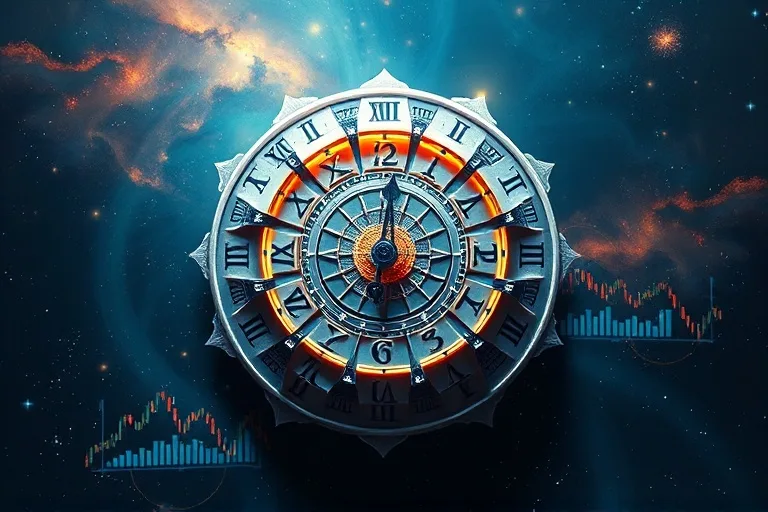
A conceptual digital illustration depicting the intricate relationship between Tarot Quantum Mechanics Intersecting Divination Reality and global market trends, symbolizing celestial influences on investment timing.
Understanding Financial Astrology
Financial astrology, at its core, is the study of how celestial events correlate with human economic activity. It operates on the premise that the same cosmic energies influencing individuals and global events also manifest in collective human behavior, particularly in areas like finance and commerce. This field seeks to identify cyclical patterns in planetary movements and link them to corresponding cycles of boom and bust, inflation and deflation, or specific market reversals.
Unlike traditional astrology, which often focuses on personal horoscopes, financial astrology applies these principles to broader economic indicators and specific financial instruments. It examines the birth charts of countries, corporations, and even the inception charts of financial markets themselves to predict their trajectory. The belief is that just as individuals have a unique astrological blueprint, so do economic entities, influencing their inherent strengths, weaknesses, and periods of growth or challenge.
Historical Roots and Pioneers
The practice of observing celestial bodies for earthly predictions dates back millennia, with ancient civilizations like the Babylonians, Egyptians, and Greeks using astronomical observations to inform agricultural, political, and even economic decisions. While not explicitly "financial astrology" as we know it today, these early practices laid the groundwork for understanding cosmic rhythms as indicators of earthly events.
In more recent history, several figures have been instrumental in developing modern financial astrology. One of the most prominent is W.D. Gann, an early 20th-century financial trader who developed unique methods for market forecasting based on geometry, numerology, and ancient mathematics, often believed to have astrological underpinnings. Although Gann himself was secretive about his exact methods, his work is widely studied by financial astrologers.
Other notable pioneers include Louise McWhirter, who published "Coins and Cycles" in 1938, detailing planetary influences on commodity prices, and George Bayer, another early 20th-century trader who explored planetary cycles in relation to market movements. Their foundational work continues to inspire contemporary practitioners who seek to refine and expand these methodologies using modern computational tools and extensive data analysis.
Key Astrological Elements in Finance
Financial astrology utilizes several core astrological components to analyze and predict market behavior. Understanding these elements is crucial for anyone looking to delve into this specialized field.
Planets: Each planet is associated with specific energies and themes that can manifest in financial markets. For instance, Jupiter is linked to expansion, growth, and optimism, often correlating with bull markets. Saturn, conversely, represents contraction, discipline, and restriction, frequently associated with bear markets or corrections. Uranus signifies innovation, disruption, and sudden changes, while Neptune relates to speculation, illusion, and bubbles. Pluto governs transformation, power dynamics, and deep structural changes within the economy.
Zodiac Signs: The twelve zodiac signs represent different qualities and characteristics that can influence various economic sectors or types of assets. For example, Taurus, an earth sign, is often linked to stability, real estate, and tangible assets, while Gemini, an air sign, might relate to communication, technology, and information-driven markets.
Houses: In a financial chart (e.g., for a company or a market), the twelve astrological houses represent different areas of life. The 2nd house typically governs personal finances, assets, and income, while the 8th house relates to shared resources, investments, debt, and corporate finance. The 10th house, representing public image and career, can reflect the overall reputation and performance of a company or market sector.
Aspects: Aspects are the angular relationships between planets. Conjunctions (0 degrees), oppositions (180 degrees), and squares (90 degrees) are considered significant. Harmonious aspects (trines, sextiles) might indicate periods of smooth growth or positive market sentiment, while challenging aspects (squares, oppositions) can signal volatility, corrections, or economic stress. Understanding these aspects is key to interpreting market shifts.
Planetary Cycles and Market Trends
The cyclical nature of planetary movements is a cornerstone of financial astrology. Long-term cycles, particularly those involving the outer planets (Jupiter, Saturn, Uranus, Neptune, Pluto), are often correlated with major economic shifts and historical events. For instance, the Jupiter-Saturn cycle (approximately 20 years) is frequently linked to significant changes in economic paradigms and technological advancements.

A vintage astrolabe resting on financial ledgers, representing the blend of historical and modern financial analysis.
The Saturn-Pluto cycle (roughly 33-38 years) is often associated with periods of profound economic restructuring, debt crises, and shifts in global power. Historically, major economic depressions and wars have coincided with challenging aspects between these two powerful planets. By observing these grand cycles, financial astrologers attempt to identify the underlying energetic currents that drive long-term market behavior.
Shorter cycles, such as the Moon's phases (monthly) and Mercury's retrogrades (several times a year), are often used for more immediate market timing. Full Moons and New Moons can sometimes correlate with shifts in market sentiment or short-term reversals. Mercury retrograde periods are often associated with communication breakdowns, re-evaluations, and delays, which can translate into market uncertainty or unexpected corrections. Traders might use these periods to exercise caution or re-evaluate their positions.
Astrological Aspects and Market Volatility
The angular relationships, or aspects, between planets are critical in financial astrology for predicting periods of increased market volatility or stability. Certain aspects are traditionally considered more challenging, while others are seen as more harmonious.
Conjunctions (0°): When two planets align, their energies merge, often leading to a strong, focused influence. In financial markets, a conjunction of Jupiter and Uranus, for example, might signal rapid technological advancements and speculative booms.
Squares (90°): These aspects represent tension and challenge, often correlating with market corrections, crises, or significant policy shifts. A square between Saturn and Uranus could indicate a clash between old structures and new innovations, leading to market disruption.
Oppositions (180°): Oppositions highlight polarity and can lead to sharp reversals or periods of indecision in the market. An opposition involving Neptune might suggest periods of market delusion or the bursting of speculative bubbles.
Trines (120°): Trines are harmonious aspects, often associated with ease, growth, and stable market conditions. A trine between Jupiter and Venus could indicate periods of economic prosperity and positive consumer sentiment.
By analyzing the unfolding of these aspects over time, financial astrologers can develop a calendar of potential market turning points. These turning points are not seen as absolute predictions but rather as windows of increased probability for specific market behaviors, allowing investors to adjust their strategies accordingly.
Zodiac Signs and Economic Sectors
Each zodiac sign is believed to govern specific industries, commodities, or economic sectors. When planets transit through these signs, they can energize or challenge the associated areas, leading to increased activity, growth, or contraction. This correlation allows financial astrologers to focus their analysis on particular market segments.
| Zodiac Sign | Associated Economic Sectors/Commodities | Key Financial Themes |
|---|---|---|
| Aries | Defense, metals (iron, steel), new ventures, startups, sports | Initiation, aggression, bold moves, rapid growth, speculation |
| Taurus | Real estate, agriculture, banking, luxury goods, stable investments | Stability, value, tangible assets, accumulation, slow but steady growth |
| Gemini | Communication, media, transportation, technology, education | Information flow, volatility, quick changes, short-term trends |
| Cancer | Food, housing, home goods, retail, public utilities | Nurturing, domestic economy, consumer sentiment, emotional influences |
| Leo | Entertainment, luxury brands, gold, creative industries, leadership | Speculation, confidence, prestige, market leadership, showmanship |
| Virgo | Healthcare, pharmaceuticals, service industries, analytics, agriculture | Precision, efficiency, analysis, caution, attention to detail, corrections |
| Libra | Law, diplomacy, fashion, luxury partnerships, M&A | Balance, negotiations, partnerships, market equilibrium, adjustments |
| Scorpio | Banking, insurance, debt, oil & gas, mining, mergers, transformations | Deep transformation, hidden values, debt, crisis, regeneration, intense shifts |
| Sagittarius | International trade, travel, higher education, publishing, commodities | Expansion, optimism, global markets, long-distance ventures, philosophical outlook |
| Capricorn | Government, large corporations, infrastructure, construction, established industries | Structure, discipline, long-term planning, conservative growth, regulation |
| Aquarius | Technology, innovation, cryptocurrency, social media, humanitarian efforts | Disruption, innovation, sudden shifts, unconventional markets, future trends |
| Pisces | Healthcare, pharmaceuticals, arts, entertainment, oil, shipping | Speculation, illusion, empathy, collective sentiment, hidden factors, bubbles |
By observing which signs are highlighted by planetary transits or significant aspects, financial astrologers can gain insights into which sectors are likely to experience growth, decline, or significant events. This allows for a more targeted approach to market analysis, moving beyond broad economic forecasts to specific industry predictions.
Practical Applications for Investors
For investors, financial astrology offers several practical applications, primarily centered around timing and risk management. It's not typically used as a standalone prediction tool but rather as a complementary layer of analysis alongside traditional methods.
Market Timing: Identifying potential turning points in the market, such as major highs or lows, based on significant planetary aspects or ingresses. For example, a Jupiter ingress into a new sign might signal the beginning of a new growth phase for related sectors.
Sector Analysis: Pinpointing which industries are likely to thrive or face challenges based on the zodiac signs being activated by transiting planets. This can help in sector rotation strategies.
Risk Management: Recognizing periods of heightened volatility or uncertainty, such as during Mercury retrogrades or challenging outer planet aspects, to adjust exposure or take protective measures. This can be crucial for Feng Shui Digital Nomads Harmonizing Virtual Well-being.
Individual Stock Analysis: Some practitioners use the "birth chart" of a company (based on its incorporation date) to understand its inherent financial strengths and weaknesses, and to forecast its performance based on transiting planets.
It's important to note that financial astrology is often employed by experienced traders and investors who already possess a strong understanding of market fundamentals. It serves as an additional layer of insight, helping to contextualize market movements within a broader cosmic framework.

A futuristic trading floor where holographic planetary orbits merge with economic data, illustrating the abstract influence of .
Distinction from Traditional Analysis
Traditional financial analysis typically relies on two main approaches: fundamental analysis and technical analysis. Fundamental analysis involves evaluating a company's intrinsic value by examining its financial statements, management, industry, and economic conditions. Technical analysis, on the other hand, focuses on studying past market data, primarily price and volume, to identify patterns and predict future price movements.
Financial astrology differs significantly from both. While fundamental analysis looks at the "what" and "why" of a company's value, and technical analysis looks at the "when" based on price action, financial astrology attempts to understand the "when" and "why" from a cosmic perspective. It suggests that underlying psychological shifts, influenced by planetary cycles, drive the collective decisions that manifest as market trends, which are then reflected in technical patterns and fundamental valuations.
It doesn't replace traditional methods but aims to provide a deeper, often counter-intuitive, understanding of market cycles. For example, while a technical analyst might identify a head-and-shoulders pattern indicating a reversal, a financial astrologer might look for a challenging planetary aspect that explains the underlying shift in collective sentiment driving that pattern. This integration of approaches can lead to more robust and nuanced market insights.
Benefits and Limitations
Like any analytical tool, financial astrology comes with its own set of benefits and limitations that prospective practitioners should consider.
Benefits:
Unique Perspective: Offers an alternative framework for understanding market movements, potentially revealing patterns missed by conventional analysis.
Timing Precision: Can provide specific windows of time for potential market reversals or significant events, aiding in entry and exit strategies.
Psychological Insight: Connects market behavior to collective human psychology and natural cycles, offering a deeper understanding of underlying motivations.
Risk Awareness: Helps identify periods of increased risk or volatility, allowing for proactive adjustments to portfolios.
Limitations:
Lack of Scientific Consensus: It is not recognized by mainstream science or financial institutions as a valid predictive tool. Correlations are observed, but direct causation is not scientifically proven.
Subjectivity: Interpretation of astrological charts can be subjective, requiring significant skill, experience, and intuition, which can vary among practitioners.
Complexity: Requires a deep understanding of both astrology and financial markets, making it a challenging discipline to master.
Over-reliance Risk: Over-reliance on astrological forecasts without combining them with fundamental and technical analysis can lead to poor investment decisions.
Ethical Considerations and Responsible Practice
Given its non-conventional nature, ethical considerations are paramount when approaching financial astrology. It is crucial to maintain a balanced and responsible perspective, especially when dealing with financial decisions that can have significant real-world impacts.
Transparency: Practitioners should be transparent about the nature of financial astrology, clearly stating that it is a complementary tool and not a guaranteed predictor of future events. It should not be presented as a substitute for thorough due diligence or professional financial advice.
Avoid Over-Promising: It is unethical to make absolute predictions or guarantee returns based solely on astrological forecasts. Markets are complex, influenced by countless factors, and astrological correlations are statistical observations, not deterministic laws.
Education and Skepticism: Encourage users to educate themselves thoroughly about both astrology and finance. Foster a healthy skepticism, emphasizing critical thinking and the importance of combining various analytical methods.
Risk Disclosure: Always include clear disclaimers that investments carry inherent risks and that past performance, whether astrological or conventional, is not indicative of future results. Financial decisions should always be made with careful consideration of personal financial situations and risk tolerance.
Responsible practice in financial astrology means using it as a lens for deeper understanding and potential timing, rather than a crystal ball for guaranteed profits. It's about enhancing insight, not replacing sound financial principles.
The Future of Financial Astrology
As technology advances, so too does the potential for sophisticated analysis within financial astrology. The availability of vast datasets, powerful computing, and advanced statistical tools allows researchers to explore correlations between cosmic cycles and market movements with unprecedented detail. This could lead to more refined models and a deeper understanding of the underlying mechanisms at play.
Furthermore, as interest in holistic and interdisciplinary approaches grows, financial astrology may find a niche among investors seeking alternative perspectives. While it may never achieve mainstream scientific validation, its continued exploration offers a fascinating avenue for understanding the complex interplay between human psychology, natural rhythms, and the dynamic world of finance. It remains a testament to humanity's enduring quest to find order and meaning in both the cosmos and our earthly endeavors.
Fuente: Contenido híbrido asistido por IAs y supervisión editorial humana.


Comments
Post a Comment