
Scrying Techniques: Mirrors & Crystals for Future | StarPluto
Scrying, an ancient divinatory art, involves gazing into a reflective surface to perceive visions or insights. This practice, deeply rooted in various cultures and spiritual traditions, has been used for centuries to seek guidance, understand the past, and glimpse potential futures. From polished obsidian mirrors used by Mesoamerican civilizations to the crystal balls of medieval seers, the methods and tools of scrying are as diverse as the beliefs that underpin them.
Far from being mere superstition, scrying taps into the human mind's capacity for introspection and pattern recognition, often serving as a conduit for intuitive and subconscious information. This comprehensive guide will explore the fascinating world of scrying, delving into its historical context, various techniques, the underlying psychological principles, and practical steps for those wishing to embark on their own scrying journey.
Are you ready to unlock the mysteries hidden within reflective surfaces? Let's begin our exploration into the depths of scrying.
Jump Menu:
- Understanding Scrying: An Ancient Divinatory Art
- The Historical Roots and Evolution of Scrying
- Key Scrying Techniques: Mirrors, Crystals, and Beyond
- The Psychology and Science Behind Scrying Phenomena
- A Practical Guide to Beginning Your Scrying Journey
- Ethical Considerations and Responsible Scrying Practices
- Common Misconceptions and the Path to Clarity
Understanding Scrying: An Ancient Divinatory Art
Scrying, also known as "seeing" or "peeping," is a practice where one gazes into a suitable medium in the hope of detecting significant messages or visions. The term "scrying" itself is derived from the Old English word "descry," meaning "to make out" or "to reveal." This ancient form of divination is not about passively receiving information but actively engaging with one's subconscious and the subtle energies around them.
The core principle behind scrying involves inducing a light trance or altered state of consciousness. By focusing intensely on a reflective or translucent surface, the scryer bypasses the analytical mind, allowing symbols, images, or impressions from the subconscious, collective unconscious, or even external energetic fields to surface. These visions are then interpreted to gain insight into a specific question, situation, or future possibility.

Delving into the depths of a mystical crystal ball, a classic tool for scrying and divination.
Unlike other forms of divination that rely on external tools like tarot cards or astrological charts for interpretation, scrying is often considered more direct and personal. The images perceived are unique to the scryer and their current state of mind, making the interpretation highly subjective but also deeply resonant. It requires patience, an open mind, and a willingness to trust one's intuition.
While often associated with fortune-telling, many modern practitioners view scrying as a tool for self-discovery, meditation, and enhancing psychic abilities. It can help in clarifying thoughts, understanding emotional blockages, and accessing creative inspiration. The practice encourages a deeper connection with one's inner wisdom and the subtle messages of the universe.
The Historical Roots and Evolution of Scrying
The practice of scrying dates back thousands of years, appearing in various forms across almost every ancient civilization. Evidence of scrying can be found in the earliest recorded histories, indicating its widespread significance as a means of seeking divine or supernatural knowledge. The tools and methods evolved with technological and cultural advancements, yet the fundamental principle remained consistent.
Ancient Egyptians, for instance, practiced hydromancy, gazing into bowls of water or oil to interpret reflections. They believed this allowed them to communicate with deities and gain insights into the future or hidden truths. Similarly, the ancient Greeks and Romans utilized various forms of scrying, with oracles often employing reflective surfaces in their divinatory rituals.
In Mesoamerica, particularly among the Aztec and Mayan civilizations, polished obsidian mirrors were highly revered. These dark, reflective surfaces were not just tools for divination but were also considered portals to other realms and sacred objects used by priests and shamans to commune with spirits and deities. John Dee, a famous alchemist and astrologer to Queen Elizabeth I, famously used an obsidian mirror, which is now housed in the British Museum.
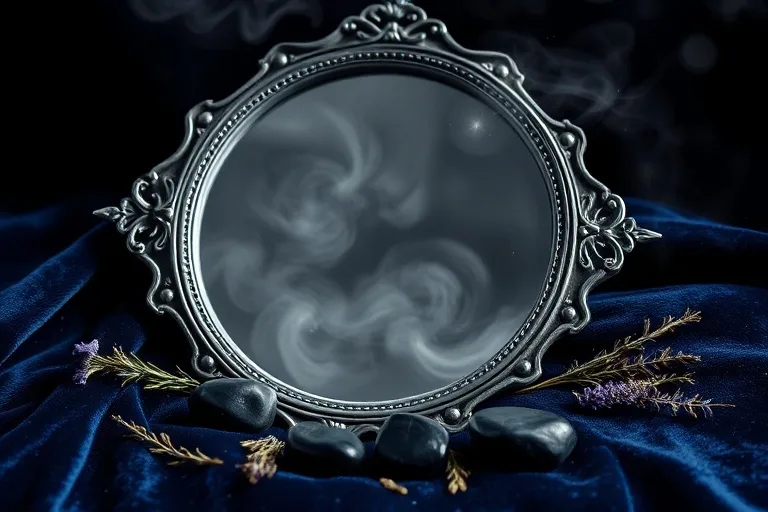
An antique mirror, a timeless tool for introspection and divinatory scrying sessions.
During the Middle Ages and Renaissance in Europe, crystal gazing became particularly popular. Crystal balls, often made of quartz, were believed to amplify psychic energies and provide clearer visions. Scryers, sometimes called "crystal gazers" or "seers," were sought after by royalty and common folk alike for their abilities to reveal secrets, locate lost items, or predict events.
The practice of scrying has persisted through the centuries, adapting to different cultural contexts and spiritual movements. While its methods have remained largely unchanged, the interpretation and purpose have broadened. Today, scrying is explored not only by those seeking prophetic visions but also by individuals interested in personal growth, spiritual development, and unlocking their own intuitive potential. It stands as a testament to humanity's enduring quest for knowledge beyond the ordinary.
Key Scrying Techniques: Mirrors, Crystals, and Beyond
Scrying encompasses a variety of techniques, each utilizing a different medium to facilitate the visionary experience. While the underlying principle of focused gazing remains constant, the choice of tool can significantly influence the nature of the visions and the scryer's personal connection to the practice. Here, we explore the most prominent forms of scrying.
Crystal Scrying: The Art of Crystallomancy
Crystallomancy involves gazing into a crystal ball or a polished gemstone. Clear quartz is a popular choice due to its clarity and perceived energetic properties, but other stones like obsidian, amethyst, or selenite can also be used. The goal is to relax the eyes and mind, allowing the surface of the crystal to appear cloudy or misty, from which images or symbols emerge.
Practitioners often prepare their crystal by cleansing it energetically and consecrating it for scrying purposes. The visions received through crystal scrying can range from fleeting impressions to vivid scenes, often requiring careful interpretation based on symbolism and personal intuition. This method is favored for its directness and the perceived ability of crystals to store and transmit information.
Mirror Scrying: Glimpsing Through Reflective Surfaces
Catoptromancy, or mirror scrying, uses a reflective surface such as a black mirror (often made from obsidian or a specially prepared glass mirror), a regular mirror, or even a shiny metal plate. Black mirrors are particularly effective as they absorb light rather than reflecting it brightly, reducing distractions and creating a deep, infinite-seeming void that encourages visions.
The technique involves gazing into the mirror's surface, often in dim lighting, until the reflection blurs and the surface seems to transform. Images, figures, or patterns may then appear within the depths of the mirror. This technique is powerful for accessing the subconscious mind and is often used for self-reflection, shadow work, and gaining clarity on personal issues.
Hydromancy: Divination by Water
Hydromancy is the practice of scrying using water. This can involve gazing into a still pool, a bowl of water, or even a glass of liquid. Some practitioners add ink, oil, or other substances to the water to enhance its reflective or clouding properties. The movement and reflections on the water's surface are observed for emerging patterns, symbols, or images.
Historically, hydromancy was practiced by many cultures, including ancient Persians, Greeks, and Romans, who believed water to be a sacred element connected to divine wisdom. It is often associated with emotional insights and the flow of life, making it a potent tool for understanding feelings and relationships. The fluidity of water can also represent the ever-changing nature of the future.

A serene water basin used for hydromancy, reflecting celestial patterns for profound insights.
Other Forms of Scrying: Smoke, Fire, and More
Beyond mirrors, crystals, and water, scrying can be performed using various other mediums:
- Capnomancy (Smoke Scrying): Gazing into the patterns formed by smoke, often from incense or sacred fires. The ephemeral nature of smoke makes this a challenging but deeply symbolic form of divination.
- Pyromancy (Fire Scrying): Observing flames, such as those from a candle or bonfire, for images or movements that convey messages. Fire is considered a transformative element, making this technique potent for insights into change and purification.
- Aeromancy (Cloud Scrying): Interpreting the shapes and movements of clouds in the sky. This is one of the most natural and accessible forms of scrying, connecting the scryer with the vastness of the natural world.
- Lecanomancy (Bowl Scrying): Similar to hydromancy, but often involves dropping objects into a bowl of water and interpreting the patterns they form or the ripples they create.
Each technique offers a unique pathway to accessing intuitive information, and the best method often depends on the individual's comfort, preference, and the specific question being asked. Experimentation is key to finding the most effective scrying tool for your personal practice.
The Psychology and Science Behind Scrying Phenomena
While scrying is often associated with the mystical, there are compelling psychological and neurological explanations for the phenomena experienced during practice. Understanding these aspects can demystify scrying and highlight its potential as a tool for self-exploration and cognitive enhancement, rather than purely supernatural prophecy.
One primary mechanism at play is the induction of a mild dissociative state or a light trance. Staring intently at a uniform, reflective, or translucent surface for an extended period can lead to a phenomenon known as the "troxler effect." This optical illusion causes peripheral, unchanging stimuli to fade from perception when one's gaze is fixed on a central point. In scrying, this can make the reflective surface appear to darken, cloud, or become a "screen" for internal imagery.
Furthermore, the brain's natural tendency to seek patterns and make sense of ambiguous stimuli, a process called pareidolia, plays a significant role. When gazing into a misty crystal ball or a swirling pool of water, the mind attempts to find recognizable shapes and forms, often projecting subconscious thoughts, memories, and associations onto the surface. This is similar to seeing shapes in clouds or faces in inanimate objects.
From a psychological perspective, scrying can be seen as a form of active imagination or guided meditation. By consciously suspending disbelief and focusing on the medium, individuals can access their subconscious mind, where intuition, creativity, and repressed information reside. Carl Jung's concept of the collective unconscious also offers a framework, suggesting that symbols and archetypes perceived during scrying might tap into universal patterns of human experience.
The act of scrying also encourages mindfulness and focused attention, which can reduce mental clutter and enhance cognitive functions. The visions, whether symbolic or literal, can serve as powerful metaphors for internal conflicts, desires, or potential pathways. Interpreting these visions becomes a process of psychological self-analysis, leading to greater self-awareness and problem-solving abilities. Therefore, while the "future" seen in scrying may not be a fixed, predetermined outcome, it can certainly reflect probable trajectories based on current psychological states and external influences, offering valuable guidance for decision-making.
A Practical Guide to Beginning Your Scrying Journey
Embarking on a scrying practice requires patience, an open mind, and a systematic approach. While individual experiences will vary, following a structured guide can help beginners establish a solid foundation for effective scrying. Remember, consistency and a relaxed mindset are more important than immediate results.
Setting the Sacred Space: Preparation and Mindset
The environment plays a crucial role in facilitating a scrying state. Choose a quiet, undisturbed space where you won't be interrupted. Dim the lights, or use natural light that doesn't create harsh reflections. Many practitioners find candlelight or soft, indirect lighting to be ideal. Consider burning incense or diffusing essential oils to create a calming and focused atmosphere.
Before you begin, take a few moments to clear your mind. Meditate, practice deep breathing, or engage in a short ritual to ground yourself and set your intention. Formulate a clear question or area of inquiry. Avoid questions that are too vague or demand a simple "yes" or "no" answer. Instead, focus on questions that seek guidance, understanding, or insight into a situation.
Choosing Your Scrying Tool: What's Right for You?
As discussed, various tools can be used for scrying. For beginners, a black mirror or a simple bowl of water can be excellent starting points due to their accessibility and effectiveness. If using a crystal ball, ensure it is clean and free of smudges. If using water, a dark-colored bowl will provide a better contrast for visions.
- Black Mirror: Excellent for reducing external distractions and creating a void-like effect.
- Crystal Ball: Good for focusing energy and can feel more "active" to some users.
- Bowl of Water: Simple, accessible, and connects to natural elements.
- Obsidian Mirror: Offers a deep, intense reflection, often used for profound insights.
Experiment with different tools to see which one resonates most strongly with you. The "right" tool is the one that allows you to enter a receptive state most easily.
Conducting a Scrying Session: Step-by-Step
Once your space is set and your mind is calm, place your chosen scrying tool before you. Here's a general approach:
- Relax Your Gaze: Look at the surface of your scrying tool without focusing too intensely. Allow your vision to soften and blur. Don't strain your eyes or try to "force" visions.
- Breathe Deeply: Maintain a slow, steady breath. This helps keep you grounded and in a meditative state.
- Hold Your Question: Gently hold your question or intention in your mind. Do not obsess over it, but keep it as a soft background thought.
- Observe Without Judgment: As you gaze, you may begin to see mists, colors, shapes, or even distinct images. Do not analyze them immediately. Simply observe what appears. These may be fleeting or more persistent.
- Be Patient: Visions may not appear in your first few sessions. Scrying is a skill that develops over time. Some days will be more fruitful than others.
- Conclude Gracefully: When you feel the session is complete, gently shift your gaze away from the tool. Take a few deep breaths to fully return to your normal state of consciousness.
Interpreting Visions and Journaling Your Insights
The interpretation of scrying visions is highly personal and often symbolic. Immediately after your session, record everything you saw, felt, or thought in a dedicated scrying journal. Don't censor anything, even if it seems nonsensical. Include:
- Date and time of the session.
- The question or intention you held.
- All perceived images, colors, sounds, or sensations.
- Your initial feelings or associations with these perceptions.
- Any insights or messages that came to you during or immediately after.
Over time, you may begin to notice recurring symbols or patterns in your journal that provide deeper meaning. Trust your intuition in interpreting these messages. Sometimes, the meaning becomes clear days or weeks later. Regularly reviewing your journal can help you track your progress and understand your personal symbolic language.
Ethical Considerations and Responsible Scrying Practices
As with any divinatory or spiritual practice, scrying comes with ethical responsibilities. Practicing scrying responsibly ensures that the insights gained are used for positive growth and do not inadvertently cause harm. Adhering to a strong ethical framework is crucial for both the scryer and anyone seeking their guidance.
Firstly, always approach scrying with respect and a clear, positive intention. Avoid using scrying for malicious purposes, to manipulate others, or to pry into the private lives of individuals without their explicit consent. The energy you bring to the practice will influence the quality and nature of the visions you receive.
Secondly, understand the limitations of scrying. Visions are often symbolic and open to interpretation, not literal predictions set in stone. The future is fluid, influenced by choices and actions. Scrying offers potential pathways and insights, but it does not dictate destiny. Presenting visions as absolute truths can be misleading and disempowering.
Thirdly, maintain personal boundaries. If you are scrying for others, ensure they understand the nature of the practice and that the insights are for guidance, not definitive answers. Never use scrying to instill fear or dependency. Empower individuals to make their own decisions based on the insights provided, rather than dictating their actions.
Finally, practice self-care and discernment. Scrying can be energetically draining, especially for sensitive individuals. Ensure you are well-rested and grounded before and after sessions. If you feel overwhelmed or disturbed by visions, take a break and seek support. Distinguish between genuine insights and projections of your own fears or desires. Regular cleansing of your scrying tools and space can also help maintain energetic clarity.
Common Misconceptions and the Path to Clarity
Scrying, like many esoteric practices, is often surrounded by misconceptions that can hinder a beginner's progress or lead to unrealistic expectations. Addressing these can help practitioners approach scrying with a clearer, more grounded perspective.
One common misconception is that scrying instantly reveals clear, movie-like visions of the future. In reality, visions are often subtle, symbolic, and require interpretation. They rarely manifest as a complete narrative. Beginners might only perceive fleeting colors, mists, or abstract shapes initially. Patience and practice are essential to develop the ability to discern clearer imagery.
Another myth is that scrying is inherently dangerous or invites negative entities. While it's always wise to practice with intention and protection, the fear surrounding scrying often stems from historical misrepresentations or lack of understanding. When approached with respect, a clear mind, and positive intent, scrying is a safe practice for self-discovery and insight. Setting a protective space and grounding oneself before and after sessions can mitigate any potential energetic discomfort.
Some believe that only "gifted" individuals can scry. While some may have a natural aptitude, scrying is a skill that can be developed by anyone willing to dedicate time and effort. It's about training your mind to enter a receptive state and interpret symbolic information, much like learning to meditate or interpret dreams. Consistency in practice is far more important than innate talent.
Finally, the idea that scrying provides absolute, unchangeable prophecies is a significant misconception. Scrying offers insights into probabilities and potential outcomes based on current energies and choices. It serves as a guide, empowering individuals to make informed decisions and adjust their path if desired. The true power of scrying lies in its ability to foster self-awareness and intuitive understanding, rather than delivering fixed pronouncements.
By dispelling these myths, practitioners can engage with scrying more effectively, appreciating it as a valuable tool for personal and spiritual development. The journey of scrying is one of continuous learning, introspection, and deepening connection with one's inner wisdom.
Fuente: Contenido híbrido asistido por IAs y supervisión editorial humana.


Comments
Post a Comment