
Runes I Ching Osteomancy: Divination Methods Beyond Tarot | StarPluto
While Tarot cards often dominate discussions about divination, the world of esoteric practices offers a rich tapestry of methods that predate and extend far beyond the familiar deck. Exploring these alternative systems provides a deeper understanding of human history, culture, and our enduring quest for meaning and guidance. From the ancient Germanic wisdom embedded in Runes to the philosophical depths of the Chinese I Ching and the primal insights of Osteomancy, these practices offer unique perspectives on the unfolding of destiny and the currents of the subconscious mind.
This guide aims to introduce and demystify three prominent divination methods that transcend the Tarot, inviting both seasoned practitioners and curious newcomers to explore their historical roots, methodologies, and interpretative nuances. Understanding these systems not only enriches our spiritual lexicon but also connects us to ancient traditions that sought to harmonize human experience with cosmic rhythms.
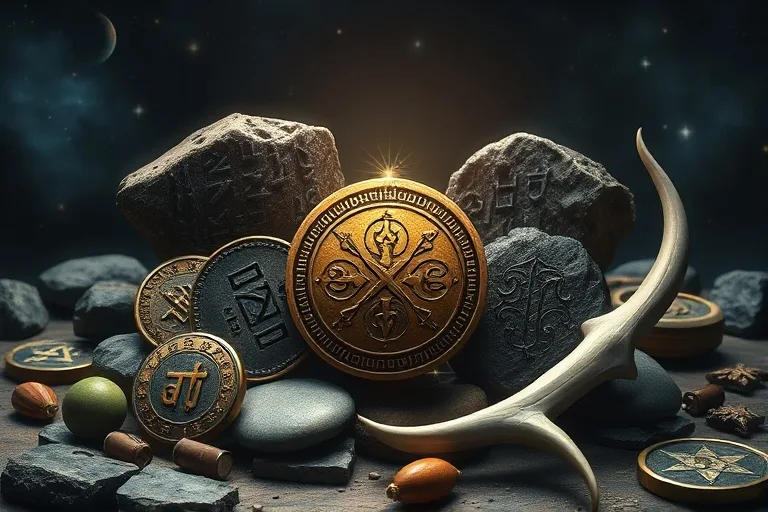
A visual representation of the mystical tools used in Runes, I Ching, and Osteomancy, hinting at their ancient origins and profound insights.
Table of Contents
- The Wisdom of Runes: Norse Divination
- I Ching: The Ancient Chinese Oracle
- Osteomancy: Divination by Bones
- Comparative Overview of Divination Methods
- Choosing Your Divination Path
- Ethical Considerations in Divination
The Wisdom of Runes: Norse Divination
Runes are an ancient Germanic alphabet, but their significance extends far beyond mere letters. They were used for writing, magic, and divination by Germanic peoples, including the Norse, Anglo-Saxons, and Goths, from the 1st to the 16th centuries. Each rune possesses a specific meaning, often linked to cosmic forces, natural phenomena, or aspects of human experience, making them powerful tools for introspection and guidance.
The most common runic alphabet used for divination is the Elder Futhark, consisting of 24 runes. Each rune has a name (e.g., Fehu, Uruz, Thurisaz) and a corresponding symbolic meaning. When cast or drawn, the runes are believed to reveal insights into a situation, offer advice, or illuminate hidden aspects of a problem. Their interpretations are often poetic and multi-layered, requiring intuition and a deep understanding of Norse mythology and symbolism.
Practitioners typically use a set of runes carved onto wood, stone, or bone. The process involves posing a question, often about a specific challenge or path, and then drawing or casting a selection of runes. The layout or spread of the runes, as well as their individual meanings and relationships to each other, form the basis of the interpretation. The wisdom derived from runes is rarely a direct "yes" or "no" answer, but rather a nuanced narrative that encourages self-reflection and personal growth.
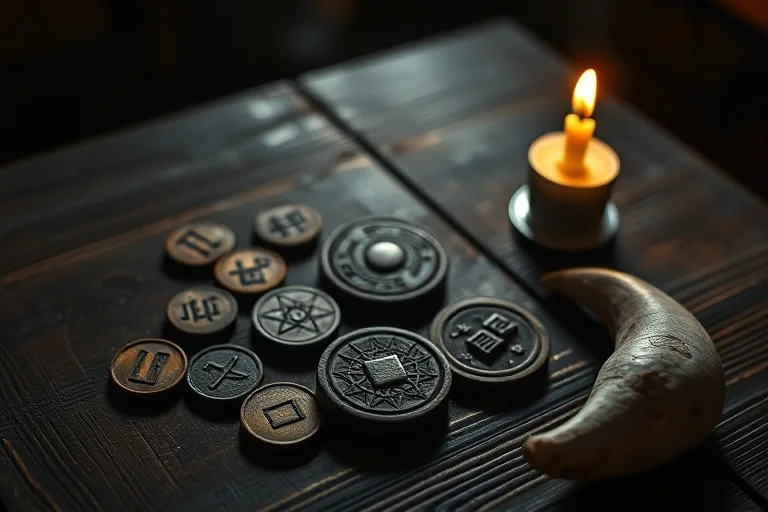
A close-up view of the tools used in runic divination, emphasizing their tactile and historical connection to ancient practices.
Key Aspects of Runic Divination:
- Origin: Ancient Germanic and Norse cultures.
- Tools: Set of 24 (Elder Futhark) or 16 (Younger Futhark) carved symbols.
- Method: Drawing or casting runes to form a spread.
- Interpretation: Symbolic meanings of individual runes, their positions, and relationships within the spread. Focus on self-reflection and guidance rather than direct predictions.
- Philosophical Basis: Connection to Norse cosmology, mythology, and the forces of nature.
I Ching: The Ancient Chinese Oracle
The I Ching, or "Book of Changes," is one of the oldest Chinese classical texts, with a history spanning over three millennia. It is a profound philosophical system and a sophisticated method of divination that offers insights into the dynamic interplay of opposing forces (Yin and Yang) and the constant flux of change in the universe. Unlike the more direct symbolism of Tarot or Runes, the I Ching provides a complex, poetic, and often paradoxical commentary on the situation at hand, encouraging a deeper contemplation of life's patterns.
The core of the I Ching consists of 64 hexagrams, each a unique combination of six lines, which can be either solid (Yang) or broken (Yin). Each hexagram has a name, an image, and a judgment, along with six individual line statements. To consult the I Ching, one traditionally uses yarrow stalks or, more commonly today, three coins. The coins are tossed six times to build a hexagram line by line, from bottom to top. The result is a hexagram that represents the current state or influence, and often, a "changing line" that indicates the direction of future development, leading to a second, "resulting" hexagram.
Interpreting the I Ching involves studying the judgment of the primary hexagram, the images associated with it, and critically, the specific changing lines and the resulting hexagram. This process requires careful consideration, as the text is rich in metaphor and philosophical depth. It's a tool for understanding the underlying dynamics of a situation and for aligning one's actions with the natural flow of change, rather than predicting a fixed outcome. Explore more about Tarot Quantum Mechanics Intersecting Divination Reality for related cultural contexts.
Key Aspects of I Ching Divination:
- Origin: Ancient China, over 3,000 years old.
- Tools: Yarrow stalks or three coins to generate hexagrams.
- Method: Tossing coins/stalks six times to form a hexagram (six lines).
- Interpretation: Complex textual interpretations of 64 hexagrams, their judgments, images, and changing lines. Focuses on understanding dynamic change and philosophical guidance.
- Philosophical Basis: Taoist principles of Yin and Yang, the constant flux of the universe, and the interconnectedness of all things.
Osteomancy: Divination by Bones
Osteomancy, or bone divination, is one of the oldest and most widespread forms of divination, practiced across various cultures globally, from ancient China (oracle bones) to African tribes, Native American communities, and Siberian shamans. It involves casting or arranging animal bones and interpreting their positions, patterns, and the way they fall to gain insight into a question or situation. This primal form of divination connects practitioners directly with the natural world and ancestral wisdom.
The specific bones used can vary greatly by tradition, but commonly include small animal bones, vertebrae, teeth, shells, and even stones or other natural objects that are imbued with personal significance. Each piece in a bone set is often assigned a specific meaning or association, representing different aspects of life, people, or influences. The casting process typically involves shaking the bones in a container and then throwing them onto a designated surface, such as a cloth or a circle drawn on the ground.
An abstract representation of the cosmic forces and patterns that divination methods seek to interpret.
Interpretation in Osteomancy is highly intuitive and often relies on the practitioner's connection to the bones, their cultural context, and their personal understanding of the symbolic language. Factors like which bones land closest to each other, which face up or down, and their overall proximity to the center or edges of the casting area are all taken into account. It's a practice that fosters a deep connection to the earth and a respect for the cycles of life and death. For more on spiritual connections, consider articles on .
Key Aspects of Osteomancy:
- Origin: Ancient and indigenous cultures worldwide.
- Tools: A collection of animal bones, teeth, shells, stones, or other natural objects.
- Method: Casting or arranging the bone set and interpreting their fall and patterns.
- Interpretation: Highly intuitive, based on the symbolic meaning of each piece, their positions, and relationships.
- Philosophical Basis: Connection to nature, ancestral wisdom, the cycles of life and death, and primal forces.
Comparative Overview of Divination Methods
While Runes, I Ching, and Osteomancy each offer distinct approaches to divination, they share the common goal of providing insight and guidance. Understanding their differences can help in choosing the method best suited to one's personal style and questions.
| Method | Origin | Tools | Interpretation Style | Focus |
|---|---|---|---|---|
| Runes | Norse/Germanic | Carved symbols (wood, stone) | Poetic, symbolic, mythological | Self-reflection, guidance, cosmic forces |
| I Ching | Ancient Chinese | Yarrow stalks or coins | Philosophical, metaphorical, dynamic change | Understanding change, aligning with natural flow |
| Osteomancy | Global, indigenous cultures | Animal bones, natural objects | Intuitive, primal, ancestral | Connection to nature, ancestral wisdom, primal insights |
| Tarot (for context) | 15th Century Europe | 78 illustrated cards | Archetypal, narrative, psychological | Self-discovery, emotional patterns, future possibilities |
Each method offers a unique lens through which to view life's challenges and opportunities. While Tarot often focuses on psychological archetypes and narrative arcs, Runes delve into primal forces and Norse cosmology, the I Ching explores the philosophy of change, and Osteomancy connects us to raw, ancestral wisdom. The choice of method often reflects the nature of the question and the seeker's personal resonance with the underlying philosophy.
Choosing Your Divination Path
Selecting a divination method is a deeply personal journey. It often begins with curiosity and a resonance with a particular system's aesthetic or philosophical underpinnings. Here are some considerations:
- Intuition and Connection: Which method "calls" to you? Does the imagery of runes, the philosophical depth of the I Ching, or the primal nature of bones resonate most strongly with your spirit?
- Type of Guidance: Are you seeking direct advice, philosophical contemplation, or a connection to ancient wisdom? Runes can be more direct and mythic, I Ching more philosophical and nuanced, and Osteomancy more intuitive and primal.
- Learning Curve: All methods require study and practice. The I Ching, with its extensive textual commentary, can have a steeper initial learning curve than the more visual and symbolic runes or the highly intuitive osteomancy.
- Accessibility: Runes and I Ching sets are widely available. Osteomancy may require collecting or crafting your own set, which can be a powerful part of the practice.
Regardless of the chosen method, the key to effective divination lies in approaching it with an open mind, clear intention, and a willingness to engage with the symbolic language it presents. It's a tool for self-discovery and empowerment, not a definitive prediction of an unchangeable future. Explore more about if you wish to compare with other methods.
Ethical Considerations in Divination
Approaching divination responsibly is paramount. Ethical practice emphasizes respect, empowerment, and personal growth. Here are some guidelines:
- Respect for the Tools and Traditions: Treat your divination tools with reverence and respect the cultural origins of the practice.
- Empowerment, Not Dependence: Divination should empower individuals to make informed decisions, not foster dependence on external guidance. The insights gained are meant to illuminate choices, not dictate actions.
- Clear Intentions: Formulate clear, open-ended questions. Avoid questions that seek to control others or that are overly simplistic ("Will I get rich next week?").
- Confidentiality: If reading for others, maintain strict confidentiality regarding their questions and the insights received.
- Non-Judgmental Approach: Interpretations should be delivered with empathy, neutrality, and without personal bias or judgment.
- Professional Boundaries: If practicing professionally, establish clear boundaries regarding what divination can and cannot do. Avoid making definitive predictions about health, legal matters, or financial outcomes that require professional expertise.
By adhering to these ethical principles, practitioners ensure that divination remains a valuable and constructive tool for spiritual exploration and personal development. For further reading on spiritual practices, consider topics like or .
Fuente: Contenido híbrido asistido por IAs y supervisión editorial humana.


Comments
Post a Comment