
I Ching Astrology Combining Ancient Oracles Guidance | StarPluto
In the vast tapestry of ancient wisdom traditions, few systems offer as much depth and insight as the I Ching and astrology. Both have served humanity for millennia as tools for self-understanding, divination, and navigating the complexities of life. While seemingly distinct in their origins and methodologies, a closer look reveals profound philosophical parallels and synergistic applications that can enrich one's journey of personal growth and cosmic awareness.
This article delves into the fascinating world where these two ancient oracles converge, exploring their individual foundations before illustrating how their combined wisdom can offer a more comprehensive and nuanced perspective on life's challenges and opportunities. By understanding their unique strengths and how they complement each other, individuals can unlock a powerful framework for guidance, decision-making, and spiritual evolution.
Table of Contents
- Introduction to I Ching and Astrology
- Historical Roots and Philosophical Parallels
- The I Ching: An Overview
- Astrology: A Cosmic Map
- Synergistic Applications: Combining the Oracles
- Practical Methods for Integration
- Benefits of a Combined Approach
- Ethical Considerations and Personal Growth
- Conclusion
Introduction to I Ching and Astrology
The I Ching, often translated as the "Book of Changes," is an ancient Chinese divination text and a philosophical system that dates back over three millennia. It is based on 64 hexagrams, each composed of six lines, which can be either solid (yang) or broken (yin). These hexagrams represent different states of change and offer profound insights into the nature of reality and human experience, guiding individuals through life's transitions.
Astrology, on the other hand, is the study of the movements and relative positions of celestial bodies and their supposed influence on human affairs and the natural world. Originating in various ancient civilizations, particularly Mesopotamia, it maps planetary positions at the moment of an individual's birth to create a natal chart. This chart is believed to reveal personality traits, life patterns, and potential destinies, providing a cosmic blueprint for understanding oneself and one's path.
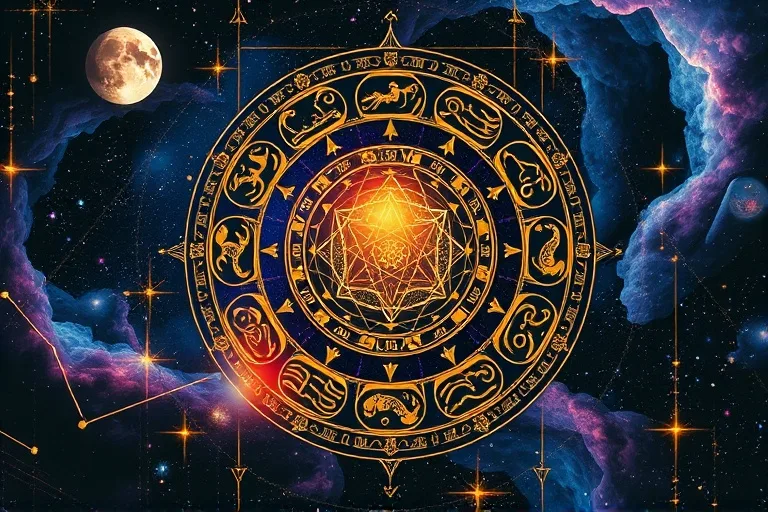
The intricate dance between I Ching hexagrams and astrological symbols offers a unique lens for understanding life's profound mysteries.
Both systems, despite their geographical and cultural differences, share a common goal: to provide clarity and perspective. They offer frameworks for interpreting the seemingly random events of life, suggesting that there is an underlying order and meaning. By engaging with these oracles, individuals can gain a deeper appreciation for the interconnectedness of all things and make more informed decisions aligned with their higher purpose.
Historical Roots and Philosophical Parallels
The I Ching emerged from ancient Chinese cosmology, deeply rooted in Taoist principles of yin and yang, and the concept of constant change. Its development is often attributed to legendary figures like Fu Xi, King Wen, and Confucius, who contributed to its structure and commentaries. It was initially used for divination, but over time, it evolved into a philosophical text offering wisdom on ethics, governance, and personal conduct.
Astrology, conversely, has a more widespread and diverse historical lineage, with roots in Babylonian, Egyptian, Greek, and Indian cultures. Its development was closely tied to early astronomical observations and the belief that celestial phenomena mirrored terrestrial events. The Hellenistic period saw the systematization of Western astrology, which then spread globally, influencing everything from medicine to politics. Both systems reflect a worldview where the microcosm (human life) is intimately connected to the macrocosm (the universe).
- Holistic Perspective: Both I Ching and astrology view life holistically, recognizing that all events and circumstances are interconnected and part of a larger cosmic design.
- Symbolic Language: They communicate through symbolic language—hexagrams, trigrams, planetary glyphs, zodiac signs—each representing archetypal energies and patterns.
- Guidance for Change: Both systems are fundamentally about understanding and navigating change, whether it's the cyclical nature of the I Ching's hexagrams or the transits and progressions in astrology.
- Self-Discovery: They serve as powerful mirrors for self-reflection, helping individuals uncover hidden aspects of their personality, motivations, and potential.
The I Ching: An Overview
The core of the I Ching lies in its 64 hexagrams, each a unique combination of six yin (broken) or yang (solid) lines. These lines are derived from casting coins or yarrow stalks, a process that introduces an element of chance, believed to connect the inquirer to the universal flow of energy. Each hexagram has a name, an image, and a judgment, along with six individual line statements, offering a layered interpretation.
When consulting the I Ching, one formulates a question and then casts the coins or stalks to generate a hexagram. If any lines are "changing lines," they transform into their opposite (yin to yang, or vice versa), leading to a second, "future" hexagram. This dynamic process illustrates the fluidity of situations and the potential for transformation, providing advice on how to act in the current moment and what outcomes might arise.
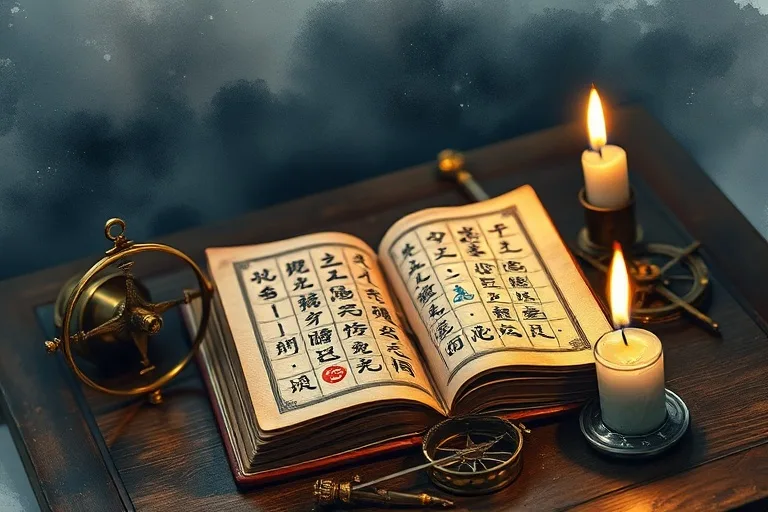
Exploring ancient texts and tools like the I Ching provides a tangible connection to timeless wisdom.
The wisdom of the I Ching is not about predicting a fixed future but about understanding the energetic dynamics of a situation and how one's actions can influence its unfolding. It encourages introspection, ethical conduct, and alignment with the natural rhythms of the universe, making it a profound guide for navigating complex decisions and personal challenges.
Astrology: A Cosmic Map
Astrology uses a birth chart, a snapshot of the heavens at the exact moment and location of one's birth, to reveal an individual's unique psychological makeup and life path. This chart comprises twelve zodiac signs, ten planets (including the Sun and Moon), twelve houses, and various aspects (angles between planets). Each element represents different facets of personality, life areas, and energetic expressions.
The zodiac signs describe fundamental archetypes and qualities, while the planets represent specific psychological functions and drives. The houses indicate the areas of life where these energies manifest, and the aspects describe how the planetary energies interact. Together, they form a complex and personalized cosmic map that can illuminate strengths, weaknesses, talents, and challenges.
Beyond the natal chart, astrology also examines transits and progressions, which track the ongoing movements of planets and their relationship to the birth chart. These dynamic techniques offer insights into current life cycles, periods of growth, and potential challenges, providing a framework for understanding timing and opportunities. For those seeking deeper insights into their cosmic blueprint, exploring the precision of a birth chart is crucial.
Synergistic Applications: Combining the Oracles
Combining the I Ching and astrology offers a powerful, multi-dimensional approach to self-understanding and guidance. Astrology provides the static blueprint—the inherent energies and potentials of an individual's life. The I Ching, on the other hand, offers dynamic, real-time advice on how to navigate specific situations within that astrological framework. Together, they create a dialogue between fixed potential and fluid action.
For instance, if an astrological transit indicates a period of significant career change (e.g., Uranus squaring the Midheaven), consulting the I Ching can provide specific guidance on the best approach, potential pitfalls, or the most auspicious attitude to adopt during this transition. Astrology defines the "what" and "when," while the I Ching illuminates the "how" and "why" of the unfolding events, offering practical steps and philosophical context.
This integration allows for a richer interpretation of life events. An astrological reading might highlight a challenging aspect, such as a difficult planetary opposition, indicating tension in relationships. The I Ching can then be consulted to ask for advice on how to resolve the conflict, improve communication, or adapt to the situation, providing actionable wisdom tailored to the moment. This dual approach ensures both a broad understanding of cosmic influences and specific, timely advice.
Abstract art can powerfully convey the subtle, interconnected energies of the cosmos and their influence on our lives.
Practical Methods for Integration
Integrating the I Ching and astrology can be approached in several practical ways, depending on the inquirer's familiarity with each system. One common method involves using astrology to identify periods of significant change or challenge, and then turning to the I Ching for specific guidance within those periods. This sequential approach leverages the strengths of both oracles effectively.
Another method involves asking the I Ching questions directly related to astrological placements. For example, one might ask, "How can I best express my Mars in Leo energy in my career?" or "What is the underlying dynamic of my Venus-Saturn square in relationships?" The I Ching's response can offer a nuanced understanding of how to work with these planetary energies and aspects, providing actionable advice that goes beyond a general astrological interpretation.
| Integration Method | Description | Example Scenario |
|---|---|---|
| Sequential Consultation | Use astrological transits/progressions to identify key life periods, then consult I Ching for specific advice within that period. | Astrology indicates a challenging Saturn return; I Ching provides guidance on career restructuring. |
| Aspect-Specific Inquiry | Formulate I Ching questions directly about specific astrological aspects or planetary placements in the natal chart. | Asking I Ching: "How to best manage my Moon-Pluto conjunction in relationships?" |
| Theme-Based Exploration | Identify a dominant theme from an astrological reading (e.g., "career change," "relationship challenges") and use I Ching to explore its nuances. | Astrology shows a focus on Midheaven (MC) issues; I Ching offers advice on public perception. |
For those interested in karmic astrology, the I Ching can offer insights into the specific lessons or actions required to resolve karmic patterns indicated in the birth chart. This deepens the understanding of one's spiritual journey and provides a roadmap for conscious evolution. The key is to approach both systems with an open mind and a willingness to engage with their symbolic languages.
Benefits of a Combined Approach
The synergy between the I Ching and astrology yields several significant benefits for individuals seeking guidance. Firstly, it offers a more comprehensive and holistic understanding of life events. Astrology provides the broad cosmic context and the individual's inherent predispositions, while the I Ching offers specific, actionable advice for the present moment, bridging the gap between potential and manifestation.
Secondly, this combined approach enhances decision-making. Instead of relying solely on one perspective, individuals can cross-reference insights from both oracles, leading to more informed and confident choices. The I Ching can validate or add nuance to astrological interpretations, helping to clarify complex situations and illuminate optimal paths forward. This dual validation builds greater trust in the guidance received.
- Deeper Self-Awareness: Uncover layers of personal psychology and potential by cross-referencing natal chart insights with I Ching's dynamic advice.
- Enhanced Predictive Clarity: Gain a more precise understanding of timing and appropriate action during significant astrological periods.
- Actionable Guidance: Translate abstract cosmic influences into concrete steps for personal and spiritual development.
- Holistic Perspective: Integrate macrocosmic patterns (astrology) with microcosmic daily changes (I Ching) for a complete worldview.
- Validation and Confirmation: Use one oracle to confirm or expand upon insights gained from the other, building confidence in your path.
Ultimately, integrating these two systems fosters greater spiritual growth and resilience. It encourages individuals to view life as a dynamic interplay of cosmic forces and personal agency, empowering them to navigate challenges with wisdom and embrace opportunities with courage. The combination offers a rich tapestry of understanding that supports a more conscious and purposeful existence.
Ethical Considerations and Personal Growth
When engaging with powerful divinatory tools like the I Ching and astrology, ethical considerations are paramount. It is crucial to approach these systems not as deterministic forces that dictate one's fate, but as guides that offer probabilities, insights, and advice. The ultimate power of choice and personal responsibility always rests with the individual. Both oracles are best utilized as tools for empowerment, not as excuses for inaction or fatalism.
For personal growth, the combined use of I Ching and astrology encourages introspection and self-reflection. It prompts individuals to consider their motivations, their reactions to external circumstances, and their alignment with their authentic self. The insights gained should inspire conscious action and personal development, rather than passive acceptance. This approach transforms divination into a dynamic process of self-mastery.
Furthermore, it is important to cultivate an attitude of discernment. Not every reading or interpretation will resonate immediately, and some may require deeper contemplation. The true value lies in the process of engaging with the symbols and allowing them to stimulate one's intuition and inner wisdom. This practice strengthens one's connection to their inner guidance system, making the oracles powerful catalysts for spiritual evolution and informed living.
Conclusion
The I Ching and astrology, each a profound system in its own right, offer unparalleled depth when combined. Astrology provides the enduring cosmic context of one's life, detailing inherent potentials and cyclical patterns. The I Ching, with its dynamic wisdom, offers real-time guidance on how to navigate the specific changes and challenges that arise within that cosmic framework. Together, they form a powerful alliance for self-discovery, decision-making, and spiritual growth.
By embracing both these ancient oracles, individuals can gain a holistic perspective on their journey, understanding not only the "what" and "when" of their experiences but also the "how" and "why." This integrated approach empowers them to make conscious choices, align with universal rhythms, and cultivate a life of greater purpose and fulfillment. The path to wisdom is often multifaceted, and the combined guidance of the I Ching and astrology illuminates it with extraordinary clarity.
Fuente: Contenido híbrido asistido por IAs y supervisión editorial humana.


Comments
Post a Comment