
Synastry Red Flags: Spotting Relationship Challenges in Your Chart | StarPluto
In the intricate dance of human connection, astrology offers a profound lens through which to understand the dynamics between individuals. Synastry, the art of comparing two birth charts, reveals the energetic interplay that shapes relationships, highlighting areas of harmony, growth, and potential friction. While every connection presents its unique set of challenges, certain astrological configurations, often termed "red flags," can indicate significant hurdles that require conscious effort and understanding to navigate.
Identifying these synastry red flags is not about predicting doom or labeling a relationship as inherently "bad." Instead, it serves as a powerful tool for self-awareness and proactive relationship management. By understanding where potential conflicts or misunderstandings might arise, partners can develop strategies to address them, fostering deeper empathy and a more resilient bond. This guide will explore common red flags in synastry, offering insights into their meaning and practical approaches to transform challenges into opportunities for profound growth.
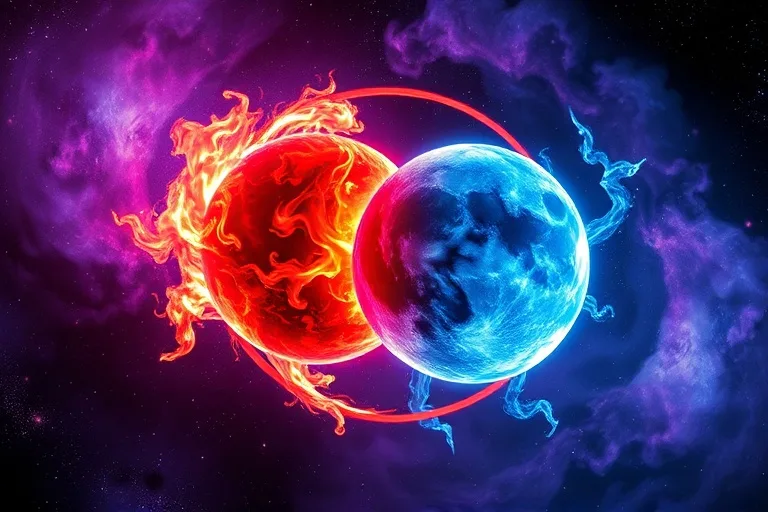
Understanding the energetic interplay of two charts reveals potential areas of friction and growth in synastry.
Table of Contents
- What is Synastry?
- The Concept of "Red Flags" in Synastry
- Key Synastry Red Flags
- Interpreting Synastry Red Flags
- Navigating Synastry Challenges
- Conclusion
What is Synastry?
Synastry is a branch of astrology that compares two natal charts to assess the compatibility and dynamics between individuals. It overlays one person's chart onto another's, analyzing how the planets, houses, and aspects in each chart interact. This technique reveals strengths, weaknesses, areas of attraction, and potential points of conflict within a relationship.
By examining planetary conjunctions, squares, oppositions, and trines between charts, synastry can shed light on communication styles, emotional needs, sexual chemistry, shared values, and even karmic connections. It provides a blueprint of the relationship's potential, helping partners understand each other on a deeper, more cosmic level.
The Concept of "Red Flags" in Synastry
In everyday language, a "red flag" signifies a warning sign or a potential problem. In synastry, these red flags are specific planetary aspects or house overlays that suggest areas of significant tension, power struggles, emotional wounds, or karmic lessons. It's crucial to understand that these aren't necessarily indicators of a doomed relationship.
Instead, synastry red flags highlight where conscious awareness and effort are most needed. They can represent opportunities for immense growth, provided both partners are willing to confront and work through the underlying issues. Ignoring these astrological warnings, however, can lead to recurring patterns of conflict, resentment, or deep-seated unhappiness.
Key Synastry Red Flags
While a comprehensive synastry reading considers the entire chart, certain aspects and overlays are more commonly associated with significant relationship challenges. Below are some of the most prominent red flags to look out for.
Challenging Planetary Aspects
Hard aspects (squares, oppositions, and sometimes conjunctions) involving certain planets can create inherent tension and friction between partners. These aspects demand integration and compromise.
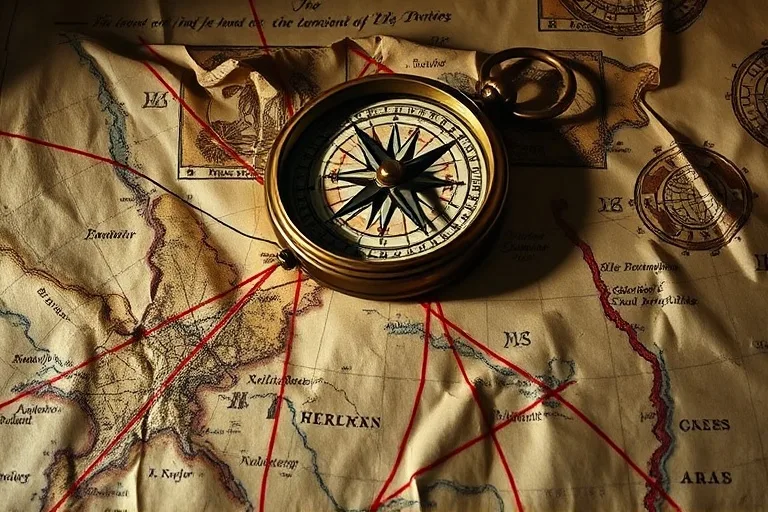
Symbolic imagery of a broken compass illustrates the challenges of conflicting directions in a relationship.
- Mars-Saturn Aspects (Square, Opposition, Conjunction): These aspects can indicate frustration, inhibition, or power struggles. Mars wants action, while Saturn imposes limits. This can manifest as one partner feeling constantly blocked or criticized by the other, or a general sense of heavy responsibility and resentment.
- Venus-Pluto Aspects (Square, Opposition, Conjunction): Intense and transformative, these aspects often bring themes of obsession, jealousy, control, and profound emotional intensity. While they can signify deep passion, they also carry the potential for manipulation, betrayal, and destructive patterns if not handled with extreme awareness.
- Sun-Moon Squares/Oppositions: The Sun represents our core identity and ego, while the Moon symbolizes our emotional nature and subconscious needs. Hard aspects between these luminaries can lead to fundamental differences in personality and emotional expression, making it difficult for partners to truly understand and validate each other's core being.
- Uranus Aspects to Personal Planets (Sun, Moon, Venus, Mars): Uranus brings sudden changes, disruption, and a need for freedom. When one partner's Uranus aspects the other's personal planets, it can lead to instability, a feeling of being unsettled, or one partner feeling stifled by the other's need for independence. This can make long-term commitment challenging.
- Neptune Aspects to Personal Planets: Neptune introduces themes of illusion, delusion, confusion, and idealism. Hard aspects here can lead to a lack of clarity, unrealistic expectations, or one partner projecting their fantasies onto the other. There's a risk of deception, either intentional or unintentional, and a blurred sense of boundaries.
- Pluto Aspects to Personal Planets: Pluto signifies power, transformation, death, and rebirth. Intense Pluto aspects can bring profound psychological dynamics, including power struggles, control issues, and deep-seated fears. While transformative, these connections can be incredibly intense and challenging, forcing both individuals to confront their shadow selves.
Difficult House Overlays
House overlays describe where one person's planets fall into the houses of the other person's chart. Certain house placements can indicate areas of challenge or intense focus.
- Planets in the 8th House Overlay: The 8th house deals with shared resources, intimacy, sex, death, and psychological transformation. When one partner's personal planets fall into the other's 8th house, it can create intense, often karmic, bonds. This can lead to power dynamics, jealousy, and a deep psychological probing that might feel overwhelming or intrusive.
- Planets in the 12th House Overlay: The 12th house governs hidden enemies, self-undoing, secrets, and the subconscious. Planets here can indicate a sense of mystery, confusion, or even sacrifice. One partner might feel unseen or misunderstood by the other, or there might be secrets and self-deception at play, leading to a lack of clarity and trust.
- Planets in the 6th House Overlay: The 6th house relates to daily routines, health, service, and work. While not as dramatic as the 8th or 12th, a strong 6th house overlay can mean the relationship becomes overly focused on practicalities, chores, or health issues. One partner might feel like the other's "project" or "servant," leading to an imbalance in the relationship dynamic.
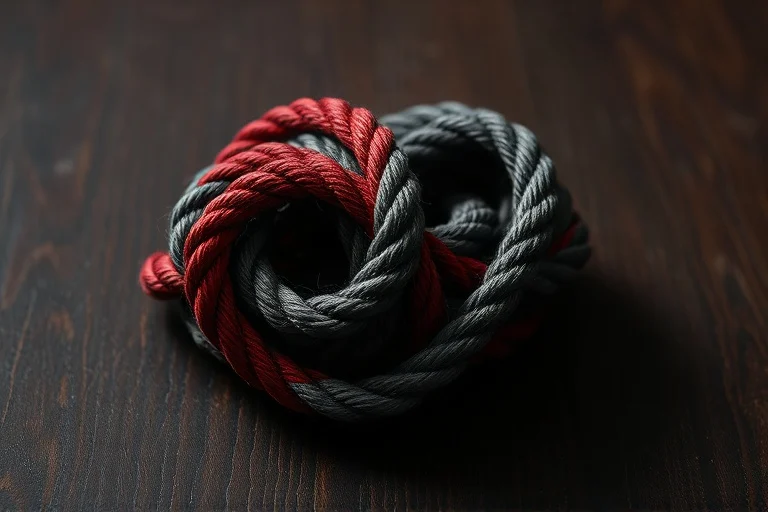
The visual metaphor of tangled ropes highlights the intricate and sometimes difficult challenges within relationships.
Karmic or Fated Aspects
Some synastry aspects suggest a deeper, often karmic, connection that may bring unresolved issues from past lives or significant life lessons to be learned.
- South Node Connections: When one person's planets conjunct the other's South Node, it often indicates a past-life connection. While there can be an instant familiarity, it can also mean that the relationship brings up old patterns, comfort zones, or unresolved karmic debts. The challenge is to move beyond these familiar patterns towards growth.
- Saturn Aspects to Nodes (especially square or opposition): Saturn, the planet of karma, responsibility, and lessons, when in hard aspect to the Lunar Nodes, can indicate a fated relationship with significant lessons. These connections often feel heavy, restrictive, or bring about challenging circumstances that force both individuals to mature and take responsibility.
Interpreting Synastry Red Flags
It is vital to approach synastry with a nuanced perspective. No single aspect or overlay tells the whole story of a relationship. A chart filled with "red flags" doesn't automatically equate to a doomed partnership, just as a chart full of "green lights" doesn't guarantee eternal bliss.
Not Necessarily Deal-Breakers
Many astrologers believe that challenging aspects are often the catalysts for growth and transformation. They force individuals to confront their own issues, evolve, and develop greater empathy. A relationship without any friction might be comfortable, but it might also lack the dynamic tension needed for profound personal and relational development.
The key lies in the individuals' willingness to engage with these challenges. Are both partners committed to self-awareness, open communication, and mutual respect, even when facing difficult dynamics? The presence of red flags simply means the relationship will demand more conscious effort in specific areas.
The Importance of the Whole Chart
When analyzing synastry, it's crucial to consider the entire chart. Harmonious aspects (trines, sextiles) can often mitigate the intensity of hard aspects. For example, a challenging Venus-Pluto aspect might be balanced by a strong Venus-Jupiter trine, bringing both intense passion and expansive love. Look for balancing energies and areas of support.
Also, consider the individual natal charts. If one partner has a strong, resilient natal chart with a good capacity for self-awareness and personal growth, they might be better equipped to handle challenging synastry aspects. The maturity and psychological health of each individual play a significant role in how synastry aspects manifest.
Navigating Synastry Challenges
Once identified, synastry red flags can be proactively addressed. This involves a combination of self-awareness, communication, and a willingness to evolve both individually and as a couple.
Communication and Awareness
- Open Dialogue: Discuss the challenging dynamics openly and honestly. If you notice a pattern of power struggles (Mars-Saturn, Pluto aspects), acknowledge it and explore its roots together.
- Empathy Building: Try to understand the other person's perspective, especially if there are Sun-Moon squares. Recognize that their core emotional needs might differ significantly from yours.
- Boundary Setting: For Neptune or Pluto aspects, clear boundaries are essential. Be explicit about what you need and what you are comfortable with to avoid confusion or feeling controlled.
Growth and Transformation
- Personal Development: Use the challenges as a mirror for your own growth. For example, if Uranus aspects bring instability, explore your own relationship with freedom and commitment.
- Shared Activities: Engage in activities that foster connection and mutual understanding, especially those that encourage vulnerability and shared experiences, which can help overcome 8th or 12th house challenges.
- Patience and Persistence: Transforming challenging dynamics takes time and consistent effort. Recognize that growth is a process, not a destination.
Professional Guidance
For particularly entrenched or painful red flags, seeking guidance from a qualified astrologer or relationship therapist can be invaluable. An astrologer can provide deeper insights into the specific dynamics at play, while a therapist can offer tools and techniques for effective communication and conflict resolution.
These professionals can help both partners understand the astrological roots of their struggles and develop healthy coping mechanisms. They can also facilitate conversations that might be too difficult to have independently, ensuring a safe space for exploration and healing.
Conclusion
Synastry red flags are not curses but cosmic signposts, guiding us toward areas in our relationships that demand attention and growth. By understanding these challenging aspects and overlays, we gain a deeper appreciation for the complexities of human connection and the unique lessons each partnership offers.
Embracing the insights from synastry allows us to move beyond superficial compatibility, fostering relationships built on genuine understanding, conscious effort, and a shared commitment to evolution. Ultimately, the most rewarding connections are often those where partners bravely navigate their astrological red flags, transforming potential pitfalls into pathways for profound love and mutual transformation.
Fuente: Contenido híbrido asistido por IAs y supervisión editorial humana.


Comments
Post a Comment