
Solar Return Chart: Predicting Your Year Ahead | StarPluto
In the vast and intricate tapestry of astrology, the Solar Return chart stands out as a powerful tool for annual prediction and self-discovery. Far more personalized than a general horoscope, this unique chart offers a detailed astrological roadmap for the year ahead, from one birthday to the next. It captures the precise moment the Sun returns to its exact natal position, reflecting the energetic blueprint and dominant themes that will shape your personal journey over the subsequent twelve months. Understanding your Solar Return chart can empower you to anticipate challenges, leverage opportunities, and align with your highest potential, transforming each birthday into a profound moment of cosmic insight.
This guide will delve into the intricacies of the Solar Return chart, explaining its calculation, the key elements to interpret, and how to apply its wisdom in your daily life. Whether you are an experienced astrologer or a curious newcomer, unlocking the secrets of your annual chart can provide unparalleled clarity and direction, helping you navigate your personal cycles with greater awareness and intention. Prepare to discover how the stars align each year to offer a fresh perspective on your evolving path.
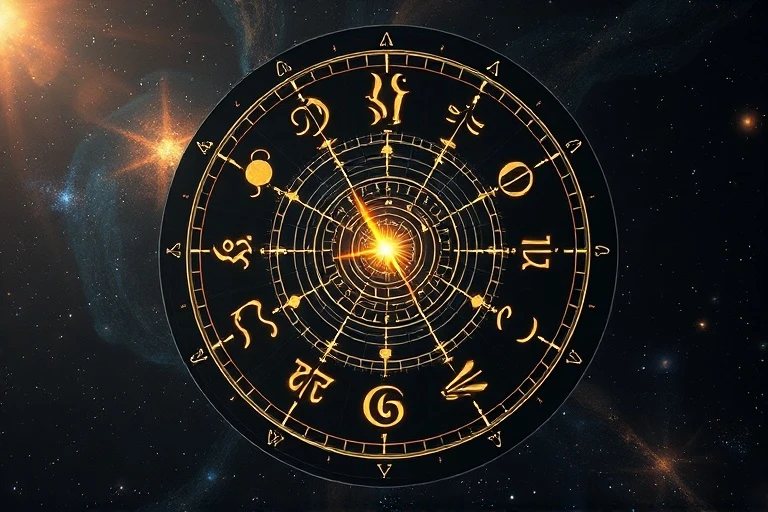
The Tarot Quantum Mechanics Intersecting Divination Reality acts as a personal celestial clock, marking the beginning of a new astrological year.
What is a Solar Return Chart?
A Solar Return chart is an astrological chart calculated for the exact moment the transiting Sun returns to the precise degree, minute, and second of its position in your natal birth chart. This event typically occurs around your birthday, though it can sometimes happen a day before or after, depending on the year and your birth time. Unlike a natal chart, which represents your lifelong potential, the Solar Return chart is a snapshot of the astrological influences that will be most prominent for you during a specific twelve-month period, from one birthday to the next. It acts as a predictive overlay, offering insights into the general tone, major events, and areas of focus for your personal year. Astrologers use this chart to understand the themes that will dominate your experiences, your psychological state, and your interactions with the world. It is a highly individualized forecast, unique to each person and each year, making it an invaluable resource for personal planning and self-awareness.
The Solar Return chart is considered a primary technique in Chrono-Astrology Ancestral Echoes Navigating Personal Time Cycles, offering a more granular and personal forecast than general transits. While transits describe the current planetary movements affecting everyone, the Solar Return specifically highlights how these energies will manifest for you based on your unique birth chart and the precise moment of your solar return. It's like a personal annual report from the cosmos, detailing the energetic landscape you'll traverse, providing a framework for understanding your personal .
How is a Solar Return Chart Calculated?
Calculating a Solar Return chart requires precise astrological data. You need your exact birth date, time, and place, just as you would for a natal chart. However, for the Solar Return, the chart is cast for the exact moment the Sun returns to its natal position, but for your current location or the location where you will be spending your birthday. This distinction is crucial, as the location determines the Ascendant and house cusps, which are central to the chart's interpretation. Many astrologers believe that if you travel for your birthday, you can "relocate" your Solar Return chart, potentially shifting the house placements and thus the areas of life emphasized for the year. This fascinating concept allows for a degree of conscious influence over your annual astrological themes.
Modern astrological software makes this calculation straightforward, but understanding the underlying principle is key. The software identifies the precise moment of the Sun's return and then generates a new chart for that specific time and the chosen location. The resulting chart will have its own Ascendant, Midheaven, and house placements, which are then analyzed in relation to the planetary positions for that moment. This dynamic interplay provides a nuanced forecast for the year ahead, revealing how universal energies converge with your personal blueprint. The accuracy of your birth time is paramount, as even a few minutes off can significantly alter the Ascendant and house cusps, leading to a misinterpretation of the year's themes. This precision ensures that the exact time of birth is respected for accurate predictions.

Ancient astrological tools like almanacs and telescopes were crucial for calculating celestial events.
Key Elements to Interpret in Your Solar Return Chart
Interpreting a Solar Return chart involves examining several key astrological elements, much like a natal chart, but with a focus on annual themes. The interplay between these elements reveals the overarching narrative of your year. It's crucial to remember that the Solar Return chart is always read in context with your natal chart; it describes how your natal potentials will be activated and expressed during the specific year. Key elements include the Ascendant, the Sun's house placement, the Moon's position, and the aspects formed by all planets.
The Solar Return Ascendant and Houses
The Ascendant (Rising Sign) of your Solar Return chart is arguably one of the most significant indicators of the year's theme. It represents the lens through which you will view the world and how you will be perceived. The sign on the Ascendant describes your general attitude and approach, while the house it falls into in your natal chart (if you overlay the two) can show which area of life will be most activated. For instance, a Solar Return Ascendant in Gemini suggests a year focused on communication, learning, and adaptability, while an Ascendant in Capricorn might bring a more serious, disciplined, and goal-oriented approach. The house placements of the planets in the Solar Return chart are also crucial, as they indicate the specific areas of your life where planetary energies will manifest, providing a detailed map of your annual experiences.
- Solar Return Ascendant in Aries: A year of new beginnings, courage, and asserting independence, often initiating personal projects.
- Solar Return Ascendant in Libra: Focus on relationships, partnerships, and seeking balance, potentially leading to new alliances or deepening existing ones.
- Solar Return 1st House: Emphasis on self, identity, and personal initiatives, a strong year for self-improvement and personal projects.
- Solar Return 7th House: Strong focus on significant others, marriage, or open enemies; partnerships and collaborations become central.
- Solar Return 10th House: Career, public image, and reputation come to the forefront, with opportunities for advancement or significant public roles.
The Sun's Position in the Solar Return Chart
While the Sun always returns to its natal degree, its house placement in the Solar Return chart changes and is highly significant. The house where the Solar Return Sun resides indicates the primary area of life where your energy, focus, and vitality will be directed throughout the year. This is where you will experience growth, self-expression, and a sense of purpose. The Sun's house placement often reveals the core theme around which your year revolves. For example, if your Solar Return Sun falls in the 10th House, your career, public image, and ambitions are likely to be a major focus, potentially bringing recognition or a significant professional shift. If it's in the 4th House, home, family, and emotional foundations will take precedence, suggesting a year of domestic focus or addressing roots. The sign of the Sun (which remains your natal Sun sign) will describe how you approach these areas, while the house shows where your energy is concentrated, providing a clear indication of your annual priorities.
The Moon's Position: Emotional Landscape
The Moon in the Solar Return chart reveals your emotional state, inner needs, and how you will experience comfort and security during the year. Its sign indicates the emotional tone, and its house placement points to the area of life where these feelings will be most active. A Solar Return Moon in the 2nd House, for instance, might suggest a year where emotional security is tied to finances or personal values, perhaps prompting a focus on budgeting or building material stability. In the 11th House, it could indicate emotional fulfillment through friendships and group associations, emphasizing social connections and collective goals. The Moon's aspects to other planets in the Solar Return chart further refine this emotional picture, indicating ease or tension in expressing feelings and meeting emotional needs. Understanding your Solar Return Moon can help you proactively manage your emotional well-being and seek support in the right areas.

The intricate web of planetary cycles reveals continuous evolution and interconnectedness in our lives.
Planets in Houses and Aspects
Each planet in your Solar Return chart carries specific energies that will be highlighted in the coming year. Their house placements show where these energies will be expressed, and the aspects they form with other planets (both within the Solar Return chart and to your natal chart planets) describe the dynamics and challenges or opportunities you'll encounter. For example, a strong Mars in the 5th House might indicate a year of passionate creative pursuits or active engagement with children, while a challenging aspect from Saturn to Venus could suggest difficulties in relationships or financial constraints that require careful management. The outer planets (Uranus, Neptune, Pluto) often signify broader, more transformative themes, indicating areas of radical change, spiritual awakening, or deep psychological shifts.
| Planet | General Influence in Solar Return | Example House Placement Impact |
|---|---|---|
| Mercury | Communication, learning, short trips, intellectual pursuits, siblings. | In 3rd House: Intense focus on local community, siblings, short trips, or writing and communication projects. |
| Venus | Love, relationships, finances, values, aesthetics, harmony. | In 5th House: New romantic interests, creative projects, or enjoyment through children; a year for pleasure and self-expression. |
| Mars | Action, drive, energy, conflict, assertion, courage. | In 6th House: Increased activity in work, health routines, or daily duties; potential workplace conflicts or a push for physical fitness. |
| Jupiter | Expansion, luck, growth, wisdom, philosophy, abundance. | In 9th House: Opportunities for higher education, long-distance travel, or spiritual exploration; a year of broadening horizons. |
| Saturn | Discipline, responsibility, challenges, structure, lessons, maturity. | In 10th House: Significant career responsibilities, public recognition, or tests related to authority; a period of hard work and building foundations. |
| Uranus | Innovation, sudden changes, rebellion, freedom, disruption. | In 11th House: Unexpected changes in friendships, group affiliations, or future goals; a year for breaking free from conventional social norms. |
| Neptune | Spirituality, illusion, dreams, compassion, dissolution, creativity. | In 12th House: Heightened intuition, spiritual retreat, or confronting hidden issues; a year for deep introspection and connecting with the subconscious. |
| Pluto | Transformation, power, regeneration, intensity, profound change. | In 8th House: Profound transformations in shared resources, intimacy, or psychological depths; a year of intense personal evolution and shedding old layers. |
The aspects formed between these planets within the Solar Return chart, as well as between Solar Return planets and natal planets, are crucial. Conjunctions amplify energies, oppositions highlight polarities and relationship dynamics, squares indicate tension and challenges requiring action, and trines/sextiles offer ease and opportunities. For instance, a challenging square between Solar Return Mars and Saturn could indicate a year of frustration and obstacles in pursuing goals, while a harmonious trine between Solar Return Jupiter and Venus might signify ease in financial matters and enjoyable social experiences. Understanding these astrological aspects is key to a complete interpretation.
The Lunar Nodes in the Solar Return Chart
The Lunar Nodes (North Node and South Node) in the Solar Return chart point to areas of karmic growth and release for the year. The North Node indicates where you are encouraged to grow and embrace new experiences, pushing you towards your evolutionary path. The South Node highlights patterns, comfort zones, or behaviors you are meant to let go of, as they no longer serve your highest good. Their house placement is particularly telling, showing the specific life arenas where these evolutionary themes will play out. For example, North Node in the 10th House suggests a year focused on career advancement and public recognition, urging you to step into your authority and embrace leadership roles, while the South Node in the 4th House might indicate releasing old family patterns or home dependencies that hinder personal progress. The signs of the Nodes also add a layer of meaning, describing the qualities of growth and release. Understanding the nodal axis in your Solar Return chart provides a powerful compass for your spiritual and personal development during the year. For more on this, explore Karmic Astrology: North Node and South Node Explained.
Relationship Between Solar Return and Natal Chart
A common mistake in interpreting Solar Return charts is to view them as entirely separate entities. In reality, the Solar Return chart is always an extension and activation of your natal chart. It reveals which natal potentials will be brought to the forefront and how they will manifest during the year. When analyzing a Solar Return, astrologers often overlay it onto the natal chart, looking for conjunctions, oppositions, and squares between Solar Return planets and natal planets. These connections are particularly potent, indicating significant activations of natal themes.
For instance, if a Solar Return planet conjuncts a natal planet, the energies of that natal planet will be strongly emphasized and expressed in the year ahead. If the Solar Return Ascendant falls in a particular natal house, that house's themes will become a major focus. This layered approach provides a comprehensive understanding of how your personal evolution is unfolding within the context of your inherent astrological blueprint. The Solar Return doesn't change your destiny, but it illuminates the specific chapter you are currently writing. This intricate connection is vital for understanding your Feng Shui Digital Nomads Harmonizing Virtual Well-being in a dynamic context.
Practical Application: Using Your Solar Return Chart for the Year Ahead
The true value of a Solar Return chart lies in its practical application. It’s not about fatalistic predictions, but rather about gaining foresight and understanding to make informed choices. By knowing the dominant themes and energies of your year, you can consciously work with them rather than against them. This empowers you to harness favorable planetary alignments and prepare for potential challenges. This proactive approach allows you to co-create your year, aligning your actions with cosmic rhythms. For example, if your Solar Return chart shows a strong emphasis on the 6th House (work, health, daily routines), it might be an ideal year to implement new fitness regimes, optimize your workflow, or seek new employment opportunities. Conversely, if the 12th House (introspection, hidden matters, spirituality) is highlighted, it could be a year best spent in quiet reflection, spiritual growth, or addressing subconscious patterns, rather than pushing for external achievements.
The Solar Return chart can also be a valuable tool for setting annual goals and intentions. Reviewing the chart shortly after your birthday can help you align your personal aspirations with the prevailing cosmic energies. This doesn't mean passively accepting what the chart suggests, but rather actively engaging with its themes. If a challenging aspect is present, you can consciously prepare to face the associated issues with resilience and a plan. If harmonious aspects dominate, you can lean into those energies to maximize opportunities for growth and enjoyment. It's about informed navigation, not blind adherence. This proactive stance is similar to how electional astrology guides auspicious timing for events.
Limitations and Nuances in Interpretation
While incredibly insightful, the Solar Return chart should not be interpreted in isolation. It is always read in conjunction with your natal chart, as the natal chart represents your fundamental blueprint and potential. The Solar Return chart activates specific potentials within that natal framework, never overriding your core astrological makeup. It's a layer of annual influence, not a complete rewrite of your cosmic identity.
Furthermore, it's essential to remember that astrology offers tendencies and influences, not absolute decrees. Free will always plays a significant role. The Solar Return chart highlights areas of focus and potential experiences, but how you respond to these energies is ultimately up to you. It's a tool for self-awareness and strategic planning, not a crystal ball dictating your fate. Consulting with a professional astrologer can provide deeper, more personalized insights into the complex interplay of your Solar Return and natal charts, helping you to understand the nuances and integrate the annual themes into your life effectively. Always approach astrological interpretations with an open mind and a sense of personal agency.
Conclusion
The Solar Return chart is a fascinating and highly effective method within predictive astrology for understanding the unique energetic blueprint of your year. By analyzing the positions of the planets, houses, and the Ascendant at the precise moment of your solar return, you gain invaluable insights into the themes, challenges, and opportunities that will unfold. This annual astrological forecast empowers you to navigate your personal cycles with greater intention, making each birthday a powerful marker for reflection, planning, and growth. Embrace the wisdom of your Solar Return chart to illuminate your path and make the most of every year, transforming potential into purposeful action and a deeper connection to your cosmic journey.
Fuente: Contenido híbrido asistido por IAs y supervisión editorial humana.


Comments
Post a Comment