
Chinese Zodiac Cycle: 12 Animal Signs Explained | StarPluto
The Chinese Zodiac, known as Sheng Xiao (生肖), is a fascinating astrological system that has captivated cultures for millennia. Unlike Western astrology, which is based on monthly solar signs, the Chinese Zodiac operates on a 12-year cycle, with each year represented by a specific animal and its attributed characteristics. This ancient system is deeply woven into Chinese culture, influencing personality traits, compatibility, career paths, and even life forecasts.
Understanding the Chinese Zodiac cycle and the order of its twelve animal signs provides profound insights into oneself and others. It’s a framework that offers a unique perspective on human nature, destiny, and interpersonal dynamics. This comprehensive guide will delve into the origins, the legend behind the animal order, and the distinct traits associated with each of the twelve zodiac animals, offering an educational and accessible introduction to this rich tradition.
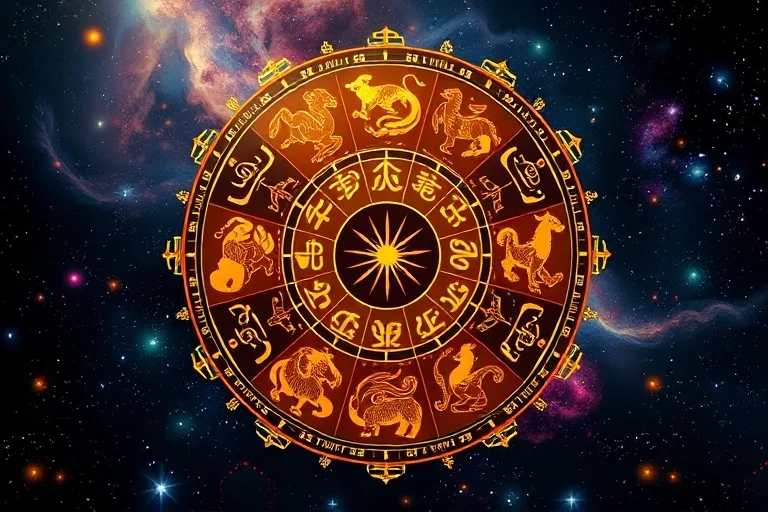
Table of Contents
Origins and the Legend of the Great Race
The exact origins of the Chinese Zodiac are shrouded in ancient history, with archaeological evidence suggesting its existence over 2,000 years ago during the Qin Dynasty. However, its popularization and the establishment of the 12-animal cycle are often attributed to the Han Dynasty. The zodiac is intrinsically linked to the traditional Chinese lunisolar calendar, which dictates agricultural practices, festivals, and personal fortunes.
The most beloved story explaining the order of the animals is "The Great Race" (or the Jade Emperor's Race). According to legend, the Jade Emperor, ruler of Heaven, decided to organize a race across a mighty river to determine which animals would be honored with a place in the zodiac. The first twelve animals to cross the river would be chosen, and their order in the zodiac would correspond to their finishing position.
Each animal used its unique strengths and cunning to navigate the challenging course. The Rat, clever and resourceful, rode on the Ox's back and then jumped off at the last moment to claim first place. The Ox, strong and diligent, came in second. The Tiger, powerful but struggling with the currents, secured third. The Rabbit, hopping across stones and a floating log, managed fourth. The Dragon, despite its ability to fly, stopped to help others and arrived fifth. The Snake, hidden on the Horse's hoof, startled the Horse to take sixth place, leaving the Horse in seventh. The Goat, Monkey, and Rooster worked together on a raft, with the Goat taking eighth, the Monkey ninth, and the Rooster tenth. Finally, the Dog, distracted by playing in the water, came eleventh, and the Pig, after stopping for a snack and a nap, arrived last, completing the cycle.
This legend not only provides a whimsical explanation for the zodiac's order but also subtly highlights the inherent characteristics attributed to each animal – from the Rat's cunning to the Ox's perseverance and the Dragon's benevolence. It serves as a foundational narrative for understanding the deeper meanings behind the Chinese Zodiac.
The 12 Animal Signs in Order: Characteristics and Years
Each of the twelve animals in the Chinese Zodiac cycle carries a unique set of personality traits, strengths, and weaknesses. These characteristics are believed to influence individuals born in that animal's year. Below is a detailed look at each sign in its traditional order, along with their associated years and key attributes.
1. The Rat (鼠 – Shǔ)
Years: 1924, 1936, 1948, 1960, 1972, 1984, 1996, 2008, 2020
Key Traits: Intelligent, quick-witted, charming, resourceful, adaptable, ambitious, and thrifty. Rats are known for their sharp minds and ability to seize opportunities. They can sometimes be secretive or cunning, but they are also loyal to their friends and family.
2. The Ox (牛 – Niú)
Years: 1925, 1937, 1949, 1961, 1973, 1985, 1997, 2009, 2021
Key Traits: Diligent, dependable, strong, determined, honest, and patient. Oxen are hardworking and methodical, preferring stability and routine. They are often quiet and reserved but possess immense inner strength and resilience.
3. The Tiger (虎 – Hǔ)
Years: 1926, 1938, 1950, 1962, 1974, 1986, 1998, 2010, 2022
Key Traits: Brave, confident, competitive, unpredictable, charming, and authoritative. Tigers are natural leaders, full of courage and enthusiasm. They love challenges and can be impulsive, but they are also generous and protective of those they care about.
4. The Rabbit (兔 – Tù)
Years: 1927, 1939, 1951, 1963, 1975, 1987, 1999, 2011, 2023
Key Traits: Gentle, elegant, kind, responsible, cautious, and artistic. Rabbits are peaceful and prefer harmony, often avoiding conflict. They are popular and compassionate, though sometimes they can be overly sensitive or shy.
5. The Dragon (龙 – Lóng)
Years: 1928, 1940, 1952, 1964, 1976, 1988, 2000, 2012, 2024
Key Traits: Enthusiastic, confident, intelligent, ambitious, charismatic, and powerful. Dragons are natural born leaders, often seen as lucky and successful. They can be a bit arrogant or demanding, but they are also generous and inspiring. Discover more about the Dragon in the Chinese Zodiac.
6. The Snake (蛇 – Shé)
Years: 1929, 1941, 1953, 1965, 1977, 1989, 2001, 2013, 2025
Key Traits: Intelligent, wise, enigmatic, intuitive, sophisticated, and insightful. Snakes are deep thinkers and often have a mysterious aura. They are graceful and calm under pressure but can be possessive or suspicious. Learn more about the Snake in the Chinese Zodiac.
7. The Horse (马 – Mǎ)
Years: 1930, 1942, 1954, 1966, 1978, 1990, 2002, 2014, 2026
Key Traits: Energetic, active, independent, enthusiastic, cheerful, and social. Horses love freedom and adventure. They are popular and enjoy being in the spotlight but can sometimes be impatient or impulsive.
8. The Goat (羊 – Yáng)
Years: 1931, 1943, 1955, 1967, 1979, 1991, 2003, 2015
Key Traits: Gentle, mild-mannered, creative, compassionate, artistic, and empathetic. Goats are peace-loving and enjoy quiet, comfortable lives. They can be indecisive or overly sensitive but are also very kind and artistic.
9. The Monkey (猴 – Hóu)
Years: 1932, 1944, 1956, 1968, 1980, 1992, 2004, 2016
Key Traits: Witty, intelligent, curious, playful, innovative, and mischievous. Monkeys are quick learners and problem-solvers, always looking for new challenges. They can be restless or cunning but are also very charming and adaptable. For more on this sign, explore Astro-Gastronomía Consciente y Feng Shui Personalizado: Nutrición Energética.
10. The Rooster (鸡 – Jī)
Years: 1933, 1945, 1957, 1969, 1981, 1993, 2005, 2017
Key Traits: Observant, hardworking, courageous, honest, confident, and proud. Roosters are meticulous and precise, often perfectionists. They are straightforward and outspoken but can sometimes be critical or boastful.
11. The Dog (狗 – Gǒu)
Years: 1934, 1946, 1958, 1970, 1982, 1994, 2006, 2018
Key Traits: Loyal, honest, responsible, cautious, protective, and friendly. Dogs are known for their unwavering loyalty and strong sense of justice. They are reliable and trustworthy but can sometimes be pessimistic or stubborn.
12. The Pig (猪 – Zhū)
Years: 1935, 1947, 1959, 1971, 1983, 1995, 2007, 2019
Key Traits: Compassionate, generous, honest, diligent, kind, and sincere. Pigs are peace-loving and enjoy life's simple pleasures. They are popular and good-natured but can sometimes be naive or easily fooled.
The Five Elements and Their Influence
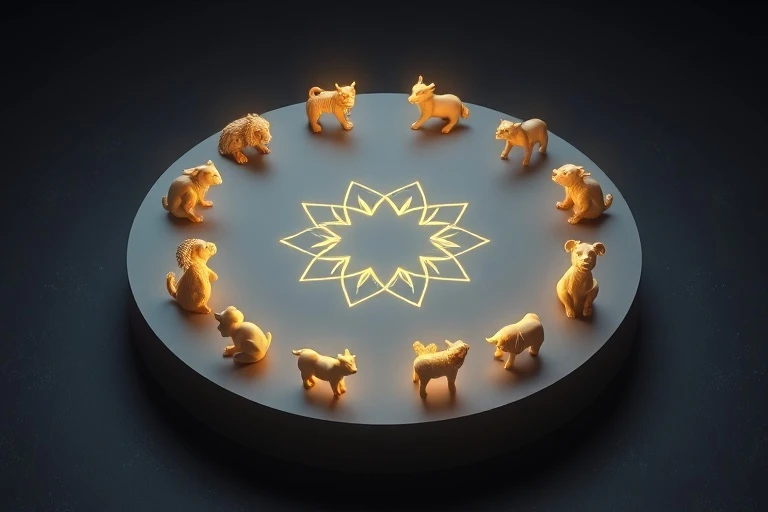
Beyond the twelve animal signs, Chinese astrology incorporates the concept of the Five Elements: Wood, Fire, Earth, Metal, and Water. These elements cycle through a 60-year period, meaning that each animal sign is associated with a specific element every 60 years. For example, there's a Wood Rat, Fire Rat, Earth Rat, Metal Rat, and Water Rat, each with distinct nuances to their personality.
| Element | Characteristics | Associated Years (Example) |
|---|---|---|
| Wood | Creative, imaginative, compassionate, cooperative, and flexible. | 1954, 1964, 1974, 1984, 1994, 2004, 2014 |
| Fire | Dynamic, passionate, adventurous, decisive, and energetic. | 1956, 1966, 1976, 1986, 1996, 2006, 2016 |
| Earth | Practical, stable, reliable, patient, and disciplined. | 1958, 1968, 1978, 1988, 1998, 2008, 2018 |
| Metal | Strong-willed, determined, ambitious, independent, and disciplined. | 1960, 1970, 1980, 1990, 2000, 2010, 2020 |
| Water | Sensitive, intuitive, adaptable, compassionate, and persuasive. | 1962, 1972, 1982, 1992, 2002, 2012, 2022 |
The combination of an animal sign with an element creates a more nuanced personality profile. For instance, a Wood Dragon might be more creative and flexible than a Metal Dragon, who would likely be more resolute and disciplined. This elemental layer adds depth and complexity to the Chinese Zodiac, allowing for a more personalized astrological interpretation.
How to Determine Your Chinese Zodiac Sign
Determining your Chinese Zodiac sign is straightforward: it is based on your birth year. However, there's a crucial detail to remember: the Chinese New Year (Lunar New Year) falls on a different date each year, usually between late January and mid-February. Therefore, if you were born in January or early February, your zodiac animal might be the one from the previous solar year.
For example, if you were born on January 25, 1985, you might assume you are an Ox. However, the 1985 Chinese New Year began on February 20. This means anyone born before February 20, 1985, would still be a Rat, the animal of 1984. Always consult a Chinese calendar or a reliable online calculator to confirm your exact sign if your birthday falls within this transitional period. This precision ensures an accurate understanding of your associated traits and elemental influences.
Cultural Significance and Modern Relevance
The Chinese Zodiac is far more than a simple astrological system; it's a cornerstone of Chinese culture. It influences everything from naming children to choosing marriage partners, business ventures, and even daily decisions. Festivals like the Lunar New Year prominently feature the zodiac animal of the incoming year, with decorations, greetings, and traditions all revolving around its symbolism. The zodiac also plays a significant role in determining compatibility between individuals, with certain animal pairings believed to be more harmonious than others. This ancient wisdom continues to guide many in their personal and professional lives.
In modern times, the Chinese Zodiac remains incredibly popular, not only in China but across the globe. Its principles are applied in various contexts, from personal development and self-understanding to marketing and popular culture. Many people find comfort and guidance in understanding their zodiac animal's traits, using this knowledge to navigate challenges, leverage strengths, and foster better relationships. The enduring appeal of the Chinese Zodiac lies in its timeless wisdom and its ability to offer a unique lens through which to view the complexities of human existence.
The rich tapestry of the Chinese Zodiac, with its twelve distinct animal signs and the intricate interplay of the Five Elements, offers a profound system for understanding personality and destiny. From the cunning Rat to the benevolent Pig, each animal contributes a unique thread to the fabric of human experience, providing guidance and insight for millions worldwide. Whether viewed as a serious astrological tool or a fascinating cultural tradition, the Chinese Zodiac continues to enlighten and entertain.
Fuente: Contenido híbrido asistido por IAs y supervisión editorial humana.


Comments
Post a Comment