
Urban Geomancy Celestial Mechanics Aligning Dwellings Well-being
Urban geomancy represents a fascinating intersection of ancient wisdom and modern urban planning, seeking to harmonize city dwellings with the subtle energies of the Earth and the cosmos. This discipline, often viewed as a spiritual or metaphysical approach to architecture and city design, proposes that the alignment of our built environments with celestial mechanics can profoundly impact human well-being, productivity, and overall societal harmony. It moves beyond mere aesthetics and functionality, delving into the energetic blueprint of urban spaces.
At its core, urban geomancy suggests that cities are not just collections of buildings but living organisms, constantly interacting with cosmic and telluric forces. Understanding and consciously integrating these interactions into urban design can create environments that support, rather than deplete, human vitality. This introductory exploration aims to demystify urban geomancy, highlighting its principles, historical context, and potential applications for creating more balanced and thriving urban ecosystems.
Table of Contents
- Historical Roots and Ancient Wisdom
- Core Principles of Urban Geomancy
- Integrating Celestial Mechanics into Design
- Practical Applications in Urban Planning
- Benefits for Human Well-being
- Challenges and Future Perspectives
Historical Roots and Ancient Wisdom
The concept of aligning human habitats with natural and cosmic forces is not new; it has deep roots in various ancient civilizations across the globe. From the sophisticated city planning of the Indus Valley Civilization to the sacred architecture of ancient Egypt, cultures have long recognized the profound influence of environment on life. These traditions, though diverse in their expressions, share a common understanding: the universe is interconnected, and human dwellings are integral parts of this grand cosmic tapestry.
Perhaps the most well-known examples are Feng Shui from China and Vastu Shastra from India. Both systems offer intricate guidelines for site selection, building orientation, layout, and material choices, all aimed at optimizing the flow of vital energy, or 'Qi' in Feng Shui and 'Prana' in Vastu. These practices consider factors such as cardinal directions, water bodies, mountains, and even specific Lunar Mansions to ensure that structures are built in harmony with their surroundings, both earthly and celestial.
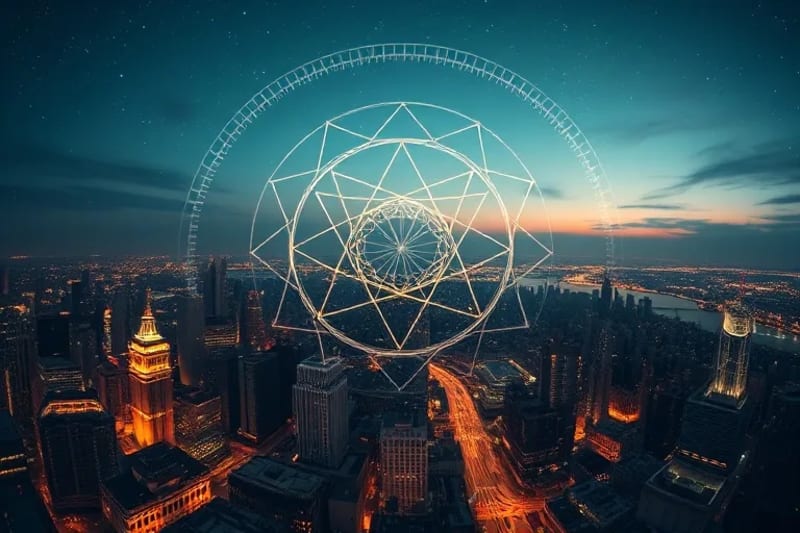 A modern city integrated with subtle cosmic and geometric patterns, reflecting the principles of urban geomancy.
Beyond Asia, indigenous cultures worldwide have practiced their own forms of geomancy. Native American tribes, for instance, often oriented their settlements and sacred sites according to solstices, equinoxes, and specific star alignments, believing these connections fostered spiritual well-being and community strength. The megalithic structures of Europe, like Stonehenge, also suggest an advanced understanding of celestial mechanics and their application in monumental architecture. These historical precedents underscore the universal human impulse to create spaces that resonate with the natural order, laying the groundwork for contemporary urban geomancy.
Core Principles of Urban Geomancy
Urban geomancy is built upon several fundamental principles that guide the creation of energetically balanced and harmonious urban environments. These principles acknowledge the intricate interplay between various forces, both seen and unseen, that influence the quality of life within a city.
- Energy Flow (Qi/Prana): This is perhaps the most central concept. Geomancy posits that a vital life force permeates all things, including urban spaces. The goal is to design cities that facilitate the smooth, unobstructed flow of this energy, avoiding stagnant or aggressive energy patterns that can lead to discomfort, stress, or illness. This involves careful consideration of building shapes, street layouts, and the placement of open spaces.
- Celestial Influences: Planets, stars, and other celestial bodies are believed to exert subtle but significant influences on Earth and its inhabitants. Urban geomancy considers the positions and movements of these bodies, integrating astrological and astronomical data into design decisions. This can range from orienting buildings to capture specific solar or lunar energies to understanding how planetary alignments might affect certain urban zones or activities.
- Earth Energies (Ley Lines and Geological Features): The Earth itself is seen as a living entity with its own energy grid, often referred to as ley lines or dragon currents. These invisible lines of energy are thought to carry powerful telluric forces. Geomancers seek to identify and work with these lines, siting buildings and infrastructure in locations that either harness beneficial energies or mitigate negative ones. Geological features like mountains, rivers, and even underground water sources are also factored into this energetic assessment.
- Topography and Landscape: The natural contours of the land play a crucial role. A geomantically sound design respects and integrates the existing topography, rather than imposing an artificial structure upon it. This includes understanding how slopes, elevations, and water bodies affect energy flow and microclimates, and how they can be utilized to enhance the overall vitality of a site.
By meticulously analyzing these factors, urban geomancy aims to create a symbiotic relationship between the built environment and the natural world, fostering a sense of balance and well-being for its inhabitants. It's a holistic approach that views a city as an extension of nature, rather than a separate entity.
Integrating Celestial Mechanics into Design
The integration of celestial mechanics is a distinguishing feature of urban geomancy, elevating it beyond purely terrestrial considerations. This involves a deep understanding of how the movements and positions of celestial bodies can be translated into actionable design principles for urban spaces. It's not about predicting individual fates, but about understanding broad energetic patterns that influence collective well-being.
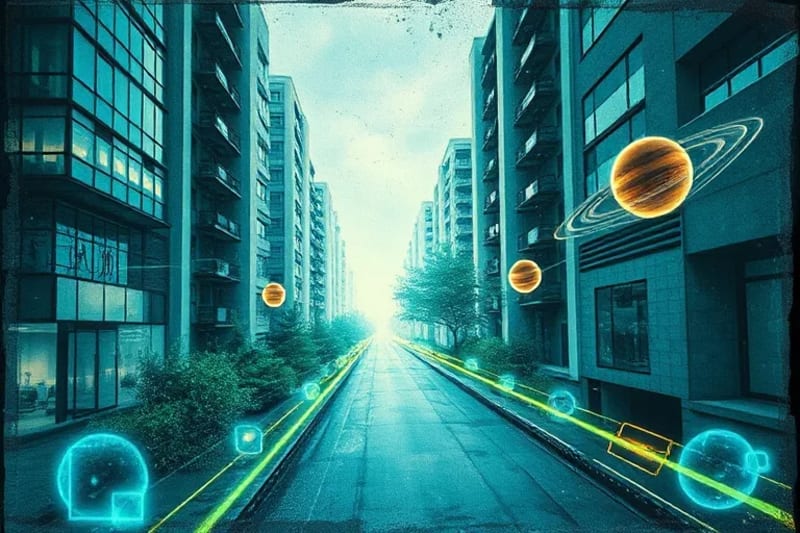 Abstract depiction of urban energy flow influenced by celestial bodies and zodiacal archetypes.
One key aspect is the consideration of planetary alignments. Just as ancient temples were often aligned with significant astronomical events, urban geomancy suggests that city layouts or crucial public buildings can benefit from such orientations. For example, a central plaza might be designed to align with the sunrise on the summer solstice, creating a focal point for communal energy and celebration. Different planets are associated with distinct energies, and their influence can be considered when designating specific zones within a city.
The Zodiac Archetypes also play a role. Each zodiac sign is linked to certain qualities and energies. A geomancer might consider these archetypes when planning different districts of a city. For instance, a financial district might be designed with elements resonating with Capricorn or Taurus energies, while a creative or artistic quarter might align with Leo or Libra. This isn't about rigid adherence but about infusing spaces with qualities that support their intended function and the well-being of those who inhabit them.
Lunar cycles, with their profound effect on tides and human emotions, are another critical element. Designing public spaces or residential areas to harmonize with lunar phases can enhance emotional balance and community rhythms. For example, areas designed for quiet contemplation might be more active during certain lunar phases, while vibrant social hubs might peak during others. The understanding of these cycles allows for a more dynamic and responsive urban design, one that ebbs and flows with natural rhythms.
Furthermore, the concept extends to the micro-level, influencing individual building orientation and window placement to maximize beneficial solar gain or minimize disruptive cosmic energies. This intricate dance between the macrocosm and the microcosm is what gives urban geomancy its unique depth and potential for creating truly integrated and life-affirming urban environments.
Practical Applications in Urban Planning
Translating the esoteric principles of urban geomancy into tangible urban planning strategies requires a multidisciplinary approach, combining traditional wisdom with modern architectural and environmental science. The practical applications are diverse and can influence every stage of urban development, from initial site selection to the fine details of interior design.
- Site Selection and Orientation: Before any construction begins, geomancers assess the energetic properties of a site. This involves analyzing ley lines, water sources, prevailing winds, and solar paths. Buildings are then oriented to maximize positive energy flow and protection from harsh elements. For example, a building might be angled to receive optimal morning sun while being shielded from strong afternoon winds.
- Street Layouts and Public Spaces: The design of roads, pathways, and public squares is crucial for directing energy flow throughout the city. Curving streets are often preferred over straight ones to prevent energy from rushing too quickly, which can create a sense of unease. Public parks and green spaces are strategically placed to act as "energy reservoirs," providing areas for relaxation and rejuvenation.
- Material Choices and Energetic Properties: Different materials are believed to possess distinct energetic qualities. Natural materials like wood, stone, and clay are generally favored for their grounding and harmonizing properties. The use of specific crystals or metals might also be incorporated into foundations or key structural points to enhance or direct energy, similar to how crystal grids are used for energetic balance.
- Green Spaces and Water Features: Parks, gardens, and water bodies are not merely aesthetic additions but vital components for energetic balance. Water features, such as fountains or ponds, are believed to attract and circulate positive energy, while green spaces absorb negative energies and provide a calming influence. Their placement is carefully considered to optimize these effects.
- Building Forms and Aesthetics: The shape and form of buildings also contribute to their energetic signature. Sharp angles and imposing structures might create aggressive energy, while softer, more organic shapes can promote a sense of peace and flow. The overall aesthetic aims for balance, proportion, and a sense of belonging within the larger landscape.
These applications demonstrate that urban geomancy is not just an abstract philosophy but a practical framework for creating cities that are not only functional and beautiful but also deeply supportive of human life. It encourages a mindful approach to development, where every design decision is weighed against its energetic implications.
Benefits for Human Well-being
The ultimate goal of urban geomancy is to enhance the well-being of city inhabitants. By creating environments that are in harmony with natural and cosmic forces, practitioners believe that a wide range of benefits can be realized, affecting individuals and communities alike. These benefits span physical, mental, emotional, and even spiritual dimensions.
- Physical Health: A balanced energetic environment can contribute to better physical health. This might manifest as improved sleep patterns, reduced instances of chronic stress-related illnesses, and a general feeling of vitality. Proper ventilation, natural light, and the absence of disruptive electromagnetic fields, often considered in geomantic design, directly impact physical comfort and health.
- Mental Clarity and Emotional Balance: Harmonious surroundings can significantly reduce mental fatigue and promote emotional stability. Spaces designed with geomantic principles often evoke a sense of calm and clarity, fostering better concentration and reducing anxiety. The subtle energetic support helps to mitigate the often overwhelming sensory input of urban life.
- Community Harmony and Social Cohesion: When urban spaces are designed to promote positive energy flow and interaction, they can foster stronger community bonds. Public areas that feel inviting and safe encourage social engagement, leading to a greater sense of belonging and collective well-being. This can reduce social friction and enhance overall civic pride.
- Enhanced Productivity and Creativity: Environments that are energetically balanced are also conducive to higher levels of productivity and creative output. Whether in workplaces, educational institutions, or residential areas, a harmonious setting can inspire innovation, improve focus, and reduce burnout, allowing individuals to thrive in their endeavors.
- Spiritual Connection: For many, urban geomancy provides a pathway to reconnect with the spiritual dimensions of existence. Living in spaces that acknowledge and integrate cosmic rhythms can deepen one's sense of purpose and connection to the larger universe, fostering a more holistic and meaningful life experience.
These benefits underscore the transformative potential of urban geomancy, suggesting that our built environments can be powerful tools for fostering a healthier, happier, and more connected human experience. It's a vision of cities that nurture the soul as much as they house the body.
Challenges and Future Perspectives
Despite its profound potential, urban geomancy faces several challenges in its broader adoption and integration into mainstream urban planning. The primary hurdle is often the perception of geomancy as a "soft science" or a purely spiritual practice, lacking empirical validation in the eyes of conventional urban developers and policymakers. Bridging this gap between ancient wisdom and modern scientific rigor is crucial for its future.
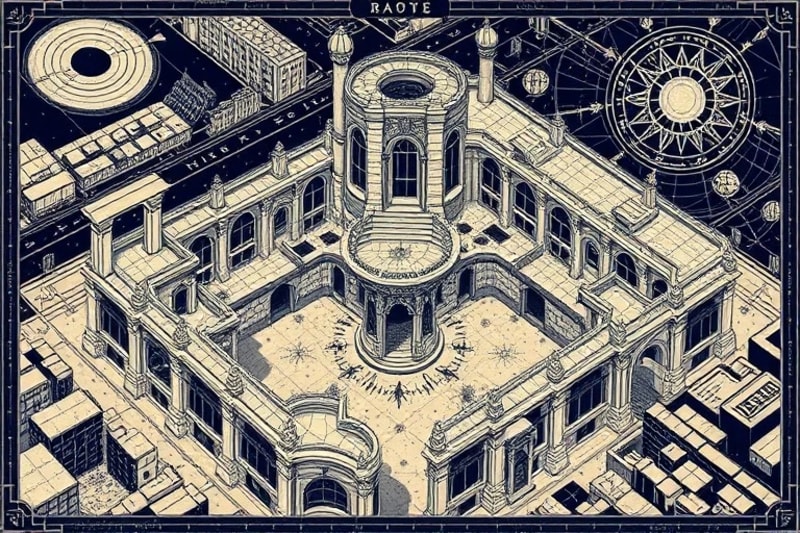 A detailed architectural blueprint illustrating the integration of geomantic principles and celestial mechanics.
One path forward involves rigorous interdisciplinary research. Collaborations between geomancers, architects, urban planners, environmental scientists, and even neuroscientists could help quantify the subtle effects of geomantically designed spaces on human physiology and psychology. Measuring parameters like stress levels, cognitive function, and emotional responses in different urban environments could provide the empirical data needed to gain wider acceptance.
Technological integration also offers exciting possibilities. Advanced mapping technologies, AI-driven data analysis, and sophisticated simulation tools could be used to model energy flows in urban environments, predict the impact of different design choices, and even identify optimal locations for development based on geomantic principles. This could lead to a new field of Cosmic Sociology AI, where data-driven insights meet ancient esoteric knowledge.
Furthermore, cultural adaptation is key. While rooted in specific traditions, the principles of urban geomancy can be adapted to diverse cultural contexts, respecting local customs and environmental conditions. This global adoption requires a flexible and inclusive approach, recognizing that the essence of harmonious design transcends geographical boundaries. Educational initiatives and pilot projects showcasing successful geomantically designed communities can also play a vital role in demonstrating its value.
The future of urban geomancy lies in its ability to evolve, integrating scientific inquiry and technological innovation with its profound spiritual and ecological wisdom. As humanity increasingly recognizes the need for sustainable and human-centric urban development, the principles of aligning city dwellings with celestial mechanics for well-being may become an indispensable tool for creating the cities of tomorrow.
Explore Further Insights
- Lunar Mansions & Urban Geomancy
- Celestial Mechanics in Cities
- Wood & Water Snake Analysis
- Cosmic Sociology & AI
- Astro-Genomics & Health
- Lunar Nodes & Soul Purpose
- Zodiac Archetypes Modern Guide
- Zi Wei Dou Shu Insights
- Ancient Egyptian Star Lore
- Crystal Grids & Retrogrades
- Esoteric Symbolism & AI Art
- Astrology Centaurs Archetypes
- Manifestation Magic Rituals
- Chinese Zodiac Significance
- Snake Rooster Compatibility
- AI Preventive Medicine
- Psychology of Scream Phenomenon
- Impostor Syndrome Insights
- Sacred Geometry Universal Codes
- Law of Attraction Astrology
- Lilith Karmic Aspects
- Modern Martyrs Testimonies
- Rosary Theology Promises
- Prayer for Souls in Purgatory
Source: Hybrid content assisted by AI and human editorial supervision.


Comments
Post a Comment