
Sigils Power Creating Personal Symbols Manifestation Guide
Sigils are powerful, personalized symbols designed to manifest specific intentions and desires. Rooted in ancient magical traditions and popularized by modern esoteric practices, they offer a direct pathway to communicate with the subconscious mind and influence reality. This guide explores the fascinating world of sigils, providing an educational and accessible introduction to their creation, activation, and ethical application for personal transformation.

A conceptual representation of the energy and intention involved in creating a sigil for manifestation.
Visual source subject to ecosystem availability: Wikimedia Commons under CC BY-SA 4.0 license or conceptual AI rendering.
The concept of a sigil transcends mere artistic expression; it is a condensed form of will and desire, encoded into a visual language. By bypassing the conscious mind's analytical filters, sigils aim to impress intentions directly upon the subconscious, which then works to align external circumstances with the desired outcome. This process taps into the deep psychological mechanisms of belief and expectation, often leading to profound shifts in one's life.
Table of Contents
- Historical Roots and Evolution of Sigil Magic
- The Anatomy of a Sigil: Intention and Symbolism
- Practical Methods for Sigil Creation
- Activating Your Sigil: Techniques for Imprinting Intent
- Integrating Sigils into Daily Life and Practice
- Ethical Considerations and Responsible Sigil Use
- Benefits and Transformative Potential of Sigils
- Conclusion: Harnessing Personal Power Through Symbols
Historical Roots and Evolution of Sigil Magic
The practice of creating symbolic representations of desires is not new; it has roots in various ancient cultures and magical traditions. From Egyptian hieroglyphs believed to hold divine power to alchemical symbols representing complex processes of transformation, humanity has long used visual language to convey and invoke powerful concepts. These early forms laid the groundwork for what we now recognize as sigil magic.
In the late 19th and early 20th centuries, the English artist and occultist Austin Osman Spare significantly modernized and popularized the concept of sigils. Spare's method involved distilling a desire or intention into a concise statement, then removing repeating letters and graphically combining the remaining ones into a unique, abstract symbol. His approach emphasized bypassing the conscious mind's censorship to directly access the subconscious, a core principle still central to sigil work today.
Following Spare, the chaos magic movement further embraced and expanded upon sigil techniques. Chaos magicians adopted a pragmatic and experimental approach, viewing sigils as powerful tools for psychological programming and reality manipulation, rather than relying on complex ritualistic frameworks. This adaptability has made sigil magic accessible to a broad audience, allowing individuals to customize their practice to suit their personal beliefs and needs. The evolution of sigils reflects a continuous human endeavor to understand and influence the subtle energies of existence, much like the broader journey of spiritual transformation and personal growth.
The Anatomy of a Sigil: Intention and Symbolism
At its heart, a sigil is a graphical representation of a focused intention. The effectiveness of a sigil lies not in its aesthetic beauty, but in the clarity and emotional charge embedded within the initial desire. Before drawing a single line, it is crucial to define precisely what you wish to manifest. Vague intentions lead to vague results, while specific and positive affirmations lay a strong foundation for successful sigil creation.
The process begins with formulating a clear, concise statement of intent. This statement should be positive, present tense, and personal. For example, instead of "I want to stop being poor," one might use "I attract abundance easily." This positive framing ensures that the subconscious mind receives a clear directive without negative connotations or resistance. The choice of words is paramount, as they are the building blocks of the symbolic representation that will follow.
Symbolism within a sigil can be conscious or unconscious. While some methods involve deliberately choosing shapes or lines that resonate with the intention, others rely on an automatic process that allows the subconscious to guide the design. The key is to create a symbol that is unique, personal, and devoid of immediate conscious association with the original statement. This "de-linking" from the conscious meaning is vital for the sigil to bypass rational thought and work directly on deeper levels of the psyche.
Practical Methods for Sigil Creation
There are several popular methods for creating sigils, each offering a unique pathway to translate intention into a visual form. Experimenting with different techniques can help you discover which resonates most effectively with your personal practice and desired outcomes.

Tools and elements commonly used in the practice of sigil crafting and esoteric work.
One of the most common approaches is the **Word-Based Method**, popularized by Austin Osman Spare. This involves:
**Step 1: Formulate your clear, positive intention.** (e.g., "MY WILL IS TO HAVE ABUNDANCE NOW")
**Step 2: Remove all repeating letters.** (e.g., M Y W I L S T O H A V B U N D C E N)
**Step 3: Graphically combine the remaining letters.** Arrange them in a way that forms a unique, abstract symbol. The goal is to make it unrecognizable from the original words.
Another powerful technique is the **Image-Based Method**. Instead of words, you visualize your desired outcome as vividly as possible. Then, you draw a symbol that represents the *essence* of that visualization. This can be more intuitive and less structured than the word-based method, allowing for a direct translation of feeling into form. This method often taps into deeper archetypal imagery, similar to how zodiac myths and archetypes guide modern spiritual self-discovery.
**Automatic Drawing** involves entering a relaxed, meditative state and allowing your hand to draw freely, without conscious thought, while holding your intention in mind. The resulting lines and shapes often form a compelling and unique sigil, directly from your subconscious. This method emphasizes intuition and flow over rigid structure.
For those interested in more structured approaches, **Planetary or Astrological Sigils** can be created using specific correspondences. Each planet, zodiac sign, or even specific degrees within a chart can have associated symbols, numbers, and magical squares. By combining these elements according to your intention, you can craft a sigil infused with specific cosmic energies, aligning your will with broader universal forces. This intricate method requires a deeper understanding of astrological principles, but offers a rich layer of symbolic depth.
Activating Your Sigil: Techniques for Imprinting Intent
Creating a sigil is only half the process; the next crucial step is its activation. Activation is the act of imprinting the sigil's intention deeply into the subconscious mind, effectively "charging" it with energy and releasing it to do its work. The key to successful activation is achieving a state of "gnosis" – a temporary suspension of the conscious, analytical mind.
Various techniques can induce gnosis, ranging from intense focus to sensory overload or deprivation. Some common methods include:
**Sexual Gnosis:** Reaching orgasm while focusing intensely on the sigil. The peak of pleasure can create a momentary blankness of mind, perfect for imprinting.
**Exhaustion Gnosis:** Engaging in strenuous physical activity, dancing, or chanting until the body is exhausted and the mind becomes clear and receptive.
**Meditation and Trance:** Deep meditation, rhythmic breathing, or hypnotic states can quiet the conscious mind, allowing the sigil to penetrate the subconscious directly.
**Sensory Overload/Deprivation:** Staring at the sigil until it seems to dissolve or blur, or conversely, performing the activation in complete darkness or silence.
During activation, the sigil should be viewed or held with intense, singular focus. Once the state of gnosis is achieved, the sigil is "fired" or released. After activation, a critical step is to "forget" the sigil. This doesn't mean literally forgetting its existence, but rather releasing the conscious attachment and desire for the outcome. Obsessive thinking about the sigil or its manifestation can hinder its work, as it keeps the intention locked in the conscious mind. By forgetting, you allow the subconscious to work unimpeded, much like planting a seed and trusting it to grow without constantly digging it up to check its progress.
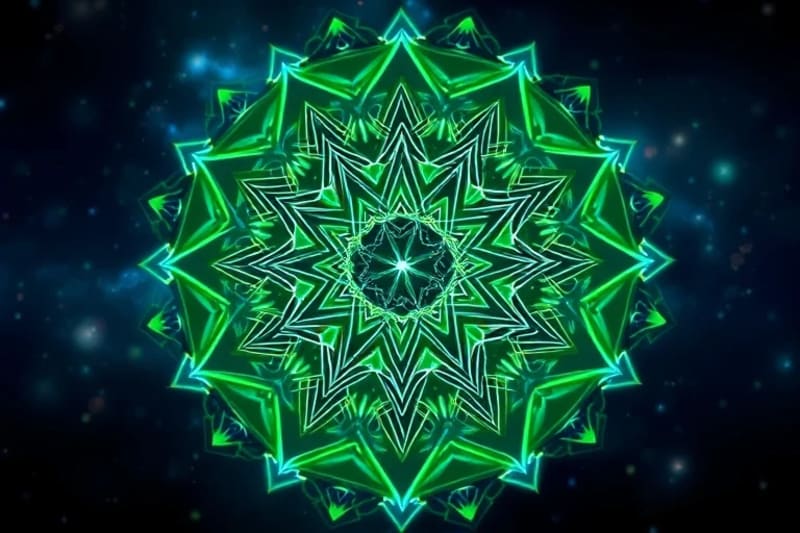
An intricate abstract sigil design, symbolizing focused intent and the flow of energetic patterns.
Integrating Sigils into Daily Life and Practice
Once a sigil is created and activated, its integration into daily life can reinforce its power and facilitate manifestation. The method of integration often depends on the nature of the sigil and its intended purpose. Some sigils are meant to be ephemeral, activated and then destroyed, while others can become permanent fixtures in your environment.
For persistent intentions, you might draw your sigil on physical objects related to your goal. For example, a sigil for financial abundance could be drawn on your wallet or a savings jar. A sigil for creativity might be placed on your art supplies or workspace. The key is to place it where it can subtly influence your environment and subconscious without becoming a constant conscious focus. This aligns with principles found in practices like Biogeometry, which focuses on harmonizing morphic fields for well-being.
In the digital age, sigils can also be integrated into your digital life. Setting a sigil as your phone background, computer wallpaper, or even discreetly incorporating it into your social media profiles can serve as a constant, subtle reminder to your subconscious. The visual presence, even if consciously ignored, can continue to reinforce the intention.
Another approach is to use sigils in conjunction with meditation or visualization practices. While you should "forget" the sigil after activation, occasional, brief meditative focus on the symbol (without dwelling on the outcome) can act as a gentle recharge. This reinforces the initial impulse without falling back into conscious obsession. The versatility of sigils allows for creative and personal methods of integration, making them adaptable to almost any lifestyle.
Ethical Considerations and Responsible Sigil Use
As with any practice that seeks to influence reality, ethical considerations are paramount in sigil magic. The power of focused intention carries responsibility, and it is crucial to approach sigil creation with a clear understanding of potential repercussions and a commitment to harmlessness. The core principle often emphasized is "Harm None," ensuring that your manifestations do not negatively impact others.
One of the most important ethical guidelines is to ensure your intentions are solely for your own benefit and do not infringe upon the free will of others. Attempting to manipulate another person's feelings, decisions, or circumstances through sigils is generally considered unethical and can lead to unforeseen negative consequences. Focus on attracting what you desire into your life, rather than forcing specific outcomes onto others.
Furthermore, clarity of intent is not just for effectiveness but also for ethical practice. Vague or poorly thought-out intentions can manifest in ways you did not anticipate, sometimes with undesirable side effects. Take the time to reflect deeply on your desires, ensuring they are truly what you want and that their manifestation would be beneficial to all involved. This self-reflection is a crucial part of responsible magical practice.
Finally, remember that sigil magic is a tool for personal empowerment and self-improvement, not a shortcut to avoid personal effort or responsibility. While sigils can help align circumstances, they often work by inspiring you to take action, opening new opportunities, or shifting your perspective. They are a catalyst for change, not a replacement for conscious effort and ethical conduct in your life. Approaching sigils with respect, clear intent, and a sense of responsibility ensures a positive and constructive experience.
Benefits and Transformative Potential of Sigils
The practice of sigil creation and activation offers a myriad of benefits beyond simple manifestation, touching upon deep aspects of psychological well-being and personal development. Engaging with sigils can be a powerful tool for self-discovery and empowerment, fostering a greater sense of agency over one's life.
One of the primary benefits is enhanced **focus and clarity** of intention. The process of distilling a desire into a concise statement and then into a visual symbol forces a profound level of introspection. This clarity can extend to other areas of life, helping individuals to identify and pursue their true goals with greater precision. It trains the mind to be more decisive and less prone to wavering.
Sigils also act as a form of **subconscious programming**. By bypassing the conscious mind, they directly impress desires onto the subconscious, which is responsible for habits, beliefs, and automatic behaviors. This can lead to subtle yet powerful shifts in attitude, motivation, and perception, making it easier to naturally gravitate towards opportunities that align with your intentions. It's a way to reprogram limiting beliefs and replace them with empowering ones.
Ultimately, sigil magic fosters **personal empowerment**. It teaches that you have the capacity to influence your reality and shape your future. This sense of agency can be incredibly liberating, encouraging individuals to take proactive steps towards their goals rather than feeling like passive observers of their own lives. It's a practical application of the idea that your internal world shapes your external experience, offering a tangible method to bridge the gap between desire and reality.
Conclusion: Harnessing Personal Power Through Symbols
The power of sigils lies in their elegant simplicity and profound psychological impact. By transforming abstract desires into concrete, personal symbols, we engage our subconscious minds in a direct and potent dialogue. This ancient practice, refined through centuries and revitalized by modern occultists, offers a unique pathway for manifestation and self-transformation.
Whether you are seeking to attract abundance, foster creativity, or cultivate inner peace, sigils provide a customizable and deeply personal tool. The journey of creating, activating, and integrating sigils is not merely about achieving specific outcomes; it is also a journey of self-discovery, clarity, and empowerment. By embracing this esoteric art, you unlock a powerful mechanism for aligning your inner world with your outer reality, paving the way for a life more intentionally lived.
Embrace the symbolic language of your subconscious, and discover the transformative potential that lies within the simple act of drawing your will into being. With clear intention, responsible practice, and a touch of creative flair, sigils can become invaluable allies on your path to personal manifestation.
Explore More Esoteric Wisdom
- Jupiter Retrograde: Growth & Re-evaluation
- Biogeometry: Harmonizing Spaces
- Planetary Dignities: Natal Chart Impact
- Neptune Transits: Creative Awakening
- I Ching & Tarot: Dual Divination
- Zodiac Myths & Archetypes
- Alchemy: Spiritual Transformation
- Planetary Dignities: Natal Potential
- Relationship Astrology: Charts Explained
- Urban Geomancy: Aligning Energies
- Zi Wei Dou Shu & Feng Shui
- Productivity for SMEs (Spanish)
- Metaverse Digital Law (Spanish)
- Cryptocurrencies for Beginners (Spanish)
- Mercury Retrograde Natal Chart (Spanish)
- Forgotten Star Myths (Spanish)
- Astrological Kabbalah & Crystals (Spanish)
- Mystical Stigmata Neuroscience (Spanish)
- Saint Michael Archangel Prayer (Spanish)
- Silent Monasticism Inner Peace (Spanish)
Source: Hybrid content assisted by AI and human editorial supervision.


Comments
Post a Comment