
Astrological Ethics AI Big Data Collective Trends
In an era defined by rapid technological advancement and an insatiable appetite for information, ancient practices like astrology are finding themselves at a fascinating crossroads. The emergence of Artificial Intelligence (AI) and the proliferation of big data present both unprecedented opportunities and complex ethical dilemmas for the field of astrological interpretation. This comprehensive exploration delves into how these modern phenomena challenge and reshape our understanding of astrological ethics, particularly concerning divination, data privacy, and the influence of collective trends, aiming to chart a responsible path forward.
As AI algorithms become increasingly sophisticated, capable of processing vast amounts of information and identifying intricate patterns, their potential application in astrology is undeniable. From generating highly personalized horoscopes to analyzing complex natal charts with unprecedented speed, AI promises to enhance precision and accessibility. However, this integration also raises fundamental questions about the nature of free will, the indispensable role of human intuition, and the responsible use of predictive insights in a world increasingly reliant on automated systems.
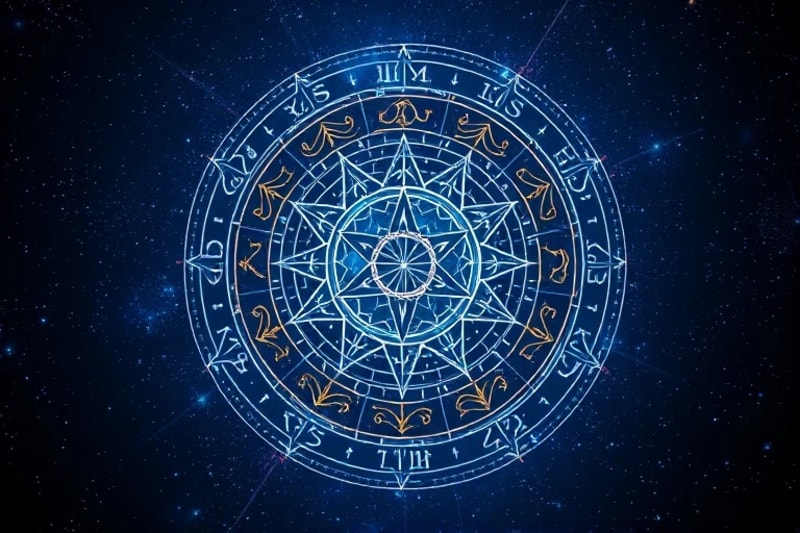
Visual representation of ancient astrological wisdom intertwined with futuristic AI data streams, symbolizing the ethical challenges and opportunities of their convergence.
Visual source subject to ecosystem availability: Wikimedia Commons under CC BY-SA 4.0 license or conceptual AI rendering.
Table of Contents
- Introduction: Defining Astrological Ethics in the Modern Era
- The Intersection of Astrology and Artificial Intelligence
- Big Data's Influence on Astrological Interpretation
- Navigating Collective Trends and Individual Agency
- Ethical Considerations: Privacy, Bias, and Responsibility
- The Future of Divination: Harmony or Discord?
- Conclusion: Charting an Ethical Path Forward
Introduction: Defining Astrological Ethics in the Modern Era
Astrological ethics traditionally revolve around core principles of responsible guidance, non-maleficence, and profound respect for individual autonomy. Practitioners are historically advised to empower clients rather than inadvertently fostering dependency, to offer insightful perspectives without dictating choices, and to maintain the strictest confidentiality regarding personal information. These foundational tenets, deeply rooted in centuries of philosophical and practical application, provide a crucial moral compass for a field that intimately touches upon personal destiny, psychological well-being, and spiritual exploration.
However, the advent of the digital age introduces entirely new layers of complexity and unprecedented challenges. The sheer volume of personal data now readily available, combined with AI's advanced analytical prowess, necessitates a fundamental re-evaluation and expansion of these traditional ethical guidelines. What happens, for instance, when an algorithm can predict life events with startling statistical accuracy, or when pervasive collective astrological trends are identified through the aggregation of millions of user data points? The delicate line between offering gentle guidance and imposing a deterministic fate begins to blur, profoundly challenging the very essence of ethical astrological practice as we know it.
The Intersection of Astrology and Artificial Intelligence
Artificial Intelligence, particularly advanced machine learning and deep learning algorithms, possesses the unparalleled capacity to process vast quantities of astrological data—including intricate planetary positions, precise aspects, house systems, and zodiacal signs—at speeds and scales that are simply impossible for even the most seasoned human astrologers. This computational power can lead to remarkably nuanced interpretations, potentially identifying subtle correlations and patterns that might consistently escape conventional human analysis or manual calculation.
The application of AI in astrology extends far beyond mere complex calculation. It can personalize horoscopes by seamlessly integrating user-specific data, offer highly interactive and dynamic learning tools for aspiring students, and even simulate future planetary transits with significantly greater visual fidelity and predictive modeling. This technological leap, while undeniably exciting and promising, demands careful consideration of its far-reaching implications. For example, how do we ethically ensure that AI-generated insights remain genuinely empowering and not inadvertently prescriptive, subtly influencing personal choices? The ethical framework must rapidly evolve to comprehensively address these novel forms of astrological delivery and their potential societal impact.
An abstract digital painting illustrating the convergence of vast data streams and cosmic patterns, reflecting the impact of big data on collective astrological understanding.
One of the core challenges lies in maintaining the irreplaceable human element within astrological practice. Astrology, at its very heart, is fundamentally a tool for profound self-reflection, personal growth, and spiritual inquiry, most often facilitated by a compassionate, intuitive human interpreter. If increasingly sophisticated AI systems begin to entirely replace this essential human interaction, there is a significant risk of losing the empathetic context, the nuanced understanding of individual life circumstances, and the subjective wisdom that only a human astrologer can truly provide. The ethical question then becomes: how do we effectively leverage AI's immense strengths without inadvertently diminishing the profound human connection and intuitive insight inherent in traditional astrological counseling?
Big Data's Influence on Astrological Interpretation
Big data, characterized by its massive collections of information that can be meticulously analyzed to reveal intricate patterns, emerging trends, and hidden associations, offers an unprecedented and powerful lens through which to examine astrological correlations. Imagine the potential of analyzing millions of anonymized birth charts alongside vast demographic data, detailed psychological profiles, diverse career paths, and even long-term health outcomes. This revolutionary approach could potentially validate, refine, or even challenge long-held astrological tenets, thereby moving the field towards a more empirically informed and evidence-based practice.
However, the ethical implications of extensively using big data in astrological interpretation are undeniably profound and complex. Privacy concerns immediately surge to the forefront of any discussion. Astrological readings frequently involve highly personal, sensitive, and often vulnerable information about an individual's life. The aggregation and sophisticated analysis of such data, even if meticulously anonymized, raise serious questions about explicit consent, robust data security protocols, and the potential for unintended misuse or exploitation. Who ultimately owns this vast repository of personal astrological data, and how can it be absolutely protected from unauthorized access or malicious exploitation?
Moreover, sophisticated big data analysis can effectively reveal significant collective astrological trends, demonstrating how specific planetary configurations or cycles correlate with major societal shifts, economic fluctuations, or even global historical events. While such macro-level analysis is undeniably fascinating and offers valuable insights into the human collective, it must always be carefully balanced with an unwavering respect for individual agency and unique life paths. Understanding these broader patterns can certainly offer valuable contextual understanding, but it should never overshadow the unique journey, personal choices, and inherent free will of each individual. For deeper insights into how cosmic alignments can influence personal growth and evolution, consider exploring topics like celestial mechanics and personal growth, which delve into the intricate dance between individual and universal energies.
Navigating Collective Trends and Individual Agency
The ability to accurately identify and articulate collective astrological trends through the power of big data presents a profound dual-edged sword. On one hand, a deeper understanding of these overarching influences can foster a powerful sense of shared human experience, cultivating greater empathy and collective awareness among diverse populations. It can significantly help individuals contextualize their personal struggles, triumphs, and life events within larger, universal cosmic cycles, potentially reducing feelings of isolation and promoting a sense of interconnectedness.
On the other hand, an excessive or unbalanced emphasis on collective trends could inadvertently diminish the paramount importance of individual free will and personal responsibility. If, for example, a widespread AI-driven astrological platform informs millions that they are all experiencing a similar, challenging transit, it might inadvertently lead to a pervasive sense of fatalism, groupthink, or a reluctance to exert personal effort. Ethical astrological practice, regardless of technological integration, must always uphold the fundamental principle that while cosmic influences are real and impactful, individuals unequivocally retain the inherent power of choice and the profound capacity to navigate their unique charts consciously and proactively.
A conceptual 3D render illustrating a futuristic crystal ball projecting holographic astrological charts, symbolizing the ethical considerations of AI in divination.
The ethically conscious astrologer, whether operating independently or extensively assisted by AI, must diligently guide individuals to understand precisely how universal energies manifest uniquely in their specific lives. This guidance should consistently encourage proactive engagement with their astrological blueprint rather than a passive acceptance of predetermined outcomes. This delicate balance is absolutely crucial for maintaining the empowering and transformative nature of astrology as a tool for personal agency. For those interested in understanding their soul's deeper purpose and re-evaluating their life path in light of cosmic influences, exploring concepts like North Node Retrograde can provide invaluable insights and a framework for profound introspection.
Ethical Considerations: Privacy, Bias, and Responsibility
The seamless integration of AI and big data into the ancient practice of astrology inevitably brings forth several critical ethical considerations that demand meticulous attention from practitioners, AI developers, ethicists, and end-users alike. These paramount concerns fundamentally include robust data privacy, the insidious potential for algorithmic bias, and the ultimate accountability and responsibility for interpretations and their far-reaching impact on individuals.
Data Privacy and Confidentiality: A Digital Imperative
Informed Consent: Users must be fully and transparently informed about precisely how their personal astrological data (birth date, time, location) is collected, securely stored, and subsequently utilized, especially if it is aggregated for broader research or sophisticated trend analysis. Clear, explicit, and easily understandable consent mechanisms are absolutely paramount, adhering to global data protection regulations like GDPR.
Enhanced Security: The implementation of robust, state-of-the-art cybersecurity measures is essential to protect sensitive birth information and any associated personal details from potential data breaches, unauthorized access, or malicious cyber-attacks. Encryption, secure servers, and regular security audits become non-negotiable requirements.
Rigorous Anonymization: When personal data is employed for large-scale collective studies or trend identification, it must be rigorously and irreversibly anonymized to prevent any possibility of re-identification of individuals. This requires adhering to the highest standards and best practices in data science and privacy engineering.
Data Minimization: Ethical practice dictates collecting only the data absolutely necessary for the astrological service provided, reducing the risk exposure associated with excessive data retention.
Algorithmic Bias: The Mirror of Our Prejudices
AI systems, by their very nature, are only as unbiased and comprehensive as the vast datasets they are meticulously trained on. If the historical and contemporary datasets used to train astrological AI are predominantly derived from a specific culture, a narrow demographic, or a limited historical period, the AI's subsequent interpretations may inadvertently reflect and perpetuate those inherent biases. This critical issue could lead to a significant lack of inclusivity, generate misinterpretations for diverse global populations, or even subtly reinforce harmful societal stereotypes. Developers and astrological data scientists must actively and consciously work to ensure that diverse, representative, and globally inclusive datasets are utilized, and that all algorithms are regularly and independently audited for fairness, equity, and cultural sensitivity. This iterative process is crucial for developing truly ethical AI in astrology.
Responsibility and Accountability: Defining the Digital Astrologer
When an AI-powered system provides an astrological reading or a predictive insight, a fundamental question arises: who bears the ultimate responsibility for its accuracy, its ethical implications, and its potential impact on the user's life choices? Is it primarily the developer of the underlying algorithm, the digital platform hosting the AI service, or ultimately the user who chooses to follow its advice? Establishing clear, transparent, and legally enforceable lines of accountability is absolutely crucial in this emerging field. Ethical guidelines should explicitly mandate complete transparency about the AI's inherent limitations, its data sources, and its predictive methodologies. Furthermore, users should be actively encouraged to engage with AI-generated insights critically, perhaps even cross-referencing them with the wisdom of experienced human astrologers or their own intuition. For daily guidance that balances cosmic influences with practical advice, many turn to personalized daily horoscopes, which often integrate both traditional and modern interpretive techniques.
Moreover, the profound potential for AI to generate highly personalized and incredibly persuasive content raises significant concerns about subtle manipulation or undue influence. An advanced AI could, theoretically, craft readings specifically designed to influence user behavior in subtle, yet powerful, ways, potentially guiding them towards certain products, services, or life decisions. Robust safeguards against such manipulative practices are absolutely essential, emphasizing the urgent need for ethical AI design principles that prioritize user well-being, genuine empowerment, and unwavering autonomy above all else.
The Future of Divination: Harmony or Discord?
The future trajectory of astrological divination in the rapidly evolving age of AI and big data is not a predetermined or inevitable path, but rather a dynamic landscape that will be profoundly shaped by conscious, ethical choices made today. This convergence presents an unparalleled opportunity to significantly elevate astrology, making it demonstrably more accessible, remarkably precise, and perhaps even more scientifically verifiable through rigorous data analysis. However, it also carries the inherent risk of inadvertently dehumanizing the practice, eroding fundamental privacy rights, and fostering a potentially deterministic worldview that undermines personal agency.
The ideal and most beneficial scenario envisions a harmonious integration where AI functions as an extraordinarily powerful tool designed to augment and amplify human intuition, understanding, and interpretive capabilities, rather than entirely replacing them. In this collaborative model, AI could efficiently handle the complex astronomical calculations, vast data analysis, and pattern recognition, thereby freeing human astrologers to dedicate their invaluable time and expertise to the empathetic interpretation, nuanced psychological counseling, and profound spiritual guidance that machines, by their very nature, cannot replicate. This synergistic model could ultimately lead to a richer, more profound, and deeply personalized astrological experience for users worldwide.
To effectively achieve this desired harmony, ongoing and open dialogue between experienced astrologers, innovative AI developers, leading ethicists, and diverse users is absolutely vital. Establishing clear, comprehensive ethical codes specifically tailored for AI-assisted astrology, developing transparent and auditable algorithms, and prioritizing extensive user education about the precise capabilities and inherent limitations of AI in astrological interpretation will be crucial steps. The overarching goal should consistently be to empower individuals with profound knowledge and self-awareness, not to overwhelm them with deterministic predictions or to inadvertently strip them of their essential agency and free will. Practices like Urban Geomancy: Aligning City Dwellings Cosmic Energies emphasize personal empowerment and connection, which should remain central to any astrological guidance.
Ultimately, the ethical compass guiding astrology in the AI age will be fundamentally determined by its core, enduring purpose: to offer profound insights that genuinely support personal growth, foster deep self-awareness, and cultivate a stronger connection to the vast, mysterious cosmos. By consciously and proactively navigating the intricate complexities and profound implications of advanced technology, astrology can confidently continue to be a relevant, invaluable, and transformative practice for generations to come, fostering a mindful and empowering approach to understanding cosmic influences, much like the reflective practice of mindful lunar phase horoscopes.
Conclusion: Charting an Ethical Path Forward
The profound convergence of ancient astrological tradition with the cutting-edge capabilities of Artificial Intelligence and big data marks an undeniably pivotal and transformative moment for the practice of divination. While the compelling allure of enhanced precision, unprecedented accessibility, and deeply personalized insights is undeniably strong, the ethical imperative to rigorously safeguard individual privacy, meticulously mitigate algorithmic bias, and steadfastly uphold individual agency and free will is even stronger and more critical. The journey forward into this new astrological paradigm requires a thoughtful, collaborative, and highly proactive approach, ensuring that technology serves as a powerful and benevolent ally in the profound journey of self-discovery, rather than an unyielding master of predetermined destiny.
By consciously embracing radical transparency in data handling, fostering critical thinking skills among users, and consistently prioritizing human well-being and empowerment above all else, the global astrological community can collectively chart an ethical and sustainable path that seamlessly integrates the very best aspects of both worlds. This exciting new era invites us all to fundamentally redefine what it truly means to practice astrology responsibly and ethically in a technologically advanced world, thereby ensuring its continued relevance, profound impact, and transformative potential for countless individuals seeking deeper guidance and meaning in an ever-evolving and increasingly complex universe.
Related Topics & Further Reading
Source: Hybrid content assisted by AI and human editorial supervision.


Comments
Post a Comment