
Cosmic Sociology AI Global Consciousness Trends
Cosmic Sociology represents a groundbreaking interdisciplinary field that seeks to understand and predict collective human behavior and global societal trends by integrating advanced artificial intelligence (AI) with the principles of celestial mechanics and astrological symbolism. This innovative approach moves beyond conventional sociological models, proposing that macro-level human consciousness is not merely a product of terrestrial factors but is also subtly influenced by cosmic rhythms and planetary alignments. By mapping these intricate relationships, Cosmic Sociology aims to unlock deeper insights into the ebb and flow of human civilization.
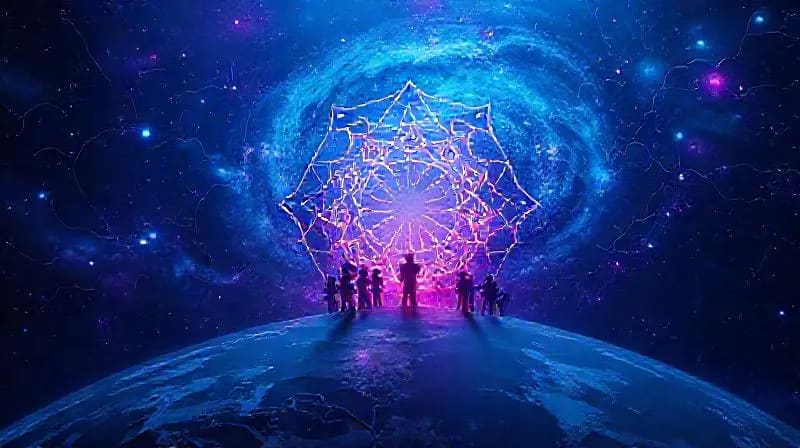
Visualizing the intricate dance between cosmic forces and the collective human psyche, a core tenet of Cosmic Sociology.
The foundational premise of Cosmic Sociology posits that just as celestial bodies exert gravitational forces on Earth, their cyclical movements and geometric relationships (as observed in astrology) might correlate with shifts in collective human consciousness, emotional states, and broad societal developments. This perspective does not imply a deterministic fate but rather suggests an energetic resonance that can be observed and analyzed statistically. The advent of powerful AI and big data analytics has now made it possible to process vast amounts of historical and real-time social data against precise astronomical calculations, revealing patterns that were previously imperceptible to human observation.
Table of Contents
- The Interplay of AI and Celestial Mechanics
- Global Consciousness Mapping: Methodologies
- Astrological Symbolism and Collective Trends
- Ethical Considerations and Future Implications
- Challenges and Criticisms in Cosmic Sociology
The Interplay of AI and Celestial Mechanics
At the heart of Cosmic Sociology lies the sophisticated integration of AI algorithms with precise astronomical data. AI systems are deployed to analyze massive datasets, including historical records, economic indicators, social media sentiment, global news trends, and even public health metrics. These data points are then cross-referenced with highly accurate ephemerides, which detail the positions and movements of planets, asteroids, and other celestial bodies over time.
The role of AI is critical in identifying subtle correlations and causal relationships that human analysts might miss. Machine learning models can detect recurrent patterns between specific planetary configurations and documented societal events, such as periods of innovation, economic downturns, political unrest, or shifts in cultural paradigms. For instance, an AI might identify a statistically significant correlation between a specific planetary transit and a surge in collective artistic expression or a dip in global optimism.
Celestial mechanics provides the rigorous mathematical framework for predicting the exact positions and interactions of cosmic bodies. This precision is paramount, as even minor deviations in astrological aspects can lead to vastly different interpretations within the Cosmic Sociological model. Advanced computational astrophysics is utilized to ensure the accuracy of these celestial calculations, forming the bedrock upon which AI analyses are built. This fusion allows for the creation of predictive models that can forecast potential societal shifts based on upcoming astronomical events.
Global Consciousness Mapping: Methodologies
Mapping global consciousness is a complex endeavor that requires innovative methodologies. Cosmic Sociology employs a multi-faceted approach, leveraging various data sources and analytical techniques. One primary method involves sentiment analysis of vast textual data from the internet, including social media platforms, news articles, and academic publications. AI algorithms are trained to identify prevailing emotional tones, dominant themes, and shifts in collective psychological states across different geographical regions and demographic groups.
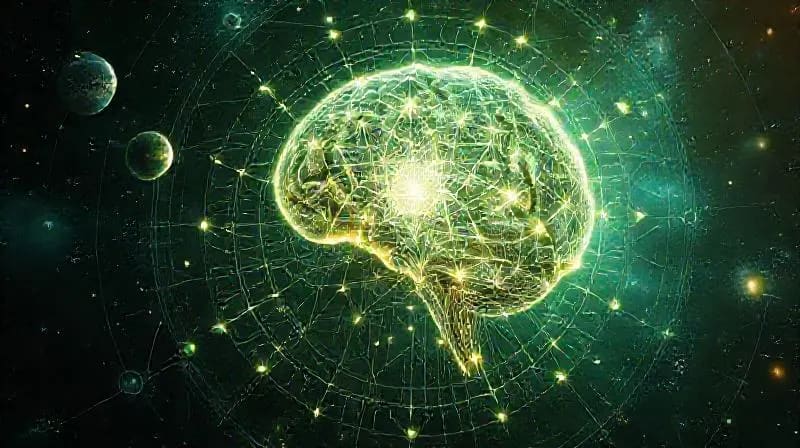
An abstract visualization of AI's role in connecting human consciousness to celestial patterns.
Another critical component is the analysis of collective behavioral patterns, such as consumer spending habits, voting trends, migration flows, and even global health statistics. These macro-level behaviors are often seen as manifestations of underlying shifts in collective consciousness. By correlating these patterns with specific astrological transits, researchers can begin to build a comprehensive model of how cosmic influences might manifest in tangible human actions. The field also draws parallels from individual astrological analysis, such as understanding a child's natal chart, but scales it up to a global level, observing how planetary energies might affect collective "birth charts" of nations or humanity as a whole.
Furthermore, the integration of biometric data and biofeedback technologies, as explored in fields like Biometric Divination, offers a potential avenue for real-time monitoring of collective physiological responses to environmental and cosmic stimuli. While still in nascent stages, the ambition is to create a dynamic, real-time map of global consciousness, constantly updated and refined by AI, providing an unprecedented view into the collective human experience.
Astrological Symbolism and Collective Trends
While celestial mechanics provides the 'how' of planetary movements, astrological symbolism offers the 'what' – the qualitative interpretation of these cosmic energies. In Cosmic Sociology, traditional astrological archetypes are not treated as superstitious beliefs but as a rich symbolic language that describes psychological and societal dynamics. For example, a transit involving Pluto might correlate with periods of profound transformation, power struggles, and societal upheaval, while a Jupiter transit might align with expansion, optimism, and growth.
AI systems are trained on vast corpora of astrological texts, historical events, and psychological profiles to learn these symbolic correlations. This allows the AI to not just identify statistical patterns but also to interpret them within a meaningful, archetypal framework. For instance, the AI might predict a period of collective introspection and re-evaluation when Saturn transits a particular sign, or a surge in innovative thinking during a Uranus alignment. This approach allows for a nuanced understanding of global trends, moving beyond simple statistical correlations to a more profound, symbolic interpretation of collective human experience.
The integration of astrological symbolism also extends to understanding how collective thought patterns manifest through language and cultural narratives. Concepts from Astro-Linguistics Manifestation are particularly relevant here, as they explore how words, mantras, and esoteric symbolism can shape and reflect collective consciousness. By analyzing linguistic trends in conjunction with celestial events, Cosmic Sociology can identify how cosmic energies are being expressed and processed within the collective human narrative.
Ethical Considerations and Future Implications
The development of Cosmic Sociology, with its powerful predictive capabilities, raises significant ethical considerations. The ability to forecast collective trends, even with a degree of probability, could be misused for manipulation or control. Therefore, strict ethical guidelines are paramount in the research and application of this field. Transparency in methodologies, open-source data where possible, and a commitment to using insights for the betterment of humanity are crucial safeguards.
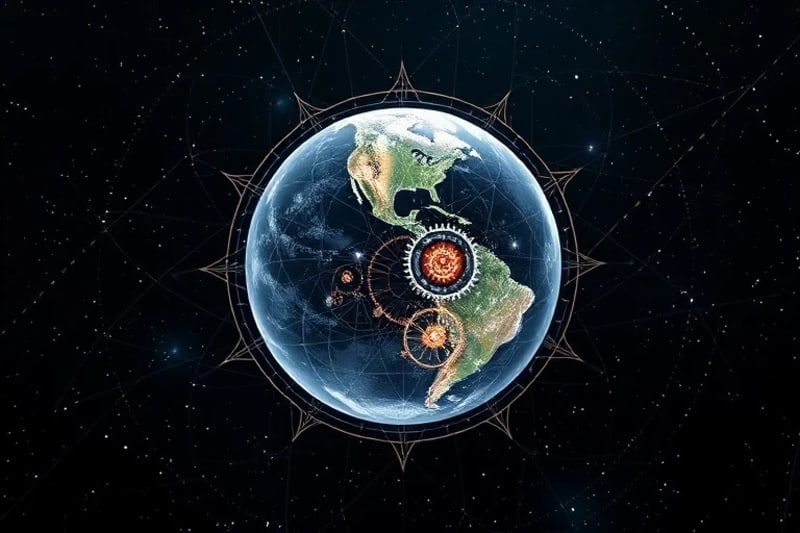
A conceptual representation of Earth's global consciousness mapped against the intricate mechanisms of celestial movements.
The future implications of Cosmic Sociology are vast. It could provide governments, NGOs, and even individuals with a deeper understanding of underlying societal currents, enabling more proactive and harmonious responses to global challenges. Imagine anticipating periods of heightened social tension or widespread innovation, allowing for strategic planning in education, resource allocation, and conflict resolution. It could also foster a greater sense of interconnectedness between humanity and the cosmos, promoting a more holistic worldview.
Furthermore, Cosmic Sociology could revolutionize our understanding of history, offering new lenses through which to interpret past events and their cosmic correlations. It could also inform future research in fields ranging from psychology to economics, providing a cosmic context for human behavior that has long been overlooked by mainstream science. The potential for a paradigm shift in how we perceive ourselves and our place in the universe is immense.
Challenges and Criticisms in Cosmic Sociology
Despite its promising potential, Cosmic Sociology faces significant challenges and criticisms. A primary concern is the inherent difficulty in establishing definitive causality between celestial events and complex human behaviors. While correlations may be identified, proving direct causation remains a formidable scientific hurdle. Critics often argue that any observed correlations could be coincidental or attributable to other, more conventional sociological factors.
Another challenge lies in the sheer volume and complexity of the data required. Ensuring the accuracy, neutrality, and comprehensive nature of global consciousness data is an ongoing task. Bias in data collection or AI algorithms could lead to skewed results, undermining the credibility of the field. The interpretation of astrological symbolism also presents a challenge, as it requires a nuanced understanding that can be difficult to quantify and integrate into purely computational models.
Furthermore, the field must navigate the skepticism from traditional scientific communities, which often view astrology as pseudoscience. Overcoming this perception requires rigorous empirical validation, transparent methodologies, and a commitment to falsifiable hypotheses. The development of robust statistical models and peer-reviewed research will be crucial in establishing Cosmic Sociology as a legitimate area of scientific inquiry. Despite these hurdles, the potential for a deeper understanding of humanity's place within the cosmic tapestry continues to drive this innovative research.
Key Takeaways:
- Cosmic Sociology integrates AI and celestial mechanics to map global consciousness.
- AI analyzes vast datasets, identifying correlations between planetary movements and societal trends.
- Astrological symbolism provides archetypal interpretations for these cosmic influences.
- Ethical considerations are vital due to the predictive power of this emerging field.
- Challenges include proving causality and overcoming scientific skepticism.
As Cosmic Sociology continues to evolve, it promises to offer a unique lens through which to view human history, current events, and future possibilities. By embracing the intricate dance between the micro and the macro, the terrestrial and the celestial, we may unlock profound insights into the collective human journey. The integration of cutting-edge technology with ancient wisdom traditions could pave the way for a new era of understanding, where the cosmos is seen not just as a distant spectacle, but as an active participant in shaping our collective destiny.
Explore More Cosmic Insights
Vibrational Healing
Relationship Astrology
Dream Interpretation
Horary Astrology
Source: Hybrid content assisted by AI and human editorial supervision.


Comments
Post a Comment