
Cosmic Sociology AI Global Consciousness Digital Trends
In an era defined by rapid technological advancement and an ever-expanding understanding of the cosmos, new interdisciplinary fields are emerging to make sense of our complex existence. Cosmic sociology, artificial intelligence (AI), global consciousness, and digital age trends are converging, offering unprecedented insights into human society's evolution. This exploration delves into how these seemingly disparate domains intertwine, influencing our collective future and our perception of the universe.
The digital revolution has not only reshaped human interaction but also opened avenues for understanding collective behaviors on a planetary scale. Simultaneously, advancements in AI are providing tools to analyze vast datasets, revealing patterns that might otherwise remain hidden. When viewed through the lens of celestial mechanics and astrological principles, these trends suggest a deeper, more intricate connection between cosmic rhythms and terrestrial phenomena.
- 1. The Emergence of Cosmic Sociology
- 2. Artificial Intelligence and the Global Mind
- 3. Digital Age Trends Shaping Society
- 4. Celestial Mechanics Through an Astrological Lens
- 5. Synthesizing Cosmic Sociology, AI, and Astrology
- 6. Challenges and Ethical Dimensions
- 7. The Future of an Interconnected Cosmos
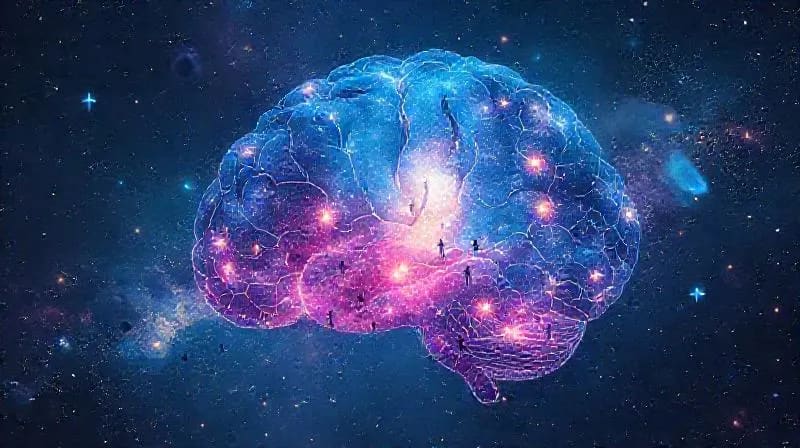
Precursors intellectuales, diagramas fundamentales y representaciones conceptuales que forjaron la visión de la Conciencia Global sobre la Sociología Cósmica.
Fuente visual sujeta a disponibilidad del ecosistema: Wikimedia Commons bajo licencia CC BY-SA 4.0 o renderizado conceptual IA.
1. The Emergence of Cosmic Sociology
Cosmic sociology is an evolving field that examines human society and its place within the broader cosmic context. It moves beyond traditional sociological boundaries, considering how extraterrestrial life, space exploration, and our expanding knowledge of the universe impact human culture, politics, and identity. This discipline posits that our understanding of ourselves is incomplete without acknowledging our cosmic environment.
The core tenets of cosmic sociology involve analyzing potential societal transformations that would arise from contact with alien civilizations or large-scale space colonization. It also explores how humanity's collective consciousness might shift as we perceive ourselves as inhabitants of a vast, interconnected cosmos rather than solely an isolated planet. This perspective encourages a holistic view of human development, integrating astronomical, philosophical, and sociological insights.
Key areas of study include the ethical implications of space resource utilization, the psychological effects of living in space, and the potential for a universal ethic that transcends terrestrial differences. By broadening our sociological lens, we can better prepare for future challenges and opportunities presented by our cosmic journey, fostering a more inclusive and resilient global society.
2. Artificial Intelligence and the Global Mind
Artificial intelligence is rapidly becoming an indispensable tool for understanding and shaping global consciousness. AI systems can process and interpret immense quantities of data from social media, news outlets, scientific research, and even historical archives. This capability allows for the identification of emergent patterns in collective thought, emotional states, and societal trends across diverse populations.
The concept of a "global mind" or collective consciousness refers to the shared beliefs, values, and experiences that bind humanity together, even across geographical and cultural divides. AI can act as a powerful aggregator, synthesizing disparate information into a coherent picture of this global consciousness. For instance, AI algorithms can track the spread of ideas, identify common concerns, or even predict societal shifts based on online interactions and public discourse.
However, the role of AI in shaping global consciousness is a double-edged sword. While it offers the potential for enhanced understanding and cooperation, it also presents risks such as algorithmic bias, propaganda dissemination, and the erosion of individual privacy. Ensuring ethical AI development and deployment is paramount to harnessing its power for positive global impact, fostering genuine connection rather than manipulation.
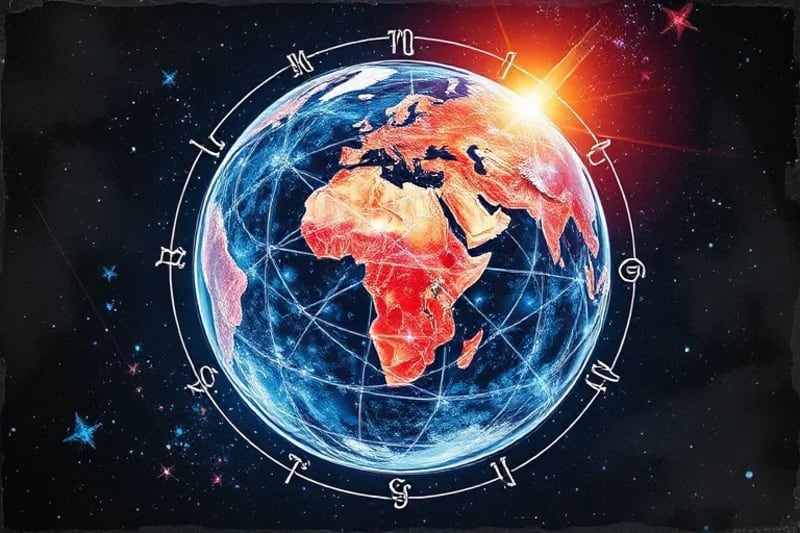
Digital age trends create an intricate web of global connections, influencing collective thought and societal evolution.
3. Digital Age Trends Shaping Society
The digital age is characterized by several transformative trends that profoundly influence human society and our collective consciousness. These include the pervasive reach of social media, the proliferation of the Internet of Things (IoT), the emergence of virtual and augmented realities (metaverse), and the increasing reliance on big data analytics. Each of these trends contributes to a more interconnected yet potentially fragmented global experience.
Social media platforms, for instance, have democratized information sharing and enabled rapid global communication, fostering new forms of collective action and identity. However, they also contribute to echo chambers and the spread of misinformation, challenging the coherence of global consciousness. The IoT, by connecting physical objects to the internet, generates vast amounts of data that can be used to optimize systems, but also raises concerns about surveillance and data privacy.
The metaverse and other immersive technologies promise new frontiers for human interaction, work, and entertainment, blurring the lines between physical and digital realities. These platforms could either enhance global empathy and understanding or deepen societal divisions. Understanding these dynamics is crucial for navigating the complexities of modern life and for recognizing how our spiritual connections might evolve in this digital landscape, much like the exploration of Twin Flames and Soulmates in spiritual contexts.
4. Celestial Mechanics Through an Astrological Lens
Celestial mechanics, the study of the motions of celestial bodies, provides the scientific foundation for understanding planetary orbits, gravitational forces, and cosmic cycles. From an astrological perspective, these precise movements are believed to have profound influences on earthly events, human psychology, and collective consciousness. Astrology interprets the symbolic meaning of planetary positions and alignments at specific moments in time.
Ancient civilizations observed the heavens and developed intricate systems to correlate planetary cycles with terrestrial phenomena, from agricultural seasons to societal shifts. While modern science often dismisses astrology as pseudoscience, its historical and cultural impact is undeniable. Many believe that the subtle energetic influences of celestial bodies can affect human temperament, events, and even the collective mood of humanity.
For example, the cycles of the moon are linked to tides and are often associated with emotional fluctuations, while the slower movements of outer planets like Pluto or Uranus are thought to correlate with generational shifts and major societal transformations. Exploring these correlations from a Psycho-Astrology Dream Interpretation perspective can offer unique insights into our inner worlds and collective psyche.
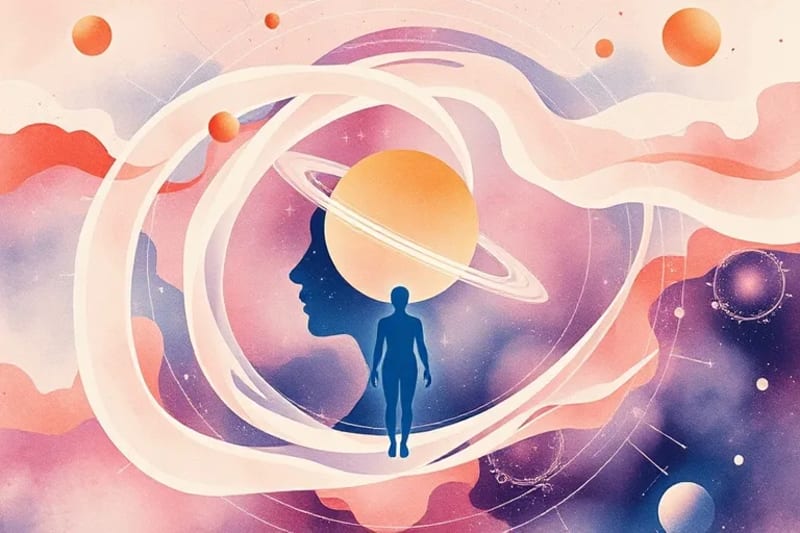
The intricate dance of celestial bodies, as understood through mechanics and astrology, is believed to subtly influence human consciousness.
5. Synthesizing Cosmic Sociology, AI, and Astrology
The true innovation lies in synthesizing these diverse fields. Cosmic sociology provides the macro-framework for understanding humanity's place in the universe. AI offers the analytical power to process vast amounts of data, including historical astrological records and real-time societal trends. Astrology, in turn, offers a symbolic language and a framework for interpreting potential cosmic influences on human affairs.
Imagine AI algorithms analyzing centuries of astrological charts alongside historical events, population data, and even global sentiment extracted from digital media. Could such an analysis reveal previously unnoticed correlations between celestial alignments and significant societal shifts, economic trends, or collective psychological states? This interdisciplinary approach could lead to a new form of "cosmic data science," bridging ancient wisdom with cutting-edge technology.
For instance, AI could be used to model the impact of specific planetary conjunctions on global financial markets or to predict periods of heightened social unrest based on historical astrological patterns. This would not necessarily validate astrology in a conventional scientific sense, but rather explore its potential as a complex system for pattern recognition, offering a unique perspective on human behavior and destiny, similar to how Medical Astrology considers elemental balance for wellness.
6. Challenges and Ethical Dimensions
Integrating cosmic sociology, AI, global consciousness, and astrological insights presents significant challenges. The primary concern revolves around the scientific rigor and empirical validation of astrological claims. While AI can identify correlations, correlation does not equate to causation, and distinguishing meaningful patterns from spurious ones requires careful methodology.
Ethical considerations are also paramount. The use of AI to analyze and potentially influence global consciousness raises questions about data privacy, algorithmic transparency, and the potential for manipulation. Who controls these powerful tools, and how can we ensure they are used for the benefit of all humanity rather than for narrow interests? These concerns are echoed in discussions around the ethical implications of advanced technologies, such as the role of AI in understanding Physics Black Holes and cosmic mysteries.
Furthermore, the philosophical implications of cosmic sociology and global consciousness are profound. How do we define "humanity" in a multi-planetary or multi-species future? What are the responsibilities of a globally conscious species towards its own members and potentially towards other life forms? These questions demand careful consideration and interdisciplinary dialogue.
7. The Future of an Interconnected Cosmos
The convergence of cosmic sociology, artificial intelligence, global consciousness, and digital age trends, informed by an understanding of celestial mechanics, paints a picture of a profoundly interconnected future. As our technological capabilities expand, so too does our potential to understand the intricate web of influences that shape our world, from the subatomic to the cosmic.
This interdisciplinary frontier invites us to reconsider our place in the universe, challenging traditional paradigms and fostering a more expansive view of human potential. By embracing both scientific inquiry and symbolic interpretation, we can cultivate a more informed and conscious approach to our collective evolution, preparing for a future where humanity's destiny is inextricably linked to the cosmos.
Ultimately, the goal is not merely to predict the future but to actively shape it, using these powerful tools and frameworks to build a more harmonious, sustainable, and cosmically aware civilization. This journey requires open minds, ethical foresight, and a willingness to explore the unknown, guided by both reason and intuition.
Related Explorations
- Quantum Entanglement Synastry: Non-Local Soul Connections
- Esoteric Scrying Techniques: Unveiling Hidden Messages Through Divination Practices
- Celestial Mechanics Mundane Astrology: Interpreting Cosmic Language
- Techno-Shamanism Digital Tools Modern Spiritual Practices
- Neuro-Geometría Sagrada: Códigos Cerebrales Activación Potencial
Source: Hybrid content assisted by AI and human editorial supervision.


Comments
Post a Comment