
Astro-Archeology: Unearthing Ancient Celestial Narratives
Astro-Archeology: Unearthing Ancient Celestial Narratives and Civilizations
Astro-archeology is an interdisciplinary field that investigates the astronomical practices, beliefs, and knowledge of ancient cultures through the study of their material remains. It bridges the gap between archaeology and astronomy, seeking to understand how early civilizations observed, interpreted, and integrated celestial phenomena into their architecture, art, religion, and social structures. This fascinating discipline reveals profound insights into humanity's enduring connection with the cosmos, demonstrating that the stars were not merely distant lights but integral components of ancient worldviews.
The study of astro-archeology goes beyond simply identifying astronomical alignments in ancient structures. It delves into the cultural significance of these alignments, exploring how they influenced agricultural cycles, religious ceremonies, political power, and even the very fabric of daily life. By analyzing the precise orientations of temples, tombs, and ceremonial sites, researchers can reconstruct the sophisticated astronomical knowledge possessed by ancient peoples, often far exceeding what modern observers might initially assume.
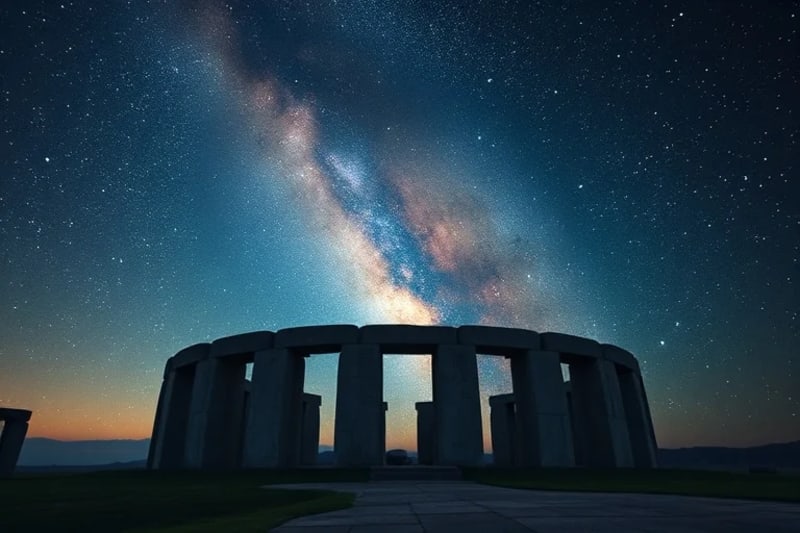
Architectural marvels and celestial narratives that shaped ancient civilizations' understanding of the cosmos.
Source visual subject to ecosystem availability: Wikimedia Commons under license CC BY-SA 4.0 or conceptual AI rendering.Table of Contents
- Foundations of Astro-Archeology
- Methodologies and Tools
- Iconic Sites and Their Celestial Connections
- The Mayan and Mesoamerican Perspective
- Significance and Implications
- Future of the Field
Foundations of Astro-Archeology
The roots of astro-archeology can be traced back to the observation that many ancient monuments seemed to align with significant astronomical events, such as solstices, equinoxes, and the risings or settings of specific stars or planets. Early researchers, often astronomers themselves, began to systematically measure these alignments, leading to the realization that these were not random occurrences but deliberate constructions reflecting advanced observational skills. This foundational work laid the groundwork for a more rigorous scientific approach to understanding ancient sky-gazing practices.
Key to this field is the understanding that ancient cultures often viewed the cosmos not as a separate entity, but as an intrinsic part of their earthly existence. Celestial movements were believed to influence everything from crop cycles and hunting seasons to the fate of kings and the timing of religious festivals. This holistic worldview meant that astronomical knowledge was often deeply embedded in their mythology, cosmology, and daily rituals, making astro-archeology a vital tool for deciphering these complex cultural narratives.
Methodologies and Tools
Astro-archeologists employ a diverse range of methodologies, combining traditional archaeological excavation and analysis with astronomical calculations and modern technological tools. The process typically begins with meticulous site surveys, often using GPS and laser scanning to create highly accurate 3D models of ancient structures. These models allow researchers to precisely measure the orientation of walls, passages, and other architectural features.
Once precise measurements are obtained, astronomical software is used to calculate the positions of celestial bodies at the time the structure was built. This requires knowledge of archaeoastronomy, which accounts for changes in the Earth's axial tilt (precession) over millennia, affecting the apparent positions of stars. Statistical analysis is then applied to determine the probability that observed alignments are intentional rather than coincidental, often comparing them against random orientations.
Furthermore, ethnographic studies and the analysis of ancient texts, myths, and oral traditions play a crucial role. These cultural contexts provide invaluable insights into the beliefs and interpretations that underpinned the astronomical observations, helping to move beyond mere alignment detection to a deeper understanding of the ancient mind. For example, understanding the ancestral echoes in chrono-astrology can shed light on how past generations perceived time and celestial cycles.
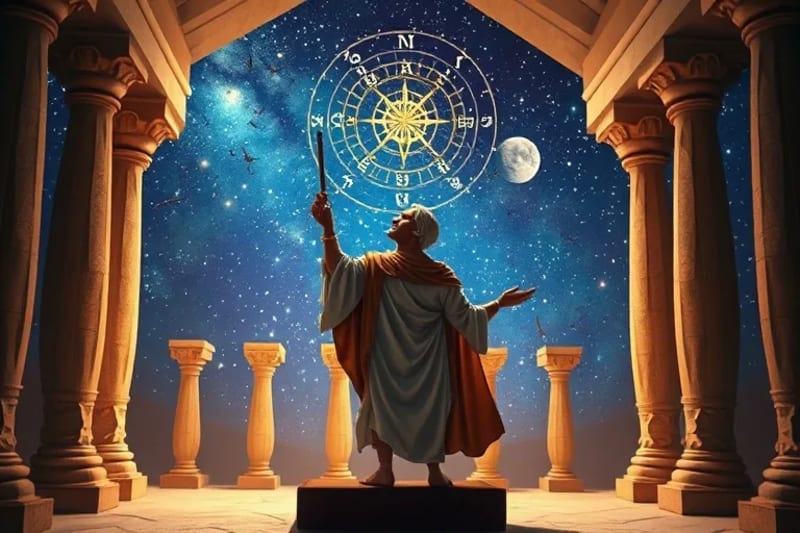
Ancient civilizations meticulously tracked celestial movements.
Iconic Sites and Their Celestial Connections
Numerous sites across the globe bear testament to the sophisticated astronomical knowledge of ancient peoples. Stonehenge in England is perhaps one of the most famous examples. Its primary axis aligns precisely with the summer solstice sunrise and the winter solstice sunset, indicating its use as a sophisticated calendrical device and ceremonial center. The arrangement of its massive stones also suggests alignments with lunar standstills, revealing a complex understanding of lunar cycles.
In ancient Egypt, the Giza Pyramids exhibit remarkable astronomical precision. The sides of the Great Pyramid are aligned almost perfectly with the cardinal directions, a feat that would have required advanced celestial navigation. Furthermore, some theories suggest alignments with stars in Orion's Belt, linking the pyramids to the pharaohs' journey to the afterlife. The temple of Karnak, with its precise alignment to the winter solstice sunrise, further underscores the importance of astronomy in Egyptian religious architecture.
Beyond these well-known examples, countless other sites demonstrate similar celestial connections. The Nazca Lines in Peru, while still debated, are thought by some to have astronomical or calendrical significance, with certain geoglyphs possibly pointing to solstices or specific star risings. The Chaco Canyon complex in New Mexico, built by the Ancestral Puebloans, features structures like Fajada Butte, where "Sun Dagger" petroglyphs mark solstices and equinoxes with striking accuracy.
The Mayan and Mesoamerican Perspective
Mesoamerican civilizations, particularly the Maya, were renowned for their advanced astronomical observations and intricate calendrical systems. Their cities, such as Chichen Itza, Uxmal, and Tikal, are replete with structures designed to track celestial movements. The El Castillo pyramid at Chichen Itza, for instance, famously displays a serpent shadow during the equinoxes, created by the interplay of light and shadow on its staircases.
The Maya developed sophisticated calendars, including the Long Count, which tracked vast periods of time, and the Tzolkin, a 260-day ritual calendar. Their astronomical tables, recorded in codices like the Dresden Codex, demonstrate precise calculations for the cycles of Venus, the Moon, and solar eclipses. These astronomical insights were deeply interwoven with their religious beliefs, political power, and agricultural practices, highlighting a profound integration of the cosmos into their daily lives. Understanding these intricate systems can be enhanced by exploring concepts like the Dog in Chinese Zodiac, which also reflects cultural interpretations of celestial influences.

The intricate connection between celestial mechanics and ancient symbolic systems.
Significance and Implications
The findings of astro-archeology have profound implications for our understanding of human history and cognitive development. They demonstrate that ancient peoples were not primitive but possessed advanced observational skills, mathematical capabilities, and a deep philosophical engagement with the natural world. This challenges earlier notions that often underestimated the intellectual achievements of pre-modern societies.
Moreover, astro-archeology helps to reconstruct the worldviews of vanished civilizations. By understanding how they perceived the cosmos, we gain insights into their religious beliefs, social hierarchies, and even their psychological landscapes. The alignment of a temple might not just be an astronomical marker; it could represent a sacred portal, a connection to deities, or a symbol of cosmic order that legitimized a ruler's power. The study of planetary debilitations in ancient astrological systems, for instance, reflects a complex understanding of celestial influence on human affairs.
The field also highlights the universal human impulse to find meaning and order in the heavens. Across diverse cultures and continents, ancient peoples looked to the stars for guidance, inspiration, and a sense of their place in the universe. This shared human experience underscores a fundamental connection that transcends geographical and temporal boundaries, linking contemporary spiritual exploration, perhaps through augmented reality spiritual growth, back to ancient cosmic reverence.
Future of the Field
The future of astro-archeology is vibrant and promising, continually evolving with advancements in technology and interdisciplinary collaboration. New remote sensing techniques, such as LiDAR and satellite imagery, are enabling the discovery of previously unknown ancient sites, many of which may hold further astronomical secrets. Advanced computational modeling allows for more precise simulations of ancient sky conditions and complex statistical analyses.
Furthermore, increased collaboration between archaeologists, astronomers, anthropologists, and historians is fostering a more holistic understanding of ancient cultures. This integrated approach ensures that astronomical findings are interpreted within their proper cultural and historical contexts, moving beyond mere technical alignments to grasp the full human experience. As our understanding of the cosmos expands, so too does our appreciation for the sophisticated ways in which our ancestors engaged with the celestial sphere, leaving behind a rich legacy of cosmic narratives etched in stone and starlight.
Explore More on StarPluto:
- Shamanic Healing Ancestral Trauma: Rituals & Release Practices
- Midheaven Ruler: Advanced Career Insights
- Horary Astrology: Asking the Stars for Answers
- Progressed Charts: Soul's Evolution, Life Cycles Unveiled
- Uranus Astrology: Rebellion, Innovation, Change
- Horary Astrology: Advanced Chart Interpretation for Complex Questions
- Herbal Magic: Plants for Protection, Love, and Prosperity
- Tasseography: Tea Leaf Reading for Intuitive Guidance
- Tao Animal Sign: Chinese Zodiac Harmony Insights
- Chinese Zodiac Traditional Medicine: Health Longevity
- Hellenistic Astrology Bridging Ancient Predictive Modern Spirituality
Source: Hybrid content assisted by AI and human editorial supervision.


Comments
Post a Comment