
Zi Wei Dou Shu Western Aspects: Deep Personality Insights
The quest for self-understanding and the mapping of life's trajectory has captivated humanity for millennia. Across diverse cultures, intricate systems of astrology have emerged, each offering unique lenses through which to perceive destiny, personality, and potential. Among these, Zi Wei Dou Shu, an ancient Chinese astrological system, and Western sidereal astrology with its emphasis on planetary aspects, stand as pillars of profound insight. While distinct in their origins, methodologies, and philosophical underpinnings, a synthesized approach to these two powerful disciplines can unveil layers of personality and life paths far deeper and more nuanced than either system could achieve in isolation.
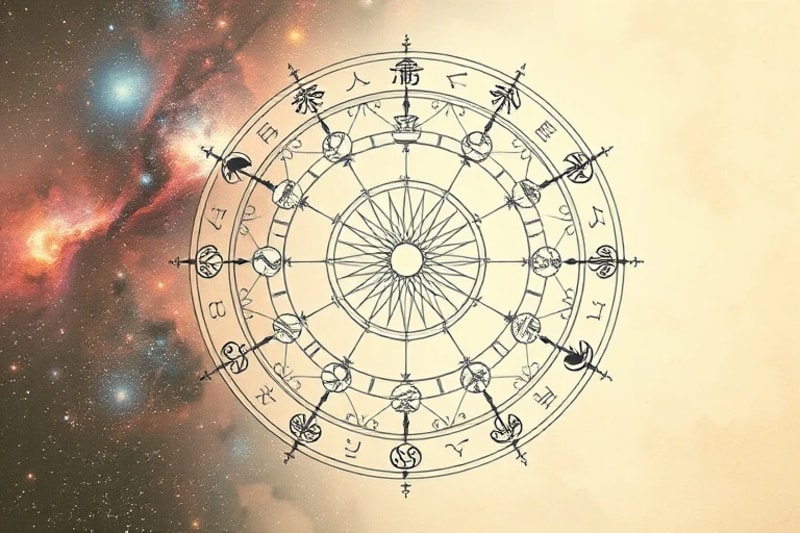
A visual representation of the intricate interplay between Eastern and Western astrological charts, symbolizing a holistic approach to cosmic understanding.
This article delves into the sophisticated architecture of both Zi Wei Dou Shu and Western astrological aspects, exploring their individual strengths before proposing a framework for their integration. By examining how these systems can complement each other, we aim to provide a comprehensive guide for those seeking to unlock a more complete understanding of their inner workings and the unfolding narrative of their lives. The synergy between these ancient wisdom traditions offers a powerful tool for personal growth, self-awareness, and navigating the complexities of existence with greater clarity.
Table of Contents
- The Confluence of Eastern and Western Astrological Wisdom
- Decoding Zi Wei Dou Shu: The Purple Star System
- Western Aspects: Unraveling Planetary Dynamics
- Synthesizing Astrological Frameworks: A Methodological Approach
- Practical Applications: Unveiling Personality and Life Paths
- The Synergy of Destiny and Psychology
- Navigating Life's Journey with Dual Astrological Insight
- Ethical Integration and Holistic Self-Understanding
The Confluence of Eastern and Western Astrological Wisdom
Astrology, in its myriad forms, serves as a symbolic language to interpret the cosmic influences on human life. Western astrology, rooted in Hellenistic traditions, focuses on the zodiac signs, planets, and houses, with planetary aspects forming the core of psychological interpretation. It emphasizes the individual's psychological makeup, conscious drives, and potential for self-actualization. In contrast, Zi Wei Dou Shu, originating from the Tang Dynasty in China, is a complex system of "Purple Star Astrology" that maps an individual's destiny, karmic patterns, and life cycles through a system of 12 palaces and numerous stars.
While both systems aim to illuminate the human condition, their approaches differ significantly. Western astrology often highlights dynamic psychological processes and the interplay of conscious and unconscious forces, offering insights into motivations, talents, and challenges. Zi Wei Dou Shu, on the other hand, provides a more deterministic blueprint of life events, karmic predispositions, and the ebb and flow of fortune across different life stages. The true power lies not in choosing one over the other, but in understanding how their unique perspectives can converge to offer a holistic and deeply insightful narrative of an individual's journey.
Decoding Zi Wei Dou Shu: The Purple Star System
Zi Wei Dou Shu, often translated as "Purple Star Astrology," is a sophisticated form of Chinese astrological divination. Its foundation rests on the lunar calendar, specifically the birth date and time, which are used to construct a birth chart featuring twelve palaces. Each palace represents a different aspect of life, such as career, wealth, relationships, health, and children. Within these palaces reside various stars, categorized into major, minor, and transformational stars, each carrying specific symbolic meanings and influences.
The Ming Gong (Life Palace) is central, defining the individual's core personality, inherent traits, and life direction. The Shen Gong (Body Palace) represents how one acts and behaves in society, often manifesting more strongly in later life. The interplay of the 14 major stars (e.g., Zi Wei, Tian Fu, Wu Qu, Tai Yang, Tai Yin) and numerous minor stars (e.g., Wen Chang, Wen Qu, Lu Cun, Tian Ma) within these palaces dictates the specific nuances of an individual's destiny. Furthermore, the "Four Transformational Stars" (Hua Lu, Hua Quan, Hua Ke, Hua Ji) dynamically influence the stars in each decade and annual palace, indicating periods of opportunity, power, reputation, or challenge.
Zi Wei Dou Shu excels in providing a detailed map of life events and karmic predispositions. It can forecast specific periods of success or difficulty in various life domains, offering a framework for understanding the unfolding of one's fate. Its emphasis on the cyclical nature of time and the concept of predetermined patterns makes it a powerful tool for strategic planning and accepting the inherent flow of life.
Western Aspects: Unraveling Planetary Dynamics
In Western astrology, the natal chart is a snapshot of the heavens at the moment of birth, depicting the positions of planets in zodiac signs and houses. While signs describe the "how" and houses the "where" of planetary expression, it is the planetary aspects that reveal the dynamic interplay and psychological complexities within an individual. Aspects are the angular relationships between planets, measured in degrees, and they symbolize the connections and tensions between different facets of the psyche.
The major aspects include:
- Conjunction (0°): A powerful fusion of planetary energies, indicating strong emphasis and direct expression.
- Sextile (60°): Harmonious and opportunistic, suggesting ease and natural talent.
- Square (90°): Challenging and dynamic, representing internal conflict, tension, and areas for growth.
- Trine (120°): Flowing and supportive, indicating natural gifts and areas of ease.
- Opposition (180°): Polarizing and awareness-seeking, highlighting duality, relationship dynamics, and balance.
Minor aspects (e.g., quincunx, semi-sextile, semi-square) also contribute to the intricate web of psychological influences, albeit with subtler effects. Each aspect describes how the energies of two or more planets interact, influencing an individual's personality, decision-making, and life experiences. For instance, a Mars-Saturn square might indicate struggles with assertiveness and authority, while a Venus-Jupiter trine suggests ease in relationships and financial abundance. Western aspects are crucial for understanding the inner landscape, psychological drives, and the conscious and unconscious patterns that shape an individual's responses to life.
A symbolic depiction of an individual navigating life's choices, guided by the dual insights of Eastern and Western astrological charts.
Synthesizing Astrological Frameworks: A Methodological Approach
Integrating Zi Wei Dou Shu and Western aspects requires a nuanced methodological approach, acknowledging their differing frameworks while seeking thematic correlations. The goal is not to force a direct one-to-one mapping, but to understand how each system illuminates different facets of the same underlying reality. Here are some techniques for synthesis:
- Thematic Correlation: Identify overarching themes in both charts. For example, if Zi Wei's Career Palace (Guan Lu Gong) shows strong influence from aggressive or pioneering stars (e.g., Po Jun, Qi Sha), and the Western chart has Mars strongly aspecting the Midheaven or 10th House, this suggests a powerful, perhaps challenging, drive towards an independent or leadership-oriented career.
- Overlaying Charts (Conceptual): While physically overlaying the charts is not practical due to different zodiacs and house systems, one can conceptually overlay their interpretations. For instance, if Zi Wei indicates a period of financial instability (Hua Ji in Wealth Palace), Western transits to natal Venus or the 2nd House might reveal the psychological mechanisms or external events contributing to this.
- Symbolic Interpretation and Amplification: Use one system to amplify the insights of the other. If Western aspects show a strong creative drive (e.g., Venus-Neptune aspects), Zi Wei's Children Palace (Zi Nu Gong, also related to creativity and subordinates) or Health Palace (Ji E Gong, related to emotions and inner world) might reveal the specific manifestation or karmic context of this creativity.
- Identifying Areas of Congruence and Contradiction: Where both systems point to similar strengths or challenges, these areas are likely deeply ingrained. Where they seem to contradict, it might highlight a dynamic tension or an area where conscious effort (Western) can modify karmic predisposition (Zi Wei).
The key is to use Zi Wei Dou Shu to understand the "what" – the karmic blueprint, the destined events, and the general flow of fortune – and Western aspects to understand the "how" and "why" – the psychological responses, the internal conflicts, and the conscious choices that shape how one navigates those events. This dual perspective offers a richer, more actionable understanding of one's journey.
Practical Applications: Unveiling Personality and Life Paths
The combined insights of Zi Wei Dou Shu and Western aspects offer powerful practical applications for self-discovery and life navigation. By looking at specific life domains, we can see how the synthesis deepens understanding.
| Life Domain | Zi Wei Dou Shu Insight | Western Aspects Insight | Synthesized Understanding |
|---|---|---|---|
| Career & Vocation | Indicates destined career type, potential for success, and periods of advancement or challenge via Guan Lu Gong (Career Palace) and associated stars. | Reveals psychological drive, work ethic, talents, and challenges in professional life via Midheaven, 10th House, and aspects to Saturn, Mars, Mercury. | Zi Wei shows the type of career path one is karmically drawn to and its trajectory; Western aspects explain the psychological approach and internal struggles/strengths in pursuing it. |
| Relationships | Describes the nature of partnerships, marital harmony, and potential for divorce or significant relationships through Fu Qi Gong (Spouse Palace) and Peach Blossom stars. | Highlights relationship needs, communication styles, attraction patterns, and conflict areas via 7th House, Venus, Mars, Moon, and their aspects. | Zi Wei outlines the fated quality and general outcome of relationships; Western aspects detail the psychological dynamics, communication patterns, and emotional needs within them. |
| Wealth & Finances | Indicates wealth potential, sources of income, financial stability, and periods of gain or loss via Cai Bo Gong (Wealth Palace) and wealth stars like Lu Cun. | Reveals attitudes towards money, spending habits, financial security needs, and earning capacity via 2nd House, Venus, Jupiter, and their aspects. | Zi Wei describes the karmic flow of wealth and financial destiny; Western aspects shed light on personal values, financial psychology, and how one manages resources. |
| Health & Well-being | Points to inherited health predispositions, chronic conditions, and periods of illness or recovery via Ji E Gong (Health Palace) and specific health-related stars. | Indicates stress points, psychosomatic tendencies, vitality levels, and areas of physical vulnerability via 6th House, Moon, Mars, Saturn, and their aspects. | Zi Wei identifies inherent physical vulnerabilities and karmic health patterns; Western aspects reveal psychological stressors and lifestyle choices that impact well-being. |
By cross-referencing these insights, individuals gain a multi-dimensional perspective. For example, a Zi Wei chart might show a strong potential for leadership, while Western aspects reveal a deep-seated fear of public speaking. This combined understanding allows for targeted personal development, addressing the psychological block to fully manifest the destined potential. It moves beyond mere prediction to provide a roadmap for conscious engagement with one's fate.
The Synergy of Destiny and Psychology
The synergy between Zi Wei Dou Shu and Western aspects lies in their ability to articulate the interplay between destiny and psychology. Zi Wei often provides a macro-level view, outlining the major themes and events that are likely to unfold in an individual's life. It speaks to the karmic inheritance, the "script" that one is given. Western aspects, conversely, offer a micro-level, psychological analysis, detailing the internal mechanisms, motivations, and conflicts that influence how one reacts to and experiences that script.
Consider an individual whose Zi Wei chart indicates significant challenges in the Wealth Palace during a particular decade. This suggests a fated period of financial struggle. When cross-referenced with their Western chart, challenging aspects to Venus or the 2nd House might reveal a tendency towards impulsive spending, a fear of scarcity, or a lack of self-worth impacting earning potential. The Zi Wei chart identifies the external manifestation (financial difficulty), while the Western chart uncovers the internal psychological patterns contributing to or exacerbating it.
This dual insight empowers individuals. It moves beyond fatalism by suggesting that while certain events or themes may be karmically predisposed, the individual's conscious psychological engagement (as revealed by Western aspects) can significantly alter their experience and outcome. Understanding the psychological 'how' allows for personal agency, enabling one to work with, rather than passively endure, their destined path. It's about recognizing the cosmic currents while learning to steer the ship more effectively.
An ancient scroll depicting the fusion of Eastern calligraphy and Western astronomical diagrams, symbolizing the integration of diverse astrological wisdom.
Navigating Life's Journey with Dual Astrological Insight
The predictive capabilities of both Zi Wei Dou Shu and Western astrology become significantly enhanced when combined. Zi Wei's system of Decade Palaces (Da Yun) and Annual Palaces (Liu Nian) provides a precise timeline for major life events and shifts in fortune. These periods are often marked by the activation of specific stars and the influence of the Four Transformational Stars, indicating themes of opportunity, challenge, or transformation.
Concurrently, Western astrology utilizes transits and progressions to forecast planetary influences on the natal chart. Transits describe the current positions of planets and how they interact with natal placements, while progressions symbolize the unfolding of inner potential over time. When a significant Zi Wei period aligns with powerful Western transits or progressions, the impact is often profound and multi-layered.
For example, a Zi Wei chart might indicate a strong period for career advancement (e.g., Hua Lu in Career Palace during a specific decade). If, during the same period, Western transits show Jupiter conjuncting the natal Midheaven or making a harmonious aspect to natal Saturn, this dual confirmation suggests an exceptionally favorable time for professional growth. Conversely, if Zi Wei points to a period of relationship difficulties, and Western transits show Saturn opposing natal Venus, the individual can prepare for both the external challenges and the internal emotional work required.
This integrated approach allows for a more comprehensive strategy in navigating life. It helps individuals to:
- Anticipate and Prepare: Understand upcoming opportunities and challenges with greater precision.
- Optimize Decision-Making: Align personal actions with cosmic timing, leveraging favorable periods and mitigating difficult ones.
- Foster Resilience: Develop psychological strategies to cope with fated challenges, knowing the underlying dynamics.
- Maximize Potential: Consciously work on psychological blocks (Western aspects) that might hinder the manifestation of destined opportunities (Zi Wei).
Ethical Integration and Holistic Self-Understanding
The integration of Zi Wei Dou Shu and Western aspects, while powerful, must be approached with ethical considerations and a commitment to holistic self-understanding. It is crucial to avoid falling into the trap of fatalism. While Zi Wei can highlight karmic predispositions and fated events, Western astrology emphasizes free will and the capacity for conscious choice and psychological growth. The combined reading should always empower the individual, not disempower them.
A holistic approach means recognizing that astrological charts are maps, not mandates. They describe potentials, tendencies, and the energetic landscape of one's life. The individual remains the ultimate navigator. The insights gained from this synthesis should be used as tools for self-awareness, personal development, and making informed decisions that align with one's highest good. It encourages introspection, reflection, and a proactive engagement with one's life path.
Furthermore, the practitioner or individual interpreting these combined charts must cultivate intuition and experience. No two charts are exactly alike, and the subtle interplay of energies requires a deep understanding of both systems. The ultimate goal is to foster a profound connection to one's inner self and the cosmic rhythms, leading to a life lived with greater purpose, clarity, and fulfillment. This integrated astrological perspective offers a comprehensive framework for understanding the intricate dance between fate and free will, providing invaluable guidance on the journey of self-discovery.
Fuente: Contenido híbrido asistido por IAs y supervisión editorial humana.


Comments
Post a Comment