
Astro-Botany: Celestial Influences on Plant Growth & Energetics
Unveiling Astro-Botany: Celestial Rhythms and Plant Vitality
Astro-Botany is an interdisciplinary field that explores the intricate relationships between celestial bodies and plant life, delving into how cosmic energies and planetary rhythms influence plant growth, development, and overall vitality. This ancient wisdom, often dismissed by modern science, is experiencing a resurgence as researchers and enthusiasts seek holistic approaches to agriculture and ecological understanding.
The core premise of Astro-Botany suggests that just as the moon affects tides, and the sun dictates seasons, other planetary positions and their energetic signatures subtly impact the biological processes of plants. This perspective posits that plants are not merely passive recipients of environmental conditions but are active participants in a grand cosmic dance, responsive to the subtle energetic shifts emanating from our solar system.
From the timing of planting and harvesting to the potency of medicinal herbs, Astro-Botany offers a framework for understanding and optimizing plant interactions with their cosmic environment. It encourages a deeper connection to nature's cycles, fostering practices that are in harmony with the natural world rather than in opposition to it.

Precursors intellectuales, diagramas fundamentales y representaciones conceptuales que forjaron la visión de la Astro-Botánica sobre la influencia celestial en la vida vegetal.
Fuente visual sujeta a disponibilidad del ecosistema: Wikimedia Commons bajo licencia CC BY-SA 4.0 o renderizado conceptual IA.
Table of Contents
- Historical Roots and Ancient Wisdom
- Planetary Archetypes and Their Botanical Signatures
- The Moon's Dance: Lunar Phases and Plant Development
- Zodiacal Influences on Plant Growth
- Practical Applications: Astro-Gardening and Biodynamics
- Energetic Dimensions: Biofields and Plant Consciousness
- Bridging the Gap: Astro-Botany and Modern Science
- Conclusion: Cultivating Cosmic Harmony
Historical Roots and Ancient Wisdom
The concept of celestial influence on plant life is not new; it is deeply embedded in ancient agricultural practices and philosophical traditions across various cultures. From the Babylonian star-gazers who correlated celestial events with earthly harvests to the Egyptian priests who timed their plantings with the rising of Sirius, humanity has long observed the sky's profound impact on the terrestrial realm.
Medieval alchemists and herbalists meticulously documented the "signatures" of plants, linking specific herbs to planetary rulers based on their form, color, medicinal properties, and growth patterns. Paracelsus, a renowned physician and alchemist, emphasized the doctrine of signatures, asserting that "the stars rule the plants, and the plants rule the body." This holistic view saw the cosmos, humanity, and nature as interconnected entities.
Rudolf Steiner's biodynamic agriculture, developed in the early 20th century, further formalized these ancient observations into a structured farming methodology. Biodynamics explicitly incorporates lunar and planetary rhythms into its planting and harvesting schedules, aiming to enhance soil fertility and crop vitality through cosmic alignment. This approach highlights a continuous lineage of thought that recognizes the subtle yet powerful forces at play between the heavens and the earth.
Planetary Archetypes and Their Botanical Signatures
Each planet in our solar system is believed to exert a unique energetic influence, an archetype that resonates with specific aspects of plant growth and characteristics. Understanding these planetary signatures allows for a more nuanced approach to cultivation, enabling gardeners and farmers to select plants that thrive under particular celestial conditions or to time interventions for maximum effect.
- The Sun: As the giver of life, the Sun represents vitality, growth, and the overall life force of a plant. Plants ruled by the Sun often have a robust constitution, bright flowers, and are associated with healing and strength, such as sunflowers, calendula, and rosemary.
- The Moon: Governing water and rhythms, the Moon influences sap flow, germination, and moisture content. Lunar plants are often succulent, have pale flowers, or exhibit strong nocturnal activity, like night-blooming jasmine, lettuce, and cabbage. Its phases are critical for timing irrigation and planting.
- Mercury: Associated with communication and intellect, Mercury influences the leaves, stems, and overall structure of a plant, particularly those with intricate patterns or rapid growth. Herbs like parsley, dill, and lavender are often linked to Mercurial energies, promoting mental clarity and nervous system balance.
- Venus: The planet of beauty, fertility, and harmony, Venus rules over flowers, fruits, and plants known for their aesthetic appeal or sweet fragrance. Roses, apples, and strawberries embody Venusian qualities, often used for love, beauty, and emotional well-being.
- Mars: Representing energy, passion, and defense, Mars influences plants with thorns, pungent flavors, or stimulating properties. Chilis, nettles, and garlic are Mars-ruled, often used for protection, courage, or to invigorate the body.
- Jupiter: The planet of expansion, abundance, and growth, Jupiter enhances the overall size and yield of plants, particularly those with generous fruits or large leaves. Oak trees, sage, and borage are Jupiterian, associated with wisdom, prosperity, and spiritual growth.
- Saturn: Governing structure, roots, and endurance, Saturn influences plants that are slow-growing, have strong root systems, or are used for grounding and discipline. Horsetail, comfrey, and hemlock (though toxic) are traditionally linked to Saturn, often used for bone health or deep foundational work.
Beyond the traditional seven planets, modern Astro-Botany also considers the influence of outer planets like Uranus, Neptune, and Pluto, which are believed to exert more subtle, collective, or transformative effects on plant energetics. For instance, Uranus might influence sudden mutations or unique plant varieties, while Neptune could relate to plants with hallucinogenic or deeply spiritual properties.
The Moon's Dance: Lunar Phases and Plant Development
The Moon's influence is perhaps the most widely recognized aspect of Astro-Botany, with its gravitational pull visibly affecting water bodies and, by extension, the sap flow and moisture levels within plants. Gardeners have long observed that plants respond differently depending on the lunar phase, leading to specific recommendations for planting, pruning, and harvesting.
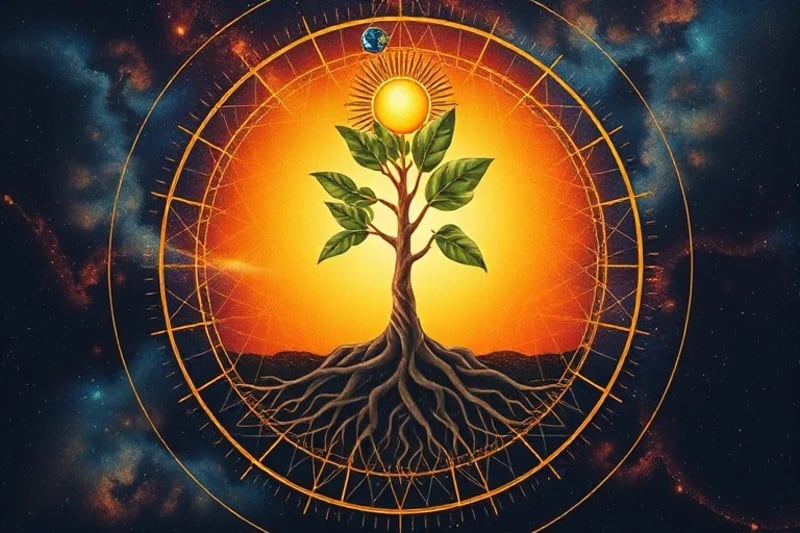
The intricate dance between telluric forces and cosmic rhythms is fundamental to understanding plant vitality.
The lunar cycle is typically divided into four primary phases, each with distinct implications for plant activity:
- New Moon (Dark Moon): This phase is considered ideal for planting root crops, transplanting, and germinating seeds. The subtle increase in gravitational pull during this period is believed to draw moisture downwards, encouraging robust root development.
- Waxing Moon (First Quarter to Full Moon): As the Moon grows in light, its energy is thought to promote above-ground growth. This is an excellent time for planting leafy greens, annual flowers, and crops that produce fruit above ground. The upward pull of moisture supports vigorous stem and leaf development.
- Full Moon: The peak of lunar energy, the Full Moon is associated with flowering and fruit development. It's considered a potent time for harvesting herbs for their medicinal properties, as their energetic potency is believed to be at its highest.
- Waning Moon (Third Quarter to New Moon): As the Moon decreases in light, energy is drawn back into the roots. This phase is best for pruning, weeding, and harvesting root crops, as well as for applying fertilizers and pest control. The downward flow of energy helps plants recover from stress and directs nutrients to the roots.
Beyond these general guidelines, specific planetary hours can further refine the timing of gardening tasks, aligning daily intentions with celestial influences. For those interested in optimizing their daily activities with cosmic timing, exploring Personalized Planetary Hours: Daily Intentions Flow can offer valuable insights.
Zodiacal Influences on Plant Growth
In addition to planetary and lunar influences, the zodiac signs through which the Moon and planets pass are also considered significant in Astro-Botany. Each zodiac sign is associated with one of the four classical elements—Fire, Earth, Air, and Water—and these elemental qualities are believed to affect different parts of a plant.
| Zodiac Element | Associated Plant Part | Recommended Activities |
|---|---|---|
| Earth Signs (Taurus, Virgo, Capricorn) | Roots | Planting root crops (carrots, potatoes), transplanting, tilling soil. |
| Water Signs (Cancer, Scorpio, Pisces) | Leaves | Planting leafy greens (lettuce, spinach), watering, fertilizing. |
| Air Signs (Gemini, Libra, Aquarius) | Flowers | Planting flowering plants, harvesting flowers, pest control. |
| Fire Signs (Aries, Leo, Sagittarius) | Fruits/Seeds | Planting fruit-bearing plants (tomatoes, beans), harvesting fruits/seeds. |
By observing which zodiac sign the Moon is currently transiting, gardeners can further fine-tune their activities to support specific plant parts. For example, planting root crops when the Moon is in an Earth sign is believed to enhance their growth and yield. This detailed understanding of celestial mechanics and their impact on growth patterns is a cornerstone of effective astro-gardening.
Practical Applications: Astro-Gardening and Biodynamics
The theoretical framework of Astro-Botany translates into tangible practices, primarily through astro-gardening and biodynamic agriculture. These methods aim to cultivate plants in harmony with cosmic rhythms, leading to healthier, more resilient crops and enhanced ecological balance.
Astro-gardening involves consulting lunar and planetary calendars to determine the most auspicious times for various gardening tasks. This includes not only planting and harvesting but also pruning, weeding, fertilizing, and even pest management. Proponents claim that plants grown using these methods exhibit increased vitality, better flavor, longer shelf life, and greater resistance to diseases and pests.
The subtle interplay of cosmic energies shapes the very essence of nascent life.
Biodynamic agriculture takes this a step further by incorporating specific homeopathic preparations and a holistic view of the farm as a self-sustaining organism. It emphasizes the spiritual and energetic health of the land, recognizing the farm's connection to the broader cosmos. The use of specific compost preparations and the timing of their application are all guided by celestial calendars, aiming to enhance the "life forces" within the soil and plants.
While often seen as esoteric, these practices are gaining traction among those seeking sustainable and regenerative agricultural models. The emphasis on observation, timing, and working with natural cycles aligns with many principles of organic and permaculture farming, offering a deeper layer of ecological integration.
Energetic Dimensions: Biofields and Plant Consciousness
Beyond the physical influences of light and gravity, Astro-Botany delves into the subtle energetic interactions between celestial bodies and plant life. This perspective often incorporates concepts of biofields, plant consciousness, and the idea that all living things are interconnected through a universal energy matrix.
The concept of a "biofield" refers to the electromagnetic and subtle energy fields that emanate from living organisms, including plants. Astro-Botany suggests that celestial energies interact with these plant biofields, influencing their growth, resilience, and even their medicinal properties. This aligns with modern research into biophotons and the subtle energy emissions of plants, hinting at a deeper level of communication and interaction than previously understood.
Furthermore, some proponents of Astro-Botany believe that plants possess a form of consciousness or sentience, capable of responding to human intention and the energetic environment. This idea is explored in various manifestation techniques, where focused thought and positive energy are directed towards plants to encourage their growth and vitality. Understanding these energetic principles can deepen one's connection to the plant kingdom and enhance the effectiveness of cultivation practices.
The interplay of these subtle energies is also critical in understanding the potency of medicinal herbs. Just as planetary positions are believed to influence human health, as discussed in Medical Astrology: Planetary Health & Wellness Guide, they are thought to affect the energetic qualities of plants used for healing. Harvesting herbs at specific celestial alignments is believed to concentrate their therapeutic properties, making them more effective.
Bridging the Gap: Astro-Botany and Modern Science
While Astro-Botany often resides in the realm of esoteric knowledge, there is a growing dialogue between its principles and emerging scientific understanding. Modern chronobiology, for instance, studies how biological rhythms in plants are synchronized with environmental cycles, including light, temperature, and even geomagnetic fields. These studies provide a scientific basis for understanding how plants perceive and respond to their external environment, including subtle cosmic cues.
Research into the effects of geomagnetic fields on plant growth, the influence of cosmic rays, and the subtle energy interactions within ecosystems offers tantalizing glimpses into how celestial phenomena might exert their influence. While direct causal links between specific planetary positions and plant growth remain largely unproven by conventional scientific methods, the increasing sophistication of biological and astrophysical research may one day provide clearer answers.
The scientific community is slowly beginning to acknowledge the complexity of plant intelligence and their sophisticated sensory capabilities. This shift opens doors for a more rigorous investigation into the claims of Astro-Botany, moving beyond anecdotal evidence to explore potential mechanisms through which celestial energies could interact with plant biology. The field of Biofield Aligned Crystal Grids Manifestation Planetary Rhythms, for example, touches upon similar concepts of subtle energy alignment and its potential impact on biological systems.
Conclusion: Cultivating Cosmic Harmony
Astro-Botany offers a compelling framework for understanding the profound interconnectedness between the cosmos and the plant kingdom. By observing and working with celestial rhythms, we can foster healthier, more vibrant plants and cultivate a deeper appreciation for the intricate web of life. Whether approached from a purely practical gardening perspective or a more esoteric exploration of energetic interactions, Astro-Botany invites us to engage with nature in a more conscious and harmonious way.
As we continue to explore the mysteries of the universe and the complexities of life on Earth, the insights offered by Astro-Botany serve as a reminder that the subtle forces of the cosmos play a vital role in shaping our world. Embracing these ancient principles, combined with modern inquiry, holds the potential to unlock new levels of understanding and sustainable practices for the future of agriculture and ecological stewardship. This holistic perspective aligns with broader efforts to co-create reality with the universe, as explored in Manifestation Techniques: Co-creating Reality with the Universe.
Source: Hybrid content assisted by AI and human editorial supervision.


Comments
Post a Comment