
Psycho-Astrology Jungian Archetypes Shadow Integration Wholeness
Psycho-astrology represents a fascinating interdisciplinary field that bridges the ancient wisdom of astrology with the profound insights of modern psychology. At its core, this approach seeks to understand the human psyche by interpreting the symbolic language of the birth chart through a psychological lens.
One of the most compelling applications of psycho-astrology involves the integration of Carl Jung's concept of archetypes, particularly the Shadow. This article explores how combining astrological birth chart analysis with Jungian principles can illuminate the path to shadow integration, fostering psychological wholeness and personal growth.
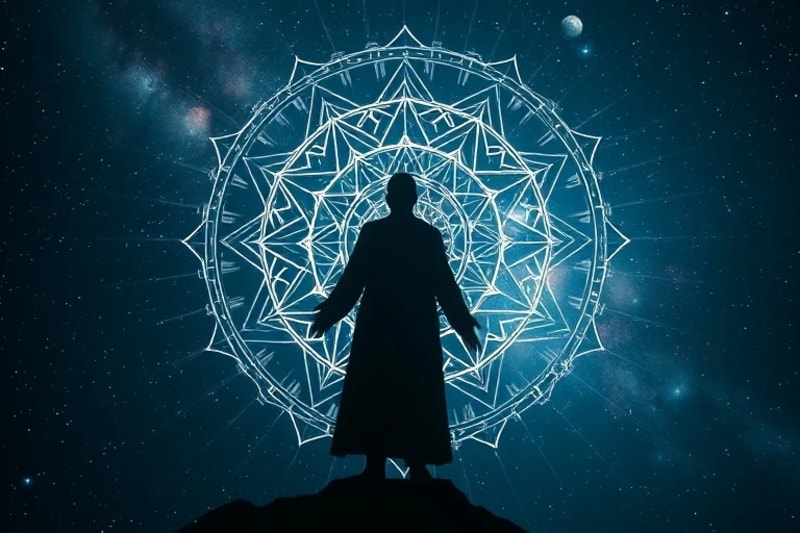
A visual representation of the intricate connection between cosmic patterns and the human psychological landscape.
Fuente visual sujeta a disponibilidad del ecosistema: Wikimedia Commons bajo licencia CC BY-SA 4.0 o renderizado conceptual IA.Table of Contents
- The Intersection of Cosmos and Psyche
- Unveiling Jungian Archetypes in the Natal Chart
- The Astrological Shadow: Unconscious Projections
- The Path to Wholeness: Shadow Integration
- Practical Approaches to Shadow Work through Astrology
- The Alchemical Journey: From Fragmentation to Wholeness
The Intersection of Cosmos and Psyche
Psycho-astrology serves as a powerful bridge, connecting the macrocosm of the cosmos with the microcosm of the individual psyche. It posits that the celestial patterns at the moment of our birth are not merely random occurrences but rather symbolic blueprints of our psychological makeup and life's journey.
Carl Jung, the renowned Swiss psychiatrist and founder of analytical psychology, introduced groundbreaking concepts that resonate deeply with astrological principles. His work on the collective unconscious, archetypes, and the process of individuation provides a robust framework for interpreting the complex symbolism found in a natal chart.
Jung believed that the psyche is composed of various interacting systems, both conscious and unconscious. The birth chart, when viewed through this lens, becomes a symbolic map of these internal dynamics, revealing innate potentials, challenges, and the energetic patterns that drive our behavior and experiences.
Unveiling Jungian Archetypes in the Natal Chart
Jungian archetypes are universal, archaic patterns and images that derive from the collective unconscious and are the psychic counterpart of instinct. They are fundamental forms of human motivation and experience, influencing our thoughts, feelings, and actions. In a birth chart, these archetypes manifest through the planets, signs, houses, and aspects.
- The Persona: Represented by the Ascendant and its ruling planet, this archetype is the mask we present to the world, our public image. It's how we adapt to society's expectations.
- The Anima/Animus: These represent the unconscious feminine qualities in a man (Anima) and masculine qualities in a woman (Animus). Venus and Mars, along with their sign and house placements, often shed light on these inner figures and how they influence our relationships and inner world.
- The Self: The central archetype of wholeness and the regulating center of the psyche. In astrology, the Sun and Moon, along with the entire chart's synthesis, point towards the individual's journey toward becoming their authentic self, a process Jung called individuation.
- The Shadow: This is perhaps the most significant archetype for personal growth. It comprises the repressed, disowned, and unconscious aspects of ourselves, both negative and positive, that we deem unacceptable or undesirable.
Each planet, sign, and house in the natal chart can embody archetypal energies. For instance, Jupiter might represent the Wise Old Man or the Benevolent King, while Saturn could symbolize the Father Figure or the Taskmaster. Understanding these archetypal expressions helps us interpret the chart beyond mere predictions, delving into deeper psychological motivations.
The Astrological Shadow: Unconscious Projections
The Shadow is not inherently evil; it simply contains everything that the conscious ego has rejected or ignored. This can include perceived flaws, weaknesses, but also undeveloped talents, powerful instincts, and creative potentials. When these aspects remain unconscious, they often manifest as projections onto others or as self-sabotaging behaviors.
In the birth chart, the Shadow can be indicated by several factors. Challenging planetary aspects (squares, oppositions, quincunxes), particularly involving outer planets like Pluto, Saturn, or Mars, can highlight areas where we experience internal conflict and repression. Planets in the 12th house, often associated with the unconscious and hidden realms, can also point to shadow material.
An abstract depiction of the shadow, revealing hidden emotions and untapped potential.
For example, a strong, challenging Pluto aspect might indicate a struggle with power, control, or repressed trauma, which, if unaddressed, can lead to obsessive behaviors or attracting manipulative individuals. Similarly, a difficult Saturn placement could signify a fear of failure or authority, leading to self-imposed limitations or resentment towards those in power.
Understanding these astrological indicators helps us identify where our unconscious projections might be stemming from. When we project our shadow onto others, we see our disowned traits in them, often leading to judgment, conflict, or intense attraction/repulsion. This dynamic is also explored in Synastry Attachment Theory Bridging Relationship Dynamics, highlighting how our inner patterns affect our connections.
The Path to Wholeness: Shadow Integration
Shadow integration is the process of acknowledging, accepting, and ultimately integrating these unconscious aspects into our conscious personality. It's not about eradicating the shadow but rather about bringing light to its contents, understanding their origins, and reclaiming the energy they hold.
The benefits of shadow integration are profound. By integrating our shadow, we reduce internal conflict, become more authentic, and develop greater self-acceptance. This process also leads to increased empathy for others, as we recognize the universality of the human shadow. It's a crucial step towards individuation, the journey of becoming a unique, whole individual.
Astrologically, the nodal axis (North and South Node) can offer insights into our karmic patterns and the qualities we are meant to integrate versus those we need to release. Chiron, the Wounded Healer, also points to core wounds and the potential for healing through conscious engagement with our pain and vulnerabilities, which are often part of the shadow.
Practical Approaches to Shadow Work through Astrology
Engaging in shadow work requires courage and self-awareness. Astrology can provide a roadmap, highlighting specific areas of the chart that are ripe for exploration. Here are some practical approaches:
- Natal Chart Analysis: Work with an astrologer or study your own chart to identify challenging aspects, planetary placements in the 12th or 8th houses, and the ruler of your Descendant, as these can reveal significant shadow material.
- Journaling and Self-Reflection: Dedicate time to reflect on your reactions to others. What qualities in others irritate or fascinate you? These are often projections of your own shadow. Journal about dreams, as they are direct messages from the unconscious. For deeper insights, consider exploring AI-Assisted Dream Interpretation.
- Active Imagination: A Jungian technique where you consciously engage with figures or symbols that emerge from your unconscious, often through dreams or meditation. This can help personify shadow aspects and facilitate dialogue with them.
- Therapy and Coaching: A skilled therapist or coach can provide a safe space to explore difficult emotions and unconscious patterns. They can guide you through the process of integrating disowned parts of yourself.
- Astrological Transits: Pay attention to significant transits, especially those involving Pluto, Saturn, or Uranus, as they often trigger periods of deep psychological transformation and bring shadow material to the surface for processing. This aligns with deeper astrological studies such as Hellenistic Astrology Bridging Ancient Predictive Modern Spirituality.
A conceptual artwork depicting the harmonious integration of all aspects of the self, leading to wholeness.
The Alchemical Journey: From Fragmentation to Wholeness
The journey of shadow integration is often described as an alchemical process, transforming lead (unconscious, fragmented self) into gold (conscious, whole self). It's a lifelong endeavor, not a one-time event, as new shadow material can emerge at different life stages, often triggered by significant astrological transits or life events.
Achieving wholeness doesn't mean becoming perfect or eliminating all negative traits. Instead, it signifies a state of inner harmony where all parts of the self, including the previously disowned shadow, are acknowledged, accepted, and integrated. This allows for a richer, more authentic expression of who we truly are, leading to greater psychological resilience and a deeper sense of meaning.
By consciously engaging with our astrological blueprint and applying Jungian principles, we embark on a profound journey of self-discovery. This path empowers us to reclaim our hidden potentials, heal old wounds, and ultimately live a more integrated and fulfilling life, aligned with our deepest truth.
The integration of the shadow is a critical component of the individuation process, leading to a more complete and balanced personality.
This process is not without its challenges, requiring courage to confront uncomfortable truths about oneself.
However, the rewards of increased self-awareness and authenticity are immeasurable for psychological well-being.
Explore Further: Related Insights
- Rabbit Zodiac: Elemental Traits for Fire, Earth, Metal, Water, Wood - Discover the elemental influences on Chinese zodiac signs.
- Chinese Zodiac Triangles: Unveiling Deep Harmonious Groups - Understand the harmonious groupings within the Chinese zodiac.
- Tarot Sacred Geometry: Unlocking Universal Truths Divination - Delve into the geometric patterns that underpin Tarot symbolism.
- Ecological Astrology: Earth's Cycles, Environmental Impact - Connect celestial movements with terrestrial environmental concerns.
- Synastry Advanced Intercepted Houses Karmic Links - Explore complex relationship dynamics through advanced synastry techniques.
- Astrology Debt Abundance Financial Karma Unpacked - Uncover the astrological links to financial patterns and karmic debts.
- Financial Astrology Day Trading Predictions: Short-Term Market - Learn about applying astrological insights to market trends.
- Rooster Chinese Zodiac: Five Elements Explained, Influence - A detailed look at the Rooster sign within the five elements framework.
- Fixed Stars Soul Healing Karmic Imbalances Natal Chart - Discover the impact of fixed stars on soul healing and karmic patterns.
- Techno-Shamanism Digital Spirituality Ancient Rituals Modern - Explore the blend of ancient spiritual practices with modern technology.
- Water Snake Horoscope: Year, Traits & Destiny - An in-depth look at the characteristics of the Water Snake in Chinese astrology.
- Karmic Debts Numerology: Unveiling Life Challenges - Understand how numerology can reveal karmic challenges and life lessons.
Source: Hybrid content assisted by AI and human editorial supervision.


Comments
Post a Comment