
Feng Shui Basics: Harmonizing Environment for Prosperity | StarPluto
Feng Shui, an ancient Chinese art and science, literally translates to "wind and water." It is a complex body of knowledge that reveals how to balance the energies of any given space to ensure health and good fortune for the people inhabiting it. This practice is not merely about interior decoration; it is a profound system of metaphysics that observes the flow of "Chi" (life force energy) and its interaction with our environment.
The core belief behind Feng Shui is that our surroundings profoundly influence our well-being, prosperity, and relationships. By understanding and manipulating these environmental energies, we can create spaces that support our goals and enhance our lives. This introductory guide will delve into the fundamental principles, elements, and practical applications of Feng Shui, providing a clear pathway for newcomers to begin harmonizing their environments.
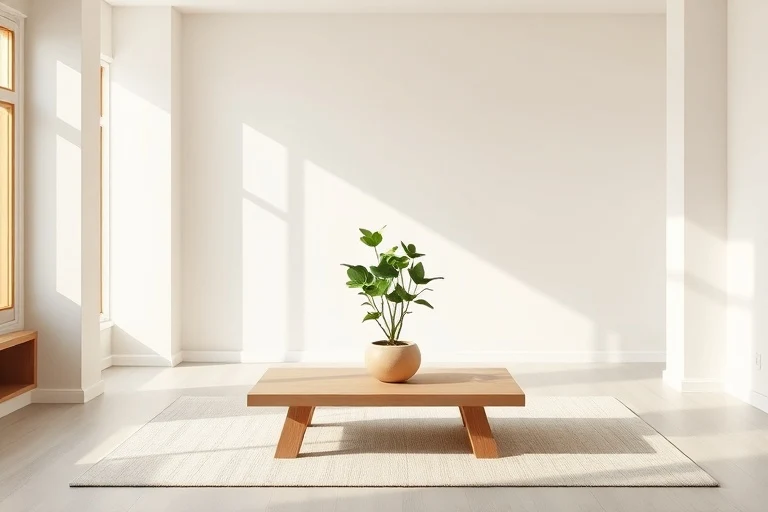
A minimalist living room designed with Feng Shui principles, fostering a sense of calm and balance.
Embarking on a Feng Shui journey involves more than just moving furniture; it requires a mindful approach to how we interact with our living and working spaces. It's about creating an energetic dialogue between ourselves and our environment, ensuring that the flow of energy is conducive to growth, health, and happiness. This ancient wisdom offers timeless strategies for modern challenges, helping us cultivate sanctuaries that reflect our deepest aspirations.
As an esoteric discipline, Feng Shui often intersects with other spiritual and metaphysical practices. Its principles are rooted in observations of nature, astronomy, and the subtle energies that govern the universe. By applying these insights, individuals can transform stagnant or negative energy into vibrant, supportive forces within their homes and offices, paving the way for a more harmonious existence.
What is Feng Shui? An Ancient Art of Harmonizing Energy
Feng Shui is a traditional Chinese practice that claims to use energy forces to harmonize individuals with their surrounding environment. The term "Feng Shui" literally means "wind-water," signifying the invisible and visible forces that affect human life. Wind (Feng) represents the invisible breath of life, or Chi, while water (Shui) represents the flow of energy and the physical environment.
Originating over 3,000 years ago in China, Feng Shui was initially used to orient buildings, such as tombs, residences, and other structures, in an auspicious manner. Ancient practitioners believed that the correct alignment with natural forces could bring prosperity, health, and good fortune to the inhabitants. Over centuries, its principles evolved, incorporating elements of astrology, cosmology, and the five elements theory.
At its heart, Feng Shui is about creating a balanced and harmonious flow of Chi. When Chi flows smoothly and gently through a space, it is considered beneficial. Conversely, stagnant or overly aggressive Chi can lead to problems. The practice involves analyzing the layout of a space, its orientation, the placement of objects, and the use of colors and materials to optimize this energy flow.
Modern Feng Shui adapts these ancient principles to contemporary living, offering guidance for everything from office layouts to garden design. It encourages a deeper connection to our surroundings and a conscious effort to shape them in ways that support our personal and professional lives. Many people turn to Feng Shui to address specific challenges, such as financial difficulties, relationship issues, or health concerns, by adjusting their environment to attract more positive energy.
The Core Principles of Feng Shui
Several fundamental principles underpin the practice of Feng Shui, guiding practitioners in their efforts to create balanced spaces. Understanding these concepts is crucial for anyone looking to apply Feng Shui effectively. The concept of Chi is paramount, representing the universal life force energy that permeates everything.
Another key principle is Yin and Yang, the complementary opposing forces that exist in all things. Yin represents darkness, passivity, femininity, and coolness, while Yang represents light, activity, masculinity, and warmth. A harmonious space achieves a balance between these two forces, avoiding extremes that can lead to imbalance and discomfort. For example, a room that is too brightly lit and active (excess Yang) might feel restless, while one that is too dark and cluttered (excess Yin) might feel stagnant.
The Command Position is a strategic placement principle, particularly important for beds, desks, and stoves. It dictates that these key items should be positioned to allow a clear view of the room's entrance without being directly in line with it. This provides a sense of security and control, allowing the individual to "command" their space and life effectively. It's about being able to see opportunities and challenges as they approach.
The concept of the Five Elements (Wood, Fire, Earth, Metal, Water) is also central to Feng Shui, as these elements interact in specific cycles to create or destroy energy. Balancing these elements within a space is essential for harmony. Each element is associated with specific colors, shapes, materials, and directions, offering a rich palette for environmental adjustments.
Finally, the Bagua map is a tool used to analyze the energy of a space and connect different areas of a home or office to specific life aspects, such as wealth, relationships, and health. By understanding these principles, one can begin to interpret and modify their environment to better support their life's journey, making conscious choices about design and arrangement.
Understanding the Five Elements
The Five Elements theory is a cornerstone of Feng Shui, providing a framework for understanding the dynamic interactions within our environment. These elements—Wood, Fire, Earth, Metal, and Water—are not merely physical substances but represent different types of energy, qualities, and phases of change. They are interconnected through two primary cycles: the Creative Cycle and the Destructive Cycle.
In the Creative Cycle, each element nourishes the next: Water feeds Wood, Wood fuels Fire, Fire creates Earth (ash), Earth yields Metal (minerals), and Metal collects Water. This cycle is used to enhance and support specific energies within a space. For instance, if you want to boost the Wood element in an area, you might introduce Water elements, such as a fountain or blue colors.
The Destructive Cycle, or Controlling Cycle, describes how elements overcome each other: Water extinguishes Fire, Fire melts Metal, Metal cuts Wood, Wood breaks Earth, and Earth absorbs Water. This cycle is used to subdue or balance an overabundance of a particular element. For example, if there's too much Fire energy, introducing Water elements can help to temper it.
Each element is associated with specific attributes, colors, shapes, and materials, which can be strategically used to activate or balance energy in different areas of a home or office. Below is a table summarizing these associations:
| Element | Attributes | Colors | Shapes | Materials/Decor |
|---|---|---|---|---|
| Wood | Growth, new beginnings, vitality, creativity | Green, light blue | Rectangular, columnar | Plants, wooden furniture, floral patterns |
| Fire | Passion, energy, recognition, transformation | Red, orange, purple, bright yellow | Triangular, pointed | Candles, fireplaces, bright lights, animal prints |
| Earth | Stability, grounding, nourishment, relationships | Brown, yellow, beige, terracotta | Square, flat | Ceramics, pottery, stone, earthy textures |
| Metal | Clarity, precision, organization, communication | White, gray, silver, gold | Round, spherical, arched | Metal objects, coins, white ceramics, rocks |
| Water | Flow, wisdom, intuition, career, wealth | Black, dark blue | Wavy, irregular, flowing | Fountains, aquariums, mirrors, glass, dark fabrics |
By strategically incorporating these elements, one can create a dynamic and supportive environment. For instance, a home office might benefit from Metal elements for clarity and focus, while a living room could balance Earth for stability with Wood for growth and creativity. The goal is to achieve a harmonious interplay, avoiding an excess or deficiency of any single element.
The Bagua Map: Your Energetic Blueprint
The Bagua map is one of the most widely recognized tools in Feng Shui, serving as an energetic blueprint of a space. It is an octagonal or square grid divided into nine sections, each corresponding to a specific life aspect or "guá" (area of life). When overlaid onto a home, office, or even a single room, the Bagua reveals which areas relate to different aspects of your life, such as wealth, health, relationships, and career.
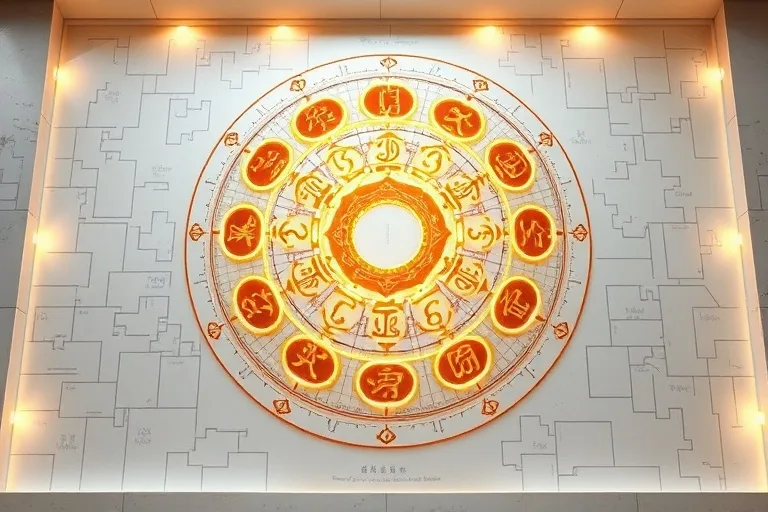
An abstract representation of the Bagua map, illustrating its energetic influence on a space.
There are two main schools of thought for applying the Bagua: the Traditional (Compass) Bagua and the Western (BTB) Bagua. The Western Bagua is simpler to apply, aligning the "Career" or "Life Path" area with the main entrance wall of the space. From there, the other eight guás are mapped out in a grid. The Traditional Bagua uses a compass to determine the exact orientation of each guá based on cardinal directions, offering a more precise, but often more complex, application.
Each of the nine areas of the Bagua is associated with specific colors, elements, and symbols that can be used to activate and enhance that particular life aspect. For example, the Wealth & Prosperity area (typically the far left corner from the main entrance in BTB Feng Shui) is associated with the Wood element and colors like purple and green. To enhance this area, one might place healthy plants, a water feature, or items in purple hues.
The nine guás and their associations are:
- Wealth & Prosperity (Xun): Southeast, Wood element, purple/green. Enhances financial abundance.
- Fame & Reputation (Li): South, Fire element, red. Boosts recognition and social standing.
- Love & Relationships (Kun): Southwest, Earth element, pink/red. Strengthens partnerships and romance.
- Family & Health (Zhen): East, Wood element, green/blue. Supports family harmony and physical well-being.
- Center (Tai Chi): Earth element, yellow/brown. Represents overall health and unity of the space.
- Creativity & Children (Dui): West, Metal element, white/silver. Fosters creativity and supports children.
- Knowledge & Self-Cultivation (Gen): Northeast, Earth element, blue/black. Enhances wisdom and personal growth.
- Career & Life Path (Kan): North, Water element, black/dark blue. Guides career progression and life purpose.
- Helpful People & Travel (Qian): Northwest, Metal element, gray/white. Attracts mentors and facilitates travel.
By identifying which areas of your home correspond to these life aspects, you can strategically place objects, colors, and elements to activate and balance the Chi in those specific guás. This allows for targeted improvements in areas of life where you seek greater harmony or success, making the Bagua a powerful tool for personal transformation.
Practical Applications of Feng Shui in Your Home
Applying Feng Shui principles in your home doesn't require a complete overhaul; even small adjustments can make a significant difference in energy flow. The goal is to create a space that feels supportive, nurturing, and conducive to your desired outcomes. Start by decluttering, as clutter creates stagnant energy and blocks the flow of Chi.
The entrance of your home, known as the "Mouth of Chi," is crucial. Ensure it is inviting, well-lit, and free of obstacles. A clear and welcoming entrance allows positive energy to enter freely. Consider placing a vibrant plant or a beautiful piece of art near the entrance to attract auspicious Chi. The front door should be easily visible and accessible, not hidden behind overgrown bushes or a pile of shoes.
In the living room, arrange furniture to encourage conversation and comfort, avoiding sharp angles pointing at seating areas. The Command Position is vital here for the main seating arrangement, ensuring that the primary sofa or chair offers a clear view of the room's entrance. Incorporate elements that represent all five elements in a balanced way to create a harmonious atmosphere.
The bedroom is a sanctuary for rest and intimacy. The bed should be in the Command Position, ideally against a solid wall, not under a window, and not directly in line with the door. Avoid placing mirrors directly facing the bed, as they can disrupt sleep. Keep electronics to a minimum and choose soft, calming colors. Ensure there is clear space under the bed for Chi to circulate, as storage here can create energetic blockages.
The kitchen, representing nourishment and wealth, should be clean and well-maintained. Ensure the stove is clean and all burners are in working order, as it symbolizes financial resources. The bathroom, a place where water (and thus energy) drains, should be kept clean, with the toilet lid down and the door closed to prevent good Chi from flowing away. Small plants can help absorb negative energy in bathrooms.
A visual representation of Chi, the vital life force energy, flowing harmoniously through a space.
By systematically applying these practical tips, you can begin to transform your home into a space that actively supports your life goals and enhances your overall sense of well-being. Remember that Feng Shui is an ongoing process of observation and adjustment, continually adapting your environment to your evolving needs.
Feng Shui for Prosperity and Abundance
One of the most popular applications of Feng Shui is to attract prosperity and abundance. The Wealth & Prosperity area of the Bagua map is specifically associated with financial well-being and is a key focus for those seeking to improve their financial situation. This area, often the far left corner when facing into your home from the main entrance (BTB Feng Shui), is governed by the Wood element.
To activate and enhance the Wealth & Prosperity corner, consider incorporating elements that represent growth, vitality, and wealth. Healthy, vibrant plants are excellent activators, symbolizing continuous growth and flourishing. Avoid plants with sharp, spiky leaves, opting instead for those with soft, rounded foliage. A money tree or jade plant is often recommended.
Water features, such as small indoor fountains or aquariums, are powerful symbols of wealth in motion. The gentle sound and movement of water can attract and circulate positive financial Chi. Ensure the water is always clean and flowing, as stagnant water can symbolize stagnant finances. Placing these features in the Wealth area can significantly enhance its energy.
Colors associated with wealth, such as purple, green, and gold, can be introduced through decor, artwork, or textiles. For example, a purple throw pillow, a green rug, or a piece of art with golden accents can subtly activate this area. Avoid clutter in this sector, as it can block the flow of abundance. Keep the area clean, organized, and well-maintained.
Symbolic items, such as a bowl of coins, a treasure chest, or representations of wealth (like a ship sailing inward), can also be placed in this area. It's important that these items resonate with your personal definition of abundance. Remember that while Feng Shui can create a supportive environment, it also requires conscious effort and action on your part to manifest financial success. It's a partnership between your environment and your intentions.
Enhancing Well-being Through Feng Shui
Beyond prosperity, Feng Shui is a potent tool for enhancing overall well-being, encompassing physical health, emotional balance, and mental clarity. The central area of the Bagua, known as the Tai Chi, is directly linked to the health and unity of the entire space and its inhabitants. Keeping this central area clear, bright, and free of clutter is fundamental for good health.
The Family & Health area (East in BTB Feng Shui) is another crucial sector for well-being, associated with the Wood element. To support health, ensure this area is vibrant and filled with living energy. Healthy plants, images of nature, and family photos (especially those depicting happy moments) can activate this guá. Avoid placing dead or dying plants, or images that evoke sadness or conflict.
Good air quality and natural light are vital for health in Feng Shui. Open windows regularly to allow fresh air to circulate, and use air purifiers if necessary. Maximize natural light in your home, as it brings positive Yang energy. If natural light is limited, use full-spectrum lighting to mimic its effects. Dim, dark spaces can contribute to stagnant Chi and feelings of lethargy.
The bedroom's setup directly impacts sleep quality and, consequently, overall health. A peaceful, dark, and quiet bedroom promotes restorative sleep. Ensure your bed is in the Command Position and that there are no sharp objects or heavy shelves hanging directly above your head. Colors in the bedroom should be calming and muted, such as soft blues, greens, or earthy tones, which promote relaxation.
Finally, maintaining cleanliness and order throughout your home contributes significantly to well-being. Clutter creates mental and emotional stress, making it difficult to relax and focus. Regularly decluttering and organizing your space not only improves the flow of Chi but also fosters a sense of peace and control. By consciously designing your environment to support health, you create a foundation for a vibrant and balanced life.
Common Feng Shui Misconceptions
As with many ancient practices, Feng Shui is often subject to various misconceptions that can hinder its effective application. One common belief is that Feng Shui is merely a form of interior decoration or superstition. While it does involve aesthetics, its principles are rooted in thousands of years of observation of natural energies and their impact on human psychology and well-being, going far beyond simple decor choices.
Another misconception is that Feng Shui requires drastic and expensive renovations. In reality, many powerful Feng Shui adjustments can be made with minimal effort and cost, such as decluttering, rearranging furniture, or introducing specific colors and elements. The focus is on intention and energy flow, not necessarily on luxury or extravagance. Small, mindful changes often yield significant results.
Some people believe that Feng Shui is a "quick fix" for all life's problems. While it can create a supportive environment that attracts positive opportunities, it is not a magical solution that negates personal effort. Feng Shui works in conjunction with your actions and intentions; it creates the fertile ground, but you must plant the seeds and nurture them. It's a tool for empowerment, not passive reception.
There's also the idea that all Feng Shui rules are universal and apply equally to everyone. In truth, effective Feng Shui often requires personalization. Factors like an individual's birth date (Kua number), personal goals, and the specific characteristics of their home and surrounding landscape all play a role. A professional Feng Shui consultant considers these unique aspects to provide tailored advice, making it a highly individualized practice.
Finally, the notion that Feng Shui is a religion is incorrect. While it originated in cultures where spiritual beliefs were prevalent, Feng Shui itself is a system of environmental science and art, not a religion. It can be practiced by people of any faith or none, as its principles relate to universal energy dynamics rather than specific deities or doctrines. Understanding these distinctions helps in approaching Feng Shui with an open and informed mind.
Integrating Feng Shui into Modern Living
Integrating Feng Shui into modern living involves adapting ancient wisdom to contemporary challenges and aesthetics. While traditional Feng Shui homes might look different from modern apartments or offices, the underlying principles remain highly relevant. The key is to understand the essence of each principle and find creative ways to apply it within your current environment.
For urban dwellers, space is often a premium. Feng Shui encourages maximizing natural light, even in small spaces, by using mirrors strategically to reflect light and expand visual areas. Vertical gardening or indoor plants can bring the Wood element into compact homes, fostering growth and vitality. Clever storage solutions are essential to combat clutter and maintain clear pathways for Chi to flow.
Technology, a ubiquitous part of modern life, can introduce an excess of Metal energy and electromagnetic fields (EMFs). Feng Shui suggests balancing this with natural elements like wood and plants. In bedrooms, minimizing electronics and creating a "digital detox" zone can significantly improve sleep and overall well-being. Consider placing a small bowl of sea salt near electronic devices to absorb negative energy.
Work-from-home setups also benefit greatly from Feng Shui. Position your desk in the Command Position, ensuring you have a solid wall behind you for support and a clear view of the door. Keep your workspace organized and clutter-free to promote focus and productivity. Incorporate elements that support your career goals, such as a small water feature for career advancement or a plant for growth.
Ultimately, integrating Feng Shui into modern living is about mindful design and conscious living. It's about creating spaces that are not only aesthetically pleasing but also energetically supportive of your life's journey. By understanding the basics and applying them thoughtfully, anyone can transform their environment into a powerful ally for prosperity, well-being, and harmony, irrespective of their living situation.
Fuente: Contenido híbrido asistido por IAs y supervisión editorial humana.


Comments
Post a Comment