
Planetary Hours: Optimizing Daily Activities for Success & Intentions Guide | StarPluto
In a world increasingly driven by the relentless pace of modern life, the quest for optimal productivity and alignment with personal goals has led many to explore ancient wisdom traditions. Among these, the concept of Planetary Hours offers a fascinating and practical framework for optimizing daily activities. This system, rooted in ancient astrology, suggests that each hour of the day is governed by a different planet, imbuing that period with specific energies and influences that can be leveraged for greater success and intention setting.
Understanding and applying planetary hours can transform how we approach tasks, meetings, creative endeavors, and even personal interactions. By aligning our actions with the prevailing cosmic energies, we can enhance our effectiveness, reduce friction, and move closer to our desired outcomes. This comprehensive guide will delve into the origins, mechanics, and practical applications of planetary hours, providing a roadmap for integrating this ancient knowledge into your contemporary routine.
- What Are Planetary Hours?
- History and Origin of Planetary Hours
- How to Calculate Planetary Hours
- The Seven Planetary Hours and Their Influences
- Sun Hour: Vitality, Leadership, and Success
- Moon Hour: Intuition, Emotions, and Nurturing
- Mars Hour: Action, Energy, and Confrontation
- Mercury Hour: Communication, Intellect, and Commerce
- Jupiter Hour: Expansion, Wisdom, and Good Fortune
- Venus Hour: Love, Beauty, and Harmony
- Saturn Hour: Discipline, Structure, and Reflection
- Integrating Planetary Hours into Modern Life
- Benefits and Considerations
What Are Planetary Hours?
Planetary hours are a system of dividing the day and night into specific periods, each ruled by one of the seven traditional planets: Sun, Moon, Mars, Mercury, Jupiter, Venus, and Saturn. This ancient astrological technique posits that the energy and influence of the ruling planet color the activities undertaken during its hour. By understanding these influences, individuals can strategically schedule their tasks to align with the most favorable cosmic energies, thereby increasing their chances of success and fulfillment.
Unlike standard clock hours, planetary hours are not fixed at 60 minutes. Instead, they are calculated by dividing the total duration of daylight and nighttime into twelve equal parts each. This means that the length of a planetary hour varies with the seasons and geographical location, being longer in summer and shorter in winter, and differing between day and night.
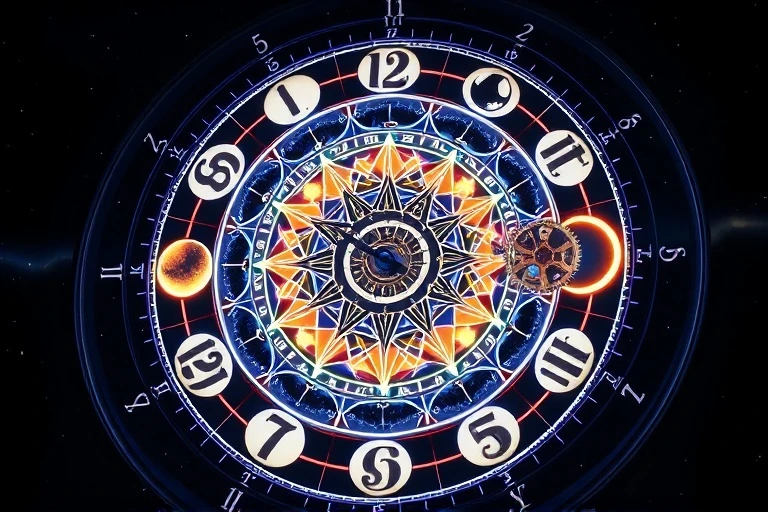
The ancient wisdom of planetary hours offers a unique lens through which to view and optimize daily life, aligning personal actions with universal rhythms.
History and Origin of Planetary Hours
The concept of planetary hours has deep roots in ancient astrological and magical traditions, dating back to the Hellenistic period, particularly in Egypt and Mesopotamia. The system is based on the Chaldean order of the planets, which arranges them by their apparent speed as observed from Earth: Saturn, Jupiter, Mars, Sun, Venus, Mercury, Moon. This sequence is crucial for determining the ruler of each hour.
The Chaldean order also explains the traditional rulers of the days of the week: Saturday (Saturn), Sunday (Sun), Monday (Moon), Tuesday (Mars), Wednesday (Mercury), Thursday (Jupiter), and Friday (Venus). Each day begins with the hour of its ruling planet, and subsequent hours follow the Chaldean sequence. This intricate system was widely used by astrologers, magicians, and even farmers to determine auspicious times for various undertakings, from planting crops to performing rituals or initiating important projects.
Over centuries, this knowledge was passed down through various cultures, including the Roman, Islamic, and European Renaissance periods. While its prominence waned with the rise of modern science, there has been a resurgence of interest in recent times among those seeking holistic approaches to personal development and time management. The enduring appeal lies in its simple yet profound premise: that timing is everything, and by understanding cosmic cycles, we can live more harmoniously and effectively.
How to Calculate Planetary Hours
Calculating planetary hours requires a few key pieces of information: your geographical location (latitude and longitude), the sunrise time, and the sunset time for that specific day. Since daylight and nighttime hours vary, the length of each planetary hour will also fluctuate. Here’s a simplified breakdown of the calculation process:
- Determine Sunrise and Sunset: Use an almanac, a reliable weather app, or an online calculator to find the exact sunrise and sunset times for your location on the day you wish to calculate.
- Calculate Daylight Duration: Subtract the sunrise time from the sunset time to get the total duration of daylight.
- Calculate Nighttime Duration: Subtract the sunset time of the current day from the sunrise time of the next day to get the total duration of nighttime.
- Divide by Twelve: Divide both the daylight duration and the nighttime duration by twelve. This will give you the length of one daylight planetary hour and one nighttime planetary hour, respectively.
- Assign Planetary Rulers: The first hour of the day (starting at sunrise) is ruled by the planet corresponding to the day of the week (e.g., Sunday by the Sun, Monday by the Moon). Subsequent hours follow the Chaldean order: Saturn, Jupiter, Mars, Sun, Venus, Mercury, Moon. This sequence repeats until all 24 hours are assigned.
Fortunately, numerous online calculators and smartphone applications are available today that can automatically determine planetary hours for any given location and time, making this ancient practice accessible to everyone. These tools eliminate the need for manual calculation, allowing users to focus on applying the insights rather than the arithmetic.

An antique journal and hourglass represent the meticulous recording and timing involved in harnessing planetary energies for personal growth.
The Seven Planetary Hours and Their Influences
Each of the seven traditional planets carries unique symbolism and energetic qualities that influence its corresponding hour. By understanding these associations, you can consciously choose activities that are supported by the planetary energy, leading to more favorable outcomes. Below, we explore the primary influences of each planetary hour and suggest optimal activities.
The Chaldean Order of Planets
| Planet | Key Influences | Optimal Activities |
|---|---|---|
| Saturn | Discipline, structure, long-term planning, responsibility, introspection, limitations. | Meditation, deep study, planning, organizing, setting boundaries, dealing with difficult issues, introspection. |
| Jupiter | Expansion, growth, wisdom, good fortune, learning, generosity, philosophy. | Learning, teaching, seeking wisdom, financial investments, legal matters, spiritual practices, travel planning. |
| Mars | Action, courage, assertion, energy, passion, conflict, physical activity. | Exercise, starting new projects, confronting challenges, physical labor, competitive activities, self-defense. |
| Sun | Vitality, leadership, self-expression, success, recognition, authority, creativity. | Public speaking, presentations, seeking recognition, creative work, leadership tasks, self-promotion, engaging with authorities. |
| Venus | Love, beauty, harmony, pleasure, relationships, art, diplomacy, luxury. | Socializing, dating, artistic pursuits, beautification, reconciliation, enjoying pleasures, buying luxury items. |
| Mercury | Communication, intellect, learning, commerce, negotiation, writing, travel. | Writing, studying, sending emails, making calls, signing contracts, short trips, negotiations, brainstorming. |
| Moon | Emotions, intuition, nurturing, domesticity, fertility, subconscious, change. | Self-care, meditation, emotional healing, domestic tasks, gardening, nurturing relationships, intuitive work. |
Sun Hour: Vitality, Leadership, and Success
The Sun is the giver of life, light, and vitality. Its hour is ideal for activities that require confidence, leadership, and a strong sense of self. This is a powerful time to shine, be seen, and assert your individuality. It's when your personal power is at its peak, making it conducive for tasks that demand your full presence and authority.
During the Sun hour, focus on activities such as public speaking, giving presentations, launching new initiatives, seeking recognition or promotion, and engaging with authority figures. It's also an excellent time for creative expression, self-promotion, and anything that puts you in the spotlight. If you have an important meeting or a job interview, scheduling it during a Sun hour can give you an energetic advantage, enhancing your charisma and impact.
Moon Hour: Intuition, Emotions, and Nurturing
The Moon governs our emotions, intuition, and subconscious mind. Its hour is best suited for activities that involve introspection, nurturing, and connecting with our inner world. This is a gentle, receptive time, perfect for self-care and emotional processing. It encourages fluidity and adaptability, making it less ideal for rigid planning or highly structured tasks.
Use the Moon hour for meditation, journaling, self-reflection, or engaging in activities that promote emotional healing and well-being. It's also favorable for domestic tasks, gardening, spending time with family, or nurturing existing relationships. Intuitive work, such as divination or dream interpretation, is particularly potent during this time. Avoid starting new, long-term projects, as lunar energy is associated with change and fluctuation.
Mars Hour: Action, Energy, and Confrontation
Mars is the planet of action, energy, courage, and assertion. Its hour is charged with dynamic and sometimes aggressive energy, making it ideal for tasks that require physical exertion, decisive action, or confronting challenges head-on. This is not a time for subtlety or passive reflection; it's a time for directness and getting things done.
During a Mars hour, engage in physical exercise, competitive sports, or any activity that demands high energy and determination. It's an excellent time to start new projects that require immediate momentum, tackle difficult problems, or have assertive conversations. However, be mindful of its confrontational aspect; if not channeled constructively, Mars energy can lead to arguments or impulsiveness. It's also traditionally considered a good time for protective magic or breaking bad habits.
Mercury Hour: Communication, Intellect, and Commerce
Mercury, the messenger planet, governs communication, intellect, learning, and commerce. Its hour is highly favorable for all forms of mental activity and exchange. This is a time when thoughts flow freely, and words carry extra weight, making it perfect for intellectual pursuits and networking. The energy is quick, adaptable, and analytical.
Schedule important meetings, send crucial emails, make phone calls, write, study, or engage in negotiations during a Mercury hour. It's also ideal for signing contracts, making short trips, brainstorming sessions, and learning new skills. Any activity that involves communication, data analysis, or quick decision-making will benefit from Mercury's influence. It's a prime time for networking and expanding your intellectual horizons.
Vibrant ribbons of light illustrate the journey of intentions, converging into a radiant success, guided by the subtle energies of cosmic timing.
Jupiter Hour: Expansion, Wisdom, and Good Fortune
Jupiter, the Greater Benefic, is associated with expansion, growth, wisdom, good fortune, and generosity. Its hour is considered one of the most auspicious times for activities that aim for abundance, learning, and spiritual development. This is a period when opportunities are more likely to present themselves, and endeavors tend to meet with positive outcomes.
Capitalize on Jupiter hours for financial investments, starting new businesses, seeking wisdom, engaging in higher education, or making important legal decisions. It's also a powerful time for spiritual practices, acts of charity, and planning long-distance travel. Any activity that involves growth, optimism, and a broad perspective will benefit from Jupiter's benevolent influence. This is a time to think big and embrace opportunities.
Venus Hour: Love, Beauty, and Harmony
Venus, the planet of love, beauty, and harmony, brings a gentle and pleasant energy to its hour. This is the ideal time for anything related to relationships, aesthetics, pleasure, and diplomacy. The atmosphere during a Venus hour is conducive to fostering connections, resolving conflicts, and indulging in enjoyable activities. It promotes peace and cooperation.
Use Venus hours for dating, socializing, artistic endeavors, beautification routines, or buying items related to fashion and luxury. It's also an excellent time for reconciliation, making peace, or engaging in any activity that brings joy and fosters harmony. If you need to have a delicate conversation or smooth over a misunderstanding, a Venus hour can provide the diplomatic touch needed for a positive outcome. Consider exploring Venus in Houses: Love Language, Values for deeper insights into relationships.
Saturn Hour: Discipline, Structure, and Reflection
Saturn, often seen as the great taskmaster, rules over discipline, structure, responsibility, and limitations. While its energy can feel heavy or restrictive, a Saturn hour is invaluable for tasks that require serious focus, meticulous planning, and long-term commitment. This is a time for grounding, introspection, and dealing with challenging realities.
The Saturn hour is best utilized for deep study, organizing, setting boundaries, reviewing long-term plans, or confronting difficult issues that require patience and perseverance. It's also a good time for meditation, introspection, and anything that involves self-discipline or overcoming obstacles. Avoid starting new, fast-paced projects during this hour, as its energy favors slow, deliberate progress and consolidation. It can also be a good time for spiritual practices that involve grounding or connecting with ancestral wisdom.
Integrating Planetary Hours into Modern Life
Integrating planetary hours into a busy modern schedule might seem daunting, but it's entirely achievable with a bit of planning and awareness. The key is not to rigidly adhere to every single hour but to strategically place your most important activities within the most favorable planetary influences. Start by identifying your most crucial tasks for the day and then consult a planetary hour calculator to find the optimal times.
For example, if you have a job interview, try to schedule it during a Sun or Jupiter hour. If you need to write an important report, a Mercury hour would be ideal. For a date, aim for a Venus hour. Even small adjustments can make a noticeable difference in the flow and outcome of your day. Many find that simply being aware of the planetary ruler of the current hour can bring a sense of cosmic alignment and purpose to their actions.
Consider creating a flexible daily schedule that incorporates these insights. Use a digital calendar or a planner to block out times for specific activities, noting the ruling planet. Over time, you'll develop an intuitive sense of which hours work best for you and your particular goals. This practice fosters a deeper connection to natural rhythms and can significantly enhance your overall well-being and productivity.
Benefits and Considerations
The practice of observing planetary hours offers several potential benefits. Firstly, it can lead to enhanced productivity and efficiency, as you are working with, rather than against, the prevailing cosmic energies. Secondly, it can improve decision-making by providing a framework for choosing the most opportune moments for important actions. Thirdly, it fosters a deeper connection to the natural world and the rhythms of the cosmos, promoting a sense of harmony and mindfulness.
However, it's important to approach planetary hours with a balanced perspective. This system is a tool for optimization and guidance, not a deterministic force. While it can influence outcomes, it does not negate the importance of personal effort, skill, and free will. Sometimes, circumstances dictate when you must act, regardless of the planetary hour. In such cases, simply being aware of the energy can help you adapt your approach.
Additionally, individual astrological charts can influence how planetary hours affect a person. What might be an auspicious hour for one person could be less so for another, depending on their natal planetary placements. For those interested in deeper astrological insights, exploring resources like Horoscope Birth Chart: Basic Definition & Components can provide valuable context. The primary goal is to use this system as a guide to empower your choices and enhance your daily experience, rather than as a rigid set of rules.
In conclusion, planetary hours offer a timeless method for bringing intentionality and cosmic alignment into our daily lives. By understanding the unique energies of each planetary ruler and strategically scheduling our activities, we can unlock greater success, foster deeper connections, and navigate the complexities of life with enhanced wisdom and grace. Embrace this ancient tradition as a powerful tool for personal growth and optimization.
Fuente: Contenido híbrido asistido por IAs y supervisión editorial humana.


Comments
Post a Comment