
Astral Projection: Out-of-Body Experiences | StarPluto
Astral projection, often described as an out-of-body experience (OBE), is a phenomenon in which an individual's consciousness or "astral body" is perceived to temporarily separate from the physical body. This experience allows for travel beyond the confines of the material world, exploring what is often referred to as the astral plane. Throughout history, cultures across the globe have documented and interpreted these experiences, viewing them as everything from spiritual journeys to vivid dreams or even neurological events.
The concept of astral projection is deeply embedded in various esoteric traditions, spiritual practices, and ancient philosophies. It suggests a multi-dimensional reality where human consciousness is not solely bound to the physical form. This exploration delves into the nature of astral projection, its historical context, the methods used to induce it, and the potential implications for personal growth and understanding of consciousness.
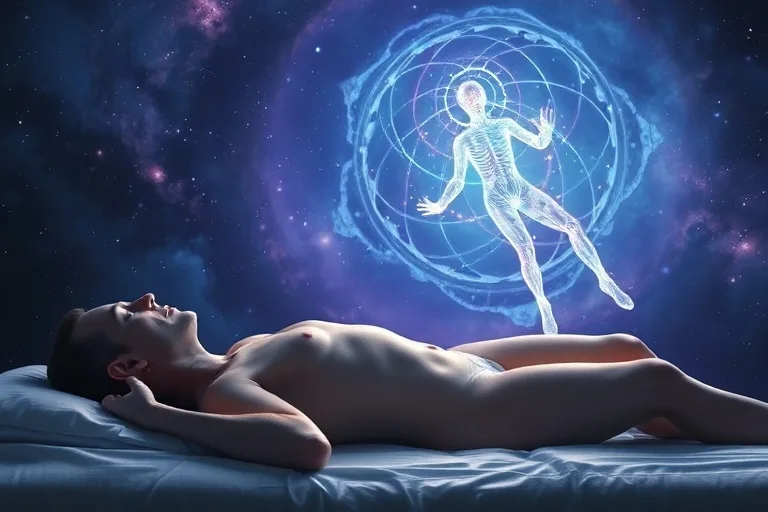
For many, astral projection represents a profound spiritual awakening, offering unique perspectives on life, death, and the universe. It challenges conventional understandings of reality and the self, pushing the boundaries of what is considered possible. While scientific evidence remains elusive, the consistent accounts across diverse cultures and personal testimonies lend credence to its subjective reality for those who experience it.
Table of Contents
- What is Astral Projection?
- Historical and Cultural Perspectives
- Techniques for Inducing Astral Projection
- The Experience of Astral Projection
- Safety and Precautions
- Benefits and Personal Growth
- Scientific and Skeptical Views
What is Astral Projection?
Astral projection is the intentional out-of-body experience (OBE) that involves a sensation of consciousness leaving the physical body and traveling to other realms, often referred to as the astral plane. This concept is ancient and has been discussed in various spiritual and mystical traditions for millennia. The "astral body" is often described as an energetic double of the physical body, connected by a shimmering cord known as the "silver cord."
The astral plane itself is considered by many esotericists to be a non-physical dimension, a realm of thought and emotion, where one can encounter various entities, landscapes, and even other projectors. It is believed to exist on a higher vibrational frequency than the physical world, making it imperceptible to the five senses. Experiences on the astral plane can range from mundane, resembling the physical world, to highly symbolic, surreal, or even otherworldly.
During an astral projection, individuals often report a distinct feeling of separation, sometimes accompanied by vibrations, buzzing sounds, or a floating sensation. They may perceive their physical body lying below them, or immediately find themselves in a different location. The clarity and control experienced during an OBE can vary significantly, often depending on the individual's practice and mental state.
The "silver cord" is a crucial element in many descriptions of astral projection. It is depicted as an elastic, luminous cord that maintains the connection between the astral body and the physical body. This cord is said to be unbreakable during an OBE, ensuring a safe return to the physical form. Its presence reassures practitioners that they cannot become permanently lost or disconnected from their bodies during these experiences.
Historical and Cultural Perspectives
The concept of the soul or consciousness leaving the body is not unique to any single culture or era. Ancient Egyptians, for instance, believed in the "Ba," a soul aspect that could travel outside the body, often depicted as a human-headed bird. Their elaborate funerary rituals and texts, such as the Book of the Dead, describe journeys through various spiritual realms, indicating a sophisticated understanding of non-physical existence.
In ancient Greece, philosophers like Plato discussed the soul's ability to transcend the physical realm. Neoplatonists and Hermetic traditions also explored similar ideas, often linking out-of-body experiences to spiritual enlightenment and mystical union. Shamanic traditions worldwide, from Siberia to the Americas, frequently involve shamans entering trance states to journey to spirit worlds, heal, or gain knowledge, which closely aligns with the description of astral projection.

Hinduism and Buddhism also contain rich traditions related to out-of-body states. In Yoga, practices like "Pranayama" and advanced meditation aim to achieve states of consciousness where the practitioner can experience separation from the physical body, often referred to as "siddhis" or spiritual powers. Tibetan Buddhism, in particular, has extensive teachings on dream yoga and the "Bardo" states, which describe consciousness transitioning between lives or dimensions.
During the Renaissance and Enlightenment periods in Europe, figures like Emanuel Swedenborg, a Swedish scientist and mystic, documented his extensive out-of-body experiences, describing interactions with spirits and explorations of heavenly and hellish realms. His detailed accounts influenced later spiritualist movements and esoteric societies.
In the late 19th and early 20th centuries, the rise of Theosophy and other esoteric movements brought astral projection into more public discourse. Figures like Helena Blavatsky and Annie Besant wrote extensively about the astral plane and the techniques for conscious out-of-body travel, popularizing the term "astral projection" itself. Today, with the advent of the internet, personal accounts and instructional guides for astral projection are widely available, reflecting a continued global interest in this enigmatic phenomenon.
Techniques for Inducing Astral Projection
Inducing an astral projection typically involves a combination of deep relaxation, focused concentration, and specific mental exercises. While there is no guaranteed method, several techniques are widely practiced and reported to be effective for some individuals. Consistency and patience are key for anyone attempting these practices.
- The Rope Technique: Developed by Robert Bruce, this method involves lying down in a relaxed state and imagining pulling yourself up a rope with your astral hands. The goal is to create the sensation of movement and separation.
- Visualization: This technique involves vividly imagining your consciousness leaving your body. You might visualize yourself floating upwards, passing through walls, or simply stepping out of your physical form. The more detailed and immersive the visualization, the better.
- Mind Awake/Body Asleep (Wake-Induced Lucid Dream - WILD): This is a common approach where you aim to keep your mind conscious while your body falls asleep. This often involves lying still, relaxing completely, and observing hypnagogic imagery or sensations without falling fully asleep. Vibrations or a feeling of paralysis can occur, which are often precursors to separation.
- Targeted Meditation: Deep meditative states can lead to altered states of consciousness conducive to OBEs. Focusing on the breath, chanting mantras, or using specific sound frequencies (binaural beats) can help quiet the mind and induce a receptive state.
- Affirmations: Repeating affirmations such as "I will have an out-of-body experience" or "My consciousness is free to explore" can help program the subconscious mind and reinforce the intention.
- Dream Recall and Lucid Dreaming: Regularly practicing dream recall and lucid dreaming can enhance one's ability to control their consciousness in non-physical states, making the transition to conscious astral projection easier. Lucid dreams often serve as a gateway to OBEs.
Preparation is also crucial. This includes creating a quiet, dark environment, ensuring you are well-rested, and having a clear intention. Many practitioners suggest attempting astral projection in the early morning hours, after a few hours of sleep, as the body is often more relaxed and the mind is still receptive from the dream state.
The Experience of Astral Projection
The experience of astral projection is highly subjective and can vary greatly from person to person and even from one experience to another. However, common themes and sensations are frequently reported by those who successfully achieve an OBE. Understanding these can help prepare potential practitioners and validate their experiences.
One of the initial sensations often reported is a strong vibration or buzzing throughout the body, sometimes accompanied by a feeling of paralysis. This is often referred to as the "vibrational state" and is considered a critical precursor to separation. Following this, individuals may feel a sensation of floating, lightness, or being pulled upwards. Some describe a feeling of rolling out of their bodies, while others simply find themselves outside, looking back at their physical form.

Once separated, perceptions in the astral plane can be incredibly vivid, often more real than waking life, or they can be hazy and dream-like. Many report being able to fly, pass through solid objects, and travel vast distances almost instantaneously. The environment can be a replica of the physical world, a distorted version of it, or entirely new, fantastical landscapes. Encounters with other beings, both human and non-human, are also frequently reported, ranging from helpful guides to neutral observers or even perceived negative entities.
Emotions during an OBE can be intense, including profound peace, exhilaration, wonder, or occasionally fear. The ability to control movement and interaction within the astral plane often improves with practice. Returning to the body is usually spontaneous, often triggered by a sudden thought, emotion, or external disturbance, and is typically described as a gentle snap back into the physical form. The memory of the experience can range from crystal clear to fragmented, much like dreams.
Safety and Precautions
While astral projection is often described as a safe and natural phenomenon, concerns about safety are common, especially for beginners. Most experienced practitioners and esoteric traditions emphasize that there is little to fear, as the "silver cord" is believed to always ensure a safe return. However, certain precautions and a healthy mindset are recommended.
One of the primary concerns is the fear of not being able to return to the body. This fear itself can be the biggest obstacle, often causing premature returns or preventing separation altogether. Understanding the concept of the silver cord and trusting the natural process can help alleviate this anxiety. It is important to approach the experience with a calm, curious, and fearless attitude.
Another common concern is encountering negative entities or unpleasant experiences on the astral plane. While some individuals report such encounters, many sources suggest that the astral plane largely reflects one's own consciousness and intentions. Maintaining a positive mindset, setting clear intentions for safe and beneficial exploration, and affirming protection can help shape the experience. If an undesirable encounter occurs, focusing on returning to the body or asserting one's will is often sufficient to end it.
- Set Clear Intentions: Before attempting, clearly state your purpose for projecting and your intention for a safe return.
- Practice Grounding: After returning, take time to fully re-integrate into your physical body. Drink water, eat a light meal, and engage in physical activities.
- Avoid Fear: Fear is the biggest impediment. Remind yourself that you are always connected and safe.
- Maintain a Positive Mindset: Your mental and emotional state can influence the nature of your experience.
- Physical Health: Ensure you are physically well-rested and not under the influence of drugs or alcohol, as these can distort perceptions and control.
It is also advisable to start with short, controlled projections and gradually increase the duration and scope of exploration as confidence grows. Documenting experiences in a journal can help process and understand them, reducing potential confusion or anxiety.
Benefits and Personal Growth
For those who successfully achieve astral projection, the experience can offer a myriad of benefits, contributing significantly to personal growth and a deeper understanding of existence. These benefits often extend beyond the immediate experience, influencing one's waking life and spiritual outlook.
One of the most profound benefits is the potential to overcome the fear of death. By experiencing consciousness outside the physical body, individuals may gain a direct, experiential understanding that consciousness is not solely dependent on the brain or physical form. This can lead to a significant reduction in existential anxiety and a greater sense of peace regarding mortality.
Astral projection can also foster a broader perspective on reality. Traveling to different planes or perceiving the world from a non-physical vantage point can challenge ingrained beliefs and open the mind to new possibilities. This expanded awareness can lead to increased creativity, problem-solving abilities, and a more holistic view of the universe.
Many practitioners report enhanced spiritual development. OBEs can facilitate encounters with spiritual guides, higher selves, or other entities that offer wisdom and guidance. These interactions can lead to profound insights into one's life purpose, personal challenges, and spiritual path. The feeling of interconnectedness with all things is a common theme, fostering empathy and compassion.
Furthermore, astral projection can improve self-awareness and control over one's mental states. The discipline required to induce and navigate an OBE strengthens concentration, visualization skills, and the ability to maintain consciousness during altered states. This mental training can translate into improved focus, emotional regulation, and a deeper connection to one's inner self in daily life.
Some individuals also use astral projection for practical purposes, such as remote viewing, gaining information, or even self-healing, though these applications are highly controversial and lack scientific validation. Regardless of these claims, the subjective experience itself often provides immense personal value and a sense of wonder.
Scientific and Skeptical Views
The scientific community largely approaches astral projection with skepticism, attributing reported experiences to psychological or neurological phenomena rather than actual separation of consciousness from the body. From a scientific standpoint, there is no empirical evidence to support the existence of an "astral body" or an "astral plane" as distinct entities from the brain's activity.
Neuroscientific explanations often link OBEs to altered brain states, particularly those occurring during sleep paralysis, lucid dreaming, or near-death experiences (NDEs). Researchers suggest that sensations of floating, seeing one's body from above, or perceiving a distinct "self" outside the body could be the result of disorienting sensory input or specific brain activity patterns. For example, stimulation of the temporoparietal junction in the brain has been shown to induce out-of-body-like sensations in some patients.
Psychological perspectives often view astral projection as a form of vivid hallucination, a product of imagination, or a coping mechanism. The desire for spiritual transcendence, the influence of cultural beliefs, and the power of suggestion can all contribute to individuals interpreting certain subjective experiences as astral projection. Critics argue that the lack of verifiable external information gained during OBEs (e.g., accurately describing a hidden object in another room) undermines claims of actual non-physical travel.
Despite the scientific skepticism, research into consciousness itself remains an active and evolving field. While mainstream science may not validate astral projection as a literal out-of-body event, it acknowledges the profound subjective reality of these experiences for individuals. The study of altered states of consciousness, including those reported during meditation and lucid dreaming, continues to provide insights into the complex workings of the human mind.
The debate between scientific materialism and spiritual interpretations of consciousness highlights a fundamental divide in understanding human experience. For many practitioners, the personal, transformative nature of astral projection transcends the need for external scientific validation, serving as a deeply meaningful spiritual journey. However, the scientific approach continues to seek measurable, reproducible evidence, keeping the phenomenon in the realm of the unexplained from an empirical perspective.
As per the World Health Organization (WHO) guidelines on mental health, it is crucial to distinguish between subjective spiritual experiences and mental health conditions. While spiritual practices can be beneficial, any persistent or distressing dissociative experiences should be discussed with a qualified healthcare professional.
The National Institute of Mental Health (NIMH) advises caution regarding claims of "out-of-body" experiences if they are accompanied by other symptoms of psychosis or severe dissociation, which may require clinical evaluation.
Fuente: Contenido híbrido asistido por IAs y supervisión editorial humana.


Comments
Post a Comment