
Western Chinese Astrology: Holistic Self-Discovery Guide | StarPluto
Astrology, in its myriad forms, offers a profound lens through which to understand the self, our relationships, and our place in the cosmic dance. While Western and Chinese astrological systems developed independently, each provides unique insights into human nature and destiny. Integrating these two powerful frameworks can unlock a more comprehensive and nuanced path to self-discovery, offering a holistic perspective that transcends the limitations of a single tradition.
This guide delves into the core principles of both Western and Chinese astrology, exploring how their distinct yet complementary methodologies can be combined to foster deeper personal understanding. By examining the interplay between planetary influences, zodiac signs, elemental cycles, and animal archetypes, individuals can gain a richer tapestry of insights into their strengths, challenges, and life purpose. The goal is not to replace one system with another, but to weave them together, creating a more robust and multifaceted tool for personal growth and enlightenment.
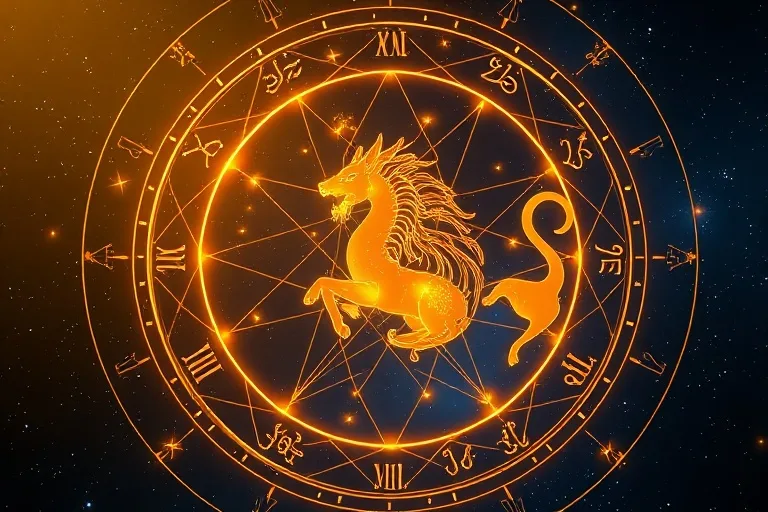 A digital illustration symbolizing the harmonious integration of Western and Chinese astrological systems for holistic self-understanding.
The journey of self-discovery is often complex, marked by introspection and external influences. Both Western and Chinese astrology provide frameworks for navigating this journey, offering symbolic languages to interpret our experiences. While Western astrology focuses on planetary positions at the moment of birth, Chinese astrology emphasizes the year of birth and its associated animal and elemental energies. Understanding these foundational differences is the first step toward a meaningful integration.
This approach encourages a multi-dimensional view of the self, moving beyond simplistic categorizations to embrace the rich interplay of cosmic forces. It empowers individuals to leverage the strengths of both traditions, fostering a more complete and insightful self-assessment. From understanding inherent personality traits to navigating life's challenges and opportunities, the integration of these systems offers a powerful roadmap.
Table of Contents
- Western Astrology: Foundations of Self
- Chinese Astrology: Dynamic Cycles and Archetypes
- The Synergy: Integrating Western and Chinese Systems
- Practical Application: Holistic Insights for Life
- Benefits of a Holistic Astrological Approach
- Conclusion: Embracing Cosmic Wisdom
Western Astrology: Foundations of Self
Western astrology, rooted in ancient Babylonian traditions and refined by Greek and Hellenistic civilizations, primarily uses the tropical zodiac, which is based on the seasons and the Earth's relationship to the Sun. A natal chart, or birth chart, is a snapshot of the heavens at the exact moment and location of an individual's birth. This intricate map reveals the positions of the Sun, Moon, and planets across twelve zodiac signs and twelve houses, all interconnected by various angles known as aspects.
Each component of the Western birth chart contributes to a detailed psychological profile. The Sun sign, determined by the Sun's position, represents the core identity, ego, and fundamental life force. The Moon sign reflects emotional nature, subconscious patterns, and comfort zones. The Ascendant (or Rising Sign) dictates the outward personality, how one appears to the world, and initial reactions. Planets symbolize different drives and functions:
- Mercury: Communication, intellect, learning.
- Venus: Love, relationships, values, aesthetics.
- Mars: Drive, assertiveness, energy, passion.
- Jupiter: Expansion, growth, philosophy, luck.
- Saturn: Discipline, responsibility, limitations, structure.
- Uranus: Innovation, rebellion, sudden change.
- Neptune: Spirituality, dreams, illusion, compassion.
- Pluto: Transformation, power, regeneration, subconscious forces.
The twelve houses represent different areas of life, such as career, relationships, family, and finances, indicating where planetary energies manifest. Aspects, the angular relationships between planets, describe how these energies interact, revealing inner conflicts, talents, and potential challenges. A comprehensive Western astrological reading provides deep insights into an individual's innate psychological makeup, motivations, and potential life path. For those interested in deeper dives into specific planetary influences, exploring resources like Planets in Astrology can be highly beneficial.
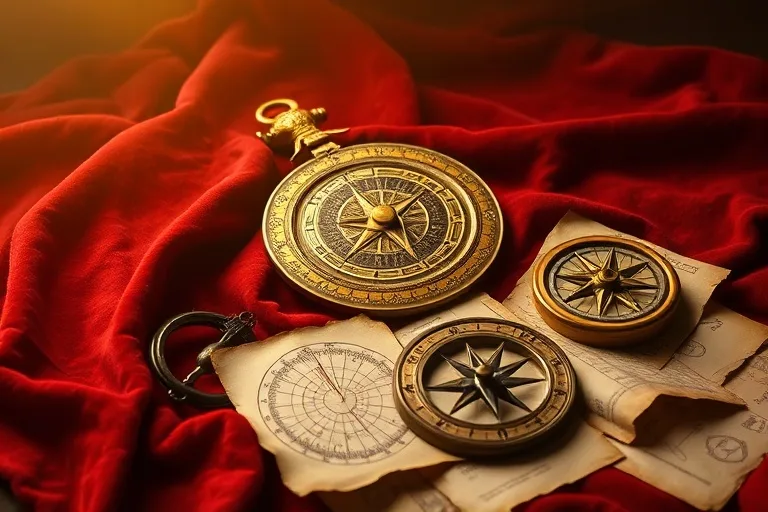 A still life composition of historical astrological tools, symbolizing the depth of ancient cosmic wisdom.
Chinese Astrology: Dynamic Cycles and Archetypes
Chinese astrology operates on a different philosophical foundation, deeply intertwined with the lunar calendar, the Five Elements (Wood, Fire, Earth, Metal, Water), and the Yin and Yang principles. It follows a 12-year cycle, with each year associated with one of twelve animal signs: Rat, Ox, Tiger, Rabbit, Dragon, Snake, Horse, Goat, Monkey, Rooster, Dog, and Pig. Unlike Western astrology's focus on the exact birth moment, Chinese astrology primarily emphasizes the birth year, although month, day, and hour also contribute to a more detailed 'Four Pillars of Destiny' (BaZi) chart.
Each animal sign embodies a distinct set of personality traits, behaviors, and predispositions. For instance, the Dragon is known for charisma and power, while the Rabbit is gentle and diplomatic. The Five Elements cycle through these animal signs, adding another layer of complexity and nuance. For example, a Wood Dragon will have different characteristics than a Fire Dragon, as the elemental influence modifies the core animal traits. This interaction creates a 60-year cycle, providing a rich framework for understanding life's patterns and individual destinies.
Chinese astrology also places significant emphasis on compatibility between signs, predicting the dynamics of relationships based on the inherent nature of the animal archetypes. It often provides insights into career paths, financial prospects, and health tendencies, viewing these aspects through the lens of energetic balance and elemental harmony. Understanding your Chinese zodiac sign and its elemental influence can offer profound insights into your inherent nature and how you interact with the world. For those born in the Year of the Snake, detailed insights can be found in resources such as Chinese Horoscope: Year of Water Snake or Chinese Horoscope: Snake Earth.
The dynamic nature of the Chinese zodiac, with its cyclical progression of animals and elements, offers a perspective on how an individual's energy evolves over time. It highlights periods of opportunity and challenge, encouraging alignment with natural flows. This system is less about fixed personality traits and more about adaptable energies and behavioral tendencies that can be harnessed for personal advantage.
The Synergy: Integrating Western and Chinese Systems
Integrating Western and Chinese astrology involves synthesizing their distinct perspectives to create a more comprehensive understanding of an individual. This is not about finding direct equivalences, but rather about identifying complementary themes and layers of meaning. For example, a person with a fiery Western Sun sign (like Aries or Leo) might also be born in a Fire year in Chinese astrology, reinforcing their passionate and energetic nature. Conversely, a seemingly contradictory combination, such as a sensitive Pisces with a strong, assertive Tiger Chinese sign, can reveal a complex interplay of inner emotional depth and outward confidence.
 A conceptual artwork depicting an intricate web of golden and silver threads, symbolizing the interconnectedness of fate and cosmic influences.
One method of integration is to compare the core characteristics of your Western Sun sign with your Chinese animal sign and its element. Look for areas of reinforcement, where both systems describe similar traits, and areas of contrast, where they might highlight different facets of your personality. These contrasts are often where the most profound insights lie, revealing hidden complexities or potential growth areas. Consider how the fixed nature of a Western sign might interact with the dynamic influence of a Chinese element. For example, a stable Taurus (Western) born in a Wood year (Chinese) might possess a grounded nature combined with a strong drive for growth and innovation.
Another powerful integrative technique involves overlaying the life cycles and predictive elements of both systems. Western astrology uses transits, progressions, and solar returns to forecast periods of change and development. Chinese astrology offers annual forecasts based on the incoming animal and element, and how it interacts with an individual's birth chart. By examining both sets of predictions, one can gain a more layered understanding of upcoming opportunities, challenges, and optimal timing for major life decisions. This dual perspective can provide a richer context for personal planning and strategic action. Further exploration into Weekly Horoscope: Love, Career, Wellness Forecast can offer current insights.
The concept of compatibility also benefits from this integrated approach. While Western synastry (the comparison of two birth charts) provides detailed insights into relationship dynamics, Chinese zodiac compatibility offers a broader understanding of natural affinities and potential friction points between partners. Combining these can offer a more holistic view of relationship potential, highlighting both psychological compatibility and energetic harmony. For example, a couple might have strong synastry in their Western charts but face challenges due to incompatible Chinese animal signs, suggesting areas where conscious effort and understanding are needed.
Practical Application: Holistic Insights for Life
Applying integrated astrological insights can significantly enhance various aspects of life. For career choices, understanding both your Western chart's vocational indicators (e.g., Midheaven sign, Saturn's placement) and your Chinese animal's natural talents (e.g., Monkey's ingenuity, Ox's diligence) can guide you toward fulfilling paths. If your Western chart suggests a need for creative expression, and your Chinese sign is a Goat, known for artistic flair, this reinforces a path in creative fields. Conversely, if your Western chart points to a structured career, but your Chinese sign is a free-spirited Horse, it might suggest a need for a career that balances discipline with autonomy.
In personal relationships, this dual perspective can foster greater empathy and understanding. Knowing your partner's Western Sun, Moon, and Ascendant, alongside their Chinese animal and element, provides a richer picture of their motivations and reactions. This can help navigate conflicts, appreciate differences, and build stronger bonds. For example, a Western Leo (proud, expressive) paired with a Chinese Rooster (confident, direct) might find their combined outspokenness both a strength and a challenge, requiring conscious communication. Delving into Zodiac Compatibility Advanced: Elemental Ascendant Influences can provide further depth.
For personal growth, integrated astrology serves as a powerful self-discovery tool. It illuminates both inherent potentials and areas requiring development. By recognizing the interplay of these cosmic influences, individuals can consciously work with their energies, rather than against them. This might involve embracing the discipline suggested by a strong Saturn placement while also cultivating the adaptability of a Water element Chinese sign. It encourages a dynamic approach to self-improvement, where one is constantly learning and evolving based on a deeper understanding of their unique cosmic blueprint.
Decision-making also benefits from this holistic view. When faced with significant choices, consulting both Western transits and Chinese annual forecasts can provide a more robust framework for timing and strategy. If Western astrology indicates a period of expansion (Jupiter transit) and Chinese astrology suggests a year favorable for new ventures (e.g., a Dragon year for innovation), it creates a powerful alignment for taking bold steps. Conversely, if both systems suggest caution, it advises a more conservative approach. This layered guidance can lead to more informed and successful outcomes.
Benefits of a Holistic Astrological Approach
Embracing a holistic approach to astrology, by integrating Western and Chinese systems, offers a multitude of benefits for self-discovery and personal empowerment. One of the primary advantages is enhanced self-awareness. By viewing your personality and life path through two distinct yet complementary lenses, you gain a richer, more three-dimensional understanding of who you are. This dual perspective can reveal aspects of your character that might be overlooked by a single system, leading to a more complete and authentic self-image.
Another significant benefit is improved decision-making. With insights from both Western planetary cycles and Chinese elemental influences, you can make more informed choices about career, relationships, and personal projects. This integrated foresight allows for better timing and strategic planning, helping you to align your actions with favorable cosmic energies and mitigate potential challenges. It moves beyond simple predictions to provide actionable guidance for navigating life's complexities.
Furthermore, a holistic astrological perspective can lead to better relationship dynamics. By understanding the astrological blueprints of both yourself and others through both systems, you can develop greater empathy and navigate interpersonal interactions with more grace. It helps to identify areas of natural harmony and potential friction, fostering conscious efforts to build stronger, more resilient connections. This is particularly valuable in understanding the subtle nuances of compatibility that might not be apparent from a single astrological reading.
Finally, this integrated approach fosters profound personal growth. It encourages a continuous journey of learning and adaptation, where you are constantly deepening your understanding of your cosmic design. By recognizing the interplay of fixed traits and dynamic energies, you are empowered to work with your inherent nature, cultivate your strengths, and transform your challenges into opportunities for evolution. This ongoing process of self-discovery is not just about knowing yourself, but about actively shaping your destiny in harmony with the universe.
Conclusion: Embracing Cosmic Wisdom
The integration of Western and Chinese astrology offers a powerful and comprehensive framework for holistic self-discovery. By moving beyond the confines of a single tradition, individuals can access a richer tapestry of cosmic wisdom, gaining unparalleled insights into their personality, life purpose, and interpersonal dynamics. This synergistic approach allows for a deeper understanding of both inherent traits and the dynamic flow of life, empowering individuals to navigate their journey with greater clarity and intention.
Embracing both systems encourages a more nuanced and compassionate view of oneself and others. It highlights the intricate dance between fixed potentials and evolving energies, providing a roadmap for personal growth, informed decision-making, and harmonious relationships. As we continue to explore the vastness of astrological knowledge, the integration of these ancient traditions stands as a testament to the universal quest for self-understanding and connection to the cosmos. This holistic perspective is not merely an academic exercise but a practical tool for living a more aligned and fulfilling life, guided by the combined wisdom of the stars and the elements.
Fuente: Contenido híbrido asistido por IAs y supervisión editorial humana.


Comments
Post a Comment