
Urban Geomancy Bio-Energetic Architecture Harmonizing Cities
In an increasingly urbanized world, the concept of creating living spaces that not only function efficiently but also nurture human well-being and ecological balance is gaining paramount importance. Bio-energetic architecture and urban geomancy represent a paradigm shift, moving beyond mere aesthetics and functionality to consider the subtle energetic interactions between humans, buildings, and the natural environment. These disciplines seek to harmonize our built surroundings with the cosmic and telluric forces that influence life on Earth.
This article explores how these ancient wisdoms and modern scientific understandings converge to design cities that resonate with positive energy, promoting health, vitality, and sustainability for all inhabitants. We will delve into their core principles, practical applications, and the profound benefits they offer in shaping our future urban landscapes. Understanding these concepts is crucial for anyone interested in creating more vibrant and life-affirming environments.
What is Bio-Energetic Architecture and Urban Geomancy?
Bio-energetic architecture focuses on designing buildings and spaces that enhance the vitality and health of their occupants by considering the subtle energy fields present in the environment. This approach integrates principles from biology, physics, and ancient wisdom traditions to create structures that resonate positively with human physiology and psychology. It acknowledges that our surroundings profoundly impact our physical and emotional states, aiming to optimize these interactions.
Urban geomancy, on the other hand, is the art and science of aligning urban planning and development with the Earth's natural energy lines and cosmic influences. It involves understanding ley lines, underground water flows, geological formations, and planetary alignments to site and orient buildings, roads, and public spaces in a way that fosters harmony and prosperity. Geomancy seeks to create cities that are not just collections of structures but living, breathing organisms in tune with the planet's pulse.
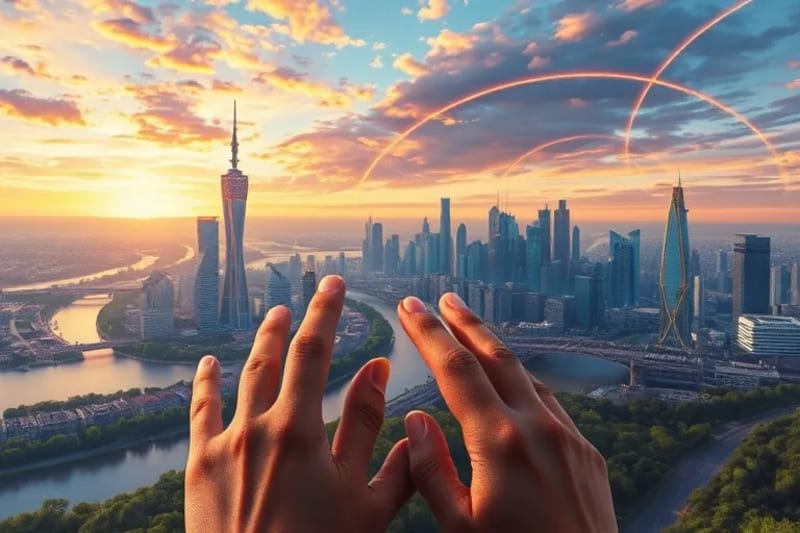 A conceptual rendering of a city designed with bio-energetic and geomantic principles, integrating natural and energetic flows.
This vibrant visual representation, a product of advanced AI rendering, captures the essence of urban harmony and energetic design.
Together, these two fields offer a holistic framework for urban development that goes beyond conventional planning. They propose that by consciously designing our environments, we can mitigate the negative impacts of modern life and cultivate spaces that actively support human thriving. This involves a deep respect for both the visible and invisible aspects of our world, fostering a connection between human habitation and the greater cosmos.
Historical Roots and Sacred Geometry
The principles underlying bio-energetic architecture and urban geomancy are not new; they echo ancient practices found across diverse cultures. Civilizations from ancient Egypt and China to indigenous communities worldwide understood the importance of aligning structures with natural forces. They observed celestial patterns, geological features, and water sources to determine optimal building sites and orientations.
For instance, the practice of Feng Shui in China is a sophisticated system of geomancy that seeks to harmonize individuals with their surrounding environment. Similarly, the Vastu Shastra of India provides guidelines for architectural design and construction based on cosmic energies. These traditions often employed Hellenistic Astrology principles, recognizing the influence of celestial bodies on terrestrial affairs.
Sacred geometry plays a crucial role in these ancient systems. It refers to the universal patterns and mathematical relationships found in nature, from the spiral of a seashell to the branching of trees. Incorporating these geometric forms into architectural design was believed to imbue structures with inherent harmony and energetic balance, creating spaces that resonated with the fundamental order of the universe. This understanding is now being re-evaluated through modern scientific lenses, revealing its profound implications.
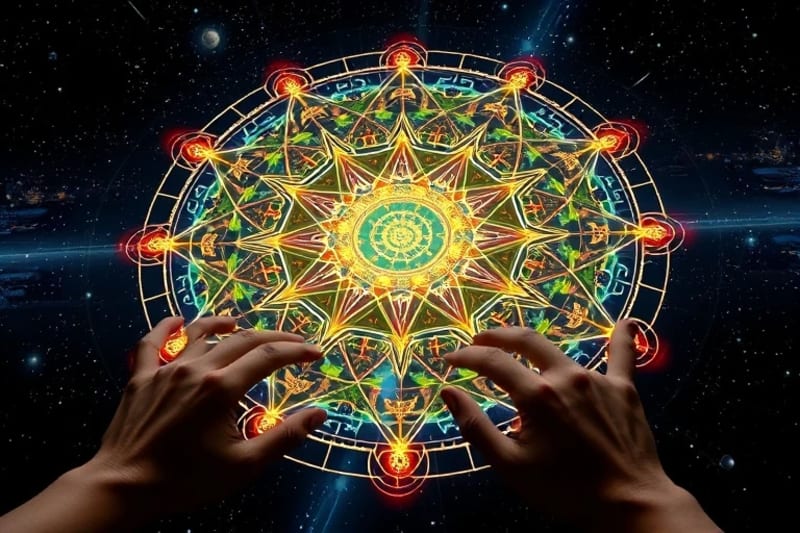 An illustrative diagram depicting the intricate energetic connections within an urban landscape, guided by geomantic principles.
This digital artwork, generated by AI, visually articulates the subtle energy pathways and their interaction with the built environment.
Core Principles of Harmonious Design
The integration of bio-energetic architecture and urban geomancy relies on several core principles aimed at fostering a harmonious relationship between humans and their environment. These principles guide the design process from macro-level urban planning down to micro-level material selection.
- Site Selection and Orientation: Identifying locations free from geopathic stress (e.g., fault lines, underground water veins) and orienting buildings to optimize exposure to beneficial solar and cosmic energies. This often involves detailed site analysis and dowsing.
- Material Selection: Prioritizing natural, non-toxic, and locally sourced materials that have low embodied energy and do not emit harmful electromagnetic frequencies (EMFs). Materials like wood, stone, and natural fibers are preferred for their inherent energetic qualities.
- Form and Proportion: Employing sacred geometry and natural proportions in building design to create aesthetically pleasing and energetically balanced forms. This includes considerations of Golden Ratio, fractals, and other universal patterns.
- Integration of Nature: Maximizing green spaces, natural light, and ventilation within urban designs. This principle emphasizes biophilic design, bringing elements of nature into direct contact with human habitation to enhance well-being.
- Energy Flow and Circulation: Designing spaces to facilitate the smooth flow of vital energy (Chi or Prana), avoiding stagnant areas or sharp angles that can disrupt energetic balance. This applies to both internal building layouts and urban street networks.
- Electromagnetic Field (EMF) Mitigation: Shielding buildings from excessive EMFs generated by modern technology and designing electrical systems to minimize their impact on occupants. This is crucial for creating truly healthy living and working environments.
These principles are often combined with modern sustainable practices, creating a powerful synergy for ecological and human health. The goal is to move beyond mere "green" building to "regenerative" design, where buildings and cities actively contribute to the health of their ecosystems.
Practical Applications in Urban Spaces
Applying bio-energetic architecture and urban geomancy translates into tangible design choices that can transform urban environments. From individual buildings to entire city districts, these concepts offer innovative solutions for creating more vibrant and sustainable communities. Consider the integration of Eco-Astrology Planetary Cycles in urban planning, which can inform decisions about green infrastructure and resource management.
One key application is the strategic placement of public parks and green corridors along natural energy pathways, enhancing their restorative power for city dwellers. Urban planners can utilize geomantic surveys to identify these beneficial zones and design public spaces that amplify positive energy, encouraging community interaction and relaxation. This creates a network of energetically charged spaces throughout the city.
In architectural design, this means creating buildings with optimal natural light, ventilation, and views of nature. Interior spaces might feature biomorphic forms, natural materials, and color palettes chosen for their psychological effects. For example, residential complexes could be designed with central courtyards that act as energetic focal points, promoting a sense of community and tranquility. Commercial buildings can integrate elements that reduce stress and improve focus, leading to increased productivity and well-being for employees.
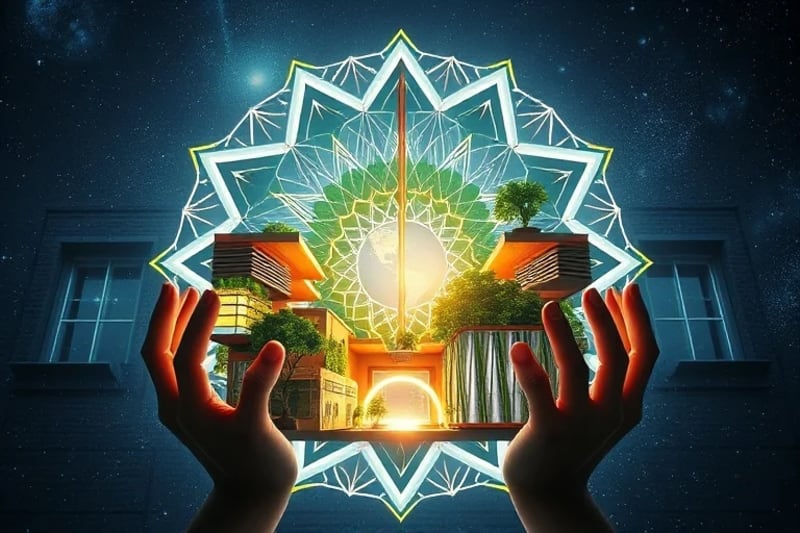 A detailed cross-section illustrating the internal structure and energetic integration of a bio-energetic building.
This 3D rendered image, generated by AI, highlights the innovative use of natural light, materials, and internal energy pathways in modern architecture.
Furthermore, the concept extends to infrastructure projects, where roads, bridges, and utility networks can be designed to minimize energetic disruption and even enhance positive flows. This holistic approach ensures that every element of the urban fabric contributes to an overall environment of health and vitality. The principles are applicable to both new developments and the revitalization of existing urban areas, offering pathways to transform concrete jungles into vibrant ecosystems.
Benefits for Human Well-being and Sustainability
The advantages of adopting bio-energetic architecture and urban geomancy are far-reaching, impacting both individual well-being and the broader ecological health of our planet. These benefits stem from creating environments that are intrinsically supportive of life.
| Aspect of Benefit | Description |
|---|---|
| Enhanced Health & Vitality | Reduced exposure to geopathic stress and EMFs, improved air quality, and access to natural light contribute to better physical health, stronger immune systems, and increased energy levels. |
| Improved Mental & Emotional State | Harmonious environments reduce stress, anxiety, and depression. Spaces designed with natural aesthetics and balanced energy flow promote calmness, creativity, and emotional stability. |
| Increased Productivity & Focus | Work and study environments designed with these principles can lead to better concentration, reduced fatigue, and higher overall productivity due to optimized energetic conditions. |
| Environmental Sustainability | Emphasis on natural materials, energy efficiency, and integration with local ecosystems leads to a smaller ecological footprint, promoting biodiversity and resource conservation. |
| Community Cohesion | Well-planned public spaces and energetically balanced urban layouts encourage social interaction, a sense of belonging, and overall community well-being. |
By consciously designing our cities and buildings to align with natural and cosmic rhythms, we move towards a more regenerative model of development. This approach not only addresses current environmental challenges but also creates spaces that actively support human flourishing, fostering a deeper connection to nature and to each other. It’s a holistic vision for the future of urban living, where well-being is paramount.
Challenges and Future Outlook
Despite the compelling benefits, the widespread adoption of bio-energetic architecture and urban geomancy faces several challenges. One significant hurdle is the lack of mainstream awareness and scientific validation within conventional urban planning and architectural fields. Integrating these concepts requires a shift in mindset, moving beyond purely quantitative metrics to embrace qualitative energetic considerations.
Another challenge lies in the complexity of existing urban infrastructures. Retrofitting older cities to align with geomantic principles can be costly and logistically difficult. However, even small-scale interventions, such as creating energetically balanced public spaces or optimizing individual buildings, can yield significant positive impacts. The rise of Techno-Shamanism Digital Healing practices suggests a growing openness to integrating subtle energies with modern technologies.
Looking ahead, the future of bio-energetic architecture and urban geomancy is promising. As research into the subtle energy fields of the Earth and their impact on human health continues to advance, these disciplines are likely to gain greater recognition and integration. Educational programs, interdisciplinary collaborations, and pilot projects showcasing successful implementations will be crucial in demonstrating their value. The increasing demand for sustainable and healthy living environments will drive innovation in this field.
Ultimately, the vision is to create cities that are not just smart and green, but also deeply resonant and life-affirming, fostering a symbiotic relationship between humanity and the planet. This holistic approach to urban development holds the key to building truly thriving and resilient communities for generations to come.
Explore More on Harmonious Living
- I Ching Tarot Integration: Dual Divination Approach
- Karmic Astrology Lunar Node Returns Soul Growth Cycles
- Automatic Writing: Higher Self Connection for Creative Flow
- Blockchain and Circular Economy: Sustainable Supply Chains
- Psychic Protection Rituals: Energetic Shields Against Negativity
Source: Hybrid content assisted by AI and human editorial supervision.


Comments
Post a Comment