
Tarot Reading Beginners Guide Understanding Cards Meanings
Tarot Reading for Beginners: A Complete Guide to Understanding the Cards and Their Meanings
The practice of Tarot reading has captivated humanity for centuries, offering a profound system for self-reflection, guidance, and spiritual insight. Far from being a mere fortune-telling tool, Tarot serves as a mirror to the soul, reflecting our inner world, current circumstances, and potential paths forward. For those new to this ancient art, the array of 78 cards and their intricate symbolism can seem daunting, yet it is an accessible and rewarding journey.
This comprehensive guide aims to demystify Tarot, providing beginners with a solid foundation to understand its structure, interpret its messages, and embark on their own intuitive exploration. We will delve into the deck's composition, the significance of the Major and Minor Arcana, fundamental reading techniques, and ethical considerations for a responsible practice.
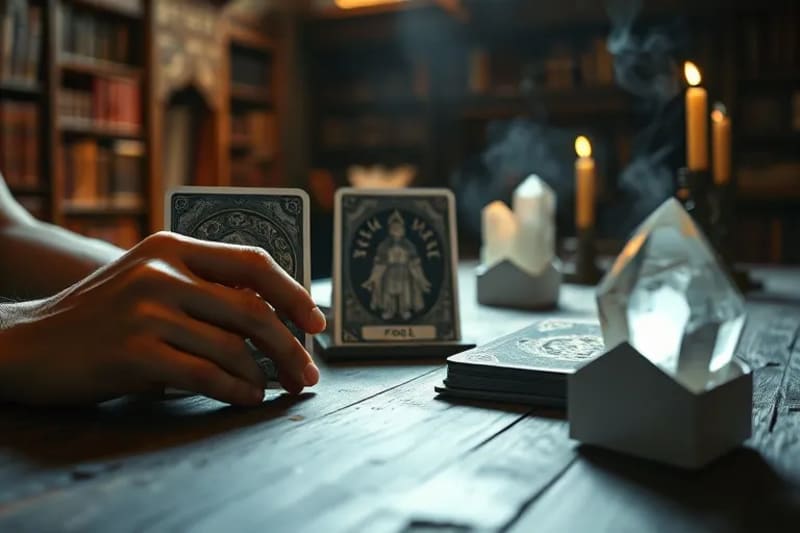
Conceptual representation of the tools and atmosphere conducive to a profound Tarot reading experience, highlighting the blend of intuition and symbolism.
This image is an AI-generated conceptual render, designed to evoke the mystical and introspective nature of Tarot, blending ancient practices with modern artistic interpretation.Table of Contents
- What is Tarot? More Than Just Cards
- Understanding the Tarot Deck Structure
- The Major Arcana: Life's Grand Journey
- The Minor Arcana: Daily Experiences and Challenges
- Basic Tarot Spreads for Beginners
- Ethical Considerations in Tarot Reading
- Tips for Aspiring Tarot Readers
- Conclusion: Embracing Your Intuitive Path
What is Tarot? More Than Just Cards
At its core, Tarot is a deck of 78 illustrated cards, each rich with symbolic imagery, archetypal figures, and narrative potential. Originating in 15th-century Italy, these cards were initially used for games before evolving into a tool for divination and self-discovery. Modern Tarot encompasses a vast array of artistic styles and interpretations, but the underlying structure and symbolism remain largely consistent across different decks.
Tarot reading is not about predicting a fixed future, but rather about gaining clarity on your present situation and understanding the energies at play. It helps you explore your subconscious thoughts, hidden motivations, and potential outcomes based on your current trajectory. By engaging with the cards, individuals can unlock deeper insights into their personal Natal Chart Explained: Your Personal Cosmic Blueprint and life path.
Understanding the Tarot Deck Structure
A standard Tarot deck is divided into two main sections: the Major Arcana and the Minor Arcana. Each section plays a distinct role in the narrative and interpretive process of a reading, offering different levels of insight and focus. Understanding this fundamental division is crucial for any beginner.
The interplay between these two arcana provides a holistic view, balancing the grand themes of life with the practicalities of daily existence. Think of the Major Arcana as the overarching story and the Minor Arcana as the chapters and verses that fill in the details. Together, they create a rich tapestry of meaning.
Visualizing the profound impact of archetypal energies as depicted in the Major Arcana, influencing our collective and individual consciousness.
The Major Arcana: Life's Grand Journey
The Major Arcana consists of 22 cards, numbered 0 to 21, representing significant life lessons, karmic influences, and archetypal themes. These cards often point to major events, spiritual awakenings, or profound shifts in one's life path. They speak to the larger journey of the soul, from innocence to enlightenment.
Each Major Arcana card embodies a universal principle or stage of development, offering deep psychological and spiritual insights. For example, The Fool represents new beginnings and leaps of faith, while The Tower signifies sudden, often disruptive, but necessary change. Understanding these archetypes can also be linked to concepts explored in Psycho-Astrology Jungian Archetypes Natal Chart Integration, where similar universal patterns are examined.
Here are a few examples of Major Arcana cards and their core meanings:
- The Magician (I): Manifestation, skill, resourcefulness, focused will.
- The High Priestess (II): Intuition, subconscious, mystery, inner wisdom.
- The Empress (III): Nurturing, abundance, creativity, fertility, connection to nature.
- The Emperor (IV): Authority, structure, control, leadership, stability.
- The Lovers (VI): Choices, relationships, values, alignment, harmony.
- Justice (XI): Fairness, truth, law, cause and effect, accountability.
- Death (XIII): Transformation, endings, new beginnings, release, profound change (not literal death).
- The Star (XVII): Hope, inspiration, healing, serenity, spiritual connection.
The Minor Arcana: Daily Experiences and Challenges
The Minor Arcana comprises 56 cards, divided into four suits, much like a regular playing card deck. These suits—Wands, Cups, Swords, and Pentacles—correspond to different aspects of daily life and human experience. They offer insights into more immediate situations, emotions, thoughts, and practical matters.
Each suit contains ten numbered cards (Ace through Ten) and four Court Cards (Page, Knight, Queen, King). The numbered cards depict various stages or intensities of the suit's energy, while the Court Cards represent personalities, roles, or ways of being within that suit's domain. They provide granular detail to the broader themes set by the Major Arcana.
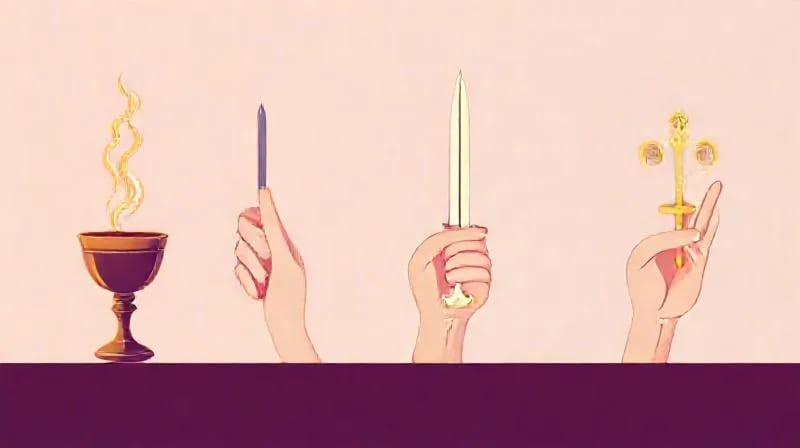
A clear and concise visual breakdown of the four elemental suits within the Minor Arcana, representing different facets of everyday life.
The four suits and their associated elements and themes are:
- Wands (Fire): Represents inspiration, creativity, passion, ambition, and action. It deals with our drive, career, and spiritual pursuits.
- Cups (Water): Governs emotions, relationships, intuition, and creativity. It reflects our feelings, connections, and inner world.
- Swords (Air): Pertains to intellect, logic, communication, truth, and conflict. It deals with thoughts, decisions, and challenges.
- Pentacles (Earth): Symbolizes material possessions, finances, career, health, and the physical world. It relates to stability, security, and tangible results.
Basic Tarot Spreads for Beginners
Once you understand the individual card meanings, the next step is to learn how to arrange them in spreads. A Tarot spread is a specific layout of cards, where each position in the layout has a designated meaning, guiding the interpretation. Starting with simple spreads is ideal for beginners.
Here are a couple of foundational spreads to get you started:
The One-Card Pull
This is the simplest and most direct spread, perfect for daily reflection or a quick answer to a focused question. Shuffle your deck, concentrate on your question or intention, and draw one card. This card will offer a single, potent message or insight for your day or query.
The Three-Card Spread
This versatile spread provides a more nuanced view of a situation. The most common variations include:
- Past, Present, Future: Card 1 represents past influences, Card 2 the current situation, and Card 3 the potential future outcome.
- Situation, Challenge, Advice: Card 1 describes the core situation, Card 2 highlights the main challenge, and Card 3 offers guidance or a solution.
- Mind, Body, Spirit: Card 1 reflects your mental state, Card 2 your physical or material condition, and Card 3 your spiritual or emotional well-being.
Remember, the key to effective reading is to allow your intuition to guide you, connecting the card's meaning to the specific context of your question. This intuitive connection is also vital in practices like Crystal Grid Magic: Advanced Manifestation Techniques, where personal energy and intention are paramount.
Ethical Considerations in Tarot Reading
As with any practice that delves into personal insights, ethical conduct is paramount in Tarot reading. Whether you are reading for yourself or others, maintaining respect, integrity, and a non-judgmental attitude is crucial. This ensures a safe and constructive environment for exploration.
Key ethical guidelines include:
- Respect Free Will: Tarot offers guidance, not absolute decrees. Always emphasize that individuals have the power to make their own choices and shape their future.
- Confidentiality: Maintain strict confidentiality regarding any personal information shared during a reading.
- Empowerment, Not Dependence: Encourage querents (those receiving the reading) to use the insights for self-empowerment, rather than fostering dependence on the cards or the reader.
- Avoid Predicting Death or Illness: Tarot is not a medical or legal diagnostic tool. Refrain from making predictions about health outcomes or life-or-death situations.
- Be Honest About Your Abilities: If you are unsure about an interpretation, it's better to admit it than to fabricate meaning. Continuous learning is part of the journey.
These principles align with broader spiritual and self-help practices, emphasizing personal growth and responsibility. Understanding the ethical dimensions ensures that Tarot remains a tool for positive transformation.
Tips for Aspiring Tarot Readers
Starting your Tarot journey can be exciting, but it's important to approach it with patience and an open mind. Here are some practical tips to help you cultivate your skills and deepen your connection with the cards.
- Choose Your First Deck Wisely: Select a deck whose artwork resonates with you. The Rider-Waite-Smith deck is highly recommended for beginners due to its rich, clear symbolism and extensive resources available.
- Study Each Card Individually: Before attempting full readings, spend time with each card. Observe the imagery, note your initial feelings, and read about its traditional meanings.
- Keep a Tarot Journal: Document your daily card pulls, interpretations, and any personal insights or synchronicities. This helps track your progress and build your intuitive vocabulary.
- Practice Regularly: Consistency is key. Pull a card each morning and reflect on its message throughout your day. Practice simple spreads for friends or family (with their permission).
- Trust Your Intuition: While traditional meanings provide a framework, your personal intuition is your most powerful tool. Allow the images to speak to you and trust the messages you receive.
- Meditate with Your Cards: Hold a card in your hand and meditate on its imagery. This can deepen your connection to its energy and symbolism, enhancing your intuitive abilities, much like Guided Meditation Interdimensional Travel Consciousness can expand awareness.
Conclusion: Embracing Your Intuitive Path
Tarot reading is a journey of self-discovery and a powerful tool for personal growth. By understanding the structure of the deck, the meanings of the Major and Minor Arcana, and practicing with ethical awareness, beginners can confidently step into the world of Tarot. It offers a unique language for the soul, providing clarity, insight, and empowerment.
Embrace the process, trust your intuition, and allow the cards to illuminate your path. The more you engage with Tarot, the more profound and enriching your experience will become, guiding you toward a deeper understanding of yourself and the world around you.
Explore More Esoteric Wisdom
- Critical Degrees Astrology: Decoding Sensitive Chart Points | StarPluto
- Lilith, Chiron & Lunar Nodes: Karmic Shadow Integration
- Moon Astrology: Emotions, Instincts, Inner World Guide | StarPluto
- Generative AI Art: Divine Dreams Digital Patterns Artistic Creation
Source: Hybrid content assisted by AI and human editorial supervision.


Comments
Post a Comment