
Planetary Transits Handbook: Navigating Celestial Shifts
Planetary transits are a cornerstone of astrological analysis, offering profound insights into the dynamic interplay between celestial movements and our earthly experiences. Far from being static, our birth charts are constantly activated and influenced by the ongoing dance of planets in the sky. Understanding these transits allows us to navigate life's challenges and opportunities with greater awareness, fostering significant personal growth.
This comprehensive handbook aims to demystify planetary transits, providing a clear framework for interpreting their effects on daily guidance and long-term development. By learning how to track and understand these celestial shifts, individuals can harness cosmic energies to their advantage, making informed decisions and embracing periods of transformation.
Table of Contents
Understanding Planetary Transits | The Natal Chart as a Blueprint | Key Components of a Transit | Interpreting Transits: A Step-by-Step Guide | Major Planetary Transits and Their Impact | Personal Planets and Daily Influences | Navigating Challenging Transits | Harnessing Transits for Personal Growth

An intricate cosmic ballet of planets and their pathways, representing the profound and interconnected celestial mechanics that shape our experiences.
Conceptual rendering generated by advanced AI, illustrating the dynamic and influential nature of planetary movements.Understanding Planetary Transits
In astrology, a planetary transit occurs when a planet in the current sky forms an aspect (a specific angular relationship) to a planet or point in your natal (birth) chart. These transits act as cosmic triggers, activating certain areas of your life and bringing forth specific themes, challenges, or opportunities for development.
The concept is rooted in the idea that the universe is a living, breathing entity, and just as the moon affects tides, the planets exert subtle yet powerful influences on our psychological and experiential landscapes. These influences are not deterministic but rather indicative of energetic currents that we can choose to work with consciously.
The Natal Chart as a Blueprint
Your natal chart is a snapshot of the heavens at the precise moment of your birth. It serves as a unique astrological blueprint, detailing your inherent potentials, personality traits, challenges, and life path. When a transiting planet interacts with a point in this blueprint, it's like a spotlight shining on that particular area of your life, bringing its themes to the forefront.
It is crucial to have an accurate natal chart, which requires your birth date, time, and location. Without this foundational information, interpreting transits becomes speculative. The natal chart provides the context, and the transits provide the timing and nature of the activation.
Key Components of a Transit
To understand a transit, several elements must be considered:
- The Transiting Planet: Each planet represents different archetypal energies and functions. For example, Mars signifies action and assertion, while Venus relates to love and values.
- The Natal Planet/Point: This is the part of your birth chart being activated. It could be a natal planet, an angle (Ascendant, Midheaven), or a house cusp.
- The Aspect: The angular relationship between the transiting planet and the natal point. Conjunctions (0°), oppositions (180°), and squares (90°) are generally considered more challenging, while trines (120°) and sextiles (60°) are more harmonious.
- The House: The astrological house where the transit occurs in your natal chart indicates the area of life that will be primarily affected. For instance, a transit through the 7th house might impact relationships.
For a deeper dive into how planetary positions influence various life aspects, exploring concepts like Planetary Dignities can provide additional layers of understanding regarding the strength and expression of planetary energies.

An abstract visualization of the dynamic internal shifts and developmental trajectories influenced by celestial energies.
Digital artwork created by AI, representing the subtle yet profound impact of astrological transits on individual transformation.Interpreting Transits: A Step-by-Step Guide
Interpreting a transit involves synthesizing these components:
- Identify the Transiting Planet: What energy is being brought? (e.g., Saturn: structure, discipline; Uranus: change, disruption).
- Identify the Natal Planet/Point: What part of your psyche or life is being activated? (e.g., Natal Sun: ego, identity; Natal Moon: emotions, security).
- Determine the Aspect: How will these energies interact? (e.g., Square: tension, challenge; Trine: ease, flow).
- Note the House: Where in your life will this manifest? (e.g., 2nd House: finances, values; 10th House: career, public image).
- Consider the Duration: Outer planets (Jupiter, Saturn, Uranus, Neptune, Pluto) have longer transits, indicating major life phases, while inner planets (Mercury, Venus, Mars) have shorter, more immediate effects.
For example, a "Transiting Saturn square Natal Sun in the 10th House" might indicate a period of significant career challenges, where you need to take responsibility, restructure your professional life, and redefine your public identity. This could be a demanding but ultimately growth-oriented period.
Major Planetary Transits and Their Impact
The outer planets (Jupiter, Saturn, Uranus, Neptune, Pluto) move slowly and their transits are often associated with significant life events and long-term developmental cycles. These are the transits that mark major turning points and periods of profound transformation.
- Jupiter Transits (approx. 1 year per sign): Bring opportunities for expansion, growth, learning, and good fortune in the areas they touch. They encourage optimism and exploration.
- Saturn Transits (approx. 2.5-3 years per sign): Emphasize discipline, responsibility, structure, and maturation. They can bring challenges that force us to confront limitations and build solid foundations.
- Uranus Transits (approx. 7 years per sign): Usher in periods of sudden change, innovation, liberation, and disruption. They challenge the status quo and encourage authenticity and individuality.
- Neptune Transits (approx. 14 years per sign): Relate to spirituality, idealism, illusion, and dissolution. They can blur boundaries, enhance intuition, or create confusion, urging us to connect with higher ideals.
- Pluto Transits (approx. 12-30 years per sign): Represent deep transformation, power dynamics, death, and rebirth. These are often the most intense transits, forcing us to confront our shadows and undergo profound psychological restructuring.
Understanding these long-term cycles is essential for comprehending major life phases. For instance, the Solar Return Cycles provide an annual snapshot of these influences, offering predictions and insights for the year ahead.
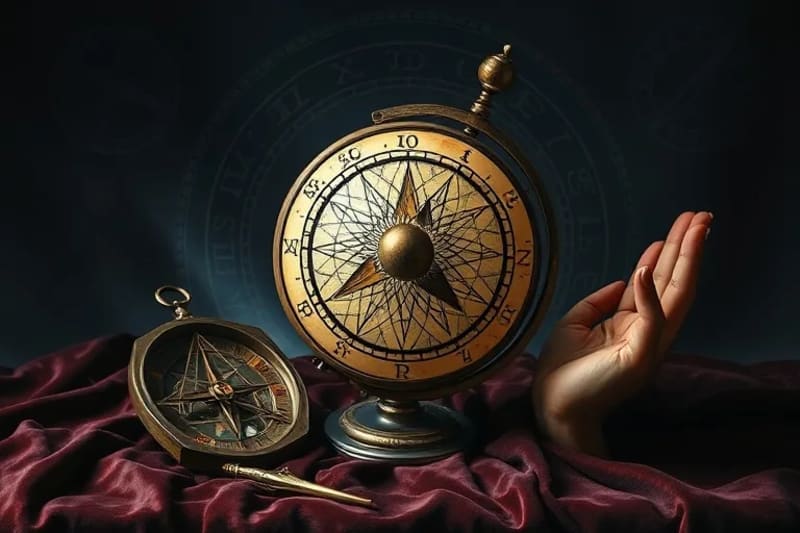
A collection of historical instruments and symbols, reflecting the enduring human quest to map and comprehend celestial influences.
Oil painting style conceptual art, evoking the rich history and profound symbolism embedded in astrological study.Personal Planets and Daily Influences
While outer planet transits mark major life shifts, the faster-moving inner planets (Sun, Moon, Mercury, Venus, Mars) provide daily and weekly guidance. Their transits are shorter-lived but can significantly influence our moods, communications, relationships, and energy levels.
- Sun Transits (approx. 1 month per sign): Highlight areas of focus, vitality, and self-expression. They illuminate themes related to identity and purpose.
- Moon Transits (approx. 2.5 days per sign): Influence our emotional states, instincts, and daily routines. They are excellent for understanding fluctuating moods and needs.
- Mercury Transits (approx. 3 weeks per sign, with retrogrades): Affect communication, thinking, learning, and travel. They indicate periods favorable for intellectual pursuits or potential misunderstandings.
- Venus Transits (approx. 1 month per sign): Impact relationships, aesthetics, values, and finances. They can bring opportunities for connection, enjoyment, or re-evaluating what we cherish.
- Mars Transits (approx. 2 months per sign): Energize our actions, drive, and assertiveness. They can ignite passion, motivate new endeavors, or stir up conflicts.
By observing these daily shifts, we can align our activities with cosmic rhythms, optimizing our productivity and well-being. For example, understanding the Lunar Phases can be particularly helpful for emotional guidance and setting intentions.
Navigating Challenging Transits
Not all transits are easy. Squares, oppositions, and conjunctions with malefic planets (traditionally Mars and Saturn, but also Uranus, Neptune, Pluto) can bring periods of tension, crisis, or profound re-evaluation. However, these are often the most fertile grounds for growth.
Strategies for navigating challenging transits include:
- Self-Awareness: Recognize the themes being activated. What old patterns are being challenged?
- Patience and Resilience: Understand that difficult periods are temporary and serve a purpose.
- Proactive Action: Instead of passively waiting, take conscious steps to address the issues highlighted by the transit.
- Seek Support: Consult with an astrologer, therapist, or trusted friend to gain perspective.
- Embrace Change: Resistance often prolongs the difficulty. Accepting the need for change can ease the process.
Even seemingly adverse transits can lead to immense personal strengthening and clarity, much like how Adaptive Leadership principles suggest that challenges foster resilience and innovation.
Harnessing Transits for Personal Growth
The ultimate goal of understanding planetary transits is not just prediction, but empowerment. By aligning with these cosmic currents, you can consciously participate in your own evolution.
Consider these practices:
- Journaling: Track your experiences during specific transits. How do you feel? What events are unfolding? This helps to identify patterns.
- Meditation and Reflection: Use periods of intense transit to go inward and process emotions or insights.
- Goal Setting: Plan important initiatives (career moves, relationship discussions, creative projects) during supportive transits, and use challenging ones for introspection and restructuring.
- Learning: Continuously deepen your knowledge of astrology and its symbolism. The more you understand, the more effectively you can work with the energies.
Planetary transits offer a dynamic roadmap for life, guiding us through periods of expansion, contraction, challenge, and transformation. By embracing this ancient wisdom, we gain a powerful tool for self-knowledge, resilience, and conscious personal growth.
Explore More Astrological Insights
Dive deeper into the fascinating world of astrology with our curated selection of articles:
- Celestial Mechanisms Sacred Geometry: Universal Patterns
- Astro-Cartography: Finding Love in New Locations
- Bio Astral Projection Conscious Journeys Self Exploration
- Celestial Mechanics: Mundane Astrology and Global Cycles
- Cancer Zodiac Sign: Traits, Emotional Depths
- Asteroids in the Natal Chart: Vesta, Juno, Pallas, and Influence
Source: Hybrid content assisted by AI and human editorial supervision.


Comments
Post a Comment