
Fixed Stars Mundane Astrology: Global Eras & Trends
In the vast tapestry of astrological wisdom, while planetary movements often capture the spotlight, the subtle yet profound influence of fixed stars remains a cornerstone of deeper esoteric study. These distant suns, seemingly stationary from our terrestrial vantage point, have been observed for millennia to correlate with significant global events, cultural shifts, and the ebb and flow of historical trends. Their study, particularly within the realm of mundane astrology, offers a unique lens through which to predict and understand the overarching themes that define epochs and civilizations.
Unlike the planets, which represent dynamic forces and individual psychological drives, fixed stars are considered to embody archetypal energies, providing a backdrop of cosmic constants against which earthly dramas unfold. Their positions, especially in conjunction with pivotal points in mundane charts (like the Sun, Moon, or angles), are believed to signify powerful, long-lasting influences that shape collective consciousness and destiny. This exploration delves into the esoteric significance of these celestial beacons, unraveling how ancient astrologers and modern practitioners alike utilize their wisdom to decipher the grand narrative of human history.
Table of Contents
- Defining Fixed Stars in Astrology
- Mundane Astrology: A Brief Overview
- Historical Context: Ancient Civilizations and Stellar Wisdom
- Key Fixed Stars and Their Mundane Interpretations
- Predicting Global Eras: Precession and Stellar Ages
- Case Studies: Fixed Stars in Historical Events
- Challenges and Nuances in Fixed Star Mundane Astrology
- Integrating Fixed Stars into Modern Astrological Practice
Defining Fixed Stars in Astrology
Fixed stars are celestial bodies that appear to maintain a constant position relative to each other in the night sky, forming the constellations. Unlike planets, which have discernible orbits and apparent retrograde motions, fixed stars move so slowly from our perspective that their positions were considered immutable for centuries. This perceived immobility is what gives them their name, distinguishing them from the "wandering stars" (planets).
Astrologically, each fixed star carries a specific energetic signature, often associated with mythological figures, constellations, or the nature of the planets they resemble. For instance, a star might be described as having a "Martian nature" if its influence is akin to that of Mars, bringing themes of conflict, energy, or assertion. These influences are traditionally considered more fated and less subject to individual free will than planetary aspects, acting as powerful amplifiers or modifiers of planetary energies.

Exploring the intricate dance of celestial bodies, ancient observatories and their instruments were crucial in mapping the fixed stars, laying the groundwork for understanding their enduring impact on global eras and human destiny.
Conceptual AI render, inspired by historical astronomical practices and the profound mystery of the cosmos.The significance of a fixed star in a chart is primarily determined by its conjunction (or opposition) to a planet, an angle (Ascendant, Descendant, Midheaven, IC), or other sensitive points. The closer the orb (angular distance), the stronger the influence. Unlike planetary aspects that can be orb-sensitive to several degrees, fixed stars often require a very tight orb, typically within one degree, to exert their full power. Their effects are often described as sudden, dramatic, and impactful, capable of elevating or devastating circumstances depending on their nature and the overall chart context.
Mundane Astrology: A Brief Overview
Mundane astrology is the branch of astrology that studies the fate of nations, cities, and the world at large. It examines geopolitical events, economic cycles, natural disasters, social movements, and the rise and fall of empires. Instead of individual birth charts, mundane astrology analyzes charts for significant moments such as the ingress of planets into cardinal signs, solar and lunar eclipses, new and full moons, and the founding charts of nations or cities.
The core principle of mundane astrology is that the celestial configurations mirror earthly affairs on a collective scale. It seeks to identify patterns and predict trends that affect large populations, often over extended periods. This field requires a broad understanding of history, politics, economics, and sociology, as astrological interpretations must be contextualized within real-world events. The integration of fixed stars into mundane analysis adds a layer of depth, providing insights into the underlying archetypal forces that drive historical processes.
Key areas of focus in mundane astrology include:
- Political Cycles: Elections, changes in leadership, international relations, wars, and peace treaties.
- Economic Trends: Market fluctuations, recessions, booms, and resource distribution.
- Social Movements: Revolutions, cultural shifts, technological advancements, and public sentiment.
- Natural Phenomena: Earthquakes, volcanic eruptions, floods, droughts, and extreme weather patterns.
- Public Health: Pandemics, disease outbreaks, and advancements in medicine.
Historical Context: Ancient Civilizations and Stellar Wisdom
The study of fixed stars is as ancient as astrology itself. Early Mesopotamian civilizations, particularly the Babylonians and Assyrians, were meticulous observers of the night sky. They cataloged stars and constellations, attributing specific omens and influences to their appearances and conjunctions with planets. These observations were primarily used for mundane prognostication, advising kings and states on matters of war, harvest, and national well-being.
In ancient Egypt, the heliacal rising of certain stars, most notably Sirius (Sopdet), was crucial for predicting the annual flooding of the Nile, which was vital for agriculture. Sirius was revered as a bringer of prosperity and renewal, and its celestial cycle was deeply integrated into their religious and calendrical systems. The Greeks and Romans further developed these traditions, incorporating Babylonian and Egyptian knowledge into their own astrological frameworks. Ptolemy's "Tetrabiblos," a foundational text of Western astrology, includes extensive sections on the nature and influence of fixed stars, categorizing them by their planetary similitudes.

A visual representation of history's intricate tapestry, where ancient symbols meet modern narratives, illustrating how celestial patterns have long been interpreted as markers of global eras and societal evolution.
Artistic interpretation generated by AI, reflecting the timeless interplay of history and cosmic influence.During the medieval Islamic Golden Age, astrologers like Al-Biruni and Albumasar meticulously translated, preserved, and expanded upon earlier works, adding their own observations and interpretations of fixed stars. They integrated stellar influences into complex predictive techniques, linking them to the destinies of dynasties and the unfolding of major historical events. This rich heritage underscores the enduring belief in the power of fixed stars to signify momentous occurrences on Earth, making them indispensable for understanding the deeper currents of history.
Key Fixed Stars and Their Mundane Interpretations
Certain fixed stars are particularly noted for their potent influence in mundane astrology. Their interpretations are often derived from their mythological associations, their brightness, and their position within significant constellations. Here are a few prominent examples:
| Fixed Star | Constellation | Nature (Planetary Similitude) | Mundane Significance |
|---|---|---|---|
| Algol | Perseus | Saturn/Jupiter/Uranus | Associated with extreme violence, beheadings, mass suffering, and catastrophic events. Can signify radical societal upheaval or the downfall of powerful figures. |
| Aldebaran | Taurus | Mars/Jupiter | One of the four Royal Stars. Represents integrity, courage, and leadership. Can indicate military success, honor, and protection, but also danger from ambition if principles are compromised. |
| Regulus | Leo | Mars/Jupiter | Another Royal Star. Symbolizes royalty, power, fame, and leadership. Often connected to the rise and fall of empires, significant political figures, and matters of state. Can bring great success but also downfall through pride or revenge. |
| Antares | Scorpio | Mars/Jupiter | Third Royal Star. Associated with war, courage, and strategic brilliance. Can signify military conflicts, revolutionary movements, and intense power struggles. Can bring success in battle but also self-destruction. |
| Fomalhaut | Piscis Austrinus | Venus/Mercury | The fourth Royal Star. Represents idealism, spiritual wisdom, and artistic genius. Can indicate periods of enlightenment, artistic flourishing, or significant spiritual movements. Can also bring deception or disillusionment if ideals are not grounded. |
| Spica | Virgo | Venus/Mars | Associated with wealth, abundance, creativity, and intellectual pursuits. Can signify periods of prosperity, scientific advancement, artistic achievement, and good fortune for nations. |
| Sirius | Canis Major | Jupiter/Mars | The brightest star in the night sky. Symbolizes honor, fame, wealth, and leadership. Can indicate periods of great national importance, significant discoveries, or the rise of influential figures. |
The influence of these stars is particularly potent when they conjunct cardinal points in mundane charts (like the Aries ingress, eclipses, or national charts) or when powerful planets transit over them. For example, a major eclipse on Algol could signify a period of intense global unrest or a significant, violent event. Conversely, a prominent luminary on Spica might herald an era of economic growth and cultural flourishing.
Predicting Global Eras: Precession and Stellar Ages
One of the most profound applications of fixed stars in mundane astrology is in understanding and predicting global eras, often referred to as "Ages." This concept is tied to the phenomenon of the precession of the equinoxes. The Earth's axis wobbles slowly over approximately 25,920 years, causing the vernal equinox point (0 degrees Aries) to gradually move backward through the zodiacal constellations. This means that roughly every 2,160 years, the vernal equinox enters a new constellation, marking a new "Age."
Each Age is characterized by the archetypal themes associated with the constellation in which the vernal equinox resides. For instance, the Age of Taurus (approximately 4000-2000 BCE) was marked by an emphasis on agriculture, fertility goddesses, and bull worship. The Age of Aries (2000 BCE-1 CE) saw the rise of patriarchal religions, warfare, and the forging of iron. We are currently transitioning from the Age of Pisces (1 CE-2160 CE), characterized by monotheism, compassion, sacrifice, and duality, into the Age of Aquarius, which is expected to emphasize humanitarianism, technology, global consciousness, and individual freedom.
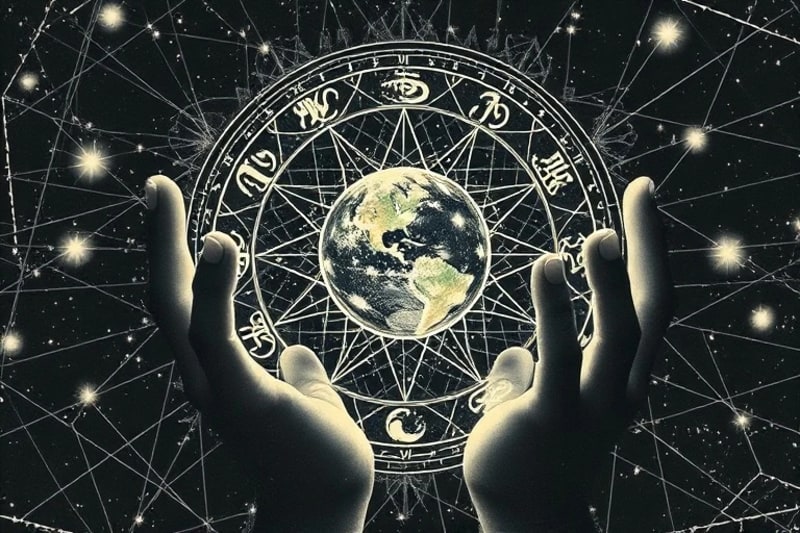
An abstract visualization of the cosmic web, symbolizing the profound, interconnected influence of fixed stars on earthly events and the unfolding of historical epochs, guiding humanity through vast cycles of time.
Conceptual art generated by advanced AI, exploring the esoteric links between stellar formations and global destiny.Fixed stars play a crucial role in refining the understanding of these Ages. As the equinoctial point precesses, it conjuncts different fixed stars, bringing their specific influences to the forefront of collective consciousness for centuries. The conjunction of the vernal equinox with a powerful fixed star can mark a pivotal shift in the dominant themes of an era. For example, the entry into the Age of Pisces saw the vernal point move past certain stars associated with older paradigms and into the influence of stars that resonate with spiritual sacrifice and universal love, aligning with the rise of Christianity and other major religions.
Understanding these stellar alignments within the grand cycle of precession allows astrologers to gain profound insights into the underlying spiritual and material currents that shape civilization over vast stretches of time. It offers a framework for understanding why certain themes dominate specific historical periods and what challenges and opportunities future ages might bring. This long-term perspective is a hallmark of advanced mundane astrology, connecting celestial mechanics with human evolution. For more on cosmic rhythms, you might explore Mindful Celestial Mechanics: Cosmic Rhythms for Well-being.
Case Studies: Fixed Stars in Historical Events
Examining historical events through the lens of fixed stars reveals compelling correlations. While specific interpretations can be complex and require detailed chart analysis, certain patterns emerge:
- The Fall of the Roman Empire: Astrologers have noted that the decline of Rome coincided with significant planetary transits over fixed stars associated with downfall and societal decay. The ingress of the vernal equinox into the constellation of Pisces, moving away from the martial energies of Aries, also marked a shift in collective values, from conquest to spiritual introspection, which contributed to the empire's internal transformation and eventual collapse.
- The Renaissance: This period of immense artistic, scientific, and cultural rebirth saw a renewed interest in classical knowledge and a blossoming of human potential. Astrologically, this era could be linked to favorable alignments with stars like Spica, associated with abundance and intellectual pursuits, or Fomalhaut, connected to idealism and artistic genius, particularly in mundane charts related to the cultural centers of the time.
- World Wars: Major global conflicts often show strong correlations with the activation of malefic fixed stars, such as Algol or Antares, in significant mundane charts (e.g., solar ingresses, eclipses). The conjunction of powerful outer planets (Uranus, Neptune, Pluto) with these stars during periods of global tension can act as a trigger for widespread violence and destruction.
- Technological Revolutions: Periods of rapid technological advancement, such as the Industrial Revolution or the Digital Age, can be seen in conjunction with stars that promote innovation, intellect, and radical change. While planetary cycles (especially Uranus) are primary drivers, fixed stars can amplify or specify the nature of these breakthroughs.
These examples illustrate how fixed stars, when integrated into a comprehensive mundane analysis, can offer deeper insights into the archetypal forces at play during pivotal moments in history. They provide a cosmic signature to human events, suggesting an underlying order to what might otherwise appear as chaotic occurrences. The study of Astro-Archeology further explores these ancient celestial connections.
Challenges and Nuances in Fixed Star Mundane Astrology
While powerful, the application of fixed stars in mundane astrology presents several challenges and requires careful nuance:
- Orb of Influence: As mentioned, fixed stars generally require very tight orbs (often less than 1 degree) to be effective, making their precise identification and calculation critical.
- Precession: The precession of the equinoxes means that the zodiacal longitude of fixed stars slowly changes over time. Astrologers must use accurate ephemerides that account for this movement, often adjusted to a specific epoch (e.g., J2000.0).
- Interpretation Complexity: The influence of a fixed star is rarely isolated. It interacts with the planetary energies, aspects, and house placements in a mundane chart, creating a complex web of influences that requires experienced interpretation.
- Lack of Consensus: While classical texts provide a foundation, modern interpretations of some fixed stars can vary, and not all astrologers agree on the exact nature or strength of every star's influence.
- Fated vs. Free Will: Fixed star influences are often described as more fated or destiny-driven. In mundane astrology, this implies powerful collective currents that are difficult to alter, though conscious awareness can still lead to better navigation of these energies.
Despite these complexities, the esoteric depth offered by fixed stars makes them an invaluable tool for astrologers seeking to understand the deeper, archetypal forces that shape our world. Their study demands precision, historical knowledge, and a profound appreciation for the interconnectedness of cosmic and earthly phenomena.
Integrating Fixed Stars into Modern Astrological Practice
In contemporary astrological practice, fixed stars are increasingly being re-integrated, moving beyond their traditional role as mere omens. Modern astrologers use them to add layers of meaning to natal charts, provide context for transits, and, crucially, to deepen mundane analysis. For the latter, this involves:
- Analyzing National Charts: Examining the fixed stars conjunct angles or luminaries in a nation's founding chart can reveal its inherent destiny and potential challenges.
- Eclipse and Ingress Charts: Paying close attention to fixed stars activated during solar and lunar eclipses, or planetary ingresses into cardinal signs, can highlight the overarching themes and specific events that will manifest during the period covered by these charts.
- Great Conjunctions: When outer planets form significant conjunctions, especially the Jupiter-Saturn cycle, their alignment with fixed stars can signify major shifts in global power structures, ideologies, and societal norms.
- Personal and Collective: Understanding how fixed stars affect the collective can also inform individual experiences, as personal destinies unfold within the broader currents of historical eras.
The esoteric significance of fixed stars in mundane astrology offers a profound perspective on the grand cycles of history and the unfolding of global destiny. By recognizing their enduring influence, we gain a richer understanding of the archetypal forces that shape our world, providing both a predictive framework and a deeper appreciation for the cosmic dance that governs all existence. This ancient wisdom continues to illuminate the path forward, helping us navigate the intricate currents of time and change.
Explore More Cosmic Insights
Dive deeper into the fascinating world of astrology and esoteric wisdom with our curated selection of articles:
- South Node Challenges: Releasing Past Life Patterns
- Composite Charts: Unveiling the Soul of a Relationship
- Juno Astrology: Partnership, Commitment, Soul Contracts
- Chakra-Astrology Integration: Energy Centers Birth Chart Alignment
- Saturn Astrology: Lessons, Discipline, Growth
- Lucid Dreams & Crystals: Esoteric Guide to Oneiric Interpretation
- Druid Horoscope: Celtic Calendar, Tree Meanings
Source: Hybrid content assisted by AI and human editorial supervision.


Comments
Post a Comment