
AI Divination Ethics: Predictive Tools Algorithmic Intuition
The intersection of artificial intelligence and ancient divination practices presents a fascinating, yet complex, ethical landscape. As AI-powered tools become increasingly sophisticated, their application extends beyond traditional data analysis into realms once reserved for human intuition, spiritual insight, and esoteric knowledge. This convergence challenges our understanding of foresight, free will, and the very nature of spiritual guidance in the digital age.
Modern spirituality, often characterized by a quest for personal meaning and self-discovery, is now encountering algorithms designed to interpret patterns, predict outcomes, and even offer personalized guidance. This article delves into the ethical considerations surrounding the use of AI in divination, exploring how these predictive tools function, their potential benefits, and the critical challenges they pose to individuals and spiritual communities.
Understanding the nuances of algorithmic intuition requires a careful examination of data sources, methodological transparency, and the potential for unintended consequences. As we navigate this new frontier, it becomes imperative to establish clear ethical guidelines that ensure these technologies serve humanity responsibly, without undermining the profound personal journey inherent in spiritual exploration.
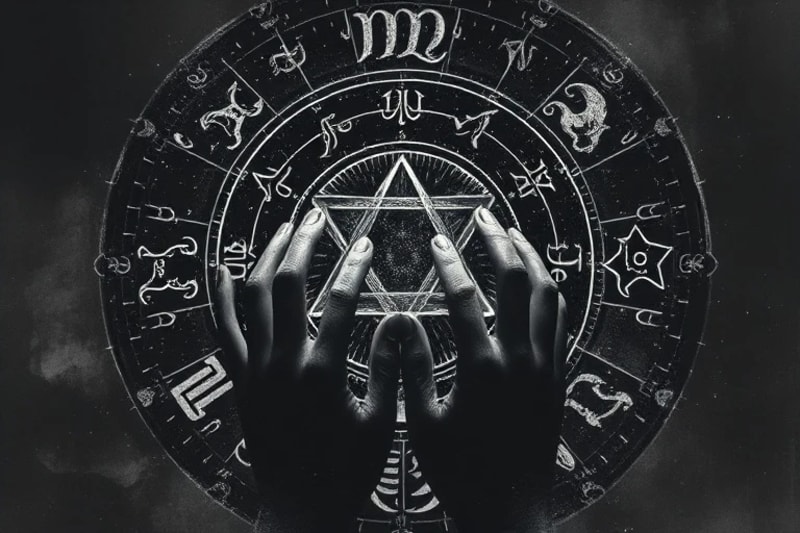
Conceptual representation of artificial intelligence interpreting esoteric patterns for future insights.
This image is an AI-generated conceptual rendering, blending technological interfaces with mystical iconography to illustrate the article's theme, created under a free-to-use license.The Rise of Algorithmic Intuition in Modern Divination
Algorithmic intuition refers to the capacity of AI systems to process vast amounts of data, identify complex patterns, and generate predictions or insights that mimic human intuition. In the context of divination, this can involve analyzing historical astrological charts, tarot card interpretations, I Ching hexagrams, or even personal biometric data to offer guidance.
These systems operate by learning from extensive datasets, often comprising centuries of recorded divinatory practices and their associated outcomes. Through machine learning algorithms, they can detect correlations and probabilities that might be imperceptible to the human mind, thereby offering a new dimension to predictive analysis. The promise is a more objective, data-driven approach to understanding potential futures.
The appeal of AI in divination lies in its potential for consistency, speed, and the ability to personalize readings based on an individual's unique data profile. Unlike human practitioners, AI does not experience fatigue, emotional bias, or subjective interpretation, theoretically offering a "purer" form of insight. This technological advancement prompts a re-evaluation of what constitutes "intuition" and whether it can be replicated or augmented by non-human intelligence.
However, the term "intuition" itself carries connotations of subconscious processing, personal experience, and often, spiritual connection. Attributing intuition to an algorithm raises philosophical questions about consciousness, understanding, and the unique qualities of human perception. It also blurs the lines between predictive analytics and genuine spiritual guidance.
Ethical Frameworks for AI-Powered Predictive Tools
Developing robust ethical frameworks for AI in divination is crucial to harness its potential while mitigating risks. These frameworks must address several key areas to ensure responsible deployment and use. Central to this is the principle of beneficence, ensuring that AI tools are designed to genuinely benefit users without causing harm.
One primary concern is the potential for over-reliance. If individuals become overly dependent on AI predictions for life decisions, it could erode their capacity for critical thinking, personal responsibility, and the development of their own inner guidance. The ethical framework must promote AI as a tool for insight, not a substitute for personal agency.
Another vital aspect is informed consent. Users must be fully aware of how their data is being used, the limitations of algorithmic predictions, and the probabilistic nature of the insights provided. Transparency about the AI's methodology, data sources, and potential biases is paramount to establishing trust and ethical engagement.
The concept of non-maleficence also applies, requiring developers to anticipate and prevent potential harms. This includes psychological impacts, such as fostering anxiety or fatalism, or even financial exploitation if predictions are used to manipulate users into certain actions. Ethical guidelines should mandate rigorous testing and continuous monitoring for adverse effects.

A visual metaphor for the intricate balance between technological advancement and spiritual integrity.
This watercolor-inspired image, generated by AI, symbolizes the delicate interaction required to maintain ethical standards in the evolving landscape of AI-driven spiritual tools, distributed under a general creative license.Furthermore, the integration of AI with spiritual practices necessitates a dialogue between technologists, ethicists, and spiritual leaders. This multidisciplinary approach can help ensure that AI tools are developed with cultural sensitivity and respect for diverse belief systems. For instance, exploring how AI interacts with concepts like Jungian archetypes or shadow integration can illuminate potential pathways for ethical development.
The goal is not to suppress innovation but to guide it towards applications that genuinely empower individuals on their spiritual paths, rather than creating new forms of dependence or disillusionment. This requires a proactive stance in defining ethical boundaries and fostering responsible innovation.
Addressing Bias, Transparency, and Accountability
One of the most significant ethical challenges in AI is the issue of bias. AI systems learn from the data they are fed, and if this data reflects historical biases, prejudices, or incomplete information, the AI will perpetuate and even amplify these biases in its predictions. In divination, this could lead to skewed or unfair guidance, particularly for marginalized groups.
For example, if an AI is trained on historical astrological interpretations predominantly from a specific cultural or gender perspective, its "insights" might not resonate or even be detrimental to individuals from different backgrounds. Ensuring diverse and representative datasets is crucial to mitigate such biases and promote equitable outcomes.
Transparency, often referred to as "explainable AI" (XAI), is another critical component. Users should ideally understand how an AI arrives at its predictions. While complex neural networks can be black boxes, efforts must be made to provide clear explanations of the data points and logical steps that lead to a particular divinatory insight. This fosters trust and allows users to critically evaluate the guidance received.
Accountability frameworks are also essential. Who is responsible when an AI divination tool provides harmful or misleading advice? Is it the developer, the platform provider, or the user? Clear lines of accountability must be established to ensure that there are mechanisms for redress and continuous improvement. This is particularly relevant as AI delves into sensitive areas of personal well-being and decision-making.

A conceptual visualization of how complex algorithms process information to generate predictive insights.
This 3D rendered image, an AI creation, depicts the intricate digital architecture underlying algorithmic intuition, offered under a flexible usage license.The challenge of bias extends beyond historical data to the very design of the algorithms. Developers must actively seek to identify and mitigate algorithmic biases through rigorous testing and ethical auditing. This proactive approach is vital to ensure that AI divination tools promote fairness and inclusivity across all users.
Furthermore, the discussion around Cosmic Sociology in the Digital Age highlights how AI's influence can shape collective consciousness and societal norms. Therefore, the ethical implications of AI divination are not just individual but societal, demanding a collective commitment to responsible innovation.
The Human Element: Preserving Free Will and Personal Agency
Perhaps the most profound ethical question raised by AI in divination concerns the preservation of human free will and personal agency. Divination, in its traditional forms, often serves as a catalyst for self-reflection and a guide for navigating life's choices, rather than a definitive statement of an unchangeable future. The insights gained are meant to empower, not dictate.
When AI offers highly precise or seemingly deterministic predictions, there is a risk that individuals may feel their choices are predetermined, leading to a sense of fatalism or diminished personal responsibility. This could undermine the very essence of spiritual growth, which often involves confronting challenges, making conscious decisions, and learning from experiences.
Ethical AI divination tools should be designed to emphasize possibility and potential, rather than certainty. They should frame predictions as probabilities or tendencies, encouraging users to actively engage with the information, reflect on their own desires, and exercise their free will in shaping their future. The role of AI should be to illuminate paths, not to choose them.
Moreover, the human element in spiritual guidance often involves empathy, compassion, and a nuanced understanding of individual circumstances that AI currently cannot replicate. A human diviner can offer comfort, provide emotional support, and adapt their guidance based on real-time interaction and deep personal connection. These qualitative aspects are vital for holistic spiritual well-being.
Therefore, AI should be viewed as a complementary tool, augmenting human insight rather than replacing it entirely. It can provide data-driven perspectives, highlight patterns, or offer alternative interpretations, but the ultimate integration and application of these insights remain the domain of human consciousness and personal choice. The ethical imperative is to ensure that AI enhances, rather than diminishes, the human spiritual journey.
Future Outlook: Integrating AI Responsibly into Spiritual Practices
The future of AI in divination is likely to be characterized by increasing sophistication and integration into various spiritual practices. As technology evolves, so too will our understanding of its ethical implications and best practices. The key will be to foster a framework of responsible innovation that prioritizes human well-being and spiritual integrity.
One promising avenue is the development of "ethical by design" AI systems. This means embedding ethical considerations into the very core of the AI's architecture, from data collection and algorithm development to user interface design. Such systems would inherently promote transparency, fairness, and user autonomy.
Education will also play a crucial role. Users need to be educated about the capabilities and limitations of AI divination tools, understanding that they are probabilistic models rather than infallible oracles. This critical literacy will empower individuals to use these tools wisely and maintain a healthy skepticism.
Furthermore, the dialogue between AI developers and spiritual practitioners must continue to deepen. This collaboration can lead to the creation of tools that are not only technologically advanced but also spiritually resonant and ethically sound. For instance, AI could assist in analyzing vast astrological data for advanced planetary aspects, providing a foundation for human interpretation.
Ultimately, the goal is to leverage AI's analytical power to enhance spiritual exploration, offering new perspectives and insights without diminishing the richness of human experience or the sacredness of personal growth. By establishing clear ethical boundaries and promoting responsible use, AI can become a valuable ally in the quest for self-understanding and spiritual enlightenment, complementing practices like mantras and vibrational power.
Explore More Insights
Source: Hybrid content assisted by AI and human editorial supervision.


Comments
Post a Comment