
Blockchain Astrology: Decentralizing Celestial Insights
Blockchain and Astrology: Decentralizing Celestial Insights and Data Integrity
The intersection of blockchain technology and astrology might seem like an unlikely pairing at first glance. One represents cutting-edge distributed ledger technology, synonymous with cryptocurrencies and digital trust, while the other is an ancient practice interpreting celestial influences on human affairs. However, a deeper look reveals fascinating synergies, particularly in areas concerning data integrity, decentralization, and the secure exchange of esoteric knowledge.
As the digital age progresses, traditional practices are increasingly seeking ways to adapt and leverage new technological advancements. Blockchain offers a robust framework that could potentially revolutionize how astrological data is managed, shared, and authenticated, moving towards a more transparent and verifiable system for cosmic insights.
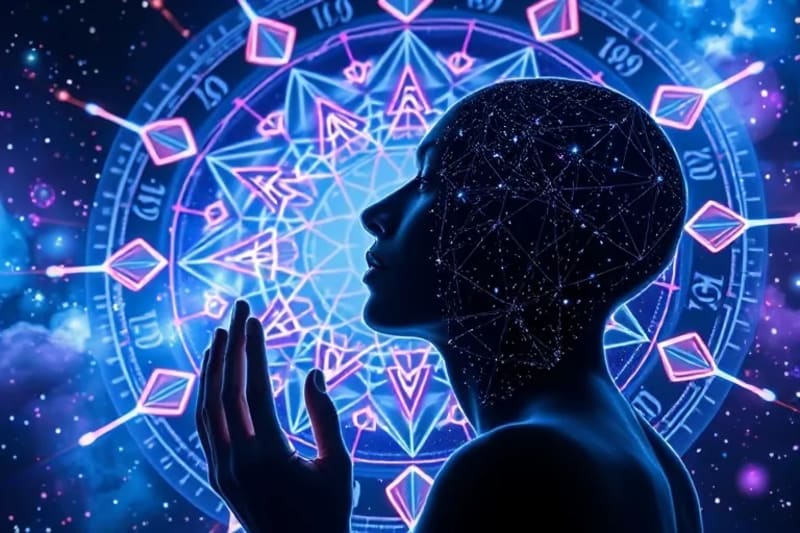
A conceptual representation of how advanced distributed ledger technology intertwines with ancient celestial wisdom, forging a new path for understanding cosmic influences.
This visual synthesis is a conceptual AI render, illustrating the profound connection between technological innovation and timeless astrological principles, bridging the gap between the digital and the divine.This article delves into the burgeoning field where blockchain meets astrology, exploring the mechanisms through which decentralized technologies can enhance the accuracy, accessibility, and trustworthiness of astrological readings and data. We will examine the core principles of both domains and illustrate how their convergence offers a novel paradigm for celestial understanding.
Table of Contents
- The Convergence of Cosmos and Code
- Understanding Blockchain: The Foundation of Decentralization
- Astrology in the Digital Age: Beyond Traditional Readings
- Key Intersections: How Blockchain Transforms Astrology
- Decentralized Astrological Data: Enhancing Trust and Accessibility
- Smart Contracts and Astrological Services
- Challenges and Ethical Considerations
- The Future of Blockchain Astrology
- Conclusion: A New Paradigm for Celestial Wisdom
The Convergence of Cosmos and Code
The idea of blending ancient wisdom with modern technology is not new. Throughout history, humanity has sought to understand its place in the universe, often using the most advanced tools available at the time. From early astronomical observations to complex mathematical models, the study of celestial bodies has always evolved alongside technological progress.
Blockchain technology, with its inherent properties of immutability, transparency, and decentralization, presents a unique opportunity to address some long-standing challenges within the field of astrology. These challenges include the verification of data sources, the authentication of readings, and the secure storage of sensitive personal information like birth charts.
Understanding Blockchain: The Foundation of Decentralization
At its core, blockchain is a distributed, immutable ledger. This means that once data is recorded on a blockchain, it cannot be altered or deleted, and copies of this ledger are maintained across a network of computers. This distributed nature eliminates the need for a central authority, fostering an environment of trust through verifiable data.
Key characteristics of blockchain technology include:
- Decentralization: No single entity controls the network, making it resistant to censorship and single points of failure.
- Immutability: Once a transaction or piece of data is added to the blockchain, it is permanent and cannot be changed.
- Transparency: All transactions on the public ledger are visible to all participants, enhancing accountability.
- Security: Cryptographic principles secure data, making it highly resistant to fraud and unauthorized access.
These features make blockchain an ideal candidate for applications requiring high levels of trust and data integrity, extending far beyond financial transactions into various sectors, including the esoteric and spiritual domains.
Astrology in the Digital Age: Beyond Traditional Readings
Astrology, the study of the movements and relative positions of celestial bodies interpreted as having an influence on human affairs and the natural world, has seen a resurgence in popularity, especially with the advent of digital platforms. Online tools and applications have made it easier than ever for individuals to access their birth charts, planetary transits, and daily horoscopes.
However, this increased accessibility also brings challenges related to the authenticity of information and the credibility of sources. The digital landscape is rife with varying interpretations and sometimes inconsistent data, which can dilute the perceived accuracy and depth of astrological insights. Understanding your child's birth chart, for example, requires precise data and reliable interpretations.
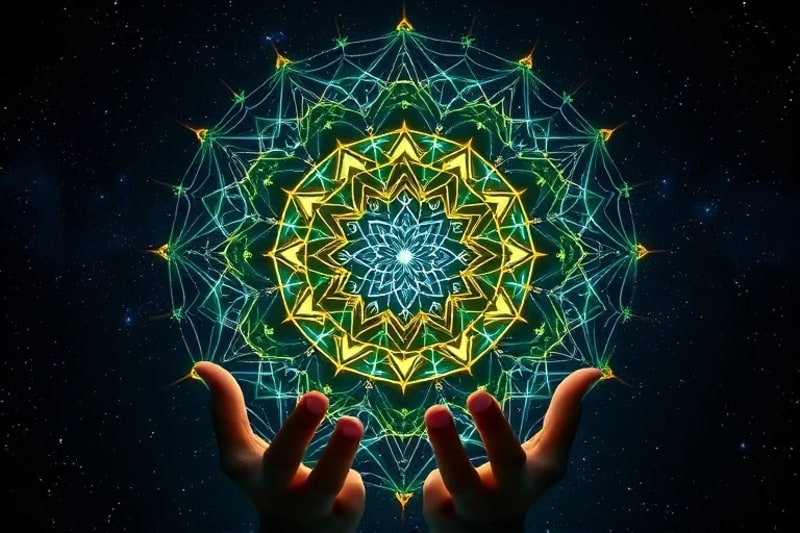
An intricate digital network illustrating the secure and transparent exchange of astrological data, where each node represents a verified birth chart.
This digital painting, created by AI, visualizes the concept of a decentralized astrological database, ensuring the integrity and accessibility of cosmic insights through a secure, interconnected system.Modern astrology benefits from computational power, allowing for complex calculations of planetary positions and aspects with unprecedented accuracy. Yet, the interpretation and delivery of these insights still largely depend on individual astrologers or centralized platforms. This is where blockchain can introduce a new layer of verification and standardization.
Key Intersections: How Blockchain Transforms Astrology
The synergy between blockchain and astrology emerges from their shared emphasis on patterns, connections, and the flow of information. Blockchain can provide a verifiable infrastructure for astrological data, while astrology offers a rich dataset for decentralized applications.
Here are some key areas of intersection:
- Immutable Birth Chart Records: A birth chart, being a snapshot of the cosmos at a precise moment, is a unique and unchangeable piece of personal data. Storing this on a blockchain could create an immutable record, preventing tampering and ensuring its authenticity for future reference.
- Verified Astrological Data Sources: Planetary ephemerides, astronomical calculations, and historical astrological events could be recorded on a blockchain. This would provide a single, verifiable source of truth for all astrological computations, reducing discrepancies across different platforms.
- Decentralized Astrological Marketplaces: Blockchain can facilitate peer-to-peer marketplaces where astrologers can offer their services directly to clients, cutting out intermediaries. This fosters a more equitable distribution of value and allows clients to verify the credentials and reviews of astrologers transparently.
- Tokenized Astrological Services: The creation of specialized tokens could enable micro-transactions for specific astrological insights, such as a quick query about a Venus sign decoding or a detailed transit analysis, making services more accessible and affordable.
Decentralized Astrological Data: Enhancing Trust and Accessibility
One of the most significant contributions of blockchain to astrology is the potential for decentralized data management. Currently, astrological data often resides on centralized servers, making it vulnerable to hacks, data loss, or manipulation. A decentralized approach ensures that data is replicated across many nodes, enhancing its resilience and availability.
Consider the implications for research: academic astrologers or enthusiasts could access a vast, verified database of birth charts and associated events, enabling more rigorous statistical analysis and pattern recognition. This could lead to new discoveries and a deeper understanding of astrological correlations, moving the field towards a more empirically supported framework.
Moreover, the concept of data sovereignty becomes paramount. Individuals could own and control their astrological data, granting access permissions as they see fit, rather than having their information stored by third-party applications. This aligns with the growing global emphasis on data privacy and personal control over digital identities.
Smart Contracts and Astrological Services
Smart contracts, self-executing contracts with the terms of the agreement directly written into code, offer a powerful tool for automating and securing astrological services. These contracts can be programmed to execute automatically when certain conditions are met, eliminating the need for intermediaries and reducing the risk of fraud.
Examples of smart contract applications in astrology include:
- Automated Reading Delivery: A client pays for a birth chart reading using cryptocurrency, and the smart contract automatically releases the payment to the astrologer only after the reading has been delivered and confirmed by the client.
- Subscription Services: Smart contracts can manage recurring payments for monthly horoscopes or transit reports, ensuring timely delivery and payment without manual intervention.
- Certification of Astrologers: Credentials and specializations of astrologers could be recorded on a blockchain, and smart contracts could verify these credentials before allowing an astrologer to offer specific services on a platform. This could be particularly useful for specialized areas like medical astrology.
- Dispute Resolution: In case of disagreements, smart contracts could incorporate arbitration mechanisms, where a predefined set of rules or a decentralized autonomous organization (DAO) helps resolve disputes fairly and transparently.
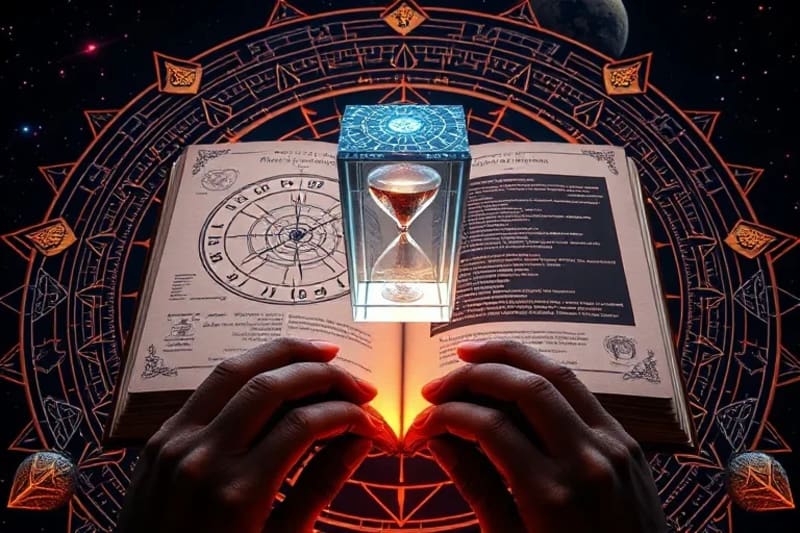
A symbolic representation of how smart contracts and blockchain technology can secure and automate the delivery of astrological services, blending ancient texts with digital innovation.
This 3D render, generated by AI, captures the essence of integrating immutable blockchain records with esoteric knowledge, offering a glimpse into a future where celestial insights are both ancient and technologically advanced.Challenges and Ethical Considerations
Despite the promising potential, the integration of blockchain into astrology is not without its challenges. The primary hurdle is adoption and understanding. Many astrologers and enthusiasts may not be familiar with blockchain technology, requiring significant educational efforts.
Other challenges include:
- Scalability: Public blockchains can sometimes face scalability issues, which might affect the speed and cost of transactions if the network becomes highly utilized.
- Interoperability: Ensuring that different astrological platforms can seamlessly interact with blockchain-based solutions will be crucial for widespread adoption.
- Data Privacy vs. Transparency: While blockchain offers transparency, sensitive personal data like birth times and locations need careful handling. Solutions like zero-knowledge proofs or private blockchains might be necessary to balance privacy with verification.
- Interpretation Nuance: While data can be decentralized, the subjective and nuanced art of astrological interpretation remains a human endeavor. Blockchain can verify the data, but not necessarily the wisdom or insight of an astrologer. This is a critical distinction, as explored in discussions around the ethics of AI in archetypal symbolism.
The Future of Blockchain Astrology
The future of blockchain astrology envisions a more robust, transparent, and user-centric ecosystem. Imagine a world where every birth chart is a verifiable NFT (Non-Fungible Token), owned by the individual, and accessible only with their permission. This would empower individuals with unprecedented control over their personal cosmic blueprint.
Decentralized Autonomous Organizations (DAOs) could emerge, governing astrological communities, setting standards for ethical practice, and funding research into astrological phenomena. This would foster a collective, community-driven approach to the study and application of celestial wisdom, moving beyond traditional hierarchical structures.
Furthermore, the integration with other emerging technologies like AI and machine learning could lead to highly personalized and dynamic astrological insights, all built upon a foundation of verifiable blockchain data. This could bridge the gap between ancient wisdom and predictive analytics, offering a truly holistic understanding of personal and collective destinies.
Conclusion: A New Paradigm for Celestial Wisdom
The convergence of blockchain and astrology represents a significant evolutionary step for an ancient practice. By leveraging the principles of decentralization, immutability, and transparency, blockchain can address critical issues of data integrity, authenticity, and accessibility within the astrological domain. It offers a pathway to a more trustworthy and empowering experience for both astrologers and individuals seeking cosmic guidance.
While challenges remain, the potential benefits of this synergy are profound. As technology continues to advance, the integration of blockchain into fields like astrology will likely foster a new era of verifiable wisdom, where ancient insights are preserved, authenticated, and made accessible to a global community in a truly decentralized manner.
Explore More Cosmic Connections
- Advanced Natal Chart: Synthesis & Integration
- Psycho-Astrology Jungian Archetypes Shadow Work Wholeness
- Black Moon Lilith: Integrating Shadows & Forbidden Powers
- Eris Astrology: Challenging Norms, Unveiling Truths Chart
- Zodiacal Decanates Ruling Impact Subpersonalities Astrology
- Neuroarchitecture and Digital Well-being: Healthy Cognitive Spaces
Source: Hybrid content assisted by AI and human editorial supervision.


Comments
Post a Comment