
AI Divination Ethics: Navigating Predictive Tools
The rapid evolution of Artificial Intelligence (AI) has begun to permeate nearly every facet of human existence, from mundane tasks to complex decision-making. Increasingly, this technological wave is reaching into realms traditionally associated with human intuition, spirituality, and the mystical, including divination. The concept of AI-driven predictive tools, whether for horoscopes, tarot readings, or other forms of future-gazing, presents a fascinating yet intricate ethical landscape that demands careful navigation.
As algorithms become more sophisticated, their ability to process vast amounts of data and identify patterns can mimic what some might perceive as intuition. This convergence raises profound questions about the nature of foresight, the role of human agency, and the very essence of spiritual practice in an increasingly digital world. Understanding these dynamics is crucial for both developers and users of such technologies.

Conceptual fusion of advanced AI structures with timeless symbols of foresight and destiny, reflecting the complex interplay between technology and spiritual wisdom.
This evocative image, a conceptual render generated by AI, captures the essence of integrating artificial intelligence with ancient divinatory arts, highlighting the profound shifts in understanding and practice.This article delves into the ethical considerations surrounding AI in divination, exploring the potential benefits, inherent risks, and the imperative for responsible development and usage. We aim to provide an introductory and educational perspective, shedding light on a topic that sits at the intersection of technology, spirituality, and human ethics.
Table of Contents
The Rise of Algorithmic Intuition
Core Ethical Challenges in AI Divination
Bias in Data and Algorithmic Fairness
Loss of Human Intuition and Connection
Privacy, Data Security, and Misinformation
Navigating the Future: Best Practices and Safeguards
Philosophical Implications and Redefining Intuition
Conclusion: Balancing Innovation with Responsibility
The Rise of Algorithmic Intuition
AI's capacity for "algorithmic intuition" stems from its ability to process and analyze vast datasets, identifying correlations and patterns that might be imperceptible to the human mind. In the context of divination, this could involve analyzing historical astrological charts, tarot card combinations, or numerological sequences to generate predictions or insights. This analytical power offers a new dimension to traditional practices.
For instance, an AI could analyze millions of birth charts alongside life events to find statistical commonalities, potentially offering incredibly detailed and personalized astrological readings. This approach moves beyond generalized horoscopes, aiming for a precision that mirrors the complexity of individual lives. Similarly, AI could be trained on historical interpretations of tarot cards, offering nuanced readings based on a comprehensive understanding of their symbolism and context.
The promise here is not to replace human spiritual guides but to augment their capabilities, providing tools that can handle the sheer volume of information required for deeply personalized insights. It could also democratize access to divinatory practices, making them available to a wider audience who might not have access to traditional practitioners or extensive knowledge of esoteric systems. For those interested in the historical context of such tools, exploring the Esoteric Tarot History can provide valuable background on how these practices evolved.
Core Ethical Challenges in AI Divination
Despite the potential benefits, the integration of AI into divination is fraught with ethical challenges. These concerns are not unique to divination but are amplified by the sensitive and often vulnerable nature of individuals seeking guidance. Addressing these issues proactively is essential for the responsible development of AI predictive tools.
Bias in Data and Algorithmic Fairness
One of the most significant ethical concerns is the potential for bias embedded within the training data. If AI models are fed historical data that reflects societal prejudices, these biases will be perpetuated and even amplified in the AI's predictions. For example, if historical astrological interpretations or numerological associations are predominantly based on certain cultural or demographic groups, the AI's "intuition" might not be universally applicable or fair.
This can lead to discriminatory or inaccurate readings for individuals from underrepresented backgrounds, reinforcing existing inequalities. Ensuring algorithmic fairness requires meticulous curation of diverse and representative datasets, along with continuous auditing of AI outputs for unintended biases. The challenge is particularly acute in areas like Numerology Dream Interpretation, where cultural and personal contexts heavily influence meaning.

The intricate dance of data streams and symbolic representations, illustrating the algorithmic processes that underpin AI-driven predictive insights.
Loss of Human Intuition and Connection
Traditional divination often involves a deep, empathetic connection between the practitioner and the seeker. This human element provides comfort, personalized interpretation, and a space for emotional processing that AI, by its very nature, cannot replicate. Over-reliance on AI tools could diminish the value of this human connection, potentially leading to a more detached and less emotionally resonant experience for users.
The subtle nuances of human interaction, the ability to read body language, and the intuitive leaps made by an experienced practitioner are difficult, if not impossible, for an algorithm to fully grasp. While AI can offer data-driven insights, it lacks the wisdom, compassion, and lived experience that human spiritual guides bring to the table. This raises questions about the definition of "intuition" itself, especially when considering phenomena like Quantum Entanglement Synastry, which emphasizes non-local connections.
Privacy, Data Security, and Misinformation
Divinatory practices often involve sharing highly personal and sensitive information. The use of AI in this context necessitates robust privacy and data security measures. Users must be assured that their personal data, including birth dates, emotional states, and life circumstances, is protected from breaches and misuse. The potential for this sensitive information to be exploited or used for purposes beyond divination is a significant ethical concern.
Furthermore, AI-generated predictions, if not carefully contextualized, could be misinterpreted or lead to harmful misinformation. Users might place undue faith in algorithmic pronouncements, potentially making significant life decisions based on flawed or incomplete AI insights. The lack of accountability inherent in AI systems makes this particularly problematic. The impact of such tools on self-perception, similar to Augmented Reality Self-Perception, needs to be considered.
Navigating the Future: Best Practices and Safeguards
To harness the potential of AI in divination responsibly, several best practices and safeguards must be implemented:
- Transparency in Algorithms: Developers should strive for transparency regarding how their AI models are trained, what data they use, and how they arrive at their predictions. This helps users understand the limitations and potential biases of the tools.
- Human Oversight and Collaboration: AI tools should be designed to complement, not replace, human practitioners. The most ethical approach involves a collaborative model where AI provides data-driven insights, and human experts offer interpretation, empathy, and contextual understanding.
- User Education: Users need to be educated about the nature of AI-generated insights, understanding that these are based on statistical patterns and algorithms, not mystical foresight in the traditional sense. Setting realistic expectations is crucial.
- Robust Data Privacy and Security: Strict adherence to data protection regulations (e.g., GDPR, CCPA) is paramount. Anonymization of data and secure storage protocols are essential to protect sensitive user information.
- Ethical Guidelines and Regulation: As AI divination tools become more prevalent, there will be a growing need for industry-wide ethical guidelines and potentially even regulatory frameworks to ensure responsible development and prevent harm.
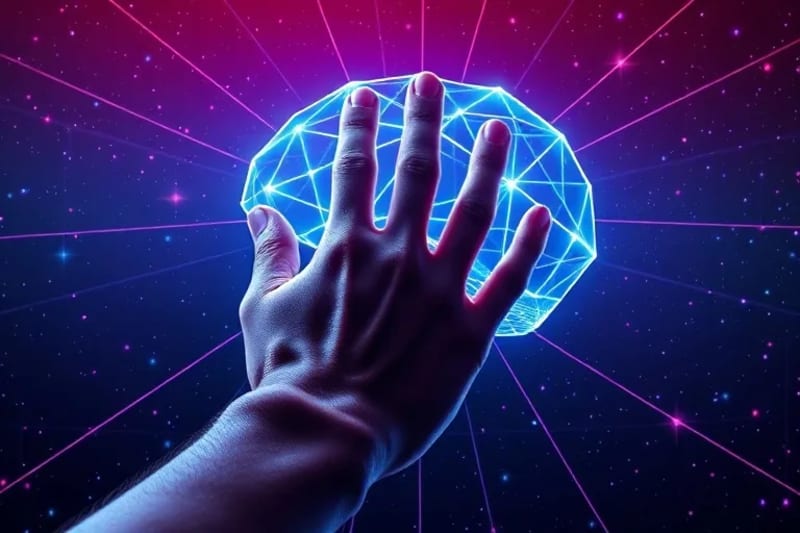
A symbolic representation of human interaction with advanced AI, emphasizing the ethical framework required for integrating artificial intelligence into sensitive predictive domains.
Philosophical Implications and Redefining Intuition
The rise of AI in divination also forces us to confront deeper philosophical questions about intuition, consciousness, and the nature of spiritual experience. If an algorithm can "predict" or "interpret" with high accuracy, does that redefine what we understand as intuition? Is intuition merely pattern recognition, or is there an unquantifiable human element at play?
Traditional spiritual practices often emphasize personal growth, self-reflection, and the development of inner wisdom. While AI can provide information, it cannot offer the transformative journey of self-discovery that comes from engaging deeply with one's own spiritual path. The ethical challenge here is to ensure that AI tools enhance, rather than detract from, this essential human process. For example, understanding one's Chiron in Astrology placement often requires deep personal reflection, not just an algorithmic output.
Moreover, the concept of "algorithmic intuition" might lead to a re-evaluation of how we perceive spiritual guidance. While some might embrace it as a new form of insight, others might view it as a reductionist approach that strips away the mystery and sacredness of divination. The balance lies in appreciating AI's analytical power while preserving the profound, subjective, and often ineffable aspects of spiritual inquiry. This echoes broader discussions about the impact of technology on contemplative practices, such as the tension between Monastic Silence and Hyperconnectivity.
Conclusion: Balancing Innovation with Responsibility
The integration of AI into divination is an inevitable frontier. As with any powerful technology, its impact will be shaped by how we choose to develop and utilize it. The ethical considerations are paramount, demanding a thoughtful and proactive approach from developers, practitioners, and users alike. The goal should be to create tools that are fair, transparent, secure, and ultimately, supportive of human well-being and spiritual growth.
By fostering a dialogue around these ethical dilemmas and implementing robust safeguards, we can navigate the exciting yet complex landscape of AI divination. The future of predictive tools lies not just in their technological sophistication but in their ethical integrity and their capacity to serve humanity responsibly. As we embrace these new possibilities, it's vital to remember that true wisdom often stems from a blend of external knowledge and internal reflection, a principle that also applies to practices like Mindfulness during Powerful Eclipses.
Explore More Insights
Source: Hybrid content assisted by AI and human editorial supervision.


Comments
Post a Comment