
Esoteric Tarot History: From Game to Divination Tool | StarPluto
The Tarot, a deck of cards rich in symbolism and mystery, has captivated minds for centuries. What began as a simple card game in Renaissance Italy evolved into a profound tool for divination, self-exploration, and spiritual guidance. Its journey from courtly entertainment to an esoteric oracle is a testament to humanity's enduring quest for meaning and understanding.
This comprehensive guide delves into the intricate history of Tarot, tracing its origins, exploring its transformation into a divinatory system, and examining its enduring legacy as a spiritual guide. We will uncover the key figures and movements that shaped its esoteric interpretations, providing a foundational understanding for both novices and seasoned practitioners.
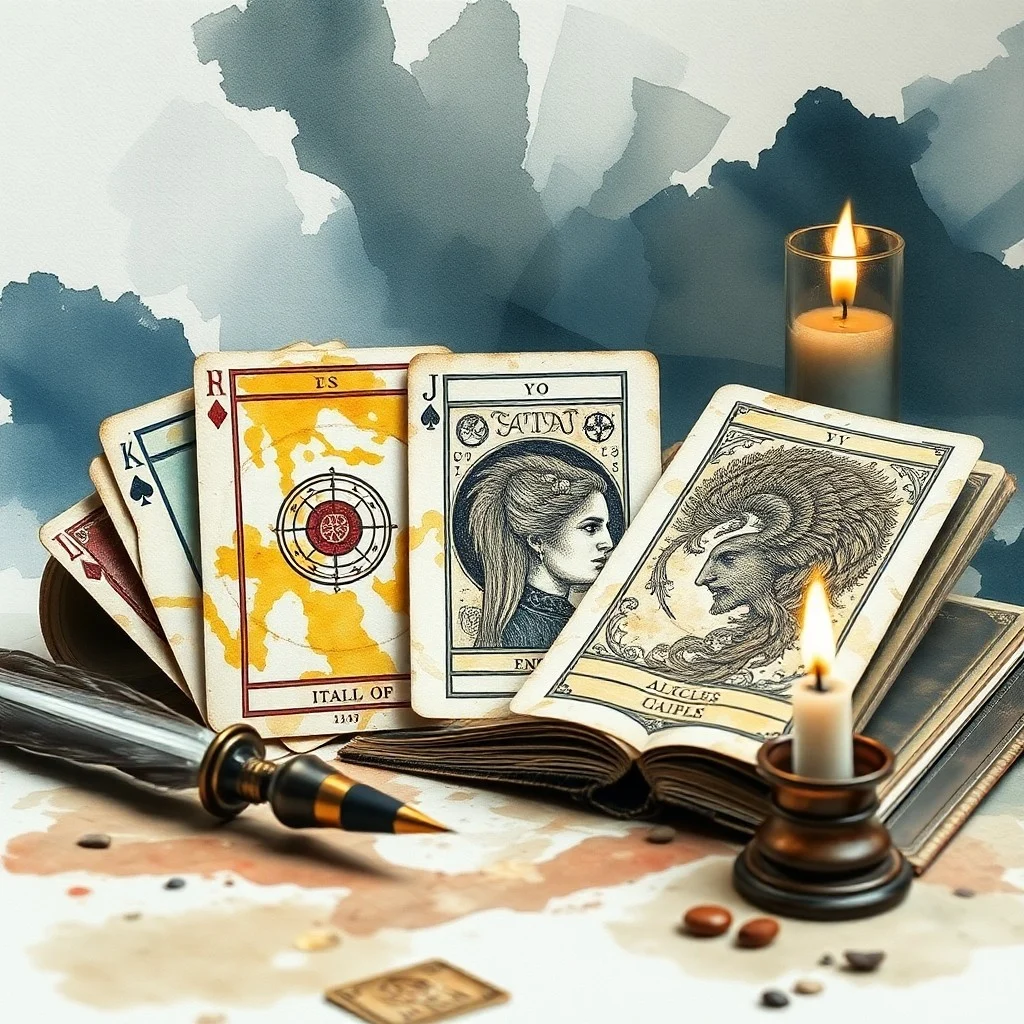
The transformation of Tarot from a simple game to a profound spiritual tool, depicted through symbolic imagery.
Understanding the esoteric history of Tarot requires a journey through various cultural and intellectual landscapes, from medieval Europe to the occult revivals of the 19th and 20th centuries. Each era added new layers of meaning and interpretation, solidifying its place in the pantheon of spiritual practices.
The evolution of Tarot is not merely a historical account; it is a narrative of how symbols and archetypes transcend their initial purpose to become vessels for deeper truths. From its earliest known decks to the modern interpretations, the Tarot has consistently adapted, reflecting the changing spiritual needs of society.
Table of Contents
- Early Origins: Playing Cards and the Renaissance
- The Birth of the Trionfi and Tarocchi
- First Esoteric Interpretations: Court de Gébelin and Etteilla
- The 19th-Century Occult Revival and Eliphas Lévi
- The Golden Dawn and the Rider-Waite-Smith Deck
- Aleister Crowley and the Thoth Tarot
- Carl Jung, Archetypes, and the Tarot
- Modern Tarot: Interpretations and its Enduring Legacy
Early Origins: Playing Cards and the Renaissance
The story of Tarot begins not in mystical circles, but in the realm of everyday entertainment. Playing cards first arrived in Europe from the Islamic world, likely via Mamluk Egypt, around the late 14th century. These early decks typically consisted of four suits, similar to modern playing cards, and were used primarily for games of chance and skill.
The Mamluk cards, characterized by their intricate geometric and calligraphic designs (due to Islamic proscriptions against figurative art), laid the groundwork for European adaptations. As they spread across the continent, particularly in Italy and France, these cards began to take on local artistic styles and cultural nuances. The Italian Renaissance, a period of immense artistic and intellectual flourishing, provided the perfect environment for the evolution of these cards.
During this era, wealthy patrons commissioned elaborate, hand-painted decks, often featuring allegorical figures and scenes from classical mythology or contemporary life. These luxurious decks were far more than simple games; they were works of art, reflecting the status and sophistication of their owners. This artistic development was crucial in setting the stage for the unique imagery that would define the Tarot.
The Birth of the Trionfi and Tarocchi
The true genesis of what we now recognize as Tarot occurred in 15th-century Italy, with the emergence of "Trionfi" cards, meaning "Triumphs." These decks added a fifth suit of trump cards to the traditional four suits. Unlike the suit cards, which largely retained their numerical and courtly structure, the trumps depicted a series of allegorical figures, such as Justice, Strength, Death, and The Fool.
These Trionfi cards were used in a game known as "Tarocchi," which quickly gained popularity among the Italian aristocracy. The allegorical nature of the trump cards, often arranged in a hierarchical order reflecting societal values or a spiritual journey, hinted at a deeper narrative potential. While initially conceived for gameplay, their rich symbolism was ripe for reinterpretation.

Ancient texts and symbols, often associated with the hidden wisdom of esoteric traditions, reveal the long journey of Tarot.
The earliest surviving Tarot decks, such as the Visconti-Sforza deck, are exquisite examples of this period, showcasing the artistic mastery and symbolic depth already present. These decks were not standardized, varying in the number and order of their trump cards, reflecting regional differences and artistic liberties. The lack of a fixed order would later allow for diverse interpretations once the cards transitioned into a divinatory role.
It is important to note that during this early period, there is no direct evidence to suggest that Tarot cards were used for divination. Their primary function remained recreational, albeit with a strong allegorical and educational undercurrent. The seeds of their esoteric future, however, were firmly planted in their symbolic imagery.
First Esoteric Interpretations: Court de Gébelin and Etteilla
The transformation of Tarot from a game to a tool of divination began in the late 18th century, largely due to the work of Antoine Court de Gébelin. A Swiss clergyman and Freemason, de Gébelin published his monumental work, "Le Monde Primitif," in 1781. In it, he dedicated a section to the Tarot, claiming it was an ancient Egyptian book of wisdom, specifically the "Book of Thoth," preserved in card form.
De Gébelin's theory, though historically inaccurate, ignited the esoteric community's interest in Tarot. He proposed that the cards contained profound symbolic meanings, linking them to Egyptian deities, astrology, and the Kabbalah. This groundbreaking (though speculative) interpretation provided the intellectual framework for future occultists to explore the Tarot's divinatory potential.
Following de Gébelin's lead, Jean-Baptiste Alliette, a French occultist who went by the pseudonym Etteilla (his surname spelled backward), became the first professional Tarot reader and publisher of a Tarot deck specifically designed for divination. In 1785, he published "Etteilla, ou manière de se récréer avec le jeu de cartes nommées Tarots," which included detailed instructions for cartomancy.
Etteilla's deck and interpretations were heavily influenced by de Gébelin's Egyptian theories, but he also introduced his own system of correspondences and card meanings. He assigned astrological, elemental, and even temporal significations to each card, establishing many of the divinatory conventions still used today. His work firmly established Tarot as a legitimate tool for fortune-telling and spiritual insight, moving it beyond mere gameplay.
The 19th-Century Occult Revival and Eliphas Lévi
The 19th century witnessed a significant resurgence of interest in occultism, mysticism, and esoteric traditions across Europe. This period provided fertile ground for the further development of Tarot's esoteric interpretations. A pivotal figure in this revival was Alphonse Louis Constant, better known by his pseudonym, Eliphas Lévi.
Lévi, a French ceremonial magician and occultist, published "Dogme et Rituel de la Haute Magie" (Dogma and Ritual of High Magic) in 1856. In this influential work, he explicitly linked the 22 Major Arcana cards of the Tarot to the 22 letters of the Hebrew alphabet and the Kabbalistic Tree of Life. This connection provided a complex, philosophical framework for understanding the Tarot as a repository of universal esoteric knowledge.
Lévi's work elevated the Tarot beyond simple fortune-telling, presenting it as a key to understanding the mysteries of the universe and the human psyche. He argued that the Tarot was a "universal key" to magic and mysticism, containing all the secrets of ancient wisdom. His interpretations profoundly influenced subsequent occult orders and Tarot scholars, establishing the Kabbalistic connection as a cornerstone of esoteric Tarot.

The abstract nature of spiritual insight, intuition, and the complex, multifaceted tapestry of destiny as revealed through esoteric practices.
Lévi's ideas were instrumental in shaping the perception of Tarot as a serious occult tool, attracting the attention of many intellectuals and practitioners of the esoteric arts. His synthesis of Tarot with Kabbalah, astrology, and ceremonial magic provided a rich symbolic language that would be further developed by the Hermetic Order of the Golden Dawn.
The Golden Dawn and the Rider-Waite-Smith Deck
The Hermetic Order of the Golden Dawn, founded in late 19th-century Britain, was a highly influential occult organization that further systematized and popularized the esoteric Tarot. Drawing heavily on Lévi's work, the Golden Dawn developed a comprehensive system of Tarot correspondences, integrating it with Kabbalah, astrology, numerology, and Egyptian mythology.
Members of the Golden Dawn, including prominent figures like S.L. MacGregor Mathers and Arthur Edward Waite, viewed the Tarot as a powerful tool for meditation, magical work, and spiritual development. They meticulously assigned specific meanings and symbols to each card, creating a coherent and deeply layered system that went far beyond simple divination.
Arthur Edward Waite, a key member of the Golden Dawn, commissioned artist Pamela Colman Smith to create a new Tarot deck that would embody these esoteric principles. The result, published in 1909, was the Rider-Waite-Smith (RWS) Tarot deck. This deck revolutionized Tarot by being the first to fully illustrate all 78 cards, including the Minor Arcana, with symbolic scenes rather than just suit pips.
The RWS deck's accessible and evocative imagery made it incredibly popular and remains the most widely used Tarot deck today. Its visual narratives provided a direct, intuitive entry point into the cards' meanings, making esoteric concepts more approachable for a broader audience. Pamela Colman Smith's artistic vision was crucial in translating complex occult ideas into universally understandable symbols.
Aleister Crowley and the Thoth Tarot
Another significant figure in the esoteric history of Tarot is Aleister Crowley, a controversial but highly influential occultist and former member of the Golden Dawn. Crowley, along with artist Lady Frieda Harris, created the Thoth Tarot deck, published posthumously in 1969. This deck is a complex and deeply philosophical work, reflecting Crowley's own system of Thelema and his extensive knowledge of occult traditions.
The Thoth Tarot is known for its intricate symbolism, drawing from Egyptian mythology, Kabbalah, astrology, and alchemy. Crowley aimed to create a deck that was a complete magical textbook, embodying the principles of his own magical system. The artwork by Lady Frieda Harris is striking and highly stylized, offering a different aesthetic and symbolic language compared to the RWS deck.
While more challenging to interpret for beginners, the Thoth Tarot is highly revered by advanced practitioners and scholars of esotericism. It represents a culmination of decades of occult research and magical practice, offering a profound tool for self-initiation and understanding the deeper currents of the universe. Its influence on modern occultism is undeniable, providing an alternative yet equally rich path for Tarot exploration.
Carl Jung, Archetypes, and the Tarot
Beyond the realm of traditional occultism, the Tarot found a fascinating connection with the field of depth psychology through the work of Carl Jung. The Swiss psychiatrist and founder of analytical psychology saw the Tarot as a symbolic representation of archetypal patterns present in the collective unconscious.
Jung believed that the Major Arcana cards, with their universal figures like The Emperor, The Empress, The Hermit, and The Fool, mirrored fundamental human experiences and psychological stages. He viewed these archetypes as primordial images and patterns of thought that exist universally across cultures and throughout history. The Tarot, for Jung, was a spontaneous expression of these archetypal energies.
This psychological perspective offered a new way to engage with the Tarot, moving beyond mere prediction to focus on self-understanding, personal growth, and individuation. Many modern Tarot practitioners incorporate Jungian concepts into their readings, using the cards as a mirror to reflect inner states, explore personal narratives, and uncover subconscious motivations. The Tarot, in this view, becomes a powerful tool for psychological insight and self-discovery.
Modern Tarot: Interpretations and its Enduring Legacy
Today, the Tarot continues to evolve, embracing a multitude of interpretations and applications. While its esoteric and divinatory roots remain strong, it has also found its way into mainstream culture as a tool for personal development, creative inspiration, and even therapeutic practice. The proliferation of new decks, each with unique artistic styles and thematic approaches, reflects this ongoing adaptation.
Modern Tarot readers often blend traditional meanings with intuitive insights, psychological understanding, and contemporary spiritual practices. The emphasis has shifted from rigid fortune-telling to empowering individuals to explore their options, understand their challenges, and tap into their inner wisdom. The Tarot is seen less as a predictor of fixed destiny and more as a guide for navigating life's complexities.
The digital age has also played a significant role in its resurgence, with numerous online resources, apps, and communities dedicated to Tarot. This accessibility has introduced the cards to a new generation, further solidifying its place as a versatile and enduring spiritual tool. From its humble beginnings as a game to its current status as a global phenomenon, the esoteric history of Tarot is a testament to its profound symbolic power and its ability to resonate with the human spirit across centuries.
The journey of the Tarot is far from over. As humanity continues its search for meaning and connection in an ever-changing world, these ancient cards, imbued with layers of history and symbolism, will undoubtedly continue to offer guidance, insight, and a pathway to self-discovery. Their enduring appeal lies in their capacity to speak to the deepest parts of our being, reflecting the universal human experience in a language of symbols and archetypes.
Fuente: Contenido híbrido asistido por IAs y supervisión editorial humana.


Comments
Post a Comment