
Synastry Secrets: Mastering Relationship Astrology
Synastry, a profound branch of astrology, offers an unparalleled lens through which to understand the dynamics between two individuals. Far beyond simple Sun sign compatibility, synastry delves into the intricate interplay of planetary energies, aspects, and house overlays between two birth charts. It reveals not just potential harmonies and conflicts, but also the deeper karmic lessons, growth opportunities, and magnetic attractions that define a relationship. Mastering synastry secrets unlocks a richer comprehension of human connection, allowing us to navigate our bonds with greater awareness, empathy, and intention.
This comprehensive guide will explore the fundamental principles of synastry, from the significance of planetary aspects to the nuanced interpretations of house overlays. We will uncover how each planet contributes to the relational tapestry, examine the role of karmic indicators like the Lunar Nodes, and discuss practical applications for fostering deeper, more fulfilling connections. Whether you are seeking to understand a romantic partnership, a family bond, or a professional collaboration, synastry provides invaluable insights into the energetic blueprint of any two souls interacting.
Table of Contents
- What is Synastry? The Cosmic Dance of Two Charts
- Planetary Aspects: The Language of Relational Energy
- House Overlays: Where Their Planets Activate Your Life
- Key Planets in Synastry: Roles in Relationship Dynamics
- Karmic Connections: Lunar Nodes and Chiron in Synastry
- Interpreting Synastry Charts: Harmony, Challenge, and Growth
- Advanced Synastry Techniques: Beyond the Basics
- Common Synastry Pitfalls and Misconceptions
- Fostering Deeper Connections Through Synastry
What is Synastry? The Cosmic Dance of Two Charts
Synastry is the astrological technique of comparing two birth charts to assess the nature of their relationship. The word "synastry" itself comes from Greek roots meaning "with the stars," implying a co-alignment or interaction of celestial influences. Instead of analyzing an individual's personality, synastry focuses on the energetic interface between two individuals, revealing how their unique astrological blueprints interact, harmonize, or clash.
A celestial map illustrating the intricate connections and planetary symbols that define synastry, reflecting the subtle yet profound human energetic interplay.
This conceptual rendering, generated by AI, visualizes the complex astrological dynamics at play when two birth charts are compared, offering a glimpse into the cosmic blueprint of relationships.At its core, synastry involves superimposing one person's natal chart onto another's. This creates a combined diagram where the planets and points of one chart form aspects to the planets and points of the other, and where one person's planets fall into the houses of the other's chart. This dual perspective provides a rich tapestry of information about the relationship's strengths, weaknesses, areas of mutual growth, and potential challenges.
It is crucial to remember that synastry does not dictate fate. Instead, it offers a map of potential energies. How individuals choose to work with these energies, whether consciously or unconsciously, determines the ultimate trajectory and quality of the relationship. Synastry empowers individuals with self-awareness and relational insight, encouraging conscious engagement rather than passive acceptance.
Planetary Aspects: The Language of Relational Energy
Planetary aspects are the angular relationships between planets in a synastry chart, measured in degrees. These angles reveal how the energies of two planets interact. In synastry, an aspect between Person A's Mars and Person B's Venus, for example, describes a specific dynamic between their drives and their desires for connection. Aspects are broadly categorized into harmonious (easy flow) and challenging (tension, growth) types.
An abstract depiction of two intertwined energy fields, illustrating the dynamic and often complex interplay of individual energies in a relationship.
This AI-generated digital artwork symbolizes the merging and interaction of distinct astrological influences, reflecting the energetic dance central to synastry.Major Aspects in Synastry:
- Conjunction (0°): A powerful blending of energies. The two planets operate as one unit, intensifying both their positive and negative traits in the relationship.
- Sextile (60°): An aspect of opportunity and ease. It suggests natural compatibility and supportive interaction, making it easy for individuals to help each other.
- Trine (120°): The most harmonious aspect, indicating natural flow, ease, and mutual understanding. These energies support each other effortlessly, often leading to comfort but sometimes a lack of motivation for growth.
- Square (90°): A dynamic and challenging aspect that creates tension and friction. While difficult, squares are potent drivers of growth and change, forcing individuals to confront issues and evolve.
- Opposition (180°): An aspect of awareness, projection, and balance. It highlights differences that can either create polarity and conflict or foster mutual understanding and completion through integrating opposing viewpoints.
- Quincunx/Inconjunct (150°): An awkward aspect requiring constant adjustment. The energies don't understand each other, leading to discomfort and a need for frequent recalibration.
The interpretation of these aspects depends heavily on the planets involved. For instance, a Venus-Mars conjunction suggests strong physical attraction and passion, while a Saturn-Moon square might indicate emotional challenges and feelings of restriction. Understanding these aspects helps in deciphering the core dynamics of attraction, communication, and potential conflict within a relationship.
House Overlays: Where Their Planets Activate Your Life
House overlays in synastry describe where one person's planets fall into the houses of the other person's natal chart. This reveals the specific areas of life (represented by the houses) that are activated, influenced, or transformed by the presence of the other person. For example, if Person A's Sun falls into Person B's 7th House of Partnerships, Person A will likely illuminate and bring focus to Person B's relationship dynamics and need for partnership.
Each house represents a different sphere of life, from personal identity (1st House) to shared resources (8th House) and spiritual exploration (12th House). When a partner's planet lands in one of your houses, that planet's energy becomes a significant theme in that area of your life through the relationship. This is a crucial layer of synastry as it shows the practical impact of the relationship on each individual's life experience.
Consider the example of a partner's planet falling into your 2nd House of Astrology. This indicates that the partner's energy, represented by that planet, will significantly influence your values, self-worth, and material possessions. If it's their Venus, they might help you appreciate your resources or bring beauty into your financial life. If it's their Saturn, they might bring structure or challenges to your financial stability, prompting you to re-evaluate your values.
General Interpretations of House Overlays:
| House Activated | Life Area Influenced | Relational Impact |
|---|---|---|
| 1st House | Self, Appearance, Identity | Partner influences how you see yourself, your self-expression. |
| 4th House | Home, Family, Emotional Roots | Partner impacts your sense of security, home life, emotional foundations. |
| 5th House | Creativity, Romance, Children, Pleasure | Partner stimulates your joy, creativity, romantic expression. |
| 7th House | Partnerships, Open Enemies | Partner profoundly affects your approach to partnership, brings balance or opposition. |
| 8th House | Intimacy, Shared Resources, Transformation, Death/Rebirth | Partner influences your deepest bonds, shared finances, psychological transformation. |
| 10th House | Career, Public Image, Reputation | Partner impacts your public standing, career aspirations, life direction. |
Key Planets in Synastry: Roles in Relationship Dynamics
Each planet plays a distinct role in synastry, contributing unique themes to the relationship. Understanding these roles is fundamental to interpreting the overall dynamics.
- Sun: Represents the core identity, ego, and life force. Sun aspects reveal how individuals recognize and affirm each other's fundamental being. Harmonious Sun aspects indicate mutual respect and vitality.
- Moon: Governs emotions, instincts, and security needs. Moon aspects are crucial for emotional compatibility, comfort, and how individuals nurture each other.
- Mercury: Rules communication, intellect, and thought processes. Mercury aspects show how well individuals understand each other's ideas, communicate, and resolve differences verbally.
- Venus: Planet of love, attraction, values, and harmony. Venus aspects indicate romantic attraction, shared aesthetics, and how individuals express affection and seek pleasure together.
- Mars: Represents drive, passion, sexuality, and assertiveness. Mars aspects reveal sexual chemistry, how individuals assert themselves, and potential areas of conflict or dynamic action.
- Jupiter: Planet of expansion, growth, optimism, and luck. Jupiter aspects bring generosity, shared beliefs, and a sense of good fortune to the relationship, fostering mutual growth.
- Saturn: Rules structure, commitment, responsibility, and challenges. Saturn aspects indicate the longevity, stability, and karmic lessons within a relationship. They can bring restriction or profound commitment.
- Uranus: Planet of innovation, freedom, disruption, and sudden change. Uranus aspects can bring excitement, intellectual stimulation, and a need for space, but also instability or unexpected shifts.
- Neptune: Governs spirituality, dreams, illusion, and dissolution. Neptune aspects can create deep spiritual bonds, empathy, and idealism, but also confusion, deception, or escapism.
- Pluto: Planet of transformation, power, control, and intensity. Pluto aspects indicate profound, often life-altering, connections that involve deep psychological change, power struggles, or intense bonding.
Karmic Connections: Lunar Nodes and Chiron in Synastry
Beyond the personal planets, certain points in the chart hold significant karmic and evolutionary meaning in synastry. The Lunar Nodes and Chiron are particularly potent indicators of deeper, soul-level connections and healing journeys.
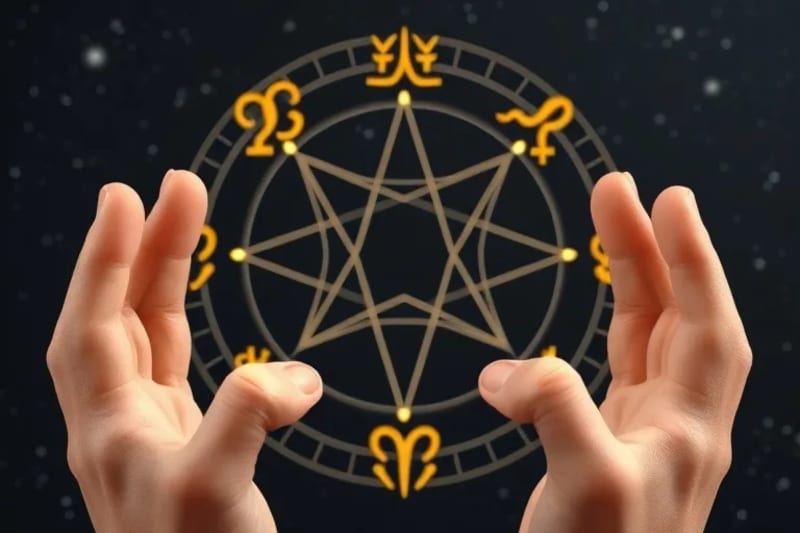
A stylized 3D render of two birth charts overlapping, with luminous connections highlighting the precise and profound cosmic interplay between individuals.
This AI-generated image visually represents the analytical and interconnected nature of synastry, where individual destinies meet and influence each other.Lunar Nodes (Rahu and Ketu): The North Node represents our evolutionary path and future growth, while the South Node signifies past life patterns, comfort zones, and accumulated karma. In synastry, nodal connections are often felt as fated or karmic. If one person's planet aspects the other's Nodes, it suggests a significant past-life connection or a role in guiding each other towards their soul's purpose. For instance, a partner's planet conjunct your North Node indicates they help you move towards your destiny, while a conjunction to your South Node might feel familiar but could also represent old patterns to be released. Understanding these connections can illuminate the deeper purpose of the relationship, as explored in concepts like Lunar Nodes and Chinese Synastry.
Chiron: Known as the "Wounded Healer," Chiron represents our deepest wounds, insecurities, and the unique gifts that emerge from healing them. In synastry, Chiron aspects reveal where individuals can wound each other, but more importantly, where they can facilitate profound healing. A partner's planet aspecting your Chiron might trigger your old wounds, but it also provides an opportunity for that partner to help you heal or for you to heal them. Exploring Chiron in Houses can further illuminate how these healing dynamics manifest in specific areas of life.
Interpreting Synastry Charts: Harmony, Challenge, and Growth
Interpreting a synastry chart requires a holistic approach, looking beyond individual aspects to understand the overall relational narrative. It's not about finding a "good" or "bad" chart, but rather understanding the energies at play and how they can be consciously navigated.
Harmonious Aspects (Trines, Sextiles): These aspects indicate areas of natural compatibility, ease, and mutual support. They create a sense of flow and understanding, making the relationship feel comfortable and enjoyable. While beneficial, an abundance of only harmonious aspects can sometimes lead to complacency, lacking the friction necessary for profound growth.
Challenging Aspects (Squares, Oppositions, Quincunxes): These aspects highlight areas of tension, friction, and potential conflict. They demand conscious effort, compromise, and adaptation. However, challenging aspects are often the catalysts for the most significant personal and relational growth. They force individuals to confront their shadow selves, develop new coping mechanisms, and deepen their understanding of each other. For example, a Uranus-Pluto synergy in synastry can bring intense transformation and challenges, pushing both individuals to evolve.
Composite Chart vs. Synastry: While synastry compares two individual charts, a composite chart is a separate technique that creates a "midpoint" chart for the relationship itself. It describes the relationship as a separate entity, its purpose, and its overall energy. Synastry shows how individuals interact, while the composite chart shows what the relationship becomes as a whole. Both offer valuable, complementary perspectives.
Advanced Synastry Techniques: Beyond the Basics
For those seeking deeper layers of understanding, advanced synastry techniques offer further insights into relationship dynamics.
- Midpoints: These are sensitive points calculated as the exact midpoint between two planets or points in a chart. In synastry, if one person's planet aspects another's midpoint, it can trigger a powerful dynamic related to the energies represented by that midpoint.
- Vertex: The Vertex is a karmic point in the natal chart, often called the "third angle." In synastry, strong aspects to the Vertex can indicate fated encounters or significant, destined meetings that have a profound impact on one's life path.
- Asteroids: While not traditional planets, asteroids like Juno (commitment, marriage), Vesta (devotion, sacred flame), Pallas (wisdom, strategy), and Ceres (nurturing, attachment) can add nuanced layers to synastry interpretations, especially in understanding specific relational roles and needs.
- Fixed Stars: Connections to fixed stars in synastry are less common but can indicate powerful, often fated, influences that bring a larger-than-life quality to the relationship, sometimes associated with fame, destiny, or significant events.
Common Synastry Pitfalls and Misconceptions
While synastry is a powerful tool, it's essential to approach it with a balanced perspective and avoid common misunderstandings:
- Fatalism: Synastry does not predict the inevitable success or failure of a relationship. It highlights tendencies and potentials. Free will and conscious effort always play a paramount role.
- Overemphasis on "Good" vs. "Bad" Aspects: No aspect is inherently "good" or "bad." Challenging aspects can be the most growth-inducing, while too many easy aspects can lead to stagnation. A balanced chart with both harmonious and challenging aspects often indicates a dynamic and evolving relationship.
- Ignoring Individual Charts: A strong synastry connection cannot compensate for unresolved issues within an individual's natal chart. Personal growth and self-awareness are foundational to healthy relationships.
- Focusing Only on Romantic Compatibility: Synastry is applicable to all types of relationships—familial, platonic, professional. Its insights extend beyond romantic partnerships.
- Lack of Nuance: Avoid drawing conclusions from a single aspect. Always interpret aspects within the context of the entire chart, considering planetary dignity, house placements, and overall themes.
Fostering Deeper Connections Through Synastry
Ultimately, synastry serves as a profound tool for self-awareness and relational understanding. By understanding the energetic blueprint of your connections, you can:
- Enhance Empathy: Recognize your partner's core needs, emotional triggers, and communication styles as revealed by their chart's interaction with yours.
- Navigate Conflict Consciously: Identify areas of friction (challenging aspects) and approach them with awareness, seeking constructive solutions rather than reactive responses.
- Appreciate Strengths: Acknowledge and leverage the areas of natural harmony and support within the relationship, fostering mutual growth and joy.
- Understand Purpose: Gain insight into the deeper karmic or evolutionary purpose of the relationship, guiding you towards fulfilling its potential.
- Foster Personal Growth: Use the relationship as a mirror for your own development, recognizing how interactions trigger your own natal chart themes and areas for healing.
Mastering synastry is an ongoing journey of discovery, offering continuous insights into the complex and beautiful tapestry of human relationships. It encourages a conscious, compassionate, and informed approach to the most significant connections in our lives.
Explore More Astrological Insights
Dive deeper into the fascinating world of astrology and self-discovery with these related articles:
- Sigils Power: Creating Personal Symbols for Manifestation
- Automatic Writing: Higher Self Connection for Creative Flow
- Biogeometry Sacred Space Design: Wellness Harmony
- Medical Astrology: Birth Chart & Health
- Ethical AI Spirituality: Digital Divination Co-creation
- Scrying Techniques: Mirrors, Crystals, Future
- Sacred Geometry Manifestation: Alchemical Principles Reality
- Lunar Mansions Chinese Astrology: Celestial Destiny Influences
- AI Divination Ethics: Navigating Predictive Tools
- Vibrational Numerology: Personal Numbers and Manifestation
- Evolutionary Zodiac Psychology: Saturn Uranus Transits
Source: Hybrid content assisted by AI and human editorial supervision.


Comments
Post a Comment