
Scrying Techniques: Mirrors, Crystals, Future | StarPluto
Scrying, an ancient divinatory practice, involves gazing into a reflective surface to perceive visions, insights, or messages from the subconscious or spiritual realms. This mystical art, often associated with peering into the future, has captivated humanity for millennia, utilizing tools ranging from polished mirrors and shimmering crystals to natural bodies of water. Far from mere superstition, scrying taps into deep psychological processes and intuitive faculties, offering a unique pathway to self-discovery and understanding.
Introduction to Scrying: An Ancient Divinatory Art
Scrying, derived from the Old English word "descry," meaning "to make out" or "to reveal," is a form of divination that involves gazing into a suitable medium in the belief that it will reveal meaningful messages. These messages can manifest as visual images, auditory impressions, or even strong intuitive feelings. The practice aims to bypass the conscious mind, allowing access to deeper layers of perception and information that may not be readily available through ordinary means.
Unlike fortune-telling, which often implies a fixed future, scrying is more about gaining insight into potential outcomes, understanding underlying influences, or receiving guidance for present dilemmas. It is a tool for introspection and spiritual exploration, rather than a definitive prediction of events. Practitioners often use it to enhance their intuition, connect with their higher self, or seek wisdom from spiritual guides.
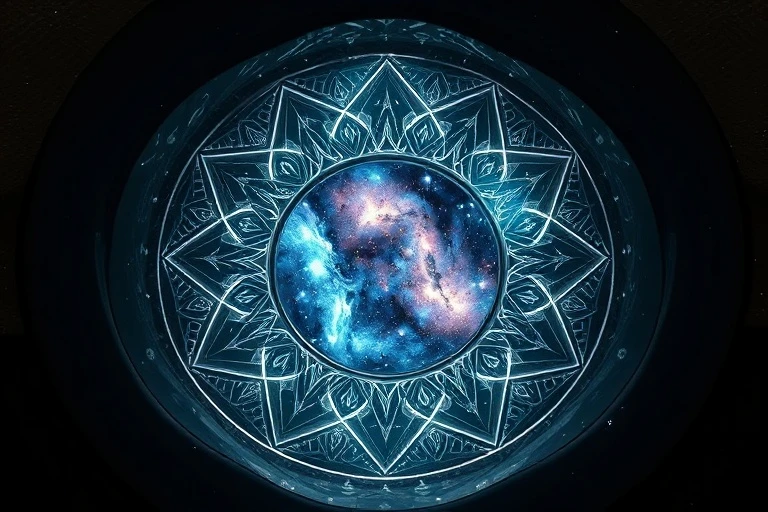
A conceptual art piece depicting a Tarot Quantum Mechanics Intersecting Divination Reality, serving as a portal to unseen dimensions and intuitive insights.
The Historical Roots of Scrying: From Antiquity to Modernity
The practice of scrying is deeply embedded in human history, with evidence found across diverse cultures and civilizations. Ancient Egyptians used bowls of water or oil to foresee events, a practice known as hydromancy. Priests and priestesses would gaze into these liquid surfaces, interpreting the reflections and distortions as divine messages. Similarly, the ancient Greeks and Romans employed polished metals and crystals for divination, believing these objects held inherent magical properties that facilitated communication with the gods.
In medieval Europe, scrying gained prominence, often intertwined with alchemy and ceremonial magic. Figures like Nostradamus are rumored to have used water scrying to gain his prophetic visions. Perhaps one of the most famous practitioners was Dr. John Dee, a prominent Elizabethan alchemist and astrologer, who used a crystal ball and obsidian mirror with his associate Edward Kelley to communicate with angelic entities, recording their conversations in detailed journals.
- Ancient Egypt: Used dark liquids in bowls for hydromancy, believing it revealed divine will.
- Greece and Rome: Employed polished bronze, obsidian, and beryl crystals for prophetic insights.
- Celtic Traditions: Water scrying in sacred wells and pools was common for guidance.
- Pre-Columbian Mesoamerica: Obsidian mirrors were highly valued and used by shamans and priests for divination and spiritual journeys.
- Medieval Europe: Scrying became a part of esoteric traditions, often associated with hermeticism and ceremonial magic.
- Renaissance Era: John Dee's extensive use of scrying with Edward Kelley became a significant historical record of the practice.
The enduring appeal of scrying lies in its accessibility and the profound human desire to understand the unknown. While its methods have evolved, the core principle remains: using a focal point to induce a trance-like state and access intuitive information.
Types of Scrying: Mirrors, Crystals, Water, and More
Scrying encompasses a variety of techniques, each utilizing different reflective or translucent mediums. The choice of medium often depends on personal preference, cultural tradition, and the specific energy properties believed to be associated with the material.
Mirror Scrying (Catoptromancy)
Mirror scrying, or catoptromancy, involves gazing into a dark, reflective surface, typically a black obsidian mirror or a regular mirror painted black on the back. The darkness of the mirror helps to eliminate external distractions and creates a void that the mind can project images onto. This method is particularly effective for inducing a hypnagogic state, where visions and symbols can emerge from the subconscious.
The black mirror acts as a psychological tool, allowing the practitioner to focus their gaze until the surface appears to deepen or become cloudy, at which point images or patterns may begin to form. These images are often symbolic and require interpretation, much like dreams.
Crystal Gazing (Crystallomancy)
Crystallomancy, or crystal gazing, involves using a clear crystal ball or a polished crystal, such as quartz, to facilitate visions. The transparency and inherent energetic properties of crystals are believed to amplify psychic abilities and provide a clear channel for intuitive information. The practice involves staring into the crystal, allowing the eyes to unfocus and the mind to quiet, until images or scenes appear within its depths.
Clear quartz is a popular choice due to its reputation as a master healer and energy amplifier, but other crystals like amethyst or selenite can also be used, each bringing its unique energetic signature to the scrying process. The goal is to enter a meditative state where the crystal acts as a window to other realities or inner wisdom.
Water Scrying (Hydromancy)
Hydromancy, the oldest form of scrying, uses a bowl of water, sometimes darkened with ink or infused with herbs, to reflect images. This method connects practitioners to the primal element of water, often associated with emotions, intuition, and the subconscious. The ripples, reflections, and perceived depths of the water can trigger visual or intuitive insights.
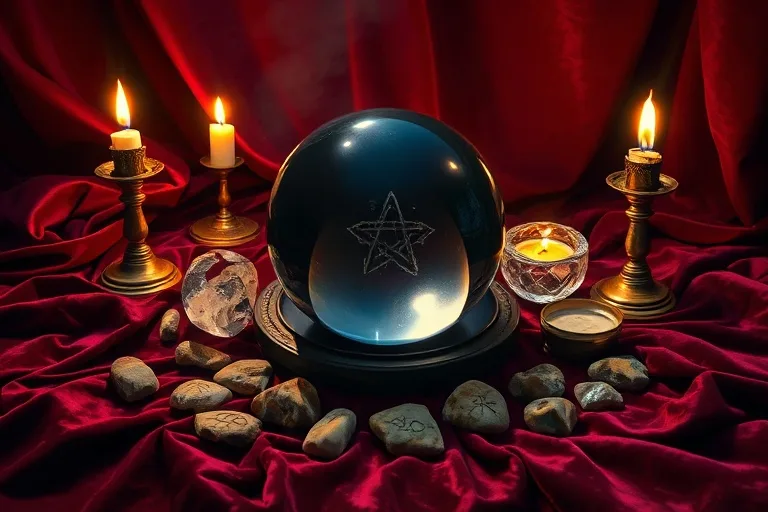
A cinematic still life featuring various , including a crystal ball and a black mirror, set on a rich velvet cloth.
Historically, hydromancy was practiced in sacred springs, wells, or ritualistic bowls. The subtle movements and patterns on the water's surface, combined with a focused gaze, can lead to a meditative state conducive to receiving psychic impressions. The purity of the water is often considered important for clear reception.
Other Forms of Scrying
Beyond mirrors, crystals, and water, scrying can be performed using various other mediums:
- Fire Scrying (Pyromancy): Gazing into flames, smoke, or embers to find patterns and visions.
- Smoke Scrying (Capnomancy): Interpreting the shapes and movements of smoke, often from incense or sacred fires.
- Cloud Scrying (Nephomancy): Observing cloud formations in the sky for symbolic messages.
- Tea Leaf Reading (Tasseography): Interpreting patterns left by tea leaves at the bottom of a cup, a form of scrying into residual patterns.
- Ink Scrying (Enoptromancy): Gazing into pools of ink, similar to water scrying but with a darker, more intense medium.
How Scrying Works: The Psychology and Spirituality
The mechanism behind scrying is often explained through a combination of psychological principles and spiritual beliefs. From a psychological perspective, scrying induces a mild trance state, similar to meditation or self-hypnosis. Staring at a fixed point for an extended period can lead to a phenomenon known as "ganzfeld effect," where the brain, deprived of varied sensory input, begins to generate its own perceptions, often manifesting as visual hallucinations or vivid imagery.
This state allows the conscious mind to relax its grip, enabling the subconscious mind to surface. The subconscious is believed to hold a vast reservoir of information, including memories, insights, and intuitive knowledge, which can then be projected onto the reflective surface. Carl Jung's concept of the collective unconscious also offers a framework, suggesting that symbols and archetypes perceived during scrying tap into universal patterns of human experience.
Spiritually, many practitioners believe that scrying opens a channel to higher consciousness, spirit guides, or ancestral wisdom. The scrying tool is seen as a focal point that concentrates energy and facilitates communication with non-physical entities or dimensions. It is thought to enhance the practitioner's natural psychic abilities, allowing them to perceive subtle energies and information beyond the ordinary senses.
Preparing for a Scrying Session: Setting the Sacred Space
Effective scrying requires careful preparation to create an environment conducive to deep focus and spiritual reception. The setting of a "sacred space" is paramount, helping to minimize distractions and enhance the energetic quality of the session.
- Choose a Quiet Location: Select a room where you will not be disturbed. Silence is crucial for concentration.
- Dim the Lights: Scrying is best performed in low light conditions, such as twilight or by candlelight. This reduces visual stimuli and helps the eyes to relax and unfocus.
- Cleanse the Space: Energetically cleanse the area using smudging (e.g., with sage or palo santo), incense, or sound (e.g., singing bowls). This helps to clear stagnant energy and invite positive vibrations.
- Protect Your Energy: Before beginning, visualize a protective shield around yourself or invoke spiritual protection. This is believed to safeguard against unwanted energetic influences.
- Set an Intention: Clearly define what you wish to gain from the scrying session. Formulate a specific question or area of insight you want to explore. This provides focus and directs your energy.
- Relax and Center Yourself: Engage in deep breathing exercises or a short meditation to calm your mind and body. A relaxed state is essential for opening intuitive channels.
Practical Scrying Techniques: A Step-by-Step Guide
Once your space is prepared and your intention set, you can begin the practical steps of scrying. Consistency and patience are key, as visions may not appear immediately.
Choosing Your Scrying Tool
While the article focuses on mirrors and crystals, remember the variety of options. For beginners, a black mirror or a clear crystal ball is often recommended due to their ease of use and visual clarity. Ensure your chosen tool is clean and free of smudges.
Meditation and Centering
Sit comfortably in front of your scrying tool. Take several deep breaths, inhaling calm and exhaling tension. Allow your gaze to soften as you look at the surface of the mirror or crystal. Do not stare intensely; rather, let your eyes relax and unfocus slightly. Imagine your awareness expanding, becoming receptive to subtle energies.
The Scrying Process
Continue gazing at the surface. You might notice the surface appearing to cloud, deepen, or shimmer. This is a common sign that you are entering a receptive state. Do not force visions; simply observe what appears. Images may be fleeting, abstract, or even appear as full scenes. They might not be literal but symbolic, requiring intuitive interpretation.

A digital 3D render illustrating an intricate , symbolizing the energetic channels accessed during scrying.
Sometimes, no clear images appear, but you might experience strong feelings, thoughts, or auditory messages. These are equally valid forms of scrying communication. Maintain an open and non-judgmental attitude throughout the process.
Interpreting Visions and Impressions
After your session, it's crucial to record everything you experienced, no matter how insignificant it seems. Keep a dedicated scrying journal to document:
- The date and time of the session.
- Your initial intention or question.
- All visual images, colors, shapes, and movements observed.
- Any auditory messages, words, or sounds.
- Feelings, emotions, or physical sensations experienced.
- Your immediate interpretations or associations.
Interpretation is highly personal. Consider the symbolic meaning of what you saw or felt in the context of your question. Often, the meaning becomes clearer with time or after reflecting on the entry later. Trust your intuition in deciphering the messages.
Safety and Ethical Considerations in Scrying
While scrying can be a powerful tool for personal growth, it's essential to approach it with respect and caution. Ethical practice emphasizes personal responsibility and integrity.
- Protection: Always begin with energetic protection, whether through visualization, prayer, or ritual. This helps to ensure that only beneficial energies are accessed.
- Intention: Maintain a clear, positive, and ethical intention. Avoid scrying for malicious purposes or to manipulate others. Focus on self-improvement, guidance, and understanding.
- Personal Boundaries: Do not attempt to scry on others without their explicit, informed consent. Respect privacy and autonomy.
- Interpretation Caution: Recognize that visions are often symbolic and open to interpretation. Avoid taking messages literally, especially those that may cause fear or anxiety. Use discernment and common sense.
- Grounding: After each session, it's vital to ground yourself. This can be done by eating a snack, walking barefoot on the earth, or visualizing roots extending from your feet into the ground. Grounding helps to reintegrate your energy and prevent feeling disoriented.
- Mental Health: If you have a history of mental health issues, particularly those involving hallucinations or delusions, consult a healthcare professional before engaging in scrying.
Benefits and Challenges of Scrying Practice
Scrying offers numerous potential benefits for those who approach it with an open mind and consistent practice. However, it also presents certain challenges that practitioners should be aware of.
Benefits:
- Enhanced Intuition: Regular practice sharpens intuitive faculties and helps individuals trust their inner guidance.
- Self-Discovery: Scrying can reveal hidden aspects of the self, subconscious patterns, and personal blockages, leading to greater self-awareness.
- Problem Solving: By providing symbolic insights, scrying can offer new perspectives on challenges and help in decision-making.
- Spiritual Connection: It can deepen one's connection to spiritual realms, guides, and a sense of universal wisdom.
- Stress Reduction: The meditative aspect of scrying can be calming and help reduce stress and anxiety.
- Creativity Boost: Accessing symbolic imagery can stimulate creativity and inspire artistic expression.
Challenges:
- Subjectivity of Interpretation: Visions are highly personal and can be subjective, making objective interpretation difficult.
- Expectation Management: Beginners may become discouraged if visions do not appear immediately or clearly. Patience is crucial.
- Distinguishing Reality: It can be challenging to differentiate between genuine intuitive insights and projections of one's own desires, fears, or imagination.
- Potential for Misinterpretation: Misunderstanding symbolic messages can lead to confusion or incorrect actions.
- Energetic Sensitivity: Some individuals may find themselves overly sensitive to energies during scrying, requiring strong grounding practices.
- Ethical Dilemmas: The temptation to misuse scrying for personal gain or to invade others' privacy can arise, highlighting the importance of ethical guidelines.
Overcoming these challenges often involves consistent practice, self-reflection, and a commitment to ethical conduct. Developing a strong foundation in meditation and intuitive development can significantly enhance the scrying experience.
Scrying in Popular Culture and Modern Applications
Scrying has permeated popular culture, appearing in countless works of fiction, film, and art. From the crystal balls of fictional seers to the magical mirrors in fantasy novels, the image of a scryer gazing into the unknown is a powerful archetype. This cultural presence reflects humanity's fascination with foresight and hidden knowledge.
In modern esoteric and spiritual communities, scrying continues to be a valued practice. It is often integrated into broader spiritual disciplines, such as Wicca, ceremonial magic, and New Age practices. Contemporary practitioners use scrying not just for divination but also for:
- Meditation and Visualization: As a tool to deepen meditative states and enhance visualization exercises.
- Dream Work: To gain further insight into dreams or to induce lucid dreaming.
- Artistic Inspiration: Artists and writers may use scrying to tap into creative flows and generate new ideas.
- Shadow Work: To confront and integrate subconscious fears or unresolved issues.
- Energy Healing: To perceive energetic imbalances or blockages in oneself or others.
The accessibility of scrying tools, from readily available mirrors to ethically sourced crystals, has made the practice more widespread. Online communities and workshops offer guidance for beginners, emphasizing responsible and respectful engagement with this ancient art. Whether viewed as a psychological phenomenon or a genuine spiritual practice, scrying remains a compelling method for exploring the depths of consciousness and seeking guidance beyond the mundane.
Fuente: Contenido híbrido asistido por IAs y supervisión editorial humana.


Comments
Post a Comment