
Alchemical Architecture: Sacred Spaces, Geomantic Resonance
Alchemical Architecture: Sacred Spaces, Geomantic Resonance, and Urban Biophilia
The concept of sacred spaces transcends mere physical construction; it delves into a profound interaction between human intention, natural energies, and architectural design. Alchemical architecture, a discipline rooted in esoteric traditions, seeks to imbue structures with specific energetic qualities, transforming them into living entities that resonate with their environment and influence human experience. This ancient wisdom is finding new relevance in contemporary urban planning, particularly through the integration of geomantic resonance and the principles of urban biophilia.
This article explores how the deliberate design of spaces, from ancient temples to modern cityscapes, can harness subtle energies, promote well-being, and foster a deeper connection between humanity and the natural world. We will examine the historical foundations of sacred geometry, the energetic principles of geomancy, and the emerging field of urban biophilia, demonstrating their synergistic potential to create truly harmonious and regenerative environments.
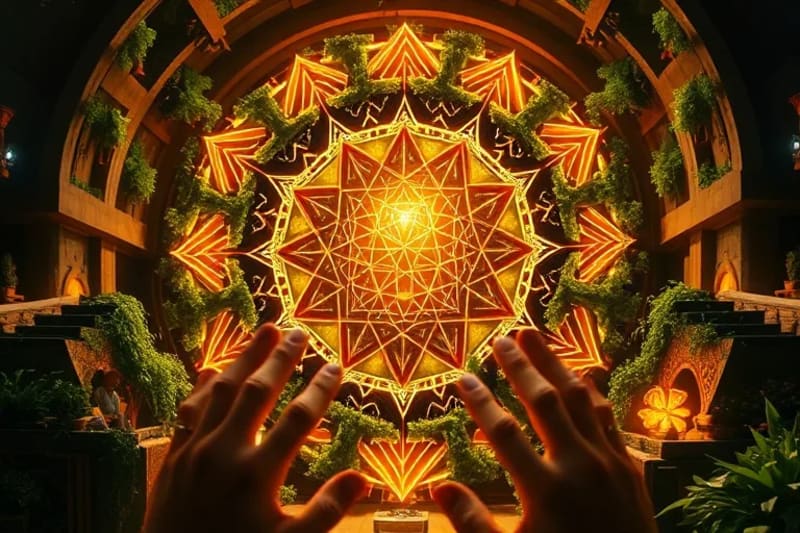
Conceptual representation of the fusion of ancient wisdom and modern ecological design, illustrating the energetic and aesthetic principles that define alchemical architecture.
This visual interpretation is a conceptual render generated by AI, reflecting the intricate interplay of historical architectural forms and contemporary biophilic integration.Table of Contents
- The Foundations of Sacred Architecture and Alchemy
- Geomantic Resonance: Tapping into Earth's Subtle Energies
- Urban Biophilia: Crafting Living, Breathing Cities
- The Synergy: Alchemical Urbanism for a New Era
- Practical Applications and Future Challenges
The Foundations of Sacred Architecture and Alchemy
Sacred architecture, throughout history, has been more than just shelter or monument. It has served as a conduit for spiritual connection, a reflection of cosmic order, and a tool for transformation. Ancient civilizations meticulously aligned their temples, pyramids, and ceremonial sites with celestial bodies and telluric currents, believing these alignments amplified the energetic potency of the space.
Alchemical principles, often associated with the transmutation of base metals into gold, extend far beyond metallurgy. In an architectural context, alchemy refers to the process of transforming ordinary materials and spaces into something imbued with higher meaning and energetic purpose. This involves a deep understanding of:
- Sacred Geometry: The use of universal patterns and proportions (e.g., the golden ratio, platonic solids) to create harmony and energetic flow. These geometries are believed to mirror the underlying structure of the cosmos.
- Material Consciousness: The selection and placement of materials based on their inherent energetic properties and their connection to the earth. Certain stones, woods, and metals are thought to amplify or channel specific energies.
- Intentional Design: The deliberate infusion of purpose and spiritual intention into every aspect of the design and construction process, from the initial blueprint to the final adornment.
Historical examples abound, from the precise orientation of the Egyptian pyramids to the intricate mandalas of Hindu and Buddhist temples, and the Gothic cathedrals of Europe. These structures were not merely buildings; they were living prayers, designed to elevate consciousness and facilitate spiritual experiences. The builders understood that form influences function, not just physically, but energetically and psychologically.
Geomantic Resonance: Tapping into Earth's Subtle Energies
Geomancy, often described as the "acupuncture of the Earth," is the ancient art and science of understanding and working with the planet's subtle energy fields. These energies, sometimes referred to as ley lines, telluric currents, or dragon currents, are believed to flow through the Earth's crust, influencing the vitality and character of specific locations. Just as the human body has meridians, the Earth has its own energetic pathways.
The practice of geomancy involves identifying these energy lines, nodal points, and vortexes, and then designing structures or landscapes in harmony with them. A well-sited building can draw upon and amplify beneficial energies, while a poorly sited one can disrupt natural flows, leading to disharmony and discomfort. This is a core principle also found in practices like Feng Shui, which optimizes the flow of "chi" within spaces to promote health, wealth, and happiness.

Visualization of geomantic energy flows within an urban context, highlighting points of resonance and energetic pathways.
Key aspects of geomantic resonance include:
- Site Selection: Choosing locations that naturally possess beneficial energetic qualities, often identified by dowsing or intuitive methods.
- Alignment: Orienting buildings and features to align with specific energy lines or cardinal directions, maximizing their energetic potential.
- Remediation: Using specific architectural elements, landscaping, or sacred objects to correct energetic imbalances or enhance positive flows within a space.
The integration of geomantic principles into modern urban planning offers a powerful way to create cities that are not only functional but also energetically vibrant. This approach recognizes that the health of a city is intrinsically linked to the health of the land it occupies. Further insights into connecting with urban spirits and ley lines can be found in discussions on Urban Shamanism: Connecting City Spirits, Ley Lines.
Urban Biophilia: Crafting Living, Breathing Cities
Biophilia, a term popularized by E.O. Wilson, describes the innate human tendency to connect with nature and other living systems. Urban biophilia extends this concept to the built environment, advocating for the design of cities that intentionally integrate natural elements to improve human well-being, ecological health, and overall urban resilience. It's a recognition that our psychological and physiological health is deeply intertwined with our access to nature.
The benefits of biophilic design are well-documented, including reduced stress, improved cognitive function, enhanced creativity, and accelerated healing. In an urban context, this translates to:
- Green Infrastructure: Incorporating green roofs, vertical gardens, urban farms, and permeable surfaces to manage stormwater, reduce heat island effects, and support biodiversity.
- Natural Light and Ventilation: Maximizing access to natural light and fresh air, reducing reliance on artificial systems and connecting occupants to diurnal and seasonal cycles.
- Natural Patterns and Forms: Using organic shapes, fractal patterns, and natural materials that evoke a sense of the natural world, even in highly urbanized settings.
- Water Features: Integrating fountains, ponds, and streams for their aesthetic, acoustic, and cooling benefits, and their psychological calming effects.
Urban biophilia moves beyond simply adding plants to a city; it's about fundamentally rethinking how cities are designed to foster a symbiotic relationship between humans and nature. This approach aligns perfectly with the principles of Astro-Botany: Celestial Influences Plant Growth Energetics, which explores the subtle energetic connections between celestial bodies and plant life, further enhancing the vitality of urban green spaces.
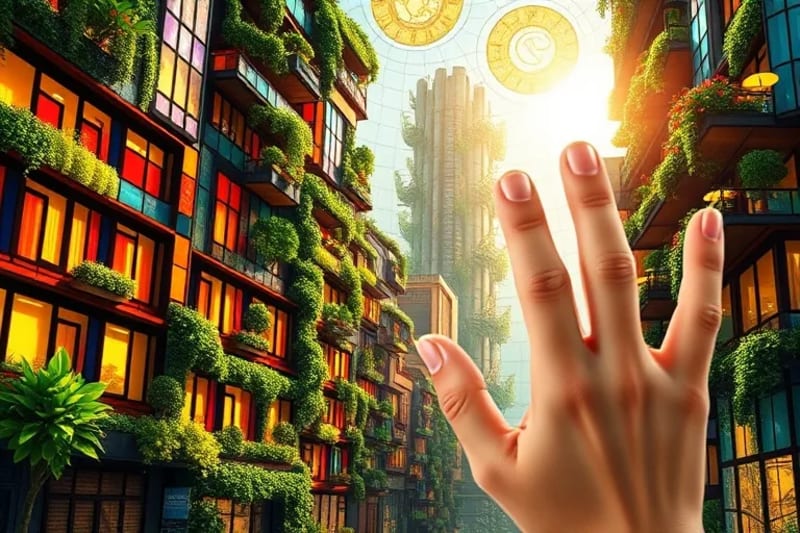
A vision of urban biophilia, showcasing buildings seamlessly integrated with living plant systems and natural elements.
The Synergy: Alchemical Urbanism for a New Era
When alchemical architecture, geomantic resonance, and urban biophilia are combined, they create a powerful synergy that can lead to a new paradigm of urban development: alchemical urbanism. This integrated approach seeks to design cities that are not only sustainable and aesthetically pleasing but also energetically balanced, spiritually uplifting, and deeply connected to the Earth's natural rhythms.
Imagine cities where every building is sited to enhance positive energy flows, where green spaces are strategically placed to cleanse and revitalize the urban fabric, and where the very materials of construction contribute to the well-being of their inhabitants. This is the promise of alchemical urbanism – a holistic approach to city planning that recognizes the interconnectedness of all things.
The table below illustrates how these three disciplines converge:
| Discipline | Core Focus | Contribution to Alchemical Urbanism |
|---|---|---|
| Alchemical Architecture | Intentional design, sacred geometry, material consciousness for energetic transformation. | Provides the foundational principles for imbuing structures with spiritual and energetic purpose. |
| Geomantic Resonance | Understanding and harmonizing with Earth's subtle energy fields (ley lines, telluric currents). | Ensures optimal siting and alignment of urban elements to tap into beneficial planetary energies. |
| Urban Biophilia | Integrating natural elements into urban design to foster human-nature connection and well-being. | Creates physically and psychologically healthy environments that resonate with our innate biophilic needs. |
This convergence offers a powerful framework for addressing many of the challenges facing modern cities, from environmental degradation to social isolation and mental health issues. By designing spaces that nourish both body and soul, we can create cities that truly serve as catalysts for human flourishing.
Practical Applications and Future Challenges
Implementing alchemical urbanism requires a multidisciplinary approach, bringing together architects, urban planners, landscape designers, environmental scientists, and geomancers. Practical applications could include:
- Energetic Mapping: Prior to development, conducting detailed energetic surveys of sites to identify optimal locations for buildings, parks, and infrastructure.
- Biophilic Master Plans: Developing urban master plans that prioritize green corridors, water features, and biodiversity, not as afterthoughts, but as central components of the design.
- Material Innovation: Researching and utilizing building materials that are not only sustainable but also possess beneficial energetic properties, or can be charged with specific intentions.
- Community Engagement: Involving local communities in the design process to ensure that new developments resonate with their cultural and spiritual values, fostering a sense of ownership and belonging.
Despite the immense potential, there are challenges. The integration of esoteric principles like geomancy into mainstream urban planning faces skepticism and a lack of formalized methodologies. Furthermore, the economic pressures of urban development often prioritize cost and speed over holistic design. However, as awareness grows about the impact of our built environment on well-being, there is an increasing demand for more meaningful and harmonious spaces.
The future of urban development may well lie in a return to ancient wisdom, reinterpreted through a modern scientific lens. By embracing the alchemical potential of architecture, the subtle power of geomantic resonance, and our innate connection to nature through biophilia, we can create cities that are not just structures of steel and glass, but living, breathing, sacred spaces that uplift the human spirit. This holistic view is crucial for cultivating Planetary Herbalism Urban Gardens: Cultivating Celestial Remedies and fostering a deeper connection to the cosmos within our daily lives.
Explore More Insights
- Chinese Zodiac: The Great Race Legend
- Eclipses Astrology Portals Change Transformation Guide
- Astro-Relocation Maps: Finding Your Ideal Place
- Asteroid Goddesses: Ceres, Pallas, Juno in Your Birth Chart
- Feng Shui Chinese Zodiac Home Energy
- Psychology of Color in Biosustainable Architecture: Cognitive Well-being
- Bio-harmonization with Solfeggio Frequencies: Vibrational Birth Chart
Source: Hybrid content assisted by AI and human editorial supervision.


Comments
Post a Comment