
Ming Gua Kua Number: Feng Shui Personal Directions Guide | StarPluto
In the intricate world of Feng Shui, understanding personal energy and its interaction with the environment is paramount. The Ming Gua, or Kua number, serves as a fundamental compass, guiding individuals to align with their most auspicious directions and sectors. This ancient Chinese metaphysical concept, deeply rooted in the I Ching and the Bagua, provides a personalized blueprint for optimizing living and working spaces to enhance health, wealth, relationships, and overall well-being.
Far from being a mere superstition, the Ming Gua number is a sophisticated calculation based on one's birth year and gender, categorizing individuals into either the East Group or West Group. Each group is associated with specific directions that are considered favorable or unfavorable, influencing everything from bed placement to office orientation. Mastering this concept allows for a profound connection with the energetic flow of one's surroundings, transforming ordinary spaces into powerful conduits for positive chi.

Discovering your Ming Gua number is essential for personalized Feng Shui adjustments, guiding you to harness auspicious energies.
Table of Contents
- What is Ming Gua or Kua Number?
- Calculating Your Kua Number
- East Group vs. West Group
- The Eight Aspirations and Their Directions
- Applying Kua Number in Feng Shui Practice
- Kua Number and Chinese Zodiac: Intersections
- Common Misconceptions and Advanced Applications
What is Ming Gua or Kua Number?
The Ming Gua, often referred to as the Kua number, is a personal number in Feng Shui that reveals an individual's most favorable and unfavorable directions and sectors. Derived from the Bagua (Eight Trigrams) and the Lo Shu Square, it connects a person's birth energy to specific elemental and directional influences. This number is a cornerstone of the Eight Mansions (Ba Zhai) school of Feng Shui, providing a tailored approach to environmental harmony.
Each Kua number (ranging from 1 to 9, with 5 being replaced by 2 for males and 8 for females in practical application) corresponds to one of the eight trigrams: Kan, Kun, Zhen, Xun, Qian, Dui, Gen, and Li. These trigrams represent fundamental forces of nature and life aspects, such as family, wealth, knowledge, and career. By understanding your Kua number, you can consciously orient yourself and your environment to attract positive chi and mitigate negative influences.
The significance of the Kua number extends beyond simple directionality; it also dictates an individual's compatibility with certain house types and even other people. For instance, individuals belonging to the East Group will thrive in East Group houses, and vice versa for the West Group. This personalized layer of Feng Shui ensures that recommendations are not generic but deeply resonant with one's unique energetic signature.
Calculating Your Kua Number
Calculating your Kua number is a straightforward process, though it requires attention to detail, particularly regarding the Chinese solar calendar (Hsia calendar). The birth year used for calculation is not the Gregorian calendar year but the year according to the Chinese solar calendar, which typically begins on February 4th or 5th. If your birthday falls before this date, you must use the previous Chinese year for your calculation.
Here's a step-by-step guide to calculating your Kua number:
- Step 1: Determine Your Chinese Birth Year. Use the Chinese solar calendar. For example, if you were born on January 15, 1980, your Chinese birth year is 1979. If you were born on February 10, 1980, your Chinese birth year is 1980.
- Step 2: Sum the Last Two Digits of Your Chinese Birth Year. If the sum is a two-digit number, sum those digits again until you get a single digit.
- Step 3: Calculate for Males. Subtract the single digit from 10. If the result is 5, your Kua number is 2.
- Step 4: Calculate for Females. Add 5 to the single digit. If the sum is a two-digit number, sum those digits again until you get a single digit. If the result is 5, your Kua number is 8.
Let's illustrate with examples:
- Example 1 (Male born July 1, 1982):
- Chinese birth year: 1982
- Last two digits sum: 8 + 2 = 10; 1 + 0 = 1
- Male calculation: 10 - 1 = 9. Kua Number = 9.
- Example 2 (Female born March 10, 1985):
- Chinese birth year: 1985
- Last two digits sum: 8 + 5 = 13; 1 + 3 = 4
- Female calculation: 4 + 5 = 9. Kua Number = 9.
- Example 3 (Male born January 20, 1975):
- Chinese birth year: 1974 (since Jan 20, 1975 is before Feb 4/5, 1975)
- Last two digits sum: 7 + 4 = 11; 1 + 1 = 2
- Male calculation: 10 - 2 = 8. Kua Number = 8.
For those born after 2000, the calculation changes slightly. For males, subtract the single digit from 9. For females, add 6 to the single digit. The replacement of Kua number 5 remains the same.
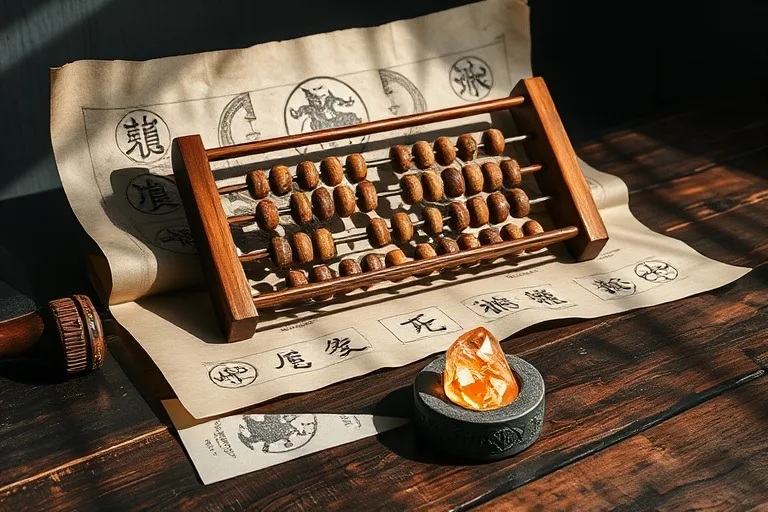
Traditional tools like the abacus symbolize the precise calculations involved in determining one's Kua number.
East Group vs. West Group
Once your Kua number is determined, you'll fall into one of two major categories: the East Group or the West Group. This grouping is crucial as it dictates your four auspicious and four inauspicious directions. Understanding your group affiliation is the first step in applying Kua number Feng Shui effectively.
- East Group Kua Numbers: 1, 3, 4, 9
- West Group Kua Numbers: 2, 6, 7, 8
Each group has a distinct set of favorable directions. Members of the East Group thrive when facing or utilizing directions associated with the East (North, South, East, Southeast). Conversely, West Group individuals find prosperity and harmony when aligned with West-related directions (Southwest, Northwest, West, Northeast). Ignoring these fundamental alignments can lead to energetic clashes and diminish positive outcomes.
The concept of East and West groups extends to property selection. An East Group person will generally find more harmony living in an East Group house (a house facing one of the East directions), and a West Group person in a West Group house. While not always feasible, being aware of this compatibility can guide major life decisions, such as purchasing a home or choosing an office location.
The Eight Aspirations and Their Directions
For each Kua number, there are eight specific directions, each corresponding to a life aspiration (four auspicious and four inauspicious). These are derived from the Bagua's energetic qualities and provide detailed guidance for placement and orientation.
| Kua Number | Group | Auspicious Directions | Inauspicious Directions |
|---|---|---|---|
| 1 (Kan) | East | Southeast (Sheng Chi), East (Tian Yi), South (Yan Nian), North (Fu Wei) | Southwest (Jue Ming), Northwest (Wu Gui), West (Liu Sha), Northeast (Huo Hai) |
| 2 (Kun) | West | Northeast (Sheng Chi), West (Tian Yi), Northwest (Yan Nian), Southwest (Fu Wei) | Southeast (Jue Ming), East (Wu Gui), South (Liu Sha), North (Huo Hai) |
| 3 (Zhen) | East | South (Sheng Chi), North (Tian Yi), Southeast (Yan Nian), East (Fu Wei) | Northwest (Jue Ming), West (Wu Gui), Southwest (Liu Sha), Northeast (Huo Hai) |
| 4 (Xun) | East | North (Sheng Chi), South (Tian Yi), East (Yan Nian), Southeast (Fu Wei) | West (Jue Ming), Southwest (Wu Gui), Northwest (Liu Sha), South (Huo Hai) |
| 6 (Qian) | West | West (Sheng Chi), Southwest (Tian Yi), Northeast (Yan Nian), Northwest (Fu Wei) | East (Jue Ming), South (Wu Gui), Southeast (Liu Sha), North (Huo Hai) |
| 7 (Dui) | West | Northwest (Sheng Chi), Northeast (Tian Yi), Southwest (Yan Nian), West (Fu Wei) | South (Jue Ming), Southeast (Wu Gui), North (Liu Sha), East (Huo Hai) |
| 8 (Gen) | West | Southwest (Sheng Chi), Northwest (Tian Yi), West (Yan Nian), Northeast (Fu Wei) | North (Jue Ming), Southeast (Wu Gui), East (Liu Sha), South (Huo Hai) |
| 9 (Li) | East | East (Sheng Chi), Southeast (Tian Yi), North (Yan Nian), South (Fu Wei) | West (Jue Ming), Northwest (Wu Gui), Southwest (Liu Sha), Northeast (Huo Hai) |
The four auspicious directions are:
- Sheng Chi (Wealth/Success): The best direction for career, wealth, and overall success. Ideal for main doors, office desks, and important rooms.
- Tian Yi (Health): Excellent for health and healing. Place beds facing this direction or use it for sickrooms.
- Yan Nian (Relationships/Harmony): Promotes strong relationships, romance, and family harmony. Favorable for bedrooms and living areas.
- Fu Wei (Personal Growth/Stability): Supports personal development, wisdom, and inner peace. Good for study rooms, meditation areas, and quiet contemplation.
The four inauspicious directions are:
- Jue Ming (Total Loss/Disaster): The worst direction, associated with severe misfortune, illness, and financial ruin. Avoid facing this direction or placing important areas here.
- Wu Gui (Five Ghosts/Arguments): Linked to arguments, theft, and disputes. Avoid facing this direction, especially in bedrooms or offices.
- Liu Sha (Six Killings/Trouble): Can bring legal problems, accidents, and minor illnesses. Minimize exposure to this direction.
- Huo Hai (Accidents/Obstacles): Associated with minor accidents, setbacks, and frustrations. Can be mitigated with proper Feng Shui remedies.
Applying Kua Number in Feng Shui Practice
Integrating your Kua number into your Feng Shui practice involves several key applications, transforming your environment to support your personal chi. The goal is to maximize exposure to your auspicious directions and minimize contact with your inauspicious ones.

The Bagua map, a fundamental tool in Feng Shui, helps visualize and align personal directions within a space.
- Bed Placement: Your head should point towards one of your auspicious directions while sleeping. This is one of the most impactful applications, as you spend a significant portion of your life in bed.
- Office Desk Orientation: When working, face your Sheng Chi (wealth) or Fu Wei (personal growth) direction. This can enhance focus, productivity, and career prospects. Avoid facing Jue Ming or Wu Gui.
- Main Entrance: Ideally, your home's main entrance should face one of your auspicious directions. If not, you can mitigate this by facing an auspicious direction when entering or leaving, or by using Feng Shui remedies.
- Stove Direction: In the kitchen, the stove's burner should face an auspicious direction. This is believed to influence the health and wealth of the household.
- Seating Arrangements: When dining or relaxing, try to sit facing one of your favorable directions. This promotes harmony and positive interactions.
- Room Usage: Designate rooms in auspicious sectors for activities aligned with those aspirations. For example, a study in your Fu Wei sector, or a family room in your Yan Nian sector.
It's important to remember that while personal directions are powerful, they are one layer of Feng Shui. The overall layout of the house, the surrounding environment (Form School Feng Shui), and the flying stars (Xuan Kong Fei Xing) also play significant roles. A holistic approach yields the best results.
Kua Number and Chinese Zodiac: Intersections
While the Kua number and the Chinese Zodiac are both derived from an individual's birth year, they operate on different principles and offer distinct insights. The Chinese Zodiac, based on a 12-year cycle, focuses on personality traits, general fortune, and compatibility with others. The Kua number, conversely, is about directional energy and environmental alignment.
However, there are subtle intersections. Both systems use the Chinese solar calendar for determining the birth year, making accurate year calculation crucial for both. While the Zodiac animal provides a broad energetic profile, the Kua number refines this by offering practical, actionable advice for optimizing one's immediate surroundings. For example, a person born in the Year of the Dragon might have inherent leadership qualities (Zodiac), but their Kua number will tell them which direction to face to best harness those qualities for career success (Feng Shui).
Some advanced Feng Shui practitioners may consider the elemental interaction between a person's Kua number (which is associated with an element) and their Zodiac animal's element. For instance, if a Kua number is associated with Wood and the Zodiac animal with Fire, this creates a productive cycle (Wood feeds Fire), suggesting a harmonious energetic flow. Conversely, a destructive cycle (e.g., Water extinguishes Fire) might indicate areas needing more careful balancing. This deeper analysis, however, is typically reserved for comprehensive Feng Shui audits.
Common Misconceptions and Advanced Applications
Despite its widespread use, the Kua number system is often subject to misconceptions. One common error is using the Gregorian calendar year instead of the Chinese solar calendar for calculation. Another is believing that one must always face an auspicious direction, even if it's impractical or uncomfortable. Feng Shui is about balance and harmony, not rigid adherence.
Advanced applications of the Kua number extend to more complex scenarios:
- Group Compatibility: For couples or families, understanding the Kua numbers of all members can help in selecting a home that is auspicious for the majority, or in mitigating conflicts by assigning rooms and orientations carefully. If a couple belongs to different groups (East and West), the focus often shifts to the main breadwinner or the person spending the most time in a particular area.
- Remedies for Inauspicious Directions: While it's ideal to avoid inauspicious directions, it's not always possible. Feng Shui offers remedies, such as placing specific cures (e.g., crystals, plants, mirrors) or using the five elements to balance the negative energy. For example, if your main door faces a Jue Ming direction, you might place a Bagua mirror or a specific element to deflect negative chi.
- Travel and Business: Knowing your auspicious directions can also guide travel plans or business ventures. Orienting your desk in a hotel room or planning meetings in a direction that aligns with your Sheng Chi can subtly enhance outcomes.
- Personalized Talismans: Some practitioners suggest carrying small talismans or wearing colors associated with your Kua number's element to further strengthen your personal energy field and attract good fortune.
Ultimately, the Ming Gua or Kua number is a powerful tool for self-awareness and environmental optimization within Feng Shui. By calculating your number and understanding its implications, you gain a personalized guide to creating spaces that support your highest potential and foster a life of balance and prosperity.
Fuente: Contenido híbrido asistido por IAs y supervisión editorial humana.


Comments
Post a Comment