
Chinese Zodiac Naming Rituals: Blessing Your Child's Destiny | StarPluto
In traditional Chinese culture, the act of naming a child transcends mere identification; it is a profound ritual imbued with the power to shape destiny and influence fortune. Far from a casual decision, selecting a name involves intricate calculations and deep consideration of astrological and elemental principles, primarily those derived from the Chinese Zodiac. This ancient practice, rooted in centuries of observation and philosophical thought, aims to bless the child with a life of harmony, prosperity, and good health by aligning their identity with favorable cosmic energies.
Understanding these rituals requires delving into the core tenets of Chinese metaphysics, where the interaction of the Five Elements (Wu Xing), Yin and Yang, and the twelve Zodiac animals creates a complex tapestry of influences. This article explores the advanced methodologies and philosophical underpinnings of Chinese Zodiac naming rituals, offering a comprehensive guide for those seeking to bestow a name that resonates deeply with their child's innate potential and destined path.
Table of Contents
- The Foundational Principles of Chinese Naming
- The Role of the Zodiac Animal in Naming
- Harmonizing with the Five Elements (Wu Xing)
- Balancing Yin and Yang Energies
- Integrating the BaZi (Four Pillars of Destiny)
- The Significance of Chinese Character Strokes
- Modern Adaptations and Ethical Considerations
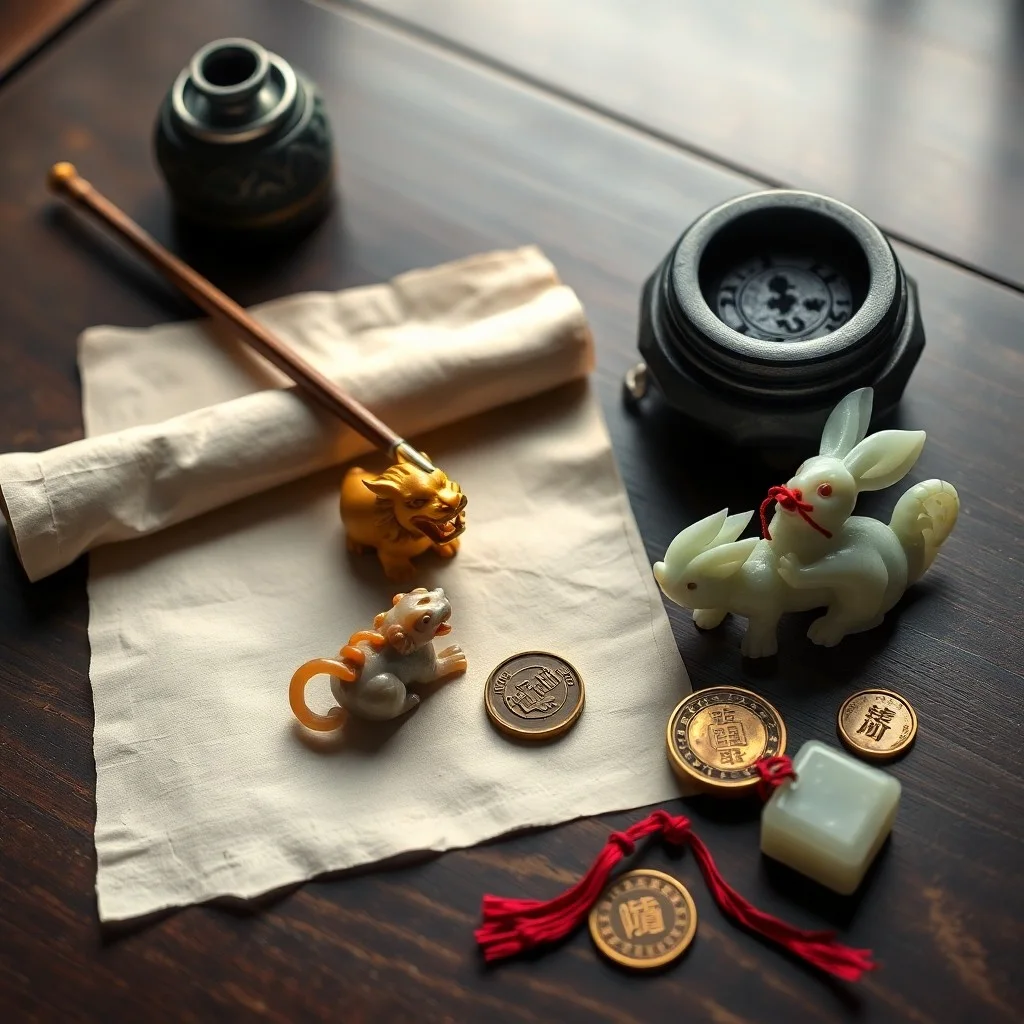
An ancient scroll unfurls, revealing Tarot Esoteric Geometry: Unlocking Universal Truths Sacred Shapes and a luminous character, symbolizing the profound act of blessing a child's destiny through naming rituals.
The Foundational Principles of Chinese Naming
The philosophy behind Chinese naming is deeply intertwined with the belief that a name carries energetic vibrations that can either enhance or hinder an individual's life path. Unlike many Western traditions where names are chosen for aesthetic appeal or familial lineage alone, Chinese naming is a strategic endeavor to optimize a child's inherent cosmic blueprint. This involves a meticulous analysis of several key components, each contributing to the overall energetic balance and auspiciousness of the chosen name.
At its core, the process seeks to compensate for any elemental deficiencies or excesses present in a child's birth chart, thereby promoting harmony and mitigating potential challenges. This holistic approach views the individual as a microcosm of the universe, where internal energies must align with external cosmic forces for optimal well-being and success. The careful selection of characters, their meanings, and their phonetic qualities all play a crucial role in this intricate balancing act.
The Role of the Zodiac Animal in Naming
Each of the twelve Chinese Zodiac animals possesses unique characteristics, strengths, and weaknesses that are believed to influence individuals born in their respective years. When selecting a name, practitioners consider the child's Zodiac animal to choose characters that complement its inherent traits or compensate for its potential shortcomings. For instance, a child born in the Year of the Dragon might benefit from names that evoke wisdom and stability, balancing the Dragon's often fiery and impulsive nature.
Furthermore, certain characters are deemed auspicious or inauspicious for specific Zodiac animals based on ancient folklore and symbolic associations. For example, characters related to water might be favorable for a Fire element animal, providing a balancing influence. Conversely, characters that symbolize conflict or predation for the animal should be avoided. This nuanced understanding ensures the name reinforces positive attributes and minimizes negative ones, contributing to a more harmonious life path.
- Rat: Often associated with intelligence and resourcefulness. Names might emphasize stability or generosity.
- Ox: Known for diligence and strength. Names might include characters for flexibility or creativity.
- Tiger: Symbolizes courage and power. Names could focus on calmness or diplomacy.
- Rabbit: Represents gentleness and sensitivity. Names might incorporate strength or assertiveness.
- Dragon: Embodies charisma and ambition. Names could balance with humility or patience.
- Snake: Associated with wisdom and mystery. Names might add warmth or openness.
- Horse: Known for energy and freedom. Names could bring grounding or focus.
- Goat: Represents creativity and compassion. Names might include characters for resilience or leadership.
- Monkey: Symbolizes intelligence and playfulness. Names could emphasize discipline or seriousness.
- Rooster: Known for confidence and punctuality. Names might add modesty or introspection.
- Dog: Represents loyalty and honesty. Names could focus on independence or adventure.
- Pig: Embodies generosity and contentment. Names might include characters for ambition or caution.

Five elemental stones, representing the Tarot Esoteric Geometry: Unlocking Universal Truths Sacred Shapes, are meticulously arranged, symbolizing the elemental balance sought in Chinese naming rituals.
Harmonizing with the Five Elements (Wu Xing)
The Five Elements—Wood, Fire, Earth, Metal, and Water—are fundamental to Chinese cosmology and medicine, and their influence extends profoundly into naming practices. Each person's birth chart, derived from their exact birth date and time, reveals their dominant and deficient elements. The goal of a good name is to introduce characters that contain the missing or weak elements, thereby creating a more balanced elemental constitution.
For example, if a child's birth chart shows a deficiency in the Wood element, names incorporating characters related to trees, growth, or spring would be considered auspicious. Conversely, if there's an excess of Fire, characters associated with Water might be chosen to temper this energy. This elemental balancing act is not merely symbolic; it is believed to directly impact an individual's health, personality, career, and relationships throughout their life. Professional naming consultants often use sophisticated software and traditional almanacs to perform these intricate calculations.
The interaction of the elements follows specific cycles: a creative cycle (Wood feeds Fire, Fire creates Earth, Earth bears Metal, Metal carries Water, Water nourishes Wood) and a destructive cycle (Wood controls Earth, Earth absorbs Water, Water quenches Fire, Fire melts Metal, Metal chops Wood). A well-chosen name will respect and leverage these cycles to foster a harmonious flow of energy within the individual.
Balancing Yin and Yang Energies
Beyond the Five Elements, the universal principle of Yin and Yang—the complementary forces that govern all existence—also plays a critical role in Chinese naming. A balanced name will reflect a harmonious interplay between these two energies. Yin qualities are often associated with femininity, receptivity, darkness, and stillness, while Yang qualities relate to masculinity, activity, light, and movement.
The balance is assessed not only in the literal meaning of the characters but also in their phonetic qualities and the number of strokes. For instance, a name with too many characters that sound harsh or have an excessive number of strokes might be considered overly Yang, potentially leading to an aggressive or restless personality. Conversely, a name that is too soft or has too few strokes might be seen as overly Yin, potentially leading to passivity or weakness. The ideal name achieves a dynamic equilibrium, promoting adaptability and resilience.

A luminous lotus flower floats serenely, reflecting a cosmic sky, symbolizing a child's Tarot Esoteric Geometry: Unlocking Universal Truths Sacred Shapes, a central theme in Chinese naming rituals.
Integrating the BaZi (Four Pillars of Destiny)
The BaZi, or Four Pillars of Destiny, is a sophisticated astrological system that provides a detailed map of an individual's elemental makeup at the moment of birth. It consists of four pairs of characters (pillars), each representing the year, month, day, and hour of birth. Each pillar is composed of a Heavenly Stem and an Earthly Branch, which correspond to specific elements and Yin/Yang polarities.
A professional BaZi master analyzes this chart to identify the dominant and weakest elements, as well as any clashes or harmonies between the pillars. The naming process then becomes a prescriptive act: selecting characters that introduce the deficient elements or strengthen the favorable ones, thereby enhancing the child's overall fortune. This is a highly technical aspect of Chinese naming, often requiring extensive knowledge of elemental interactions and their implications for various life aspects.
For example, if a BaZi chart indicates a strong Metal element but a weak Wood element, a name might be chosen with characters that have a strong Wood radical (木) or characters whose meaning is associated with growth and vitality. This intricate analysis ensures that the name acts as a lifelong energetic supplement, guiding the individual towards a more balanced and prosperous existence.
The Significance of Chinese Character Strokes
Beyond meaning and elemental association, the number of strokes in each Chinese character within a name holds significant numerological importance, a practice known as "Wu Ge Shu Li" (Five Grids and Numbers Theory). This system analyzes the total stroke count of the surname, the first given name character, and the second given name character, as well as combinations thereof, to derive various "fates" or influences.
These "fates" include the Heavenly Grid (天格), Earthly Grid (地格), Human Grid (人格), Outer Grid (外格), and General Grid (总格), each influencing different aspects of life such as early fortune, middle age, relationships, and overall destiny. Each stroke count corresponds to a specific numerical meaning, which can be auspicious, inauspicious, or neutral. Naming consultants meticulously calculate these stroke counts to ensure they align with favorable numerical patterns, avoiding combinations that predict misfortune or hardship.
This method is particularly complex because the traditional stroke count of a character might differ from its simplified or modern count, and specific rules apply to different character components. Therefore, relying on accurate, traditional stroke counts is paramount for precise analysis. A name that is harmonious in terms of elements and Zodiac animal but inauspicious in stroke count would generally be rejected, highlighting the multi-layered complexity of the ritual.
Modern Adaptations and Ethical Considerations
While deeply rooted in tradition, Chinese Zodiac naming rituals have seen various adaptations in the modern era. With globalization and the increasing use of simplified Chinese characters, some practitioners have adjusted their methods, while others adhere strictly to classical interpretations. The rise of online naming services has also made these practices more accessible, though the expertise and authenticity of such services can vary significantly.
Ethical considerations are paramount in this field. Professional naming consultants emphasize that a name is a tool for guidance and empowerment, not a guarantee of a perfect life. They advise parents to approach the process with a balanced perspective, combining traditional wisdom with personal preferences and cultural values. The ultimate goal remains to provide a child with a name that instills confidence, reflects positive aspirations, and supports their journey through life, rather than imposing an unchangeable fate.
Furthermore, the choice of a name should always consider its phonetic sound and ease of pronunciation in various languages, especially for families living in multicultural environments. A name that is auspicious in Chinese may sound awkward or have unintended meanings in another language, which could impact the child's social integration. Therefore, a holistic approach that balances astrological wisdom with practical considerations is often recommended for modern parents.
The practice of Chinese Zodiac naming rituals is a testament to the enduring belief in the interconnectedness of human life and cosmic forces. By meticulously analyzing birth charts, elemental balances, Yin and Yang energies, and character stroke counts, parents aim to bestow a name that serves as a powerful blessing, guiding their child toward a destiny filled with harmony, strength, and fulfillment. This intricate tradition continues to be a cherished aspect of Chinese heritage, offering a unique blend of philosophy, astrology, and numerology in the sacred act of naming.
Fuente: Contenido híbrido asistido por IAs y supervisión editorial humana.


Comments
Post a Comment