
Reiki Introduction: Healing Energy for Body and Soul | StarPluto
Reiki, a Japanese technique for stress reduction and relaxation that also promotes healing, is gaining widespread recognition in the holistic wellness community. Often described as "universal life energy," Reiki involves the transfer of energy from the practitioner's palms to the patient, aiming to improve the flow and balance of energy within the body. This practice is rooted in the belief that an unseen "life force energy" flows through us and is what causes us to be alive.
A Feng Shui Modern Spirituality: Harmonizing Virtual Well-being gently transmitting universal life energy, fostering deep relaxation and promoting the body's natural healing processes.
When one's life force energy is low, we are more likely to get sick or feel stress, and if it is high, we are more capable of being happy and healthy. Reiki is a simple, natural, and safe method of spiritual healing and self-improvement that everyone can use. It has been effective in helping virtually every known illness and malady and always creates a beneficial effect.
It also works in conjunction with all other medical or therapeutic techniques to relieve side effects and promote recovery. This comprehensive guide will delve into the origins, principles, benefits, and practical applications of Reiki, providing a clear and educational perspective on this ancient healing art.
Table of Contents
- The Origins and History of Reiki
- The Five Reiki Principles
- How Does Reiki Work?
- Benefits of Reiki Healing
- What to Expect During a Reiki Session
- Common Misconceptions About Reiki
- Integrating Reiki into Your Daily Life
The Origins and History of Reiki
The practice of Reiki originated in Japan in the early 20th century, developed by Mikao Usui. Usui Sensei, as he is often referred to, embarked on a spiritual quest to understand how ancient spiritual leaders achieved healing. His journey led him to extensive study and meditation, culminating in a profound spiritual experience on Mount Kurama.
During this experience, he reportedly received the ability to channel and transmit healing energy, which he later named Reiki. Usui then established a clinic and school in Tokyo, where he taught his system of healing. The system he developed was not just about physical healing but also emphasized spiritual development and ethical living.
After Usui's passing, one of his students, Chujiro Hayashi, played a crucial role in systematizing the practice and establishing a more formal teaching structure. Hayashi simplified some aspects of Usui's teachings and created a lineage system, which is still largely followed today. He also introduced hand positions for treating specific ailments, making the practice more accessible.
It was through Hawayo Takata, a Japanese-American woman who was healed by Hayashi and later became a Reiki Master, that Reiki was brought to the Western world. Takata established clinics and trained many practitioners and masters in the United States, Canada, and Europe, ensuring the widespread dissemination of Reiki beyond Japan. Her efforts were instrumental in popularizing Reiki as a complementary therapy globally.
The Five Reiki Principles
Central to the practice of Reiki are the Five Reiki Principles, or Gokai, which serve as ethical guidelines for living a balanced and harmonious life. These principles are not merely rules but rather invitations to cultivate a mindful and compassionate existence. Mikao Usui believed that these principles were just as important as the healing practice itself, promoting spiritual growth alongside physical well-being.
- Just for today, do not be angry: This principle encourages releasing anger, which can be a destructive emotion, and fostering inner peace.
- Just for today, do not worry: It promotes letting go of anxieties about the past or future, focusing instead on the present moment.
- Just for today, be grateful: Cultivating gratitude shifts perspective towards appreciation for life's blessings, big and small.
- Just for today, work hard (or earn your living honestly): This emphasizes diligence, integrity, and contributing positively to society.
- Just for today, be kind to every living thing: This principle promotes compassion, empathy, and respect for all beings.
Practitioners are encouraged to recite these principles daily, integrating them into their thoughts and actions. Adhering to these guidelines helps to maintain a positive energy field, not only for the practitioner but also for those they interact with and heal. They form the philosophical bedrock upon which the physical practice of Reiki rests, guiding practitioners towards a path of self-improvement and service.
How Does Reiki Work?
Reiki operates on the premise that an invisible "life force energy" (known as Ki in Japan, Chi in China, or Prana in India) flows through and around us. This energy is vital for our health and well-being. When this energy flow is disrupted or blocked, it can lead to physical illness, emotional distress, and mental imbalance. Reiki aims to restore this balance.

A conceptual Tarot Esoteric Geometry: Unlocking Universal Truths Sacred Shapes, illustrating how life force energy moves through the body and is influenced by external healing modalities.
During a Reiki session, the practitioner places their hands lightly on or just above the recipient's body, following a series of specific hand positions. The practitioner acts as a conduit, channeling universal life energy to the recipient. This energy is believed to flow to areas where it is most needed, clearing blockages and promoting the body's natural ability to heal itself.
While the exact scientific mechanisms are still being researched, many theories attempt to explain Reiki's effects. Some suggest it influences the body's subtle energy systems, such as chakras and meridians, which are recognized in traditional Eastern medicine. Others propose that the deep relaxation induced by Reiki triggers the parasympathetic nervous system, reducing stress hormones and enhancing the body's self-repair processes.
The experience of Reiki is highly subjective, but many recipients report feelings of warmth, tingling, deep relaxation, and a sense of peace. It's important to note that Reiki is not a religion and does not require any specific belief system to be effective. It is a complementary therapy, meaning it can be used alongside conventional medical treatments to support overall well-being.
Benefits of Reiki Healing
The benefits of Reiki are wide-ranging and can impact an individual's physical, emotional, mental, and spiritual health. While it is not a cure for diseases, it is often used to support the healing process and improve quality of life. Many people turn to Reiki for stress reduction and relaxation, which are foundational to overall health.
- Stress Reduction and Relaxation: Reiki induces a deep state of relaxation, helping to calm the nervous system and reduce the physiological effects of stress. This can lead to improved sleep and a greater sense of peace.
- Pain Management: While not directly eliminating pain, many recipients report a reduction in pain intensity and an increased ability to cope with chronic pain conditions.
- Emotional Healing: Reiki can help release emotional blockages, promoting emotional balance and clarity. It can be particularly helpful for those dealing with grief, anxiety, or depression.
- Enhanced Well-being: Regular Reiki sessions can foster a sense of overall well-being, vitality, and inner harmony. It helps individuals feel more centered and connected to themselves.
- Support for Medical Treatments: Reiki is often used in hospitals and hospices to complement conventional medical care. It can help reduce side effects of medications, accelerate recovery from surgery, and provide comfort during illness.
- Spiritual Growth: Beyond physical and emotional benefits, Reiki can facilitate spiritual awareness and personal growth, aligning individuals with their higher purpose.
Research on Reiki's efficacy, though still emerging, has shown promising results in areas such as reducing anxiety and pain in various clinical settings. The holistic nature of Reiki means it addresses the individual as a whole, rather than just focusing on symptoms, leading to more profound and lasting positive changes.
What to Expect During a Reiki Session
A typical Reiki session usually lasts between 60 to 90 minutes. The recipient remains fully clothed and lies on a massage table or sits in a comfortable chair. The environment is generally calm and peaceful, often with soft music or diffused lighting to enhance relaxation.
The practitioner will typically begin by discussing any specific concerns or intentions the recipient might have. During the session, the practitioner places their hands gently on or just above various parts of the body, starting from the head and moving down to the feet. There is no manipulation of muscles or tissues, as in massage therapy.

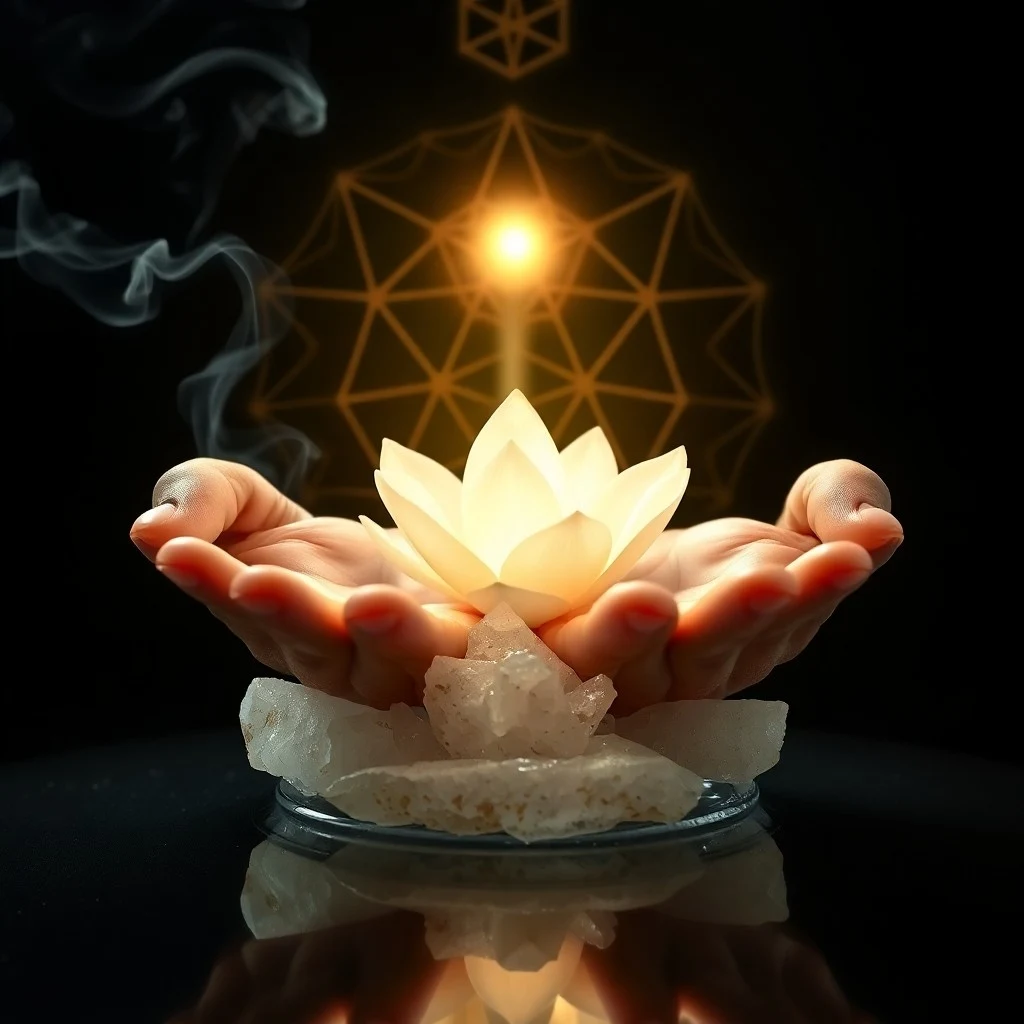
A serene Tarot Sacred Geometry: Unlocking Universal Truths Divination symbolizing purity, spiritual awakening, and the gentle spread of healing energy, reflecting the profound peace often experienced during Reiki.
Recipients may experience a variety of sensations, including warmth, coolness, tingling, or a gentle pulsing. Some may fall asleep, while others remain awake and aware, experiencing a deep sense of calm and well-being. It is also common to feel nothing specific, yet still experience the benefits of relaxation and reduced stress after the session.
After the session, recipients are encouraged to drink plenty of water and allow themselves time to integrate the experience. Some may feel energized, while others might feel a need to rest. The effects of Reiki can continue to unfold in the days following a session, often leading to subtle yet significant shifts in perspective and emotional state.
Common Misconceptions About Reiki
Despite its growing popularity, Reiki is often misunderstood. Addressing common misconceptions is crucial for a clear understanding of what this healing modality entails. One prevalent misconception is that Reiki is a religion. While it has spiritual components and encourages ethical living, it is not tied to any specific religious dogma or belief system.
Another common misunderstanding is that Reiki is a magical cure-all. It is important to reiterate that Reiki is a complementary therapy, not a substitute for conventional medical treatment. It supports the body's natural healing abilities and promotes relaxation, but it does not diagnose or cure diseases in the traditional sense.
Some people also believe that a Reiki practitioner must possess special psychic abilities or powers. In reality, anyone can learn to practice Reiki through proper training and attunement from a qualified Reiki Master. The ability to channel Reiki energy is said to be inherent in all individuals and is simply reawakened through the attunement process.
Finally, there's the idea that Reiki is only for those who are ill. While it is highly beneficial for those facing health challenges, Reiki is also an excellent tool for preventative care, stress management, and general well-being. Many healthy individuals use Reiki to maintain balance, enhance their spiritual practice, and promote personal growth.
Integrating Reiki into Your Daily Life
Reiki is not just a therapy received in sessions; it can also be a powerful tool for self-care and personal development. Learning self-Reiki allows individuals to apply the healing energy to themselves daily, fostering continuous balance and well-being. This can involve placing hands on various parts of the body for a few minutes each day, similar to a full session.
Incorporating the Five Reiki Principles into daily life is another profound way to integrate the practice. By consciously choosing not to be angry or worry, practicing gratitude, working honestly, and being kind, individuals can cultivate a more positive and harmonious existence. These principles serve as a moral compass, guiding actions and thoughts.
Many practitioners also use Reiki to enhance other spiritual practices, such as meditation and mindfulness. The calming and centering effects of Reiki can deepen meditative states and promote a greater sense of presence. It can also be used to energize food, water, and even spaces, infusing them with positive intentions and healing vibrations.
Regular practice, whether through self-Reiki, receiving sessions, or living by the principles, helps to strengthen one's connection to universal life force energy. This ongoing engagement supports resilience, emotional regulation, and a sustained sense of inner peace. Reiki offers a gentle yet powerful path to holistic health and spiritual awakening, accessible to everyone.
In conclusion, Reiki is a profound system of natural healing that extends beyond physical ailments to encompass emotional, mental, and spiritual well-being. Its simple yet powerful principles and non-invasive technique make it a valuable complementary therapy for anyone seeking balance, relaxation, and a deeper connection to their inner self. As research continues to explore its mechanisms, the experiential benefits reported by millions worldwide continue to affirm its gentle efficacy.
Fuente: Contenido híbrido asistido por IAs y supervisión editorial humana.


Comments
Post a Comment