
Chakra Healing Basics: Energy Centers Guide | StarPluto
Chakra healing basics involve understanding the intricate energy system within and around our bodies. Originating from ancient Indian spiritual traditions, particularly Hinduism and Buddhism, the concept of chakras refers to spinning wheels or vortexes of energy that govern various aspects of our physical, mental, emotional, and spiritual well-being. These energy centers are believed to be located along the spine, from its base to the crown of the head, each corresponding to specific organs, emotional states, and spiritual qualities.
The practice of chakra healing aims to identify imbalances or blockages within these energy centers and restore their harmonious flow. When chakras are balanced, energy can move freely, promoting overall health, vitality, and inner peace. Conversely, blocked or overactive chakras can manifest as physical ailments, emotional disturbances, and spiritual stagnation. This comprehensive guide will introduce you to the seven main chakras, their characteristics, and practical methods for their healing and balancing.
Understanding the seven main chakras as vibrant energy points within the human body.
Table of Contents
- What Are Chakras?
- The Seven Main Chakras: An Overview
- Root Chakra (Muladhara)
- Sacral Chakra (Svadhisthana)
- Solar Plexus Chakra (Manipura)
- Heart Chakra (Anahata)
- Throat Chakra (Vishuddha)
- Third Eye Chakra (Ajna)
- Crown Chakra (Sahasrara)
- Signs of Imbalance in Chakras
- Methods for Chakra Balancing and Healing
- Integrating Chakra Healing into Daily Life
- The Benefits of Balanced Chakras
What Are Chakras?
The term "chakra" is Sanskrit for "wheel" or "disk," and it refers to the energetic hubs within the subtle body. While not physically tangible, these centers are believed to be points where energy (prana or chi) converges and radiates. Each chakra is associated with specific nerve bundles, major organs, and psychological, emotional, and spiritual states, influencing our overall health and perception of reality.
The concept suggests that a healthy flow of energy through these chakras is crucial for well-being. When a chakra is blocked, stagnant, or overactive, it can disrupt this flow, leading to various issues. For example, a blocked heart chakra might manifest as difficulty in forming loving relationships, while an overactive throat chakra could lead to excessive talking or inability to listen.
The Seven Main Chakras: An Overview
Although some traditions recognize more, the most commonly discussed system involves seven primary chakras. These are aligned along the central axis of the body, from the base of the spine to the crown of the head. Each chakra has a distinct color, element, sound (mantra), and set of associated functions.
Understanding these individual characteristics is the first step toward effective chakra healing. By recognizing the specific attributes and potential imbalances of each chakra, individuals can tailor their healing practices to address their unique needs and promote a more harmonious internal state. This foundational knowledge empowers a deeper connection with one's energetic self.
| Chakra | Location | Color | Associated Themes |
|---|---|---|---|
| Root (Muladhara) | Base of spine | Red | Stability, security, survival, grounding |
| Sacral (Svadhisthana) | Lower abdomen | Orange | Creativity, sexuality, emotions, pleasure |
| Solar Plexus (Manipura) | Upper abdomen | Yellow | Personal power, will, self-esteem |
| Heart (Anahata) | Center of chest | Green/Pink | Love, compassion, empathy, forgiveness |
| Throat (Vishuddha) | Throat | Blue | Communication, truth, self-expression |
| Third Eye (Ajna) | Between eyebrows | Indigo | Intuition, wisdom, insight, perception |
| Crown (Sahasrara) | Top of head | Violet/White | Spirituality, enlightenment, divine connection |
Root Chakra (Muladhara)
The Root Chakra, or Muladhara, is located at the base of the spine and is associated with the color red. It is the foundation of our energy system, governing our sense of security, stability, and basic survival needs. This chakra connects us to the earth, providing a feeling of being grounded and supported.
When balanced, the Root Chakra fosters feelings of safety, confidence, and a strong connection to one's physical body and environment. Imbalances can lead to anxiety, fear, financial insecurity, and issues with physical grounding, such as feeling disconnected or restless. Healing this chakra often involves practices that promote stability and connection to nature.
Sacral Chakra (Svadhisthana)
The Sacral Chakra, or Svadhisthana, is situated in the lower abdomen, just below the navel, and resonates with the color orange. It is the center of our creativity, emotions, sexuality, and pleasure. This chakra influences our ability to experience joy, passion, and healthy relationships.
A balanced Sacral Chakra allows for fluid emotional expression, healthy sexual experiences, and a vibrant creative flow. When out of balance, individuals might experience emotional instability, creative blocks, sexual dysfunction, or addictive behaviors. Healing practices for this chakra often focus on embracing sensuality, creativity, and emotional release.
Solar Plexus Chakra (Manipura)
Located in the upper abdomen, the Solar Plexus Chakra, or Manipura, is associated with the color yellow. This chakra is the seat of our personal power, willpower, self-esteem, and sense of purpose. It governs our ability to manifest our desires and assert ourselves in the world.

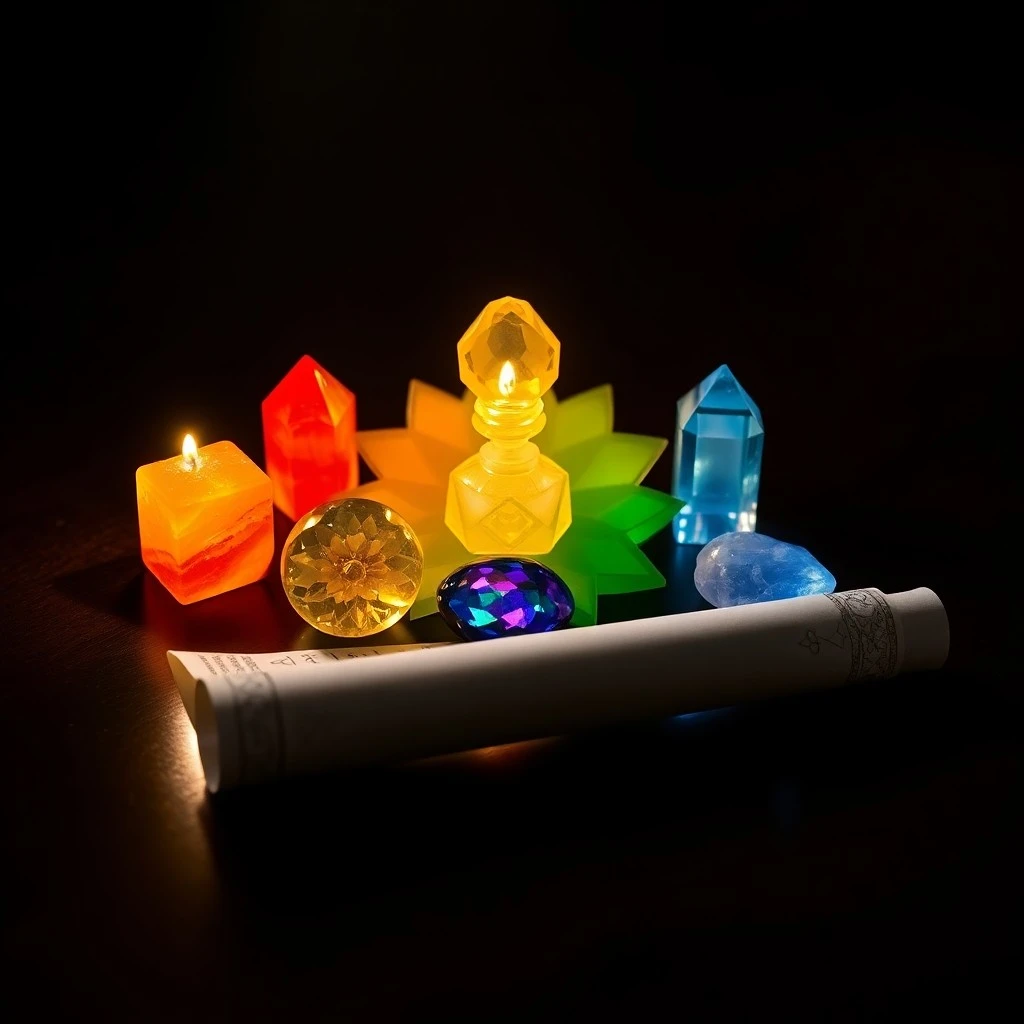
Crystals like amethyst and clear quartz are often used in chakra healing practices.
A balanced Solar Plexus Chakra leads to strong self-confidence, effective decision-making, and a clear sense of personal boundaries. Imbalances can manifest as low self-esteem, difficulty making decisions, control issues, or digestive problems. Healing this chakra often involves empowering activities and practices that build self-worth and assertiveness.
Heart Chakra (Anahata)
The Heart Chakra, or Anahata, is located in the center of the chest and is represented by the colors green and pink. This chakra is the bridge between our lower (physical) and upper (spiritual) chakras, governing our capacity for love, compassion, empathy, and forgiveness. It influences our relationships with others and with ourselves.
When balanced, the Heart Chakra allows us to give and receive love freely, fostering deep connections and emotional healing. Imbalances can lead to feelings of loneliness, jealousy, resentment, fear of intimacy, or circulatory issues. Healing this chakra emphasizes practices that cultivate unconditional love, self-acceptance, and compassion.
Throat Chakra (Vishuddha)
The Throat Chakra, or Vishuddha, is located in the throat area and is associated with the color blue. This chakra is the center of communication, truth, and self-expression. It governs our ability to speak our truth, listen effectively, and express our authentic selves.
A balanced Throat Chakra enables clear and honest communication, active listening, and confident self-expression. Imbalances can result in difficulty expressing thoughts, fear of public speaking, gossiping, or physical throat issues like sore throats or thyroid problems. Healing this chakra focuses on honest communication and creative expression.
Third Eye Chakra (Ajna)
The Third Eye Chakra, or Ajna, is located between the eyebrows and is represented by the color indigo. This chakra is the center of intuition, wisdom, insight, and perception. It governs our ability to see beyond the physical world and access inner guidance.

The lotus flower, a symbol of purity and enlightenment, represents the awakening of energy centers.
When balanced, the Third Eye Chakra fosters strong intuition, clear vision, and a deeper understanding of life's complexities. Imbalances can lead to confusion, lack of focus, poor decision-making, or headaches. Healing this chakra involves practices that enhance intuition and inner wisdom, such as meditation and mindfulness.
Crown Chakra (Sahasrara)
The Crown Chakra, or Sahasrara, is located at the very top of the head and is associated with the colors violet and white. This chakra is our connection to the divine, universal consciousness, and spiritual enlightenment. It governs our sense of unity, purpose, and spiritual understanding.
A balanced Crown Chakra brings profound spiritual connection, inner peace, and a sense of oneness with all existence. Imbalances can cause feelings of isolation, lack of purpose, cynicism, or spiritual detachment. Healing this chakra involves practices that foster spiritual connection, such as meditation, prayer, and selfless service.
Signs of Imbalance in Chakras
Recognizing the signs of an imbalanced chakra is crucial for beginning the healing process. These signs can manifest in various ways, ranging from physical discomfort to emotional distress and mental confusion. It is important to remember that these symptoms are often interconnected, as our energetic and physical bodies are deeply intertwined.
Observing these indicators can help guide you toward which chakra might require attention. For instance, chronic fatigue and a feeling of being ungrounded might point to a Root Chakra imbalance, while frequent sore throats and difficulty expressing oneself could suggest issues with the Throat Chakra. Self-awareness and introspection are key tools in this diagnostic process.
- Root Chakra: Anxiety, fear, financial insecurity, feeling ungrounded, lower back pain, issues with legs/feet.
- Sacral Chakra: Emotional instability, creative blocks, sexual dysfunction, addiction, urinary problems, hip pain.
- Solar Plexus Chakra: Low self-esteem, control issues, digestive problems, anger, fear of rejection, chronic fatigue.
- Heart Chakra: Loneliness, jealousy, resentment, fear of intimacy, circulatory issues, upper back/shoulder pain.
- Throat Chakra: Difficulty communicating, fear of speaking, gossiping, sore throat, thyroid issues, neck stiffness.
- Third Eye Chakra: Lack of intuition, confusion, poor decision-making, headaches, eye problems, memory issues.
- Crown Chakra: Feelings of isolation, lack of purpose, spiritual detachment, depression, sensitivity to light/sound.
Methods for Chakra Balancing and Healing
There are numerous techniques and practices available for balancing and healing your chakras. The most effective approach often involves a combination of methods, tailored to individual needs and preferences. Consistency and intention are paramount for achieving lasting results in chakra work.
Exploring different modalities can help you discover what resonates most deeply with your energetic system. From ancient meditative practices to modern energy work, each method offers a unique pathway to restoring harmony and vitality within your chakras. Remember that healing is a journey, not a destination.
- Meditation: Focused meditation on each chakra, visualizing its color and feeling its energy, can help clear blockages. Guided meditations specifically designed for chakra balancing are widely available.
- Yoga and Asanas: Specific yoga poses (asanas) are known to activate and balance different chakras. For example, warrior poses can strengthen the Root Chakra, while camel pose opens the Heart Chakra.
- Crystals and Gemstones: Each chakra is associated with certain crystals that resonate with its energy. Placing these Feng Shui Modern Spirituality: Harmonizing Virtual Well-being on or near the corresponding chakra during meditation or rest can facilitate healing.
- Aromatherapy: Essential oils can be used to support chakra balancing. For instance, cedarwood for the Root Chakra, sandalwood for the Sacral, and lavender for the Crown. Diffusing or applying diluted oils to pulse points can be beneficial.
- Sound Healing: Specific musical notes, mantras, or singing bowls are attuned to the vibrational frequency of each chakra. Listening to or chanting these sounds can help realign and clear energy centers.
- Color Therapy: Wearing clothes of a specific chakra color, visualizing the color during meditation, or even eating foods of that color can help stimulate and balance the corresponding chakra.
- Nature Connection: Spending time in nature, particularly walking barefoot on the earth, can help ground and balance the Root Chakra. Connecting with natural elements supports overall energetic harmony.
- Diet and Nutrition: Consuming foods that are energetically aligned with each chakra can support its health. For example, root vegetables for the Root Chakra, fruits for the Sacral, and leafy greens for the Heart.
- Reiki and Energy Healing: Practitioners trained in energy healing modalities can channel universal life force energy to clear, balance, and activate chakras, promoting deep relaxation and healing.
Integrating Chakra Healing into Daily Life
Incorporating chakra healing practices into your daily routine doesn't require a complete lifestyle overhaul. Small, consistent efforts can yield significant results over time. The key is to cultivate mindfulness and awareness of your energetic state throughout the day.
Start by choosing one or two practices that resonate with you and commit to them regularly. This could be a short morning meditation focusing on a specific chakra, wearing a crystal, or consciously choosing foods that support your energy centers. Over time, you'll develop a deeper connection to your chakras and intuitively understand what they need.
Journaling can also be a powerful tool to track your emotional and physical states in relation to your chakra practices. This allows you to identify patterns and understand how different activities or foods impact your energy. Remember, self-care is a holistic practice that encompasses all levels of your being.
The Benefits of Balanced Chakras
Achieving balanced chakras can lead to a profound transformation in all areas of your life. When your energy centers are flowing harmoniously, you experience greater physical health, emotional stability, mental clarity, and spiritual connection. This holistic well-being allows you to navigate life's challenges with resilience and grace.
The benefits extend beyond individual well-being, influencing your interactions and overall impact on the world. A person with balanced chakras often radiates positive energy, attracting healthy relationships and opportunities. Embracing chakra healing is an investment in your holistic health and a journey towards a more vibrant and purposeful existence.
- Increased physical vitality and reduced chronic pain.
- Greater emotional stability and resilience to stress.
- Enhanced creativity and self-expression.
- Improved relationships and deeper empathy.
- Stronger intuition and mental clarity.
- A profound sense of inner peace and spiritual connection.
- Better ability to manifest goals and achieve personal power.
Fuente: Contenido híbrido asistido por IAs y supervisión editorial humana.


Comments
Post a Comment