
Elemental Balance: Birth Chart & Personality Guide | Astrology | StarPluto
In astrology, the four classical elements—Fire, Earth, Air, and Water—are fundamental building blocks that describe the core energies and temperaments present in every individual's birth chart. Understanding your elemental balance is not merely an academic exercise; it's a profound journey into self-awareness, revealing your innate strengths, potential challenges, and paths to greater harmony and fulfillment. Each element corresponds to specific zodiac signs and planetary placements, collectively painting a vivid picture of your psychological makeup and how you interact with the world.
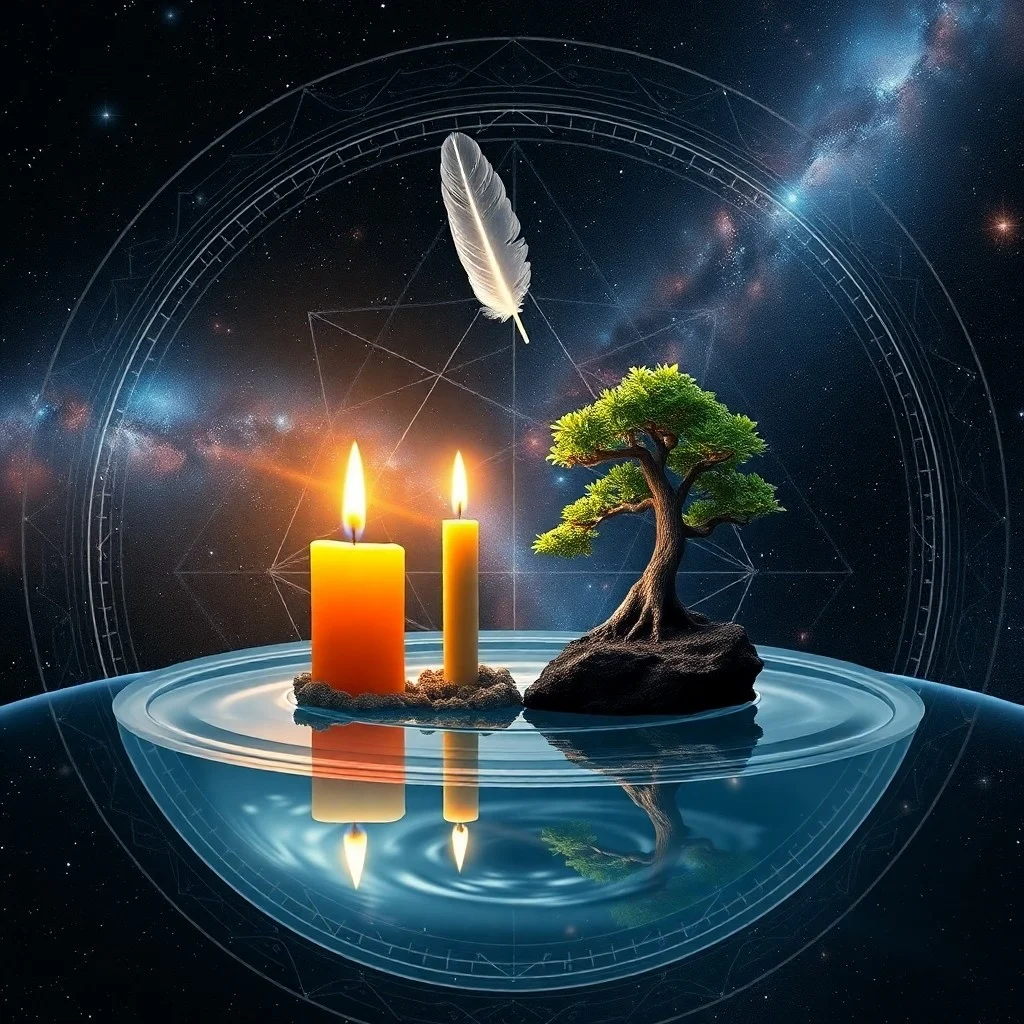
A visual representation of the four astrological elements in perfect cosmic balance, symbolizing their vital role in shaping our being.
This comprehensive guide will delve deep into each element, exploring their characteristics, how they manifest in your personality, and how to assess their distribution in your birth chart. We will also examine the implications of elemental dominance and deficiency, providing practical strategies to cultivate a more balanced and integrated self. By recognizing the elemental energies within you, you can unlock a deeper understanding of your motivations, emotional responses, and overall life path.
The concept of elemental balance dates back to ancient philosophical and astrological traditions, which recognized these forces as the primordial components of existence. From the fiery drive of creation to the grounding stability of matter, the intellectual currents of thought, and the depths of emotional experience, these elements are not just abstract concepts but living energies that resonate within us. Their interplay determines much of our inherent nature and how we navigate the complexities of life.
Table of Contents
- Understanding the Four Elements in Astrology
- Fire Element: Passion and Drive
- Earth Element: Stability and Practicality
- Air Element: Intellect and Communication
- Water Element: Emotion and Intuition
- Identifying Elemental Balance in Your Birth Chart
- Calculating Your Elemental Distribution
- Interpreting Elemental Dominance and Deficiency
- The Impact of Elemental Imbalance on Personality
- Excess Fire: Impulsiveness and Burnout
- Deficient Fire: Lack of Motivation and Enthusiasm
- Excess Earth: Rigidity and Materialism
- Deficient Earth: Instability and Impracticality
- Excess Air: Overthinking and Detachment
- Deficient Air: Poor Communication and Social Awkwardness
- Excess Water: Emotional Overwhelm and Sensitivity
- Deficient Water: Emotional Detachment and Difficulty Empathizing
- Achieving Elemental Harmony: Strategies for Balance
- Practical Exercises for Each Element
- Conclusion
Understanding the Four Elements in Astrology
The four elements in astrology are not merely symbolic; they represent fundamental modes of being and interacting with the world. Each element governs a specific set of characteristics, psychological functions, and life approaches. The distribution of planets and points across these elements in your birth chart reveals your inherent elemental makeup, influencing everything from your decision-making process to your emotional landscape.
Fire Element: Passion and Drive
The Fire element is associated with energy, enthusiasm, inspiration, and action. It is a dynamic and assertive force, representing the spirit and the will. Individuals with a strong Fire presence in their chart are often passionate, courageous, optimistic, and self-motivated. They are natural leaders, driven by a desire to create, initiate, and experience life intensely. Fire signs are Aries, Leo, and Sagittarius.
- Key Characteristics: Energetic, enthusiastic, spontaneous, courageous, optimistic, assertive, inspiring, creative.
- Strengths: Leadership, motivation, innovation, self-confidence, ability to inspire others.
- Challenges: Impulsiveness, impatience, arrogance, recklessness, tendency to burn out.
- Associated Zodiac Signs: Aries (Cardinal Fire), Leo (Fixed Fire), Sagittarius (Mutable Fire).
Earth Element: Stability and Practicality
The Earth element embodies stability, practicality, groundedness, and a connection to the material world. It is a receptive and tangible force, representing the physical body and resources. People with a prominent Earth element are typically reliable, patient, disciplined, and realistic. They value security, hard work, and tangible results, often excelling in practical matters and building solid foundations. Earth signs are Taurus, Virgo, and Capricorn.
- Key Characteristics: Practical, reliable, patient, grounded, disciplined, realistic, sensual, persistent.
- Strengths: Consistency, resourcefulness, strong work ethic, ability to manifest goals, loyalty.
- Challenges: Rigidity, materialism, stubbornness, resistance to change, overly cautious.
- Associated Zodiac Signs: Taurus (Fixed Earth), Virgo (Mutable Earth), Capricorn (Cardinal Earth).
Air Element: Intellect and Communication
The Air element is linked to intellect, communication, objectivity, and social interaction. It is a mutable and intellectual force, representing the mind and ideas. Individuals with a strong Air presence are often articulate, curious, logical, and sociable. They thrive on exchanging ideas, learning, and connecting with others on an intellectual level. Air signs are Gemini, Libra, and Aquarius.
- Key Characteristics: Intellectual, communicative, logical, objective, sociable, curious, adaptable, rational.
- Strengths: Diplomacy, problem-solving, intellectual curiosity, effective communication, networking.
- Challenges: Detachment, indecisiveness, overthinking, superficiality, inconsistency.
- Associated Zodiac Signs: Gemini (Mutable Air), Libra (Cardinal Air), Aquarius (Fixed Air).
Water Element: Emotion and Intuition
The Water element is associated with emotions, intuition, empathy, and the subconscious. It is a receptive and fluid force, representing feelings and inner worlds. People with a prominent Water element are typically sensitive, compassionate, intuitive, and deeply empathetic. They are attuned to the emotional currents around them and often possess strong psychic abilities or creative talents. Water signs are Cancer, Scorpio, and Pisces.
- Key Characteristics: Emotional, intuitive, empathetic, compassionate, sensitive, imaginative, nurturing, mysterious.
- Strengths: Deep emotional understanding, healing abilities, creativity, strong intuition, loyalty.
- Challenges: Moodiness, hypersensitivity, emotional overwhelm, tendency to absorb others' feelings, escapism.
- Associated Zodiac Signs: Cancer (Cardinal Water), Scorpio (Fixed Water), Pisces (Mutable Water).
A dramatic still life representing the dynamic and active energies of Fire and Air through symbolic objects.
Identifying Elemental Balance in Your Birth Chart
To understand your elemental balance, you need to examine the distribution of planets and key astrological points across the zodiac signs in your birth chart. While a professional astrologer can provide a detailed analysis, you can get a good initial understanding by counting the planets in each element. The most significant points to consider are the Sun, Moon, Ascendant (Rising Sign), Mercury, Venus, Mars, Jupiter, and Saturn.
Calculating Your Elemental Distribution
Here's a simplified method to calculate your elemental distribution:
- Step 1: Obtain Your Birth Chart: Use an online calculator or astrology software to generate your natal chart. You'll need your exact birth date, time, and location.
- Step 2: List Key Placements: Note down the zodiac sign for your Sun, Moon, Ascendant, Mercury, Venus, Mars, Jupiter, and Saturn. Some astrologers also include Uranus, Neptune, and Pluto, but for a basic understanding, the personal and social planets are sufficient.
- Step 3: Assign Elements: For each placement, identify its corresponding element:
- Fire: Aries, Leo, Sagittarius
- Earth: Taurus, Virgo, Capricorn
- Air: Gemini, Libra, Aquarius
- Water: Cancer, Scorpio, Pisces
- Step 4: Tally the Score: Count how many placements fall into each element. Some systems assign more weight to the Sun, Moon, and Ascendant (e.g., 2 points for these, 1 point for others), but a simple count is a good starting point.
For example, if your Sun is in Aries (Fire), Moon in Taurus (Earth), Ascendant in Gemini (Air), Mercury in Aries (Fire), Venus in Gemini (Air), Mars in Leo (Fire), Jupiter in Virgo (Earth), and Saturn in Cancer (Water), your tally would be:
- Fire: 3 (Sun, Mercury, Mars)
- Earth: 2 (Moon, Jupiter)
- Air: 2 (Ascendant, Venus)
- Water: 1 (Saturn)
Interpreting Elemental Dominance and Deficiency
Once you have your elemental tally, you can begin to interpret what it means for your personality. A balanced chart would have a relatively even distribution of planets across all four elements, indicating a well-rounded personality with access to various modes of expression. However, most people have a dominance in one or two elements and a deficiency in others.
| Elemental Count | Interpretation |
|---|---|
| Dominant (3+ placements) | Strong expression of the element's qualities. These traits are readily apparent and often define your core personality. |
| Balanced (1-2 placements) | A healthy presence of the element, allowing for flexible access to its characteristics without being overwhelmed. |
| Deficient (0 placements) | Lack of direct planetary influence in this element. This can indicate areas where you might feel less comfortable, skilled, or naturally inclined, potentially leading to overcompensation or avoidance. |
It's important to remember that a deficiency doesn't mean you entirely lack that quality. It simply suggests that you might need to consciously cultivate those traits or seek them out in others. For instance, someone with deficient Earth might need to work harder at grounding themselves or might be drawn to partners who are very earthy and practical. The goal isn't to change who you are, but to understand your natural inclinations and find ways to integrate missing energies for a more holistic self.
The Impact of Elemental Imbalance on Personality
Elemental imbalances can manifest in various ways, creating both strengths and challenges in your life. Understanding these patterns can help you navigate your personality quirks and foster personal growth. It's about recognizing where your natural energy flows easily and where you might encounter resistance or overexertion.
Excess Fire: Impulsiveness and Burnout
An abundance of Fire energy can lead to extreme enthusiasm, but also impulsiveness, a quick temper, and a tendency to act without thinking. You might be prone to burnout due to constantly pushing yourself, and others might perceive you as arrogant or self-centered. The challenge is to channel this powerful energy constructively, learning patience and considering consequences before acting.
- Manifestations: Restlessness, aggression, impatience, arrogance, overconfidence, quick to anger, difficulty relaxing.
- Growth Area: Cultivating patience, listening to others, practicing humility, strategic planning, regular relaxation.
Deficient Fire: Lack of Motivation and Enthusiasm
A lack of Fire energy can result in low energy levels, difficulty initiating projects, and a general lack of enthusiasm or self-confidence. You might struggle with motivation, feel easily overlooked, or find it hard to assert your needs. The goal is to ignite your inner spark, embrace risks, and find activities that genuinely excite you. This often involves stepping out of your comfort zone.
- Manifestations: Apathy, low self-esteem, difficulty taking action, fear of risk, lack of direction, feeling invisible.
- Growth Area: Setting small achievable goals, engaging in physical activity, pursuing passions, public speaking, leadership roles.
Excess Earth: Rigidity and Materialism
Too much Earth energy can lead to excessive caution, resistance to change, and a focus on material possessions to the detriment of emotional or spiritual growth. You might be perceived as rigid, stubborn, or overly concerned with security. The lesson here is to embrace flexibility, be open to new experiences, and understand that true security comes from within, not just external factors.
- Manifestations: Stubbornness, materialism, resistance to change, overly cautious, dullness, excessive routine.
- Growth Area: Embracing spontaneity, exploring new ideas, practicing generosity, cultivating spiritual interests, letting go of control.
Deficient Earth: Instability and Impracticality
A deficiency in Earth energy can make it difficult to ground yourself, manage practical affairs, or maintain stability. You might struggle with financial planning, keeping commitments, or feeling disconnected from your physical body. The path to balance involves developing practical skills, creating routines, and connecting with the natural world to foster a sense of security and presence.
- Manifestations: Disorganization, financial instability, impracticality, restlessness, difficulty completing tasks, feeling ungrounded.
- Growth Area: Building routines, financial planning, connecting with nature, physical exercise, developing practical skills.
A serene oil painting capturing the grounding and intuitive essence of Earth and Water through symbolic still-life elements.
Excess Air: Overthinking and Detachment
An overabundance of Air energy can lead to excessive intellectualization, overthinking, and a tendency to live in your head rather than connect with your emotions or physical reality. You might be prone to anxiety, indecisiveness, or emotional detachment, struggling to commit to a single idea or path. The key is to ground your thoughts, connect with your feelings, and translate ideas into action.
- Manifestations: Anxiety, indecisiveness, emotional detachment, superficiality, restlessness, constant worrying.
- Growth Area: Meditation, mindfulness, connecting with emotions, physical activity, focusing on one task at a time.
Deficient Air: Poor Communication and Social Awkwardness
A lack of Air energy can result in difficulties with communication, expressing ideas clearly, or engaging in social interactions. You might feel misunderstood, struggle with objectivity, or find it challenging to connect with others intellectually. Developing your communication skills, engaging in intellectual pursuits, and seeking diverse perspectives can help you bridge this gap.
- Manifestations: Difficulty communicating, social awkwardness, narrow-mindedness, lack of objectivity, feeling isolated.
- Growth Area: Public speaking, journaling, reading widely, engaging in debates, active listening, learning new languages.
Excess Water: Emotional Overwhelm and Sensitivity
Too much Water energy can lead to heightened sensitivity, emotional overwhelm, moodiness, and a tendency to absorb the emotions of others. You might struggle with setting boundaries, be prone to escapism, or find it hard to maintain objectivity. The challenge is to manage your emotional depth, protect your energy, and channel your intuition constructively without being swept away.
- Manifestations: Mood swings, hypersensitivity, emotional dependency, escapism, difficulty setting boundaries, feeling drained.
- Growth Area: Emotional regulation, boundary setting, creative expression, spending time alone, grounding practices, therapy.
Deficient Water: Emotional Detachment and Difficulty Empathizing
A deficiency in Water energy can result in emotional detachment, difficulty expressing feelings, and a struggle to empathize with others. You might be perceived as cold or insensitive, finding it hard to connect on a deep emotional level. The path to balance involves exploring your inner world, allowing yourself to feel, and actively practicing empathy and compassion.
- Manifestations: Emotional repression, difficulty empathizing, appearing cold or aloof, fear of intimacy, lack of intuition.
- Growth Area: Journaling, creative arts, spending time near water, practicing empathy, engaging in deep conversations, exploring dreams.
Achieving Elemental Harmony: Strategies for Balance
Achieving elemental harmony is not about eradicating your dominant elements or forcing yourself to be something you're not. Instead, it's about consciously integrating the energies you lack and moderating the energies you have in excess. This leads to a more well-rounded, adaptable, and resilient personality. It's a continuous process of self-observation and intentional practice.
Practical Exercises for Each Element
- To Cultivate Fire (if deficient or to channel excess):
- Deficient: Engage in competitive sports, start a new hobby, take on leadership roles, express your passions openly, wear vibrant colors.
- Excess: Practice meditation to calm the mind, engage in solitary creative pursuits, channel energy into physical exercise, learn to listen more than speak.
- To Cultivate Earth (if deficient or to loosen excess):
- Deficient: Spend time in nature (gardening, hiking), practice grounding meditations, organize your physical space, create a budget, learn a practical skill (e.g., cooking, carpentry).
- Excess: Embrace spontaneity, travel to new places, try new foods, practice letting go of material attachments, engage in imaginative play.
- To Cultivate Air (if deficient or to ground excess):
- Deficient: Read widely, engage in debates or discussions, learn a new language, practice journaling, actively seek out diverse perspectives, join a book club.
- Excess: Practice mindfulness to stay present, engage in physical activities that require focus, connect with your body through dance or yoga, limit screen time, spend time in silence.
- To Cultivate Water (if deficient or to manage excess):
- Deficient: Explore creative arts (painting, music), spend time near water, practice empathy by actively listening to others, journal about your feelings, engage in dream analysis.
- Excess: Practice setting clear boundaries, engage in activities that provide emotional release (e.g., crying, talking to a trusted friend), learn emotional regulation techniques, practice detachment from others' emotions.
Remember that elemental balance is a dynamic state, not a fixed destination. Your needs may change throughout life, and understanding your chart's elemental composition provides a powerful tool for continuous self-improvement and personal evolution. By consciously working with these energies, you can foster a more integrated and fulfilling existence.
Conclusion
The four elements of Fire, Earth, Air, and Water offer a profound framework for understanding the intricate tapestry of your personality and the energies at play within your birth chart. From the fiery spark of initiation to the grounded practicality of implementation, the intellectual currents of connection, and the deep emotional tides of intuition, each element contributes uniquely to who you are. Recognizing your elemental strengths and deficiencies is the first step towards cultivating a more balanced and harmonious self.
By consciously engaging with the qualities of each element, you can mitigate challenges, amplify your natural gifts, and foster a deeper connection to your authentic self. Astrology, through the lens of elemental analysis, provides a powerful guide for personal growth, enabling you to navigate life's complexities with greater awareness and intention. Embrace your elemental blueprint, and embark on a journey of self-discovery that leads to profound inner balance and outer expression.
Fuente: Contenido híbrido asistido por IAs y supervisión editorial humana.


Comments
Post a Comment