
Palmistry Hand Analysis Destiny Unlocking: Your Guide | StarPluto
Palmistry, also known as chiromancy, is an ancient practice of characterization and foretelling the future through the study of the palm. This fascinating art involves analyzing the various lines, mounts, and shapes of the hand, each believed to hold clues about an individual's personality, destiny, and life events. From the intricate patterns of the fingerprints to the overall flexibility of the hand, every detail contributes to a comprehensive reading.
While often associated with divination, palmistry is also viewed by many as a powerful tool for self-discovery and understanding one's innate strengths and challenges. It offers a unique lens through which to explore potential life paths, relationships, career inclinations, and even health predispositions. By delving into the nuances of hand analysis, individuals can gain deeper insights into their own nature and the forces that may shape their journey.
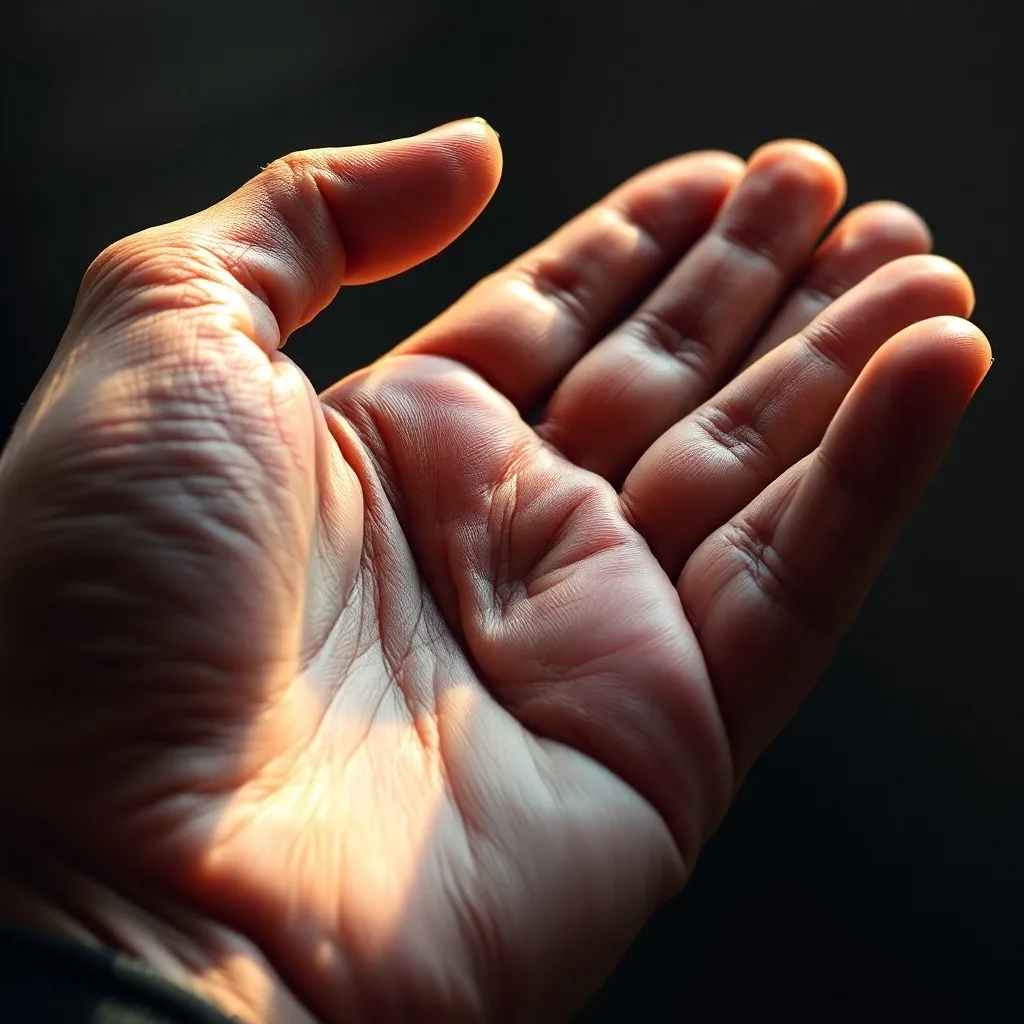
An intricate digital illustration of a hand with glowing lines, symbolizing the mystical art of palmistry and its connection to cosmic destiny.
This guide aims to provide an introductory yet comprehensive overview of palmistry, breaking down its core components and offering a framework for understanding its principles. Whether you are a curious beginner or seeking to deepen your knowledge, exploring the wisdom held within your hands can be a truly enlightening experience. It is important to approach palmistry with an open mind, recognizing it as a symbolic language rather than a rigid prediction of the future.
History and Origins of Palmistry
The practice of palmistry dates back thousands of years, with roots in ancient India, China, and Egypt. Early records indicate that it was a recognized art form in Vedic astrology and was practiced by philosophers like Aristotle, who reportedly found a treatise on the subject on an altar of Hermes. From these ancient civilizations, palmistry spread to Greece and Rome, eventually making its way to Europe and beyond.
In India, palmistry is closely linked with Jyotish, or Vedic astrology, where the lines and marks on the hand are seen as reflections of planetary influences and karmic patterns. The Chinese tradition, known as 'Xiang Mian' or 'face and hand reading,' also places great emphasis on the hand's features as indicators of character and fate. These ancient systems laid the groundwork for the diverse schools of palmistry practiced today, each with its unique interpretations and methodologies.
Throughout history, palmistry has experienced periods of both acceptance and suppression. During the Middle Ages, it was often associated with witchcraft and forbidden by the Church. However, it persisted in various forms, often practiced discreetly or integrated into other esoteric traditions. The 19th and 20th centuries saw a resurgence of interest, with numerous books and societies dedicated to its study, solidifying its place as a recognized form of divination and self-analysis. For more on ancient practices, you might be interested in exploring Tarot Esoteric Geometry: Unlocking Universal Truths Sacred Shapes.
Major Lines of the Palm: Your Life's Blueprint
The palm features several prominent lines, each offering profound insights into different aspects of life. These lines are not static; they can change over time, reflecting shifts in an individual's experiences, choices, and personal growth. Understanding these major lines is fundamental to any palm reading.
- The Life Line: This line curves around the base of the thumb, indicating vitality, physical health, major life changes, and overall zest for life. A long, deep line suggests strong health and a vigorous life, while a short or faint line does not necessarily mean a short life, but rather a need to focus on energy and well-being.
- The Head Line: Running horizontally across the palm, usually starting between the thumb and forefinger, this line reveals intellectual capacity, learning style, decision-making abilities, and mental approach to life. A long, straight line might indicate a logical, analytical mind, whereas a curved or sloping line suggests creativity and imagination.
- The Heart Line: Located above the Head Line, running across the top of the palm, the Heart Line speaks to emotional patterns, relationships, romantic experiences, and emotional health. A deep, clear line can signify strong emotional connections, while breaks or chains might point to emotional challenges or periods of healing.
- The Fate Line (or Line of Destiny): This vertical line, not always present or prominent, runs from the base of the palm towards the middle finger. It indicates career path, success, life purpose, and external influences that shape one's destiny. A clear, unbroken Fate Line suggests a clear path and strong sense of purpose.
A vintage photographic still life showcasing essential tools for ancient palmistry and divination, including an old book and a crystal sphere.
Minor Lines and Their Significance
Beyond the major lines, the palm also contains several minor lines that add further depth and detail to a reading. These lines, though less prominent, can offer specific insights into various life aspects, from relationships to creativity.
- The Sun Line (or Apollo Line): Running parallel to the Fate Line, typically starting near the wrist and extending towards the ring finger, this line indicates success, fame, talent, and happiness. A strong Sun Line suggests a life filled with recognition and joy.
- The Mercury Line (or Health Line): Extending from the base of the pinky finger down towards the base of the palm, this line relates to health, communication skills, and business acumen. Its presence and clarity can reveal insights into one's nervous system and overall well-being.
- The Girdle of Venus: A semi-circle line found above the Heart Line, under the index and middle fingers. It signifies emotional intensity, sensitivity, and artistic inclinations. A prominent Girdle of Venus often points to a highly empathetic and passionate individual.
- Travel Lines: These are small horizontal lines found on the Mount of Luna (at the base of the palm, opposite the thumb). They indicate journeys, adventures, and significant changes of location.
- Marriage Lines: Small horizontal lines located on the side of the palm, below the pinky finger. They reflect relationships, partnerships, and emotional bonds, rather than strictly marriage.
Mounts of the Palm: Planetary Influences
The fleshy pads or mounds on the palm are known as mounts, and they are associated with planetary energies and specific personality traits. The prominence and firmness of these mounts can reveal much about an individual's character and potential. Each mount corresponds to a planet and its associated qualities.
| Mount | Location | Associated Qualities |
|---|---|---|
| Mount of Venus | Base of the thumb | Love, passion, sensuality, vitality, artistic appreciation. |
| Mount of Jupiter | Under the index finger | Ambition, leadership, pride, spirituality, justice. |
| Mount of Saturn | Under the middle finger | Responsibility, wisdom, solitude, discipline, seriousness. |
| Mount of Apollo (Sun) | Under the ring finger | Success, creativity, optimism, fame, artistic talent. |
| Mount of Mercury | Under the pinky finger | Communication, intellect, business acumen, quick wit. |
| Mount of Luna (Moon) | Opposite the Mount of Venus, at the base of the palm | Imagination, intuition, dreams, travel, emotional depth. |
| Mounts of Mars | Two mounts: one below Jupiter (Upper Mars) and one above Luna (Lower Mars) | Courage, aggression, resilience, self-control, energy. |
A well-developed and firm mount suggests a balanced expression of its associated qualities, while an overly developed mount might indicate an excess or imbalance. Conversely, a flat or underdeveloped mount could point to a lack or suppressed expression of those traits. The interplay between these mounts and the lines on the palm creates a complex and personalized map of an individual's inner world. Understanding these planetary influences can also be enhanced by learning about Jupiter Astrology: Expansion, Luck, Philosophy.
Finger Analysis and Hand Shapes
Beyond the lines and mounts, the fingers and the overall shape of the hand also provide crucial information in palmistry. Each finger is associated with a specific planet and its corresponding attributes, while the hand shape reveals fundamental personality types.
- Thumb: Represents willpower, logic, and self-control. A strong, flexible thumb indicates a determined and adaptable individual.
- Index Finger (Jupiter): Symbolizes ambition, leadership, and ego. A long index finger suggests a desire for power and recognition.
- Middle Finger (Saturn): Relates to responsibility, wisdom, and prudence. A well-proportioned middle finger indicates a balanced and thoughtful nature.
- Ring Finger (Apollo/Sun): Associated with creativity, success, and self-expression. A long ring finger can point to artistic talent and a love for beauty.
- Pinky Finger (Mercury): Governs communication, intellect, and business skills. A prominent pinky finger suggests excellent communication abilities.
Hand shapes are broadly categorized into four types, often correlating with the four classical elements:
| Hand Shape | Element | Characteristics |
|---|---|---|
| Earth Hand | Earth | Square palm, short fingers, firm skin. Practical, grounded, reliable, hardworking. |
| Air Hand | Air | Square palm, long fingers, clear lines. Intellectual, communicative, analytical, restless. |
| Water Hand | Water | Long palm, long fingers, soft skin, many fine lines. Emotional, intuitive, sensitive, artistic. |
| Fire Hand | Fire | Long palm, short fingers, firm skin, prominent lines. Energetic, passionate, impulsive, confident. |
The combination of finger length, flexibility, and overall hand shape provides a foundational understanding of an individual's core personality traits and how they interact with the world. This elemental categorization helps in quickly grasping the general temperament before delving into the specifics of lines and mounts. For more on elemental influences, consider reading about Tarot Esoteric Geometry: Unlocking Universal Truths Sacred Shapes.
A conceptual art piece illustrating intertwining hands and diverging paths, representing the abstract nature of destiny and personal choices.
The Scientific Perspective and Modern Chirology
While traditional palmistry is often considered an esoteric art, modern chirology (the scientific study of hands) explores the connection between hand features and psychological or physiological traits. Scientists and researchers have observed correlations between certain dermatoglyphic patterns (fingerprints and palm prints) and genetic conditions or personality indicators, though these studies are distinct from the predictive aspects of traditional palmistry.
Modern chirology focuses on the unique patterns of dermal ridges, which are formed during fetal development and remain unchanged throughout life. These patterns are influenced by both genetics and environmental factors during gestation. For instance, certain medical conditions are known to be associated with specific hand and fingerprint patterns. However, this scientific approach does not claim to predict future events or destiny in the way traditional palmistry does.
The distinction between chiromancy (the art of palm reading) and chirology (the scientific study of hands) is crucial. While chiromancy delves into symbolic interpretations and intuitive insights, chirology uses empirical methods to analyze physical characteristics of the hand. Both fields, however, acknowledge the hand as a rich source of information, whether for understanding personality, health predispositions, or potential life tendencies. The study of the hand continues to evolve, bridging ancient wisdom with contemporary understanding. Delve deeper into esoteric insights with Tarot Esoteric Geometry: Unlocking Universal Truths Sacred Shapes.
How to Read Your Own Palm
For those interested in exploring palmistry for self-awareness, here's a basic guide to get started. Remember, this is an art that requires practice and intuition, so don't expect immediate mastery. The dominant hand (the one you write with) typically represents your conscious mind and current path, while the non-dominant hand reflects your innate potential and past experiences.
- Step 1: Observe Your Hand Shape. Determine if your hand is primarily Earth, Air, Water, or Fire. This gives you a general understanding of your core personality traits.
- Step 2: Examine Your Fingers. Look at the length and flexibility of each finger. Are they long or short relative to your palm? What does each finger's prominence suggest about your Jupiter, Saturn, Apollo, and Mercury traits?
- Step 3: Identify Major Lines. Locate your Life, Head, and Heart Lines. Note their length, depth, clarity, and any breaks or branches. Consider what these features might indicate about your vitality, intellect, and emotional life.
- Step 4: Check for the Fate Line. If present, observe its path. Does it start clearly and run unbroken? This can offer insights into your career and life purpose.
- Step 5: Feel Your Mounts. Gently press on the fleshy pads of your palm. Are they prominent or flat? Which mounts are most developed? This can highlight your dominant planetary influences and corresponding personality strengths.
- Step 6: Look for Minor Lines and Markings. Pay attention to any Sun, Mercury, or Travel lines, as well as any squares, triangles, or stars, which can add specific details to your reading.
- Step 7: Synthesize Your Findings. Combine all the information you've gathered. Look for recurring themes or conflicting indicators. Palmistry is about understanding the whole picture, not just isolated features.
Remember that palmistry is a tool for introspection and guidance, not a definitive prophecy. It encourages self-reflection and can empower you to make conscious choices that align with your true potential. Engaging with this ancient art can be a journey of continuous discovery, revealing new facets of your personality and destiny over time. For insights into other forms of self-discovery, consider exploring The Pig in the Chinese Zodiac and Horoscope.
Conclusion: The Journey Within Your Hands
Palmistry, in its essence, is a profound system for understanding the human experience through the unique map etched onto our hands. From the deep furrows of the major lines to the subtle contours of the mounts and the distinct shapes of our fingers, each element contributes to a narrative of who we are, where we've been, and where we might be headed. It's a practice that invites us to look inward, to recognize our inherent talents, confront our challenges, and embrace the potential for growth and transformation.
Whether approached as a spiritual discipline, a psychological tool, or simply a fascinating curiosity, palmistry offers a rich tapestry of symbolism and insight. It reminds us that our hands are not merely instruments for interaction with the physical world, but also mirrors reflecting the intricate landscape of our souls. By learning to read these ancient symbols, we can embark on a journey of self-discovery, unlocking deeper layers of our destiny and forging a more conscious path forward.
Embrace the wisdom of your hands, for they hold stories waiting to be told and futures waiting to be shaped. The journey of understanding your destiny begins with the lines you carry every day. To further your understanding of personal paths and influences, explore topics like Tarot Esoteric Geometry: Unlocking Universal Truths Sacred Shapes.
Fuente: Contenido híbrido asistido por IAs y supervisión editorial humana.


Comments
Post a Comment