
Runes Divination: Ancient Nordic Wisdom Guide | StarPluto
The practice of rune divination, rooted deeply in ancient Nordic and Germanic traditions, offers a profound pathway to self-discovery and spiritual insight. Far more than mere fortune-telling, runes serve as a system of symbolic wisdom, reflecting the forces of the cosmos and the human psyche. Each rune is a key to understanding specific energies, challenges, and opportunities, guiding seekers through life's complexities with clarity and purpose.
This comprehensive guide aims to demystify the world of runes, providing an accessible introduction for newcomers while offering depth for those looking to expand their understanding. We will explore their rich history, delve into the meanings of the Elder Futhark, and outline practical methods for their use in divination, always emphasizing a respectful and ethical approach to this powerful ancient wisdom.
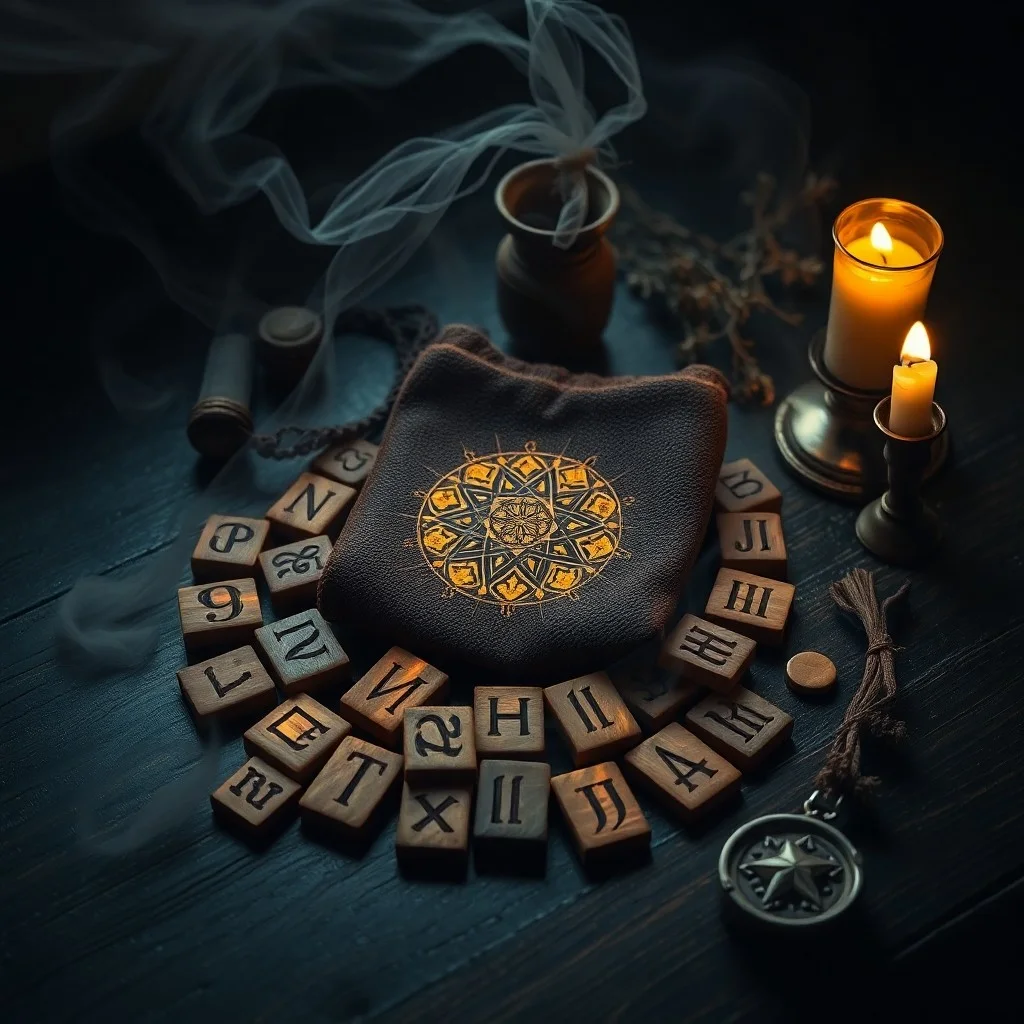
Discover the ancient power of Nordic runes, glowing with mystic energy, guiding seekers through the ethereal mist of wisdom and insight.
Whether you are drawn to their historical significance, their artistic beauty, or their potential for personal growth, the runes offer a unique lens through which to view your journey. By engaging with these ancient symbols, you can tap into a wellspring of ancestral knowledge, fostering intuition and making informed decisions that resonate with your true path.
Jump to a specific section:
- The Ancient Origins of Runes
- The Elder Futhark: A Comprehensive Overview
- Understanding Rune Meanings for Divination
- Methods of Rune Casting and Interpretation
- Preparing for a Rune Reading: Sacred Practice
- Ethical Considerations in Runic Divination
- The Enduring Legacy of Runes
The Ancient Origins of Runes
The word "rune" itself comes from the Old Norse "rún," meaning "secret," "mystery," or "whisper." These ancient symbols were not merely an alphabet for writing; they were imbued with magical and spiritual significance, believed to be gifts from the gods, particularly Odin, the Norse god of wisdom, poetry, and magic. Legend has it that Odin hung himself from the world tree Yggdrasil for nine days and nights, sacrificing himself to himself, to gain the knowledge of the runes.
Runic inscriptions have been found throughout Northern Europe, Scandinavia, and the British Isles, dating back as early as the 2nd century AD. They were carved into stone monuments, weapons, jewelry, and wooden objects, serving various purposes from marking ownership and commemorating events to invoking protection and casting spells. The earliest and most complete runic alphabet is known as the Elder Futhark, named after its first six runes (Fehu, Uruz, Thurisaz, Ansuz, Raido, Kenaz).
Over time, runic alphabets evolved, leading to variations such as the Younger Futhark, which was more common during the Viking Age, and the Anglo-Saxon Futhorc. While their primary use as a writing system eventually declined with the adoption of the Latin alphabet, their mystical and divinatory applications persisted, carried forward through oral traditions and esoteric practices. Today, the Elder Futhark remains the most widely studied and utilized runic set for divination due to its comprehensive symbolism.
The Elder Futhark: A Comprehensive Overview
The Elder Futhark consists of 24 runes, divided into three groups of eight, known as Aetts (families). Each Aett is associated with a specific Norse deity and represents a stage of spiritual and material development. Understanding these divisions can add another layer of depth to your interpretations.
- Freyja's Aett (Fehu, Uruz, Thurisaz, Ansuz, Raido, Kenaz, Gebo, Wunjo): Focuses on material wealth, primal force, protection, communication, journeys, creativity, partnerships, and joy.
- Hagal's Aett (Hagalaz, Nauthiz, Isa, Jera, Eihwaz, Perthro, Algiz, Sowilo): Deals with challenges, necessity, stagnation, cycles, endurance, mystery, protection, and success.
- Tyr's Aett (Tiwaz, Berkano, Ehwaz, Mannaz, Laguz, Ingwaz, Othala, Dagaz): Represents justice, growth, movement, humanity, intuition, completion, heritage, and breakthroughs.
Here is a brief overview of each rune's core meaning:
A collection of runestones, an antique book, and a flickering candle evoke the sacred atmosphere of ancient divination practices.
- Fehu (ᚠ): Wealth, abundance, success, material gain, new beginnings. It signifies earned prosperity and the power to create.
- Uruz (ᚢ): Strength, primal force, courage, vitality, good health. Represents untamed potential and the wild, untamed aspects of self.
- Thurisaz (ᚦ): Thorn, giant, protection, destruction, breakthrough. Can symbolize a strong defensive force or a sudden, powerful change.
- Ansuz (ᚨ): Gods, communication, inspiration, wisdom, truth, divine messages. Represents the power of words and intellectual pursuits.
- Raido (ᚱ): Journey, travel, rhythm, order, progress, evolution. Symbolizes a physical or spiritual journey, and the right path.
- Kenaz (ᚲ): Torch, knowledge, enlightenment, creativity, passion, inner fire. Represents illumination and the ability to create.
- Gebo (ᚷ): Gift, partnership, generosity, balance, exchange. Signifies reciprocal relationships and the spirit of giving and receiving.
- Wunjo (ᚹ): Joy, comfort, harmony, fellowship, success, spiritual reward. Represents happiness and emotional well-being.
- Hagalaz (ᚺ): Hail, disruption, crisis, transformation, release. A powerful force of nature, often uncontrollable, leading to necessary change.
- Nauthiz (ᚾ): Need, constraint, delay, resistance, self-reliance. Highlights areas of necessity, patience, and learning from hardship.
- Isa (ᛁ): Ice, standstill, challenge, introspection, patience. Suggests a period of pause, reflection, or a temporary blockage.
- Jera (ᛃ): Year, harvest, cycles, reward, justice, fruition. Represents the natural progression of time and the rewards of effort.
- Eihwaz (ᛇ): Yew tree, endurance, protection, transformation, death/rebirth. A powerful rune of resilience and overcoming obstacles.
- Perthro (ᛈ): Lot cup, mystery, fate, hidden knowledge, intuition, secrets. Associated with the unknown and the unfolding of destiny.
- Algiz (Z): Elk, protection, defense, connection to divine, warning. A strong protective shield, both physical and spiritual.
- Sowilo (ᛋ): Sun, victory, success, spiritual power, honor, wholeness. Represents positive energy, achievement, and clarity.
- Tiwaz (ᛏ): Tyr (god), justice, sacrifice, leadership, courage, victory. Embodies the warrior spirit, integrity, and self-sacrifice for a greater cause.
- Berkano (ᛒ): Birch, growth, fertility, new beginnings, regeneration, family. Signifies nurturing, birth, and continuous development.
- Ehwaz (ᛖ): Horse, movement, progress, trust, teamwork, harmony. Represents partnership, loyalty, and steady advancement.
- Mannaz (ᛗ): Man, humanity, self, community, social order, cooperation. Focuses on the individual and their place within society.
- Laguz (ᛚ): Water, intuition, flow, emotions, subconscious, healing. Represents the unconscious mind, dreams, and fluid movement.
- Ingwaz (ᛝ): Ing (god), completion, fertility, new phase, inner growth. Marks a period of gestation, resolution, and new potential.
- Othala (ᛟ): Heritage, home, property, tradition, ancestral wisdom, legacy. Connects to one's roots, family, and inherited values.
- Dagaz (ᛞ): Day, dawn, breakthrough, awakening, new opportunities, transformation. Symbolizes sudden change, enlightenment, and hope.
Understanding Rune Meanings for Divination
Interpreting runes goes beyond memorizing individual meanings. It involves understanding their context within a spread, their relationship to neighboring runes, and how they resonate with the question asked. Each rune also has a reversed or "merkstave" meaning, which often indicates challenges, blockages, or the negative aspect of its upright meaning. However, some runes, like Gebo and Isa, do not have a reversed meaning as their energy is considered universally positive or neutral.
The key to successful rune divination lies in developing your intuition. While books and guides provide foundational knowledge, your personal connection to the symbols and your ability to synthesize their messages are paramount. Practice and reflection are essential for deepening this connection, allowing the runes to speak to you in a more nuanced and personal way.
An isometric render of a Viking longhouse interior, where runic symbols are thoughtfully arranged on a table, reflecting ancient practices.
Consider the interplay of elements within a reading. For example, a rune of communication (Ansuz) appearing alongside a rune of challenge (Nauthiz) might suggest difficulties in expressing oneself or a need to communicate more effectively about a pressing issue. Conversely, Ansuz with a rune of joy (Wunjo) could indicate good news or harmonious discussions. The narrative that emerges from the combination of runes is where the true wisdom lies.
Methods of Rune Casting and Interpretation
There are various methods for casting runes, ranging from simple single-rune draws to more complex spreads. The method you choose often depends on the nature of your question and your personal preference. Here are a few common approaches:
- The One-Rune Draw: Ideal for quick questions requiring a direct answer or a daily insight. You simply draw one rune from the bag and interpret its message. This is excellent for beginners to familiarize themselves with individual rune meanings.
- The Three-Rune Spread (Past, Present, Future): A popular and versatile spread. You draw three runes: the first represents the past influences, the second the current situation, and the third the potential outcome or advice for the future. This spread provides a narrative arc to your reading.
- The Five-Rune Cross: This spread offers a more detailed perspective.
- Rune 1: The challenge or problem.
- Rune 2: The obstacle or opposing force.
- Rune 3: The best course of action.
- Rune 4: The support or positive influence.
- Rune 5: The final outcome or resolution.
- The Nine-Rune Spread: A more advanced spread often used for broader questions about life paths or spiritual journeys. Nine runes are drawn and cast onto a cloth, with their positions relative to each other offering insights into different aspects of the question, such as conscious and unconscious influences, challenges, and opportunities.
When interpreting, always consider the overall theme. Are there recurring messages? Do certain runes seem to amplify others? The blank rune, if included in your set, often signifies the unknown, fate, or a situation where the outcome is yet to be determined, emphasizing trust in the process.
Preparing for a Rune Reading: Sacred Practice
To ensure a meaningful and accurate rune reading, preparation is key. Approaching the runes with respect and a clear mind can significantly enhance the experience. Here are some steps to prepare yourself and your space:
- Cleanse Your Runes: Before your first reading, and periodically thereafter, cleanse your runes to remove any residual energies. This can be done by passing them through incense smoke, placing them under moonlight, or burying them in salt or earth for a short period.
- Create a Sacred Space: Designate a quiet area where you won't be disturbed. You might light a candle, burn incense, or play calming music to set the atmosphere. A clean cloth to cast the runes upon is also traditional and helps define your sacred working area.
- Formulate Your Question: Be clear and specific with your question. Avoid yes/no questions, as runes offer guidance and insight rather than definitive answers. Instead, phrase your question to seek understanding, advice, or perspective on a situation. For example, instead of "Will I get the job?", ask "What do I need to know about pursuing this job opportunity?"
- Ground Yourself: Take a few deep breaths, meditate briefly, or engage in any practice that helps you feel centered and present. This ensures you are open to receiving the messages without personal biases clouding your judgment.
- Set Your Intention: Clearly state your intention for the reading. This could be to gain clarity, understand a challenge, or seek guidance on a path forward. Setting an intention focuses your energy and directs the flow of information.
Remember, the act of divination is a conversation with your subconscious and the energies around you. The more mindful and respectful your approach, the richer the insights you will gain.
Ethical Considerations in Runic Divination
As with any divinatory practice, ethical considerations are paramount when working with runes. The power of these symbols demands respect and responsibility. Here are key ethical guidelines to keep in mind:
- Personal Growth, Not Fortune-Telling: View runes as a tool for introspection, personal growth, and understanding potential paths, rather than a definitive prediction of the future. They offer insights into current energies and likely outcomes based on present circumstances, empowering you to make conscious choices.
- Respect for Free Will: Never use runes to manipulate or control others. Readings should always respect the free will of all individuals involved. Avoid asking questions about others without their explicit consent, and even then, focus on how their actions might affect you, rather than trying to predict or influence their choices.
- Honesty and Objectivity: Approach readings with honesty and strive for objectivity. Be open to whatever messages the runes convey, even if they are challenging or unexpected. Avoid seeking confirmation for preconceived notions.
- Confidentiality: If you are reading for others, maintain strict confidentiality. The insights gained are personal and should not be shared without permission.
- Empowerment, Not Dependence: The goal of rune divination is to empower individuals to navigate their lives with greater awareness. Encourage self-reliance and critical thinking, rather than fostering dependence on the runes for every decision.
- Avoid Medical or Legal Advice: Runes are not a substitute for professional medical, legal, or financial advice. If a question falls into these categories, advise seeking qualified professionals.
By adhering to these ethical principles, you ensure that your practice of runic divination remains a positive and constructive force, fostering wisdom and respect for both yourself and others.
The Enduring Legacy of Runes
The legacy of runes extends far beyond their historical use as an alphabet. They represent a rich tapestry of ancient Nordic cosmology, mythology, and spiritual understanding. Their continued relevance in modern times speaks to the universal human desire for meaning, guidance, and connection to something larger than oneself. From academic study to personal spiritual practice, runes continue to captivate and inspire.
As you embark on your journey with runes, remember that it is a path of continuous learning and discovery. Each interaction with these symbols deepens your understanding, not only of the runes themselves but also of your inner landscape and the world around you. Embrace the mystery, trust your intuition, and allow the ancient wisdom of the Nordic peoples to illuminate your way.
Fuente: Contenido híbrido asistido por IAs y supervisión editorial humana.


Comments
Post a Comment