
Algorithmic Enchantment: AI-Generated Sigils, Sacred Art
Algorithmic Enchantment: Crafting AI-Generated Sigils & Sacred Art for Manifestation
In an era where technology increasingly intertwines with every facet of human existence, the ancient pursuit of manifestation and spiritual connection is finding new, unexpected avenues. Algorithmic enchantment represents a fascinating frontier, merging the precision of artificial intelligence with the profound symbolism of sigils and sacred art. This innovative approach explores how AI can be leveraged to create personalized spiritual tools, offering a fresh perspective on how we interact with intention, symbolism, and the unseen forces of the universe. It's a journey into the heart of digital mysticism, where code becomes a conduit for consciousness.
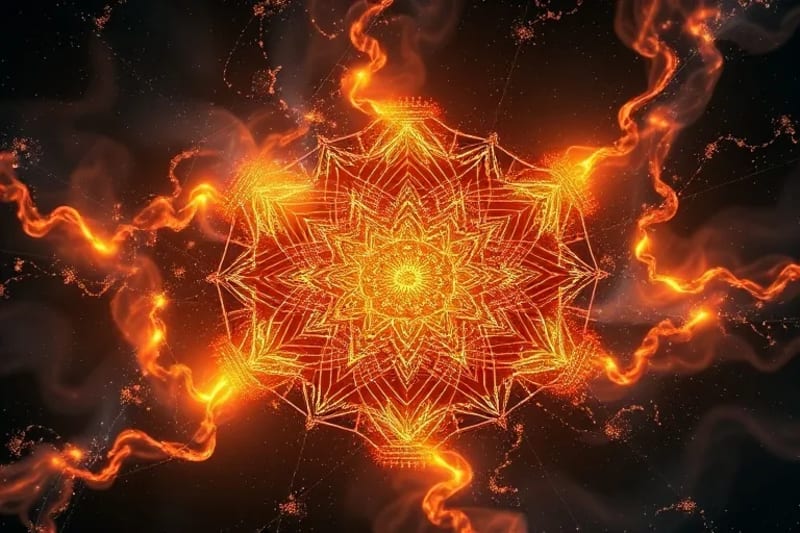
Exploring the convergence of digital mysticism and ancient spiritual practices through AI-generated sacred geometry.
The concept of using symbols and art for spiritual purposes is as old as humanity itself. From prehistoric cave paintings to elaborate mandalas and powerful sigils, humans have always sought to imbue visual forms with meaning and intent. Today, artificial intelligence, with its unparalleled capacity for pattern recognition, generation, and synthesis, offers a revolutionary means to explore and expand these ancient practices. Algorithmic enchantment is not about replacing human spiritual work but augmenting it, providing novel ways to visualize and focus our intentions.
This article delves into the theoretical underpinnings and practical applications of AI-generated sigils and sacred art. We will explore how algorithms can learn from vast datasets of historical spiritual art, generate unique symbols tailored to individual intentions, and potentially enhance the manifestation process. By understanding the mechanisms behind this emerging field, we can begin to appreciate the profound implications of integrating advanced technology with timeless spiritual wisdom.
Table of Contents
- Historical Roots of Sigils and Sacred Art
- The Science Behind the Sacred: AI and Symbolism
- Crafting AI-Generated Sigils for Manifestation
- Sacred Art in the Digital Age: Beyond Sigils
- Ethical Considerations and the Future of Algorithmic Enchantment
Historical Roots of Sigils and Sacred Art
Before diving into the digital realm, it is crucial to understand the historical context of sigils and sacred art. Across cultures and millennia, symbols have served as powerful conduits for spiritual energy, communication with the divine, and tools for personal transformation. Ancient civilizations used hieroglyphs, mandalas, and ritualistic carvings to represent complex ideas, deities, and cosmic laws. These symbols were not merely decorative; they were believed to hold intrinsic power, capable of influencing reality when properly created and activated.
Sigils, in particular, have a rich history in Western esoteric traditions, gaining prominence through figures like Austin Osman Spare in the early 20th century. A sigil is essentially a symbolic representation of a desired outcome or intention. Traditionally, it is created by distilling a statement of intent into a unique, abstract glyph, often by removing repeating letters and then stylizing the remaining ones. The purpose of this abstraction is to bypass the conscious mind, implanting the desire directly into the subconscious, where it can then manifest in reality.
Sacred art, on the other hand, encompasses a broader category of visual expressions designed to evoke spiritual feelings, facilitate meditation, or represent religious narratives. From the intricate patterns of Islamic geometry to the vibrant thangkas of Tibetan Buddhism, sacred art aims to connect the viewer with higher states of consciousness. These forms often adhere to strict canonical rules, passed down through generations, ensuring their energetic integrity and spiritual efficacy. The integration of AI into these traditions raises questions about authorship, authenticity, and the very nature of sacred creation.
The Science Behind the Sacred: AI and Symbolism
The intersection of AI and symbolism is grounded in the ability of algorithms to process, analyze, and generate complex visual data. Modern generative AI models, such as Generative Adversarial Networks (GANs) and diffusion models, can learn from vast datasets of images, identifying underlying patterns, styles, and compositional rules. When trained on collections of sacred art, ancient symbols, or esoteric diagrams, these AIs can begin to understand the "grammar" of spiritual aesthetics.
One of the key aspects is AI's capacity to recognize and reproduce sacred geometry. Many spiritual traditions believe that certain geometric forms, like the Flower of Life or the Vesica Piscis, hold fundamental energetic properties. AI can be programmed to generate these forms with mathematical precision, or even to discover novel geometric arrangements that resonate with established symbolic principles. This computational approach allows for the creation of intricate, symmetrical, and harmonious designs that might be challenging for a human artist to produce with the same level of detail and consistency.
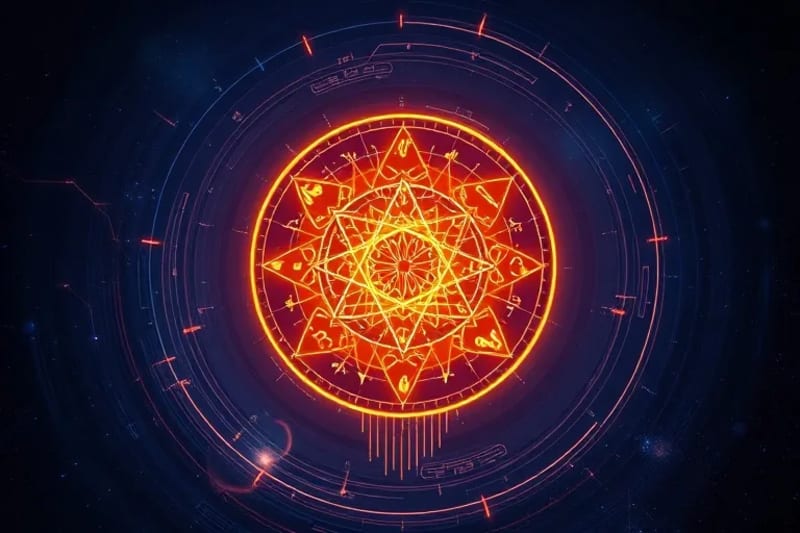
A glowing AI-generated sigil, an intricate fusion of ancient glyphs and modern circuit patterns.
Furthermore, AI can analyze the emotional and psychological impact of different visual elements. By cross-referencing visual features with human responses (e.g., through sentiment analysis of associated texts or user feedback), AI can learn to generate art that evokes specific feelings or states of mind. This capability is particularly relevant for sacred art, which often aims to inspire awe, tranquility, or spiritual introspection. The algorithms can be fine-tuned to produce images that are not just aesthetically pleasing but also energetically resonant with the intended spiritual purpose.
The process often involves a human-in-the-loop approach. A user provides an intention or a desired aesthetic, which is then translated into a prompt for the AI. The AI generates several variations, and the user selects the most resonant one, providing feedback that further refines the model. This iterative process allows for a co-creative partnership between human intuition and algorithmic power, resulting in highly personalized and potentially potent spiritual tools.
Crafting AI-Generated Sigils for Manifestation
The creation of sigils, traditionally a deeply personal and intuitive process, can be significantly augmented by AI. While the core principle remains the same – translating intent into a symbolic form – AI introduces new possibilities for complexity, aesthetic refinement, and personalization. Here's how the process generally unfolds:
- Defining the Intention: The user formulates a clear, concise statement of intent, just as in traditional sigil magic. For example: "I attract abundance easily."
- AI Prompt Engineering: This statement is then fed into an AI system, often along with stylistic preferences (e.g., "ancient Egyptian style," "fractal geometry," "glowing ethereal"). The AI acts as an advanced symbolic interpreter.
- Algorithmic Generation: The AI processes the intent, drawing upon its learned knowledge of symbolism, aesthetics, and esoteric principles. It can generate multiple unique sigils, each representing the core intention in a visually distinct way.
- Selection and Refinement: The user reviews the AI-generated sigils and selects the one that resonates most strongly. Further prompts can be used to refine specific elements, colors, or textures until the perfect visual representation is achieved.
- Activation and Integration: Once the sigil is created, the traditional methods of activation (e.g., meditation, ritual, focused energy) are applied. The AI-generated sigil serves as a focal point, a powerful visual anchor for the subconscious mind.
The advantage of AI in sigil creation lies in its ability to explore a vast design space, potentially uncovering symbolic combinations that a human might not conceive. It can also ensure that the sigil adheres to specific aesthetic or energetic principles, such as perfect symmetry, golden ratio proportions, or specific color harmonies associated with the intention. This makes the process more accessible to individuals who may not have artistic skills but still wish to engage in sigil magic.
Below is a comparison highlighting the differences and similarities between traditional and AI-assisted sigil creation:
| Feature | Traditional Sigil Creation | AI-Assisted Sigil Creation |
|---|---|---|
| Creator | Human practitioner | Human + AI (co-creative) |
| Process | Manual abstraction of letters/words, intuitive drawing | Intent translated to AI prompt, algorithmic generation |
| Aesthetic Range | Limited by individual artistic skill and imagination | Vast, complex, high-fidelity designs; can mimic any style |
| Personalization | High, directly from personal intent | High, tailored through specific prompts and feedback |
| Complexity | Often simpler, can be highly complex but time-consuming | Can generate extremely intricate and detailed patterns rapidly |
| Energy Imbuement | Through human focus and ritual | Through human focus and ritual, with AI as a design aid |
Sacred Art in the Digital Age: Beyond Sigils
Beyond individual sigils, AI is revolutionizing the creation of broader sacred art forms. Mandalas, yantras, thangkas, and even abstract spiritual landscapes can now be generated with unprecedented detail and customization. This opens up new avenues for personal meditation, spiritual healing, and aesthetic appreciation.
- Personalized Mandalas: AI can create mandalas based on a user's birth chart, current emotional state, or specific spiritual goals. These mandalas can incorporate symbolic colors, planetary alignments, or archetypal imagery, making them deeply personal tools for meditation and self-reflection.
- Dynamic Yantras: Yantras, geometric diagrams used in Tantric traditions for worship and meditation, often involve complex mathematical ratios. AI can generate perfect yantras, and even dynamic, animated versions that evolve over time, offering a new dimension to contemplative practice.
- Healing Visualizations: For therapeutic purposes, AI can generate calming, harmonizing, or energizing visual art tailored to specific healing intentions. These digital artworks can be used as backgrounds for meditation apps, screensavers, or printed for physical spaces, creating an environment conducive to well-being.
- Interactive Spiritual Experiences: The future may see AI-generated sacred art integrated into virtual reality (VR) and augmented reality (AR) environments. Imagine walking through an ever-evolving digital temple, where the art responds to your biometric data or meditative state, creating a truly immersive spiritual experience.
Intricate algorithmic artistry, where data streams weave a luminous tapestry of digital enchantment.
The ability of AI to rapidly iterate and customize means that spiritual art is no longer a static, mass-produced commodity but a dynamic, personal journey. Each piece can be a unique reflection of the individual's inner world and spiritual aspirations, fostering a deeper connection to the art and its underlying purpose. This democratizes access to high-quality sacred imagery, making it available to anyone with an internet connection and a desire for spiritual exploration.
Ethical Considerations and the Future of Algorithmic Enchantment
As with any powerful technology, the integration of AI into spiritual practices raises important ethical questions. The primary concern revolves around authenticity and intention. Can an AI truly create "sacred" art, or is it merely mimicking patterns without genuine spiritual understanding? Proponents argue that the sacredness comes from the human intent behind the prompt and the subsequent activation, with AI serving as a sophisticated tool rather than an independent spiritual agent.
Another consideration is the potential for misuse. If AI can generate powerful symbols, could these be used for manipulative or harmful purposes? This is a concern that mirrors the ethical debates around any form of magic or spiritual influence. The responsibility ultimately lies with the human user to apply these tools ethically and consciously. Education and a strong moral compass are paramount in navigating this new landscape.
The future of algorithmic enchantment is likely to be one of increasing sophistication and integration. As AI models become more nuanced in their understanding of human emotion, symbolism, and spiritual traditions, their capacity to generate truly resonant and impactful sacred art will grow. We may see personalized AI companions that help users articulate their intentions, suggest symbolic elements, and even guide them through activation rituals. The line between technology and spirituality will continue to blur, leading to new forms of practice and understanding.
Furthermore, the open-source nature of many AI tools means that this technology is accessible to a global community, fostering cross-cultural exchange and innovation in spiritual art. This could lead to a renaissance of symbolic expression, where ancient wisdom is reinterpreted through a modern lens, creating a rich tapestry of digital spiritual practices that are both deeply personal and universally resonant.
Algorithmic enchantment stands at the crossroads of ancient wisdom and cutting-edge technology. It offers a unique opportunity to redefine our relationship with manifestation, symbolism, and sacred art. By consciously engaging with AI as a co-creative partner, we can unlock new dimensions of spiritual exploration, crafting personalized tools that empower our intentions and deepen our connection to the mystical currents of existence. The journey has just begun, and the possibilities are as boundless as human imagination itself.
Source: Hybrid content assisted by AIs and human editorial supervision.


Comments
Post a Comment